

Q&A with Shannon Stevenson | Colorado’s solicitor general talks about arguing to SCOTUS in Trump case

Earlier this month, the U.S. Supreme Court heard a Colorado case with historic implications — specifically, whether Donald Trump is constitutionally disqualified from seeking office for engaging in insurrection as president.
In December, the Colorado Supreme Court found Trump to be disqualified, by 4-3, based on Section 3 of the 14th Amendment. Trump appealed to the nation’s highest court, which set a rapid schedule for briefing the case.
Although the bulk of the arguments involved lawyers for Trump and the six Colorado voters who petitioned to bar him from the ballot, the Supreme Court allocated 10 minutes for the other party to the case, Secretary of State Jena Griswold. Her lawyer, Colorado Solicitor General Shannon Stevenson, argued the state’s elections procedures permitted Colorado to deem Trump ineligible.
Stevenson spoke with Colorado Politics about her experience appearing before the Supreme Court for the first time.
FAST FACTS:
-
Shannon Stevenson became Colorado’s solicitor general in April 2023, an appointee of Attorney General Phil Weiser.
-
She was previously in private practice and argued more than 70 cases in appellate courts.
-
The case, Trump v. Anderson, analyzes states’ ability to use Section 3 of the 14th Amendment to remove insurrectionist candidates from their ballots through their own elections laws.
Colorado Politics: How long did you have to prepare for this argument?
Shannon Stevenson: From the minute the court granted cert (review), which I think was Friday, Jan. 5, getting ready for argument was at the forefront of my brain. We didn’t actually know we would have argument time until the week before. But certainly, even going through the process of drafting our briefs, we were preparing for the potential for oral argument.
We were doing all of the things, not being sure we were going to have oral argument time.
CP: What were all of the things that went into preparation?
Stevenson: Obviously, the pace of this case was truly crazy. You’re trying to digest all of the prior record and have a full understanding of the district court and Supreme Court opinions. I haven’t done a total for the number of amicus briefs that came in on both sides, but it was extreme. So, we were trying to digest those and figure out which ones really related to the issues that were most critical to the state, and make sure we were aware of the arguments presented in those.
Once we got our briefs done, we switched to all kinds of oral argument prep. I think I did a total of four proper moot courts, which was great and really helpful. Then just trying to put yourself in the shoes of the court and think about what information might they be interested in that the state would be uniquely positioned to provide, and we make sure they understood all those different issues and had answers ready.
CP: Is it fair to characterize the argument the state was making as Colorado’s procedures for challenging the qualifications of candidates do apply to a presidential disqualification under Section 3 of the 14th Amendment. Therefore, what the Colorado courts did procedurally was proper?
Stevenson: Yeah. Also, just wanting the court to understand states run presidential elections. They’re empowered to do that under the Constitution. They do it in a lot of different ways. For states and the state administrators who do that, that is a normal part of the process.
At least in Colorado, we have ballot access challenges. It’s something we’re well-equipped to handle. We’re also comfortable, and I think state election administrators are comfortable, with the fact that ballots look different in different states because every state has its own criteria for putting people on the ballot. That’s a normal feature of our system. We thought we could bring that perspective, too.
We were understanding that the electors had done all of the legwork on developing the record on a lot of the 14th Amendment issues, including whether the president is an officer of the United States, whether there was an insurrection and what the definition for insurrection was. They’re the ones who took the labor more on that at the lower level.
CP: Did you get advice from anyone who had argued before the U.S. Supreme Court previously?
Stevenson: Oh, sure. There were other lawyers on the case who had argued in the court previously. A lot of mooters, too, were very experienced Supreme Court advocates. We had national participation. I did two moots here in Colorado and two in Washington.
CP: Did you involve the six voters and their lawyers in anything you prepared for?
Stevenson: We were certainly in conversation with them and understood the arguments they would be making. I think they were really prepared to take on everything in the case. So, we didn’t consult with them on certain issues.
CP: And that’s because if the Supreme Court had not allowed you at the last minute to argue, then the petitioners would have had to take up your arguments?
Stevenson: Yes. And did in their briefing. They just didn’t have quite as much space as we did.
CP: So, when an attorney gets to the Supreme Court building the morning of oral arguments, what is the process?
Stevenson: They have a door you can go in for arguing counsel. So, you can get right into the building, which is nice. They have a lawyer’s lounge there for the lawyers who are arguing in the case so they can hang out. The clerk’s staff there is amazing and friendly and helpful and explains what the different time limits will be and those types of things. It was reasonably pleasant and you get to chat with people before you head into the courtroom.
At SCOTUS, Colorado's Justice Carlos Samour looms in Trump ballot disqualification arguments
CP: I take it you passed by the line of people that had been camping out on the sidewalk the night before?
Stevenson: Actually, I didn’t see them because the door we go in is on the opposite side. I never saw the line of folks who had been there from the early hours of the morning. Although I heard it was pretty long.
CP: How many people did you recognize from Colorado in the courtroom?
Stevenson: I walked in so quickly and I never really turned around to do, like, a full assessment, so I’m probably not the best person to ask. I know there were folks who had worked on the electors’ case there. I know there was a Colorado Supreme Court justice there. But I really didn’t get a chance to turn around and fully assess the crowd.
CP: Sitting there listening and watching before you got to speak, was it a different experience than sitting at home livestreaming the arguments?
Stevenson: I think the main difference — I’ve listened to a lot of Supreme Court arguments. There is a real difference in what you hear on the audio and what you can read in their body language when you’re sitting right up there looking at them. It was materially different, actually, to be able to see the justices and see their facial expressions and their body language. It’s great to be able to have the audio for all the arguments, but it was truly different seeing it right there up close.
When I was answering questions myself, people who listened to the audio sort of have the reaction of, “You were being interrupted. They didn’t let you finish.” It actually didn’t feel that way in the moment. There is more of a give-and-take than what comes through on the audio. What might sound like you being interrupted is the justice saying, “I understand what you’re saying. Let me ask something else because I know where you’re going.” It doesn’t feel as abrupt and feels a little more natural than it may come through on the audio.
CP: When you were watching the other lawyers speak, it sounded like they were getting a lot more interruptions. They could barely get out a sentence before a justice butted in with a question or clarification. Was their experience different than yours or did you see that as more natural, as well?
Stevenson: I do think their experience was different. I felt like there was some — for each of them, there was some more aggressive or pointed questioning that wasn’t necessarily directed at me.
CP: How closely did your argument mirror your expectations for the argument beforehand?
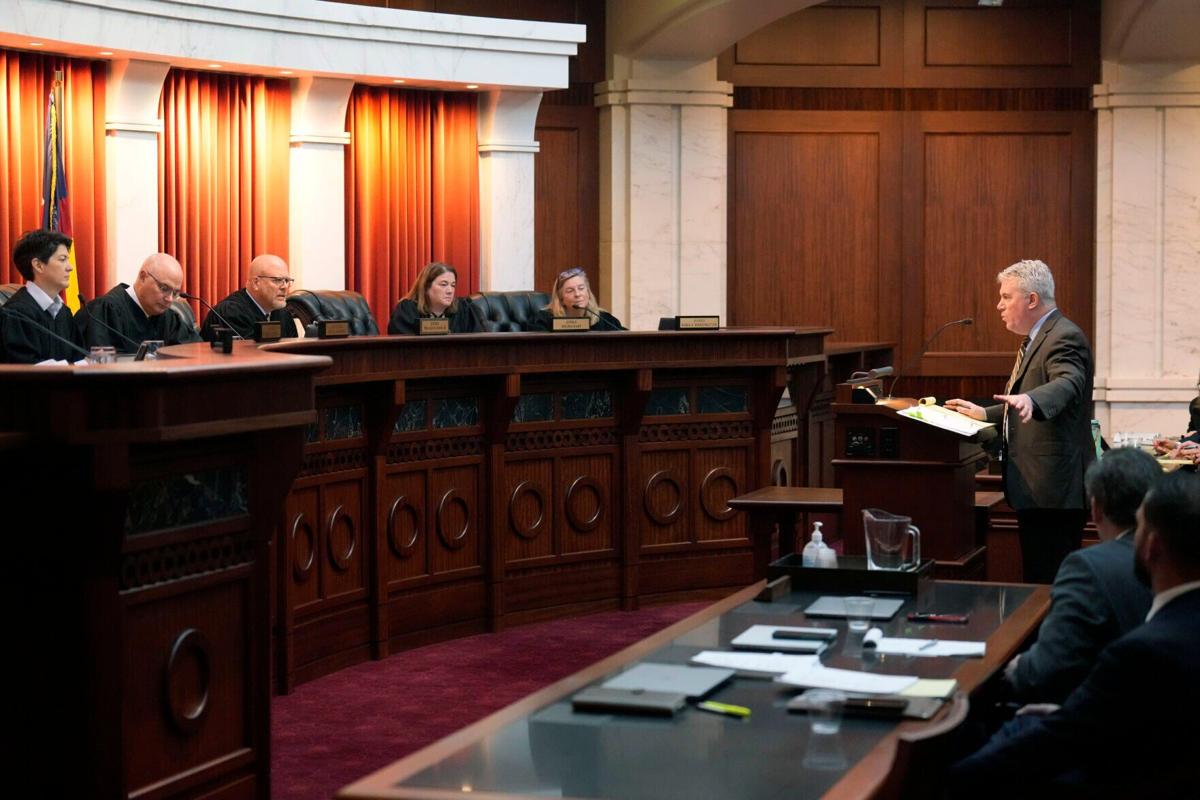
Attorney Scott Gessler argues before the Colorado Supreme Court on Dec. 6, 2023, in Denver. The oral arguments before the court were held after both sides appealed a ruling by a Denver district judge on whether to allow former President Donald Trump to be included on the state’s general election ballot.
associated press file

Stevenson: Doing all the moot courts, it was great because we really sort of covered the waterfront of all the things I wanted to be prepared to talk about. Some of the particularly difficult areas that I was ready for, those questions got directed to Mr. (Jason) Murray for the electors. So, I didn’t know, coming up, would they want to rehash those issues with me or were they sort of satisfied with the answers they got from him.
I think for the most part, they left those things alone and didn’t want to rehash them, with the exception of the question of what are some of the consequences if we were to affirm this decision. How will this impact other states?
There were a lot of things we were prepared to answer. I thought they might have a lot of questions about what the impact of their ruling might be, specifically on Colorado’s electoral process. And they had no questions about that at all.
Certainly, everything they asked, I thought, was anticipated. But it was just a lot less than the full panoply of things we prepared for.
CP: Did you adjust your argument based on the nearly two hours you heard prior to getting up there?
Stevenson: I would say I adjusted it more based on the questions I was receiving from the court and what their demeanor was at the time. There were certainly issues that I was sort of ready to advocate more aggressively for, but their questions directed at me did seem more informational in tone, including Justice (Samuel) Alito’s questions about the consequences. I thought he was more trying to get a perspective of what do people really think this would actually be like. I adjusted my tone for that.
There was also an issue raised in (Trump’s) brief on the Moore v. Harper case they were making an argument about. That was something we were concerned about and I was really prepared to advocate aggressively on that. But it never came up once in the argument for (Trump) or the electors. So, I thought, “We’ll just leave that alone. If they’re not interested, that’s great.”
CP: Is there anything you thought of afterward that you wish you had said during your time at the microphone?
Dissenting justices in Trump case raise due process concerns, offer slim details
Stevenson: I think I said it, but I wish I could have said it even more fulsomely, just to alleviate this sort of concern about states doing different things in this context. For people who work in state election administration, this is just such a normal way of things. I feel like there was much skepticism or resistance or concern about having 50 different states run their presidential elections in different ways.
I think if I had sort of understood that that would be the temperament of everyone coming in, I might have said more about that because it’s such an important notion to convey – which is the Constitution give states broad powers to run their elections. And there are inconsistencies in the ballot and we shouldn’t make exceptions to that important process for one particular case.
CP: You probably saw after the argument the predominant feeling was that the Supreme Court is going to reverse the Colorado Supreme Court and permit Donald Trump on our state’s ballot and probably all other states’ ballots. Did you get that impression at any time during the argument or immediately after?
Stevenson: Yes, for sure. It definitely seemed like, again, sort of from this consequentialist point of view, that across the board there was just concern about the impact of the case. It was somewhat unusual for this court to focus so much on consequences and sort of a pervasive concern about affirming the Colorado Supreme Court’s decision.
I do think this is a case where the longer you work on it, the harder it is to reach a sound legal reasoning for that result. The court was on a really short timeframe to review all of these issues, too. It will be interesting to see how quickly they move and whether they’re able to get a majority to consolidate around any particular reasoning for the outcome.
CP: You said at the beginning you didn’t look back at any point to see who all from Colorado was in the gallery. Did having a completely full courtroom make a difference for you in arguing the case?
Stevenson: Not at all. When you’re up there, you’ve got one audience — or nine audiences, I guess — and you’re completely focused on them.
CP: It is a frequent criticism of the Supreme Court that they do not allow cameras in the courtroom. Do you have a position on that?
Trump disqualified from 2024 ballot, Colorado Supreme Court rules
Stevenson: It’s a great question. I have never done a deep dive to understand their rationale for doing the audio and not the video. I think in general, my view is the more transparency, the better. But I would want to understand their reasons for not wanting to do that before criticizing their policy.
CP: If someone ever got the chance to wait in line overnight for a seat in that courtroom, would you advise them to do that?
Stevenson: Absolutely. I’ve been there for arguments a few times now. I think anytime people have the chance to see our government institutions at work, they should take advantage of that. I think you leave with a completely different perspective than if you hadn’t seen it firsthand.

10th Circuit says landowner cannot sue ex-Routt County judge for statements in decision
Michael Karlik
michael.karlik@coloradopolitics.com
Updated 9 hours ago
A Routt County landowner cannot sue a former judge for his allegedly inaccurate statements in a case where the landowner was not a party, the Denver-based federal appeals court decided on Wednesday. Anne Fitzsimmons, who lives in Germany, owns a...
Parole, appeals deadlines and restitution: Colorado justices accept cases
Michael Karlik
michael.karlik@coloradopolitics.com
Updated 1 day ago
The Colorado Supreme Court announced on Monday that it will determine how a defendant’s parole-eligibility date should be calculated in instances where a new trial results in a sentence being imposed retroactively to the date of the original, since-overturned sentence....
Federal judge rejects DOJ bid to force Colorado to hand over voter information
Marissa Ventrelli
marissa.ventrelli@coloradopolitics.com
Updated 8 hours ago
A U.S. district court judge has dismissed a lawsuit filed by the U.S. Department of Justice against Colorado Secretary of State Jena Griswold for refusing to provide the agency with personal voter information. Last December, the DOJ’s Civil Rights Division asked...
3 Colorado judges receive unfavorable retention recommendation as one performance commission violates rules
Michael Karlik
michael.karlik@coloradopolitics.com
Updated 2 days ago
Of the 123 Colorado judges standing for retention on the November ballot, citizen-led performance commissions found that three did not meet the required performance standards. However, in an unprecedented move, the commission charged with evaluating Supreme Court and Court of...
10th Circuit weighs Gross Reservoir expansion, judge’s ‘punishment’ of Denver Water
Michael Karlik
michael.karlik@coloradopolitics.com
Updated 10 hours ago
Members of the Denver-based federal appeals court considered on Friday whether they could intervene in an ongoing infrastructure project to enlarge a Boulder County dam after a trial judge deemed the underlying permit unlawful nearly two years ago. Denver Water...
10th Circuit upholds federal prohibition on juvenile handgun possession
Michael Karlik
michael.karlik@coloradopolitics.com
Updated 1 day ago
The Denver-based federal appeals court concluded on Monday that Congress acted within its constitutional powers to make it a crime for juveniles to possess handguns in most instances. The decision from the U.S. Court of Appeals for the 10th Circuit...

Senate advances judicial nominee, Montezuma County judge agrees to discipline | COURT CRAWL
Michael Karlik
michael.karlik@coloradopolitics.com
Updated 3 days ago
Welcome to Court Crawl, Colorado Politics’ roundup of news from the third branch of government. A U.S. Senate committee advanced a judicial nominee from Colorado, plus a Montezuma County judge agreed to receive discipline for his misconduct that stops short...
Judge denies Calderon injunction case against Denver, Johnston
Deborah Grigsby
deborah.smith@denvergazette.com
Updated 3 days ago
A U.S. District Court judge has denied a preliminary injunction in the case of Jessica Calderon, the Denver city employee who won a temporary restraining order preventing the City and County of Denver from terminating her amid the 2025 citywide...
10th Circuit partially revives lawsuit over 2020 Denver protest injuries
Michael Karlik
michael.karlik@coloradopolitics.com
Updated 4 days ago
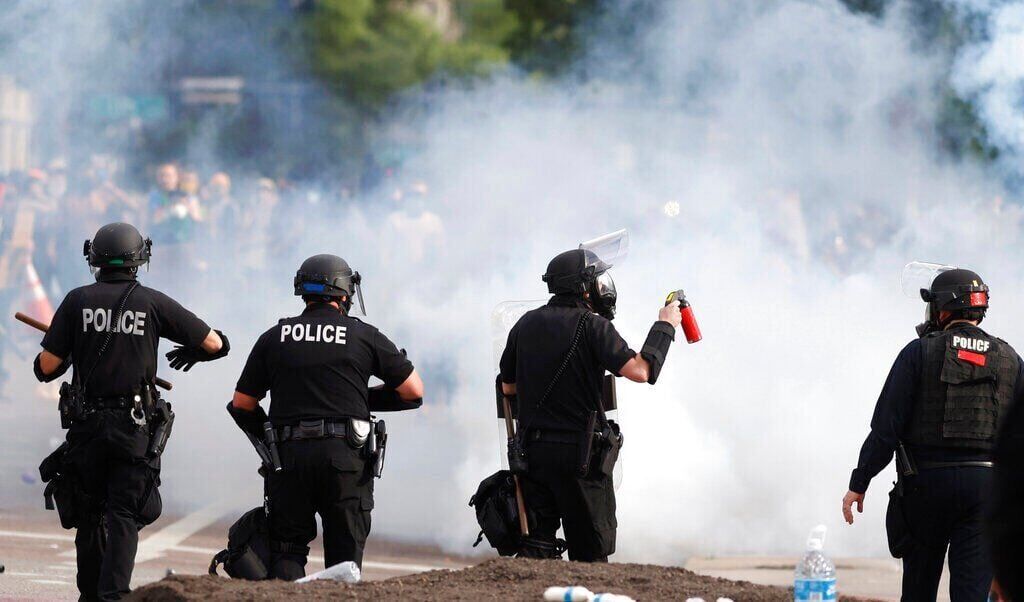
The Colorado-based federal appeals court revived a man’s claims against Denver on Friday after concluding a trial judge resolved the case in the city’s favor without analyzing two of the three instances of alleged excessive force and other constitutional violations....

Federal judges find Colorado immigration judge violated several orders
Michael Karlik
michael.karlik@coloradopolitics.com
Updated 4 days ago
Multiple federal judges in Colorado have freed people from immigration custody after determining that one immigration judge violated their directives for properly conducting bond hearings. For nearly a year, Colorado’s U.S. District Court has faced a flood of habeas corpus petitions...
PREV
PREVIOUS

'Something about that is wrong': Colorado justices weigh ski resort immunity for child's debilitating fall
In a case that attracted the interest of Colorado’s outdoor recreation industry, the state Supreme Court considered on Tuesday whether parents may waive their children’s right to sue for debilitating injuries that are allegedly the fault of a negligent ski resort operator. Annalea “Annie” Miller was 16 years old when she fell 30 feet from […]

Denver magistrate may resolve dispute between parents over whether to vaccinate child against COVID-19, appeals court says
Colorado’s second-highest court last week clarified that trial judges need not find a child is endangered before they break an impasse between two parents who cannot agree about which course of action is best. A three-judge panel for the Court of Appeals agreed a Denver magistrate appropriately sided with a father who wanted his child […]