

Trump disqualification case at SCOTUS, GOP primary remains open to unaffiliateds | COURT CRAWL
Welcome to Court Crawl, Colorado Politics’ roundup of news from the third branch of government.
This week, the U.S. Supreme Court will hear an unprecedented case out of Colorado involving a presidential candidate’s disqualification from the ballot, and a federal judge recently rejected an attempt to exclude unaffiliated voters from Colorado’s Republican primary.
14th Amendment challenge
• On Thursday, the nation’s highest court will hear oral arguments in a case that rocketed through Colorado’s courts late last year, with a potential to upend the presidential election nationwide. The Colorado Supreme Court decided, 4-3, in December that Donald Trump engaged in insurrection as president and, under Section 3 of the 14th Amendment, is disqualified from holding future office. It was the first court to ever reach that conclusion.
• Quickly, the U.S. Supreme Court agreed to review the ruling. Maine has since put its own adjudication of Trump’s ineligibility on hold until SCOTUS weighs in.
• The Supreme Court has allocated 80 minutes for oral arguments — 40 for Trump, 30 for the voters challenging his eligibility and 10 for Secretary of State Jena Griswold. Arguing for Trump will be Jonathan F. Mitchell of Texas, a conservative attorney who was responsible for Texas’ restrictive 2021 abortion law. Representing the six Colorado voters will be Jason Murray, who litigated the disqualification case in Colorado’s courts. Finally, Colorado’s solicitor general, Shannon Stevenson, will argue on behalf of Griswold in her first SCOTUS appearance.
• The arguments will be streamed here.
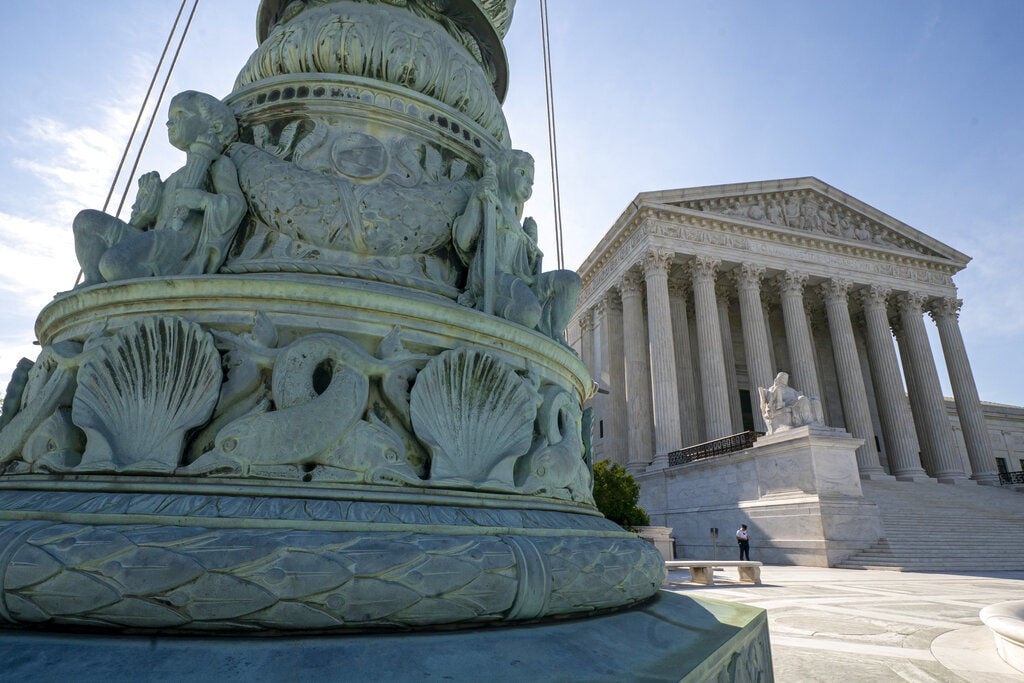
The Supreme Court is seen in Washington, Monday, June 17, 2019.
(AP Photo/J. Scott Applewhite)

GOP primary remains on track
• The Colorado Republican Party sought to block unaffiliated voters from participating in its primary elections through a preliminary injunction, after its own central committee was unable to reach the threshold needed to move to a closed nominating system. Last week, a judge declined to order the exclusion of unaffiliateds, finding no likely violation to the GOP’s constitutional rights.
• “The Party’s inability to opt out of the semi-open primary for the last three election cycles is not due to an impossible structural barrier, but rather arises from robust policy disagreement within the Party.” —U.S. District Court Chief Judge Philip A. Brimmer
Another retirement on the federal bench
• Colorado Politics recently reported that longtime U.S. Magistrate Judge Michael E. Hegarty was intending to retire at the end of this year. On Friday, the U.S. District Court announced Hegarty will indeed be stepping down in January 2025.
• Hegarty, who was appointed in 2006, was also recently named the first chief magistrate judge for Colorado’s federal trial court. The district judges authorized the leadership role at the unanimous request of the magistrate judges.
• “Judge Michael Hegarty is one of the top five magistrate judges I have practiced before in my over 43 years of practice,” attorney Gordon L. Vaughan told Colorado Politics at the time. “He is by far the most sought-after magistrate judge for court sponsored settlement conferences (mediation).”
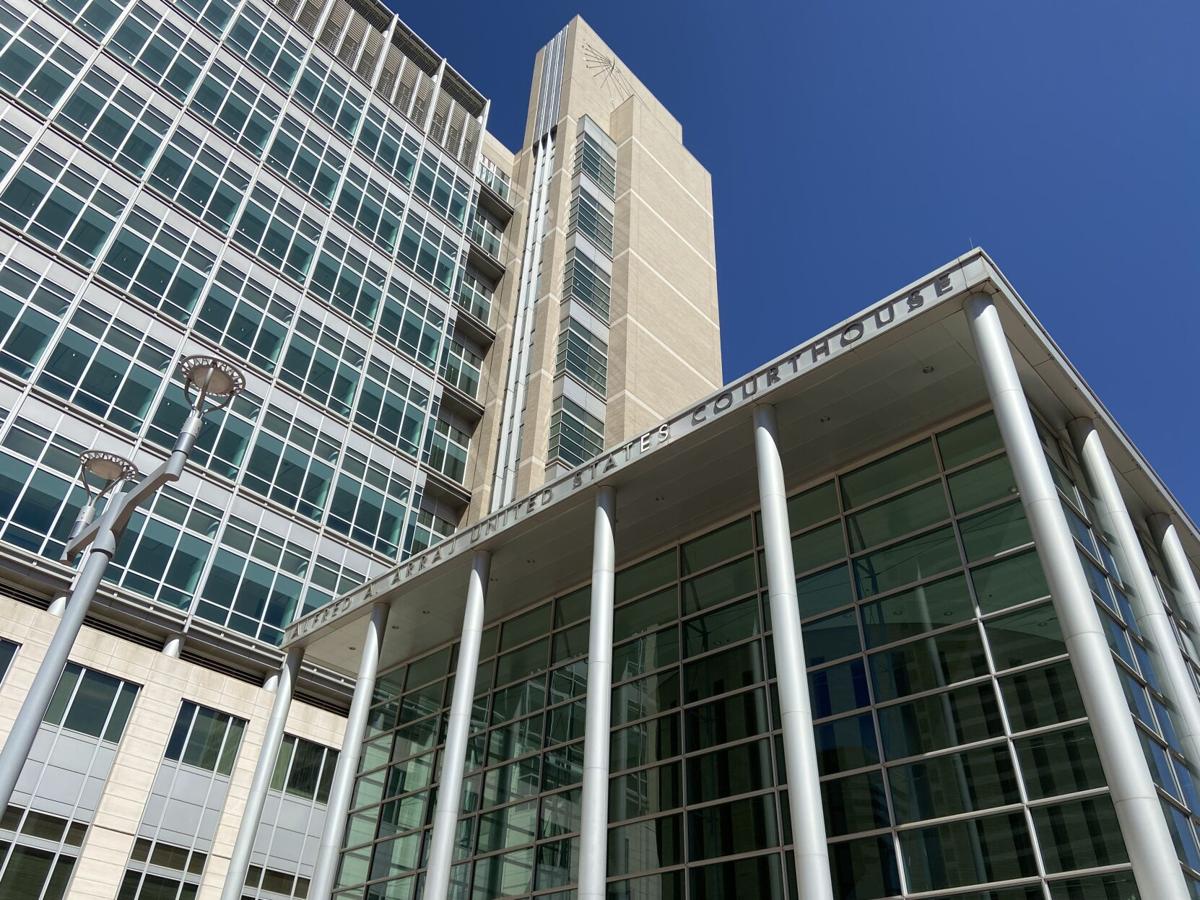
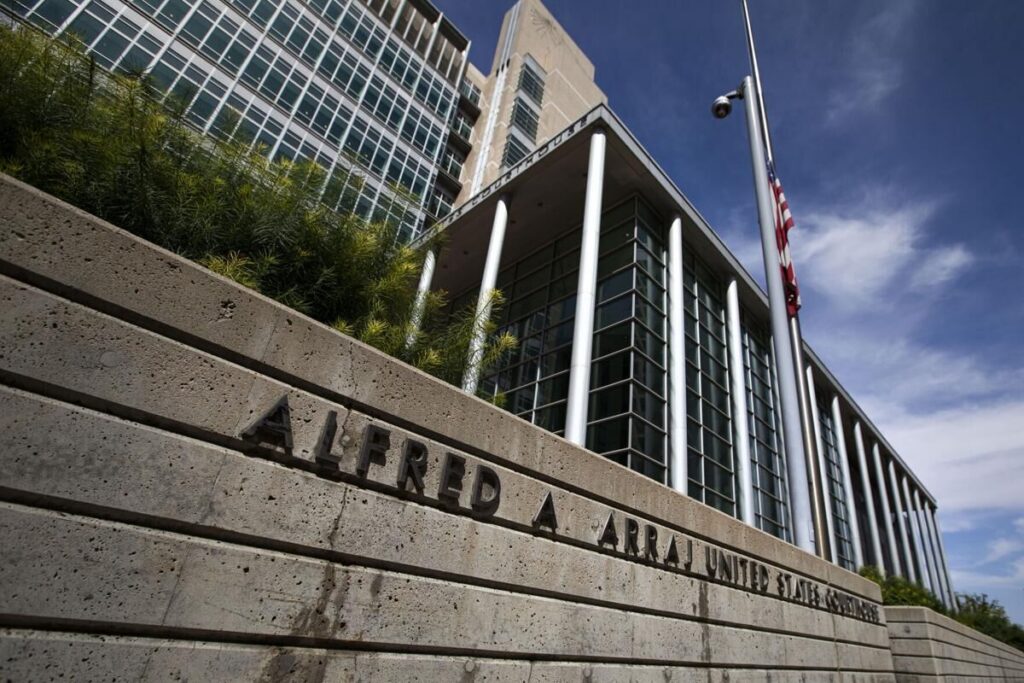
FILE PHOTO: The Alfred A. Arraj U.S. Courthouse in downtown Denver.
Colorado Politics file photo

• Hegarty’s retirement means that in the span of four years, an astounding six out of nine magistrate judge seats at the U.S. District Court will have turned over. It’s comparable to what has happened on the district judge bench, with President Joe Biden appointing five of the seven active judges in his first term.
• The deadline to apply for Hegarty’s seat is Feb. 12. A merit selection panel will screen applicants for the position, alongside the existing vacancy for the seat of former U.S. Magistrate Judge S. Kato Crews, who recently became a life-tenured district judge.
In other federal news
• The U.S. Court of Appeals for the 10th Circuit agreed the company behind an online marketplace app can’t be held liable after one of its users murdered an Aurora couple during a transaction arranged through the platform.
• A trio of Gunnison landlords escaped contempt of court in December, but now the U.S. government is warning they continue to ignore their obligations under a four-year-old non-discrimination consent decree.
• A federal judge agreed Circle K lawfully fired a 72-year-old convenience store clerk for violating company policy when she tried to stop a shoplifter.
• A jury will decide whether nursing personnel violated an incarcerated man’s rights by failing to adequately respond to his deteriorating medical condition prior to his death.
Heard on appeal
• The 10th Circuit has asked the Colorado Supreme Court to resolve a question of state law that hasn’t been answered yet: Is Amazon complying with Colorado’s wage requirements by excluding shifts worked on holidays from the calculation of employees’ overtime compensation?
• The Supreme Court concluded Adams County waited 20 years too long to sue Denver over its failure to log excess noise violations at Denver International Airport with a monitoring system, rather than an outdated and inaccurate modeling method.
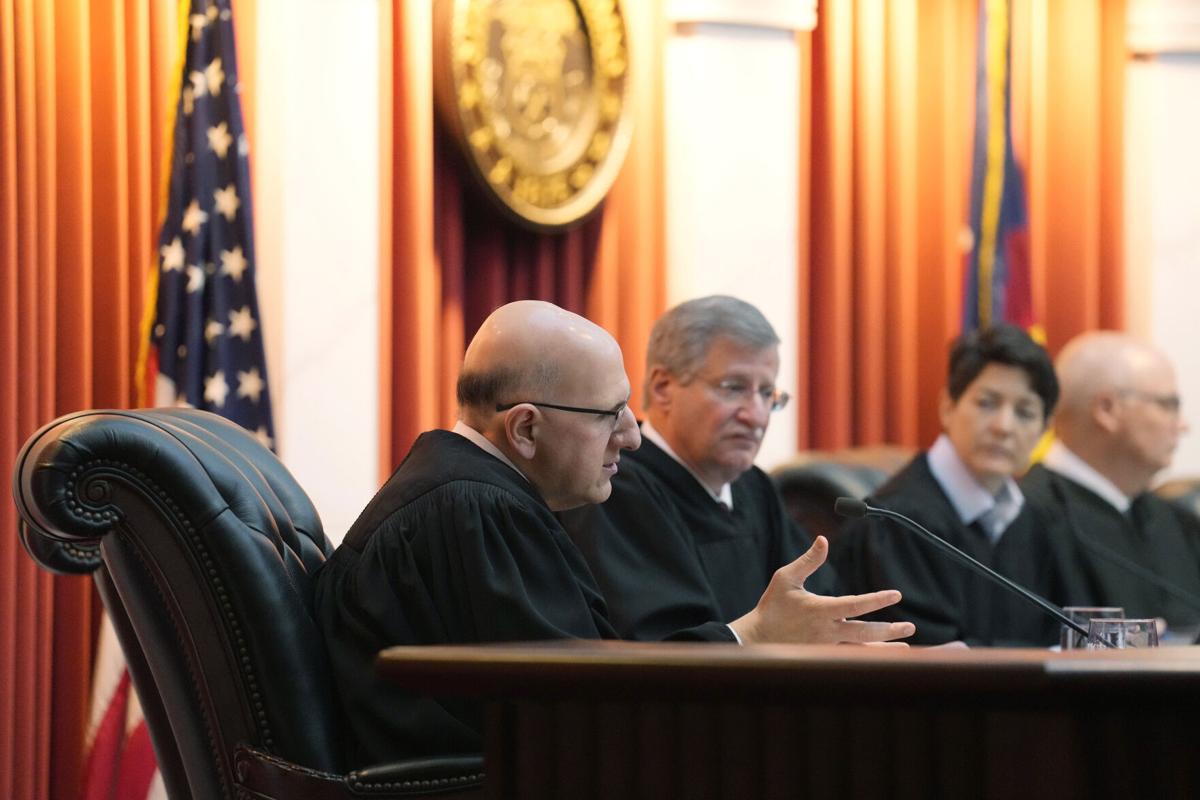
Colorado Supreme Court Justice Carlos Samour, Jr., left, asks a question during oral arguments before the court on Dec. 6 in Denver. Looking on are Justices Richard L. Gabriel, second from left, Monica M. Marquez, third from left, and Chief Justice Brian D. Boatright. Colorado Supreme Court justices have sharply questioned whether they could exclude former President Donald Trump from the state’s 2024 ballot.
the associated press

• The state’s Court of Appeals upheld a set of restrictions on a man’s access to the courts, finding they were justified by his past threats to judges.
• A man convicted of murder will receive a new trial because a Denver judge failed to give a key jury instruction that would have mitigated the severity of the offense.
• A Boulder County judge incorrectly applied the state’s “rape shield” law, leading the Court of Appeals to overturn a man’s sex assault conviction and 18-to-life sentence because jurors didn’t hear about the victim’s potential motive for fabricating the allegations.
• The Court of Appeals concluded an El Paso County prosecutor didn’t engage in unconstitutional discrimination when he removed two jurors of color from a criminal trial because of their views about policing.
Vacancies and appointments
• The governor has appointed deputy district attorney James H. Hesson to the Moffat County Court, where he succeeds now-District Court Judge Brittany A. Schneider.
Miscellaneous proceedings
• U.S. Rep. Joe Neguse has once again introduced a bill that would give Colorado two new judgeships on its seven-member federal trial court. Neguse, as well as Colorado’s two senators, have repeatedly sponsored legislation in recent years to expand the U.S. District Court, but the efforts have gone nowhere. This time, Neguse has teamed up with U.S. Reps Ross Fulcher and Mike Simpson, both Republicans from Idaho, to tie the creation of two judgeships in Colorado with one new judgeship in Idaho. There is currently no companion bill in the U.S. Senate.


Judicial performance evaluations released, Montezuma County judge disciplined | COURT CRAWL
Michael Karlik
michael.karlik@coloradopolitics.com
Updated 12 hours ago
Welcome to Court Crawl, Colorado Politics’ roundup of news from the third branch of government. Colorado’s citizen-led judicial performance commissions released their voter narratives for the judges standing for retention in November, plus a disciplinary panel imposed consequences on a...
Federal judge holds off on dismissing formerly bankrupt medical contractor from Jeffco jail death lawsuit
Michael Karlik
michael.karlik@coloradopolitics.com
Updated 14 hours ago
A federal judge declined on Monday to dismiss the formerly bankrupt medical contractor from a lawsuit over a detainee’s death in Jefferson County jail, but indicated she would do so if the plaintiffs’ attorneys go through the process to ensure...
Federal judge green-lights excessive force, retaliation claims for trial against Fort Collins officers
Michael Karlik
michael.karlik@coloradopolitics.com
Updated 2 days ago
A federal judge green-lit a jury trial last week against multiple Fort Collins police officers on claims that they used excessive force on one man who was standing unarmed in his underwear, and retaliated against another man for exercising his...
10th Circuit revives wage violation lawsuit against Papa John’s operator
Michael Karlik
michael.karlik@coloradopolitics.com
Updated 3 days ago
The Denver-based federal appeals court on Tuesday reinstated a former Papa John’s delivery driver’s lawsuit alleging violations of federal and state wage law. Steve Mighell worked for one month at a Denver Papa John’s location in summer 2023. He alleged...
Colorado appeals judge’s delays in releasing opinions noted by performance commission
Michael Karlik
michael.karlik@coloradopolitics.com
Updated 2 days ago
The citizen-led performance commission that provides guidance to voters about whether to retain members of Colorado’s second-highest court raised concerns by judges and attorneys that Judge Elizabeth L. Harris sometimes struggles with releasing opinions promptly. Harris, who joined the Court...
Colorado judge explores sanctions against DOJ, ICE for rearresting man 4 days after release on bond
Michael Karlik
michael.karlik@coloradopolitics.com
Updated 4 days ago
A federal judge in Colorado is considering sanctions against the government after immigration agents rearrested a man four days after an immigration judge found him suitable for release on bond. On July 28, U.S. Magistrate Judge N. Reid Neureiter ordered...
Divided disciplinary panel censures Montezuma County judge after agreement reached
Michael Karlik
michael.karlik@coloradopolitics.com
Updated 3 days ago
A disciplinary panel formally imposed a public censure, suspension, and further training on Montezuma County Court Judge Ian J. MacLaren on Tuesday by a 2-1 vote. Under constitutional Amendment H, which voters adopted in November 2024, MacLaren was set to...
Colorado’s Western Slope magistrate judges describe unique role in federal judiciary
Michael Karlik
michael.karlik@coloradopolitics.com
Updated 5 days ago
Two of Colorado’s federal judges stationed on the Western Slope spoke to lawyers on Wednesday about their unique roles, the ways their workloads differ, and the need for more criminal defense lawyers to take cases outside the Front Range. “Here...

Denver sues Philip Morris, other tobacco companies over cigarette butt litter
Deborah Grigsby
deborah.smith@denvergazette.com
Updated 4 days ago
Denver is demanding that some of the biggest tobacco companies in the world pay for the cleanup of discarded cigarette butts on its streets, following a similar campaign that cities in other states have pursued. Denver’s lawsuit, filed this week...
Federal judge rules that request for bond hearing not necessary to challenge immigration detention
Michael Karlik
michael.karlik@coloradopolitics.com
Updated 3 days ago
A federal judge in Colorado ruled last week that it is not mandatory for a person to seek a bond hearing with an immigration judge before they challenge the lawfulness of their detention in federal court. For the past year,...
PREV
PREVIOUS
Judge denies Colorado GOP's request to exclude unaffiliated voters from primary elections
A federal judge on Friday declined a request from the Colorado Republican Party to block unaffiliated voters from participating in its primary elections, finding the GOP was unlikely to succeed in its constitutional challenge to a 2016 ballot measure allowing for unaffiliateds to vote in major party primaries. After a two-day hearing last week, U.S. […]
Colorado Supreme Court to review limits on negligence claims in case over Denver restaurant fire
The Colorado Supreme Court announced on Monday that it will review whether a judicially created rule barring certain types of negligence claims applies when a defendant acts recklessly to cause an injury. At least three of the court’s seven members must agree to take up an appeal. The justices also signaled they may intervene in […]