

Judge denies Colorado GOP’s request to exclude unaffiliated voters from primary elections
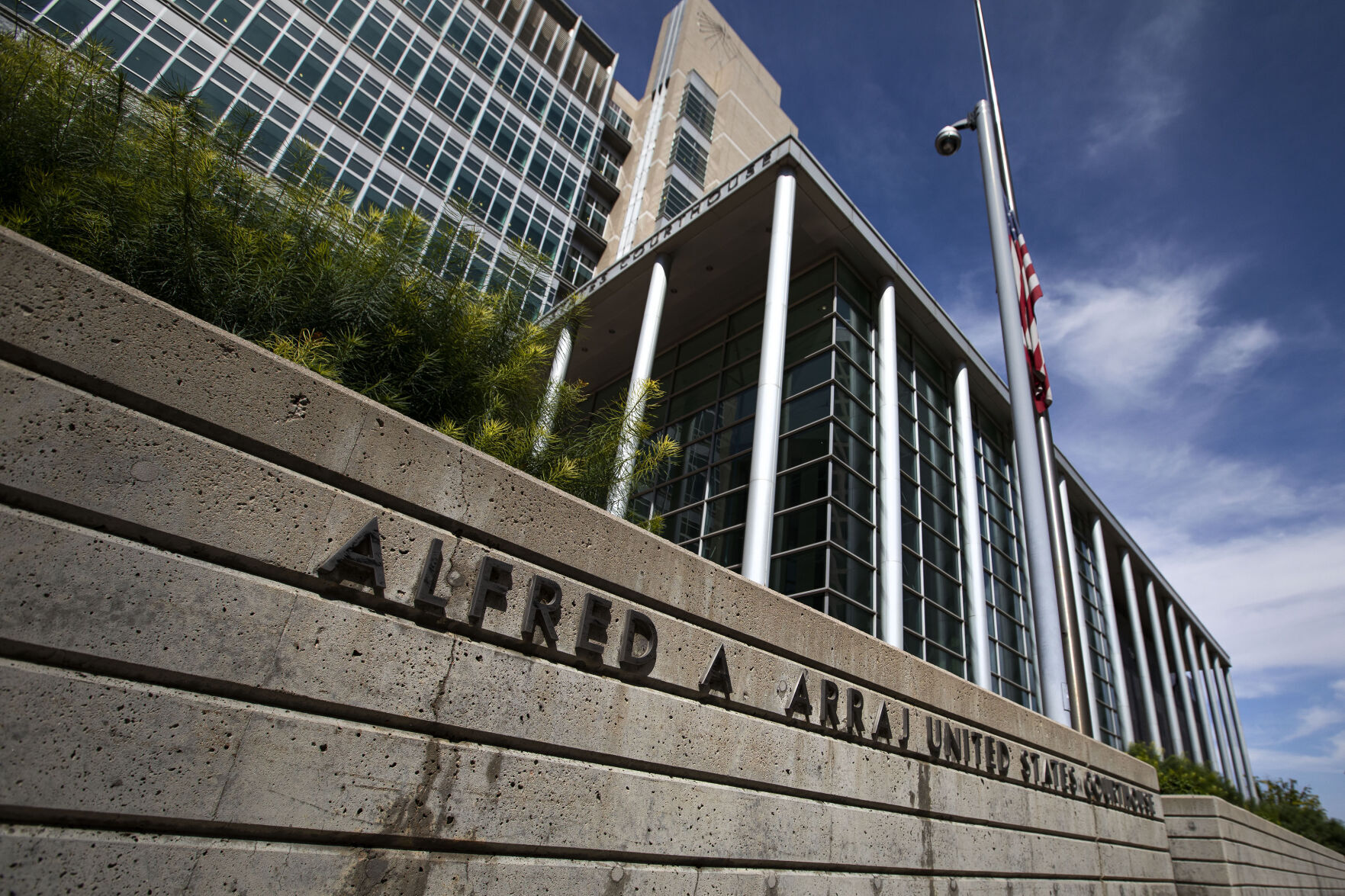
A federal judge on Friday declined a request from the Colorado Republican Party to block unaffiliated voters from participating in its primary elections, finding the GOP was unlikely to succeed in its constitutional challenge to a 2016 ballot measure allowing for unaffiliateds to vote in major party primaries.
After a two-day hearing last week, U.S. District Court Chief Judge Philip A. Brimmer concluded the GOP failed to show the passage of Proposition 108 nearly eight years ago had a measurable effect on Republican nominating contests since.
“At the hearing, the Party presented no evidence of crossover voting or any other evidence suggesting that unaffiliated voters or voters affiliated with rival parties might determine the Party’s nominee,” Brimmer wrote on Feb. 2. “The Party offered no evidence that unaffiliated voters changed the outcome of any specific primary races in 2018, 2020, or 2022.”
Since the passage of Prop 108, the state Republican Party has attempted to opt out of the primary elections, with some conservatives bristling at the notion that non-party members would have a say in selecting the GOP’s candidates. The effort has been unsuccessful, with a 2023 vote of the party’s central committee resulting in only 65% support for the opt-out – short of the necessary 75% threshold.
Brimmer found the opt-out threshold was not so high that it burdened the GOP’s First Amendment rights. Although the party’s central committee was unable to marshal 75% support for moving to a closed method of nominating candidates, multiple party officers testified the GOP had surpassed 75% approval for other matters routinely.
“The Party’s inability to opt out of the semi-open primary for the last three election cycles is not due to an impossible structural barrier, but rather arises from robust policy disagreement within the Party,” Brimmer wrote.
Kent Thiry, who led the campaign to pass Prop 108, called the ruling “a reminder that elections belong to voters – not political parties.”
Unaffiliated voters are the largest bloc in Colorado, at around two million people. Registered Democrats number approximately one million, with Republicans at 900,000 voters. Proponents of Prop 108 at the time of its passage argued permitting unaffiliated voters to participate in partisan primaries would make candidates more responsive to “a broader range of interests.”
As the Republican Party pursued a lawsuit to accomplish through the courts what it could not do through a vote of its central committee, GOP leaders were split about the wisdom of barring everyone but registered Republicans from voting on the party’s nominees.
“The reason we continue to lose at the ballot box is we allow watered-down candidates to infiltrate our ballot,” said former congressional candidate Laurel Imer during the GOP’s failed 2023 vote to hold its nominating contest through a closed caucus and assembly system.

However, Suzanne Taheri, a former state Senate candidate in Arapahoe County, testified during the preliminary injunction hearing that it was preferable for the party to participate in the state’s semi-open primary.
“In my county we have a whole lot of unaffiliateds,” she said. “I think you need those voters to win a general election and I think candidates are better off” reaching out to them early.
In arguing Prop 108 violated its constitutional rights to freedom of association and to equal protection of the laws, the GOP relied upon a 2000 U.S. Supreme Court case, California Democratic Party v. Jones, which struck down California’s open primary system on First Amendment grounds. However, Brimmer agreed California’s process, in which all names appeared on the same ballot and voters could choose any candidate, was markedly different from Prop 108.
“A political party does not have a constitutional right to nominate its candidates by a certain method,” he wrote. Further, “(i)ncreasing voter participation in primary elections is an important State interest.”
Brimmer, a George W. Bush appointee, suggested the GOP could have presented evidence showing unaffiliated primary voters have substantially different policy preferences than registered Republicans – potentially by polling unaffiliateds or analyzing the platforms of successful primary candidates. Instead, the GOP had not shown the participation of unaffiliated voters resulted in less conservative candidates being chosen in Colorado.
GOP Chair Dave Williams said it was “a shame this judge relied on the false testimony of RINOs” – a derogatory term meaning “Republican in name only” – “but a victory that the court reaffirmed our Party’s legal right to decide our internal processes for opting out.”
Shad Murib, the Colorado Democratic Party chair, told Colorado Politics that while “Republicans will mourn unaffiliated voters participating in their primaries, the Democratic Party welcomes their input and we look forward to continuing to nominate and elect champions for working Colorado – not the MAGA extremists the GOP is trying to rig the system for.”
Currently, voting in Colorado’s March 5 presidential primary is underway. A preliminary injunction would not have affected that election. The primary for all other offices will take place in June.
The case is Colorado Republican Party v. Griswold.
Colorado Politics reporter Ernest Luning contributed to this story.


Federal judge green-lights civil trial against ex-Fort Collins DUI officer
Michael Karlik
michael.karlik@coloradopolitics.com
Updated 1 day ago
A federal judge ruled on Thursday that Fort Collins’ former “DUI officer” will face a civil trial for allegedly investigating a motorist for impaired driving without any reasonable suspicion to do so. In recent years, several people arrested by Officer...

Colorado Supreme Court suspends Mesa County judge pending misconduct investigation
Michael Karlik
michael.karlik@coloradopolitics.com
Updated 2 hours ago
The Colorado Supreme Court suspended Mesa County Court Judge Michael J. Grattan on Thursday amid a misconduct investigation. The court’s Sept. 10 order gave Grattan 21 days to explain why his paid suspension should not continue through the end of...
Colorado Supreme Court changes course, dismisses case about special district bonds
Michael Karlik
michael.karlik@coloradopolitics.com
Updated 2 hours ago
The Colorado Supreme Court declined on Friday to decide a dispute between a large-scale Commerce City development and the various districts financing it, after initially showing interest in the ongoing case. Colorado has roughly 2,800 special districts, which are local...
10th Circuit tosses GEO Group’s pretrial appeal in human trafficking lawsuit
Michael Karlik
michael.karlik@coloradopolitics.com
Updated 2 days ago
The Denver-based federal appeals court dismissed an attempt by The GEO Group on Wednesday to appeal a trial judge’s non-existent decision two months before the company is scheduled to face a civil trial over alleged trafficking violations at the Aurora...
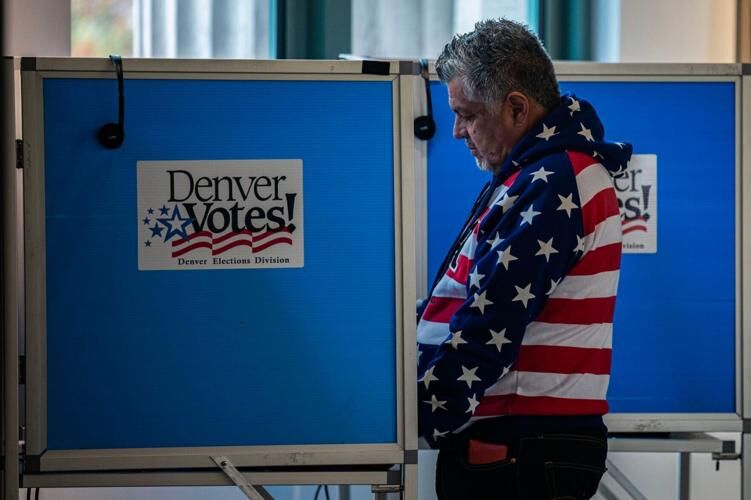
Denver sues Trump to block armed ICE agents from polling sites
Deborah Grigsby
deborah.smith@denvergazette.com
Updated 2 days ago
The city of Denver, along with several groups, sued the Trump administration Thursday, seeking to block U.S. Immigration and Customs Enforcement officers who are armed from polling sites during the upcoming midterm elections. In fact, there are no official orders...
Federal judge takes no action against ICE in Colorado after hearing about mistakes, not ‘blatant violations’
Michael Karlik
michael.karlik@coloradopolitics.com
Updated 22 hours ago
A federal judge declined to take action against U.S. Immigration and Customs Enforcement on Thursday after hearing that a pattern of alleged lawbreaking amounted to mistakes and a misunderstanding of the government’s position in court. For nearly a year, Colorado’s...
Colorado doctors, dentists challenge state law on gender‑transition services in new federal lawsuit
Marissa Ventrelli
marissa.ventrelli@coloradopolitics.com
Updated 19 hours ago
A group of Christian doctors and dentists has filed a federal lawsuit challenging a Colorado law they say requires them to provide gender‑transition services that conflict with their religious and ethical beliefs. The lawsuit, filed by the Christian Medical and...
Federal judge directs plaintiff to revise complaint alleging Denver officers’ constitutional violations
Michael Karlik
michael.karlik@coloradopolitics.com
Updated 23 hours ago
A federal judge directed a plaintiff to revise his allegations on Wednesday to more precisely state what two Denver officers and the city itself allegedly did to violate his constitutional rights by facilitating his prosecution for murder until prosecutors dropped...
Lawsuit challenges Douglas County commissioners’ ballot actions
Nicholas Fogleman
nicholas.fogleman@denvergazette.com
Updated 2 days ago
A new lawsuit against Douglas County commissioners seeks to invalidate the board’s intervention in efforts to expand the commission from three members to five and restore the original ballot language approved by more than 20,000 petition signers. The suit marks...
Federal judge explores new sanctions against ex-Colorado judicial discipline director
Michael Karlik
michael.karlik@coloradopolitics.com
Updated 2 hours ago
A federal judge on Wednesday directed Colorado’s former judicial discipline director, for the third time this year, to explain why she should not sanction him for his latest conduct in his litigation against the state’s judiciary. Christopher S.P. Gregory, who served...
PREV
PREVIOUS
House Republicans object to Democratic resolution setting end-of-session rules
A resolution offered by House Majority Leader Monica Duran drew protests from Republicans Friday, who claimed changing rules in the last days of the session is an effort to silence GOP voices. House Resolution 1004 passed on a 42-19 party-line vote after a brief protest from Minority Leader Rose Pugliese of Colorado Springs, who spoke […]
The List: 28 lawmakers, 29 legislative seats filled via vacancy committees
Here’s the list of the 28 lawmakers who gained their seats through the vacancy process, the year in which they were selected, and vote totals for the vacancy committees. One legislator was appointed twice — to two different seats. All told, 28 individuals were appointed to 29 seats. HOUSE Lawmaker Year Selected Vote Totals Andrew […]