

Colorado justices ponder defendants’ ‘informed consent’ when challenging convictions
When a criminal defendant asks for postconviction relief, for reasons like new evidence or ineffective assistance from counsel, Colorado’s procedural rules require judges to forward any petition that seems viable to an appointed defense lawyer to investigate or add claims, then to decide whether the defendant deserves relief.
But what happens when an appointed attorney chooses to focus on only some of the defendant’s claims? Does that mean judges can ignore the defendant’s other allegations?
Last year, the state’s Court of Appeals said no, judges have to address the items a defendant raises on his own unless he provides “informed consent” to ditch some of the claims.
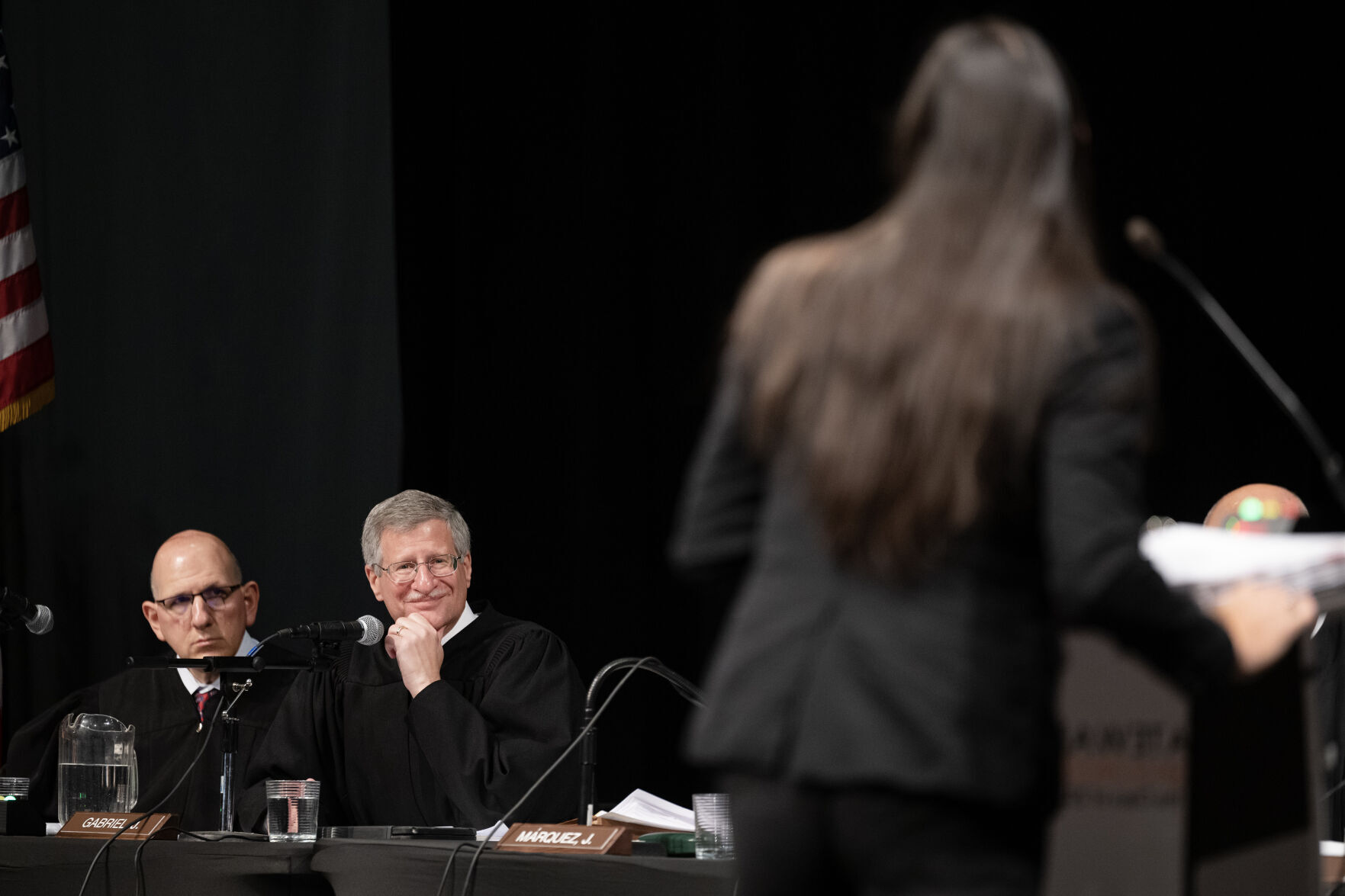
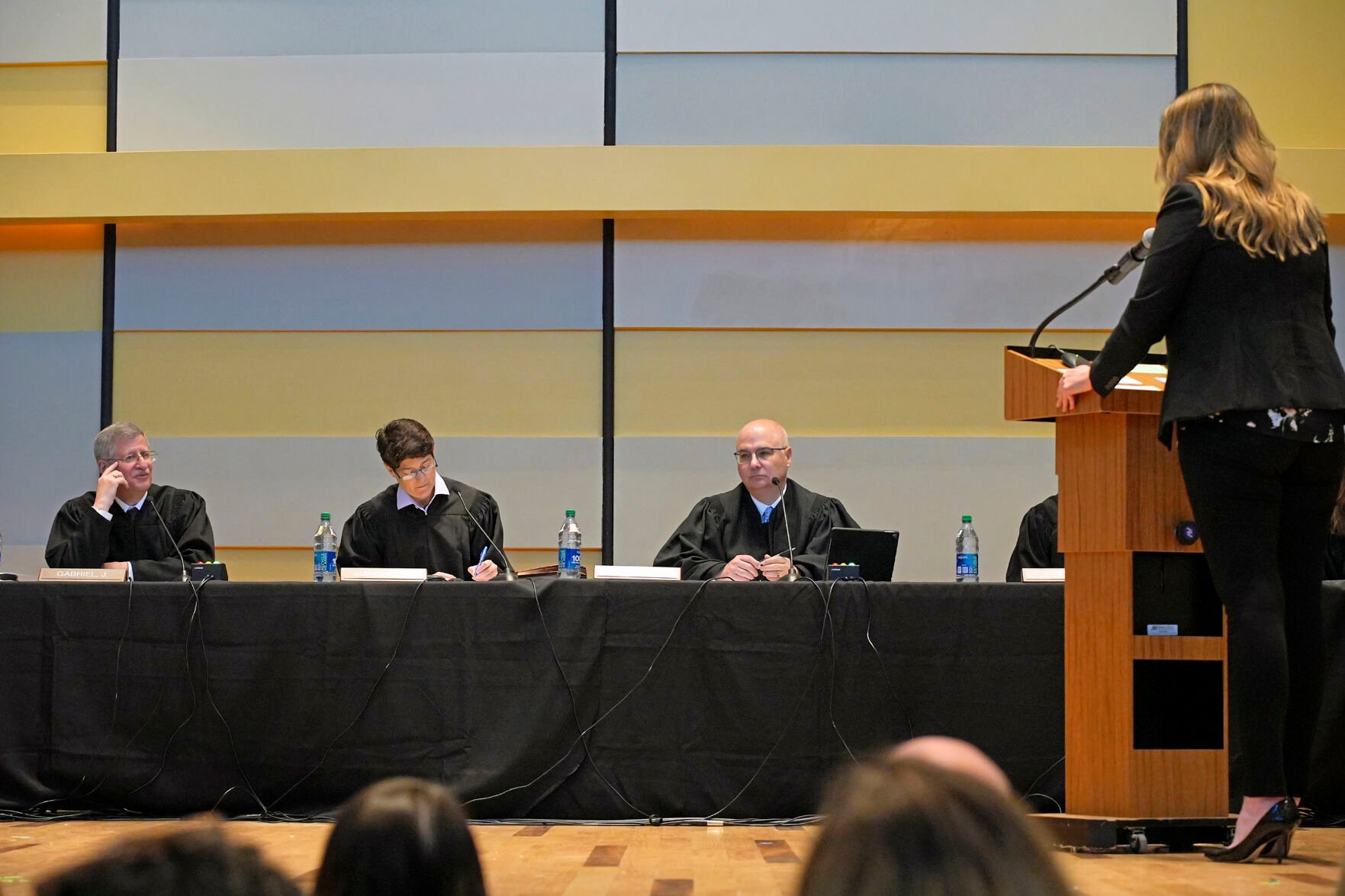
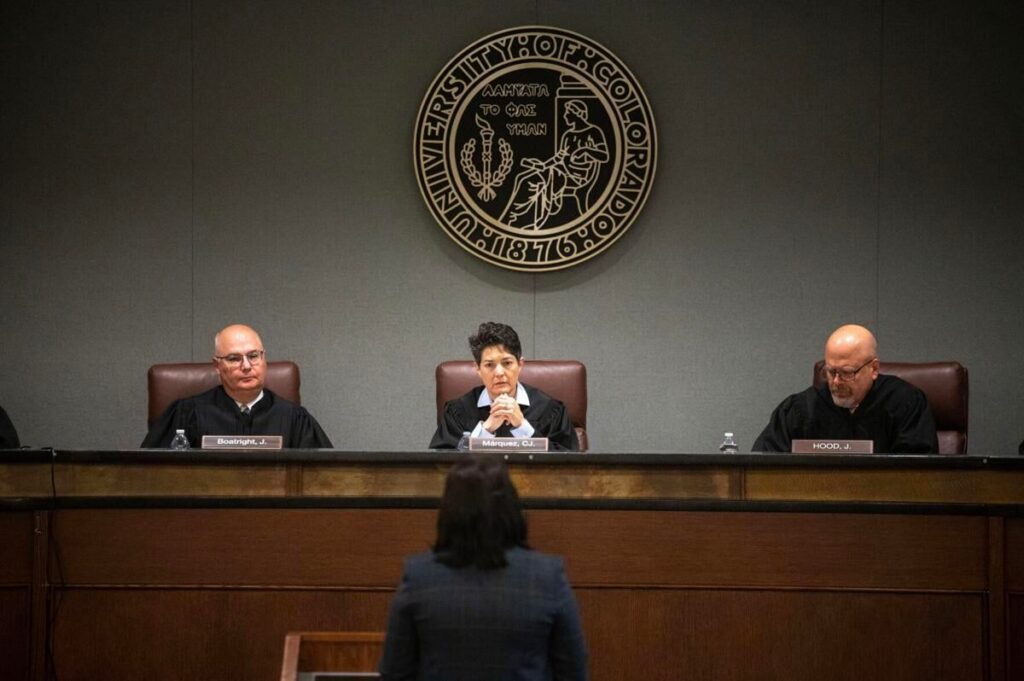
Members of the Colorado Supreme Court on Wednesday analyzed that new interpretation of the rules, and the consequences of requiring informed consent. One the one hand, the court recognized a defendant’s consent could guard against any inclination to sweep allegations aside and uphold convictions, simply because certain claims have not attracted a lawyer’s focus.
“Why isn’t it better to set up a scheme that allows these claims to go forward and just have the trial court dispose of them?” asked Justice William W. Hood III. “Maybe there is a claim in there that merits some consideration by the court that postconviction counsel hasn’t really seized on.”
Other members, however, observed that if judges are required by default to address all claims a defendant made while he was representing himself, the defendant has no incentive to consent to the withdrawal of any claims, no matter how meritless they are.
“Why would a defendant ever give informed consent?” wondered Justice Carlos A. Samour Jr. “Of course they’re gonna leave it in. And now you’re gonna have the trial court judge having to decide up to 100 claims, potentially, because the defendant wants 100 claims and they’re entitled to have the judge rule on every single claim.”
Although research has indicated a relatively low likelihood of a criminal conviction being reversed, one Innocence Project study found that courts have typically rejected postconviction allegations of ineffective lawyering even when the defendants were later exonerated by DNA evidence.
The case of Anthony Robert Smith in Larimer County revolved less around the merits of his allegations, and instead asked whether a judge needed to engage with some of Smith’s claims at all after an attorney got involved.
A jury convicted Smith of multiple child sex assault offenses. He then filed a motion in 2018 asserting his trial lawyer was ineffective, there was newly discovered evidence and prosecutors committed misconduct. After the court appointed an attorney to assist, she filed a supplemental motion focusing on only a portion of Smith’s claims.
District Court Judge Gregory M. Lammons subsequently decided that, because Smith’s new lawyer had not engaged with the other allegations, Smith waived his ability to have Lammons look at them.
A three-judge panel for the Court of Appeals acknowledged Lammons could have denied Smith’s motion outright if it was clear the claims were meritless and did not deserve relief. Moreover, Smith’s court-appointed attorney had no duty to advocate for meritless arguments.
However, it was not the case, wrote Judge Rebecca R. Freyre, that Smith forfeited his ability to have Lammons consider all of his original claims, or that Smith’s lawyer received “informed consent to waive any claims.”
The prosecution then appealed, citing the Supreme Court’s previous characterization of attorneys as the “captain of the ship,” who have latitude to represent their client’s interests – even if that means abandoning long-shot claims.
“It’s not that the attorney is disregarding the client’s interest. They’re actually furthering the client’s interests by selecting the issues to pursue,” argued First Assistant Attorney General Matthew S. Holman.
“What if the client disagrees? ‘I really like issues one, two, three.’ Does the client have any opportunity to voice that?” asked Justice Richard L. Gabriel.
“I’m wondering if we’re not doing more harm than good by just creating a mechanism by which we get rid of these (defendants’) claims so easily,” added Hood.
Adrienne Teodorovic, representing Smith, said his original postconviction lawyer never meant to abandon any of Smith’s claims, and the rules did not put her on notice she had to guard against a judge’s refusal to consider them.
“Counsel’s duty isn’t to supplant claims or get rid of claims. It’s just to add additional claims that have merit,” Teodorovic said. Otherwise, a defendant could file yet another postconviction petition arguing his appointed counsel was ineffective for failing to pursue his original postconviction claims.
“That’s a possibility,” acknowledged Samour, but “isn’t that the answer to the problem?”
“How would we find informed consent?” wondered Justice Melissa Hart. “That’s very different than anything that’s ever happened before and it’s not in the rules.”
Teodorovic responded that the Court of Appeals had not elaborated on what it meant, nor had she asked for that standard. But it had to be “more than just an assumption” by a trial judge, she offered.
Some members of the court suggested lawyers simply make clear they would like judges to address all of their clients’ claims, even if the rule does not explicitly require such a request.
Barring that, said Gabriel, “Why isn’t a better approach here – the tie goes to Mr. Smith and let him get a ruling on it? As opposed to us with 20/20 hindsight … have this fight over whether counsel said enough?”
The case is People v. Smith.


Federal judge green-lights civil trial against ex-Fort Collins DUI officer
Michael Karlik
michael.karlik@coloradopolitics.com
Updated 2 days ago
A federal judge ruled on Thursday that Fort Collins’ former “DUI officer” will face a civil trial for allegedly investigating a motorist for impaired driving without any reasonable suspicion to do so. In recent years, several people arrested by Officer...

Colorado Supreme Court suspends Mesa County judge pending misconduct investigation
Michael Karlik
michael.karlik@coloradopolitics.com
Updated 1 day ago
The Colorado Supreme Court suspended Mesa County Court Judge Michael J. Grattan on Thursday amid a misconduct investigation. The court’s Sept. 10 order gave Grattan 21 days to explain why his paid suspension should not continue through the end of...
Colorado Supreme Court changes course, dismisses case about special district bonds
Michael Karlik
michael.karlik@coloradopolitics.com
Updated 1 day ago
The Colorado Supreme Court declined on Friday to decide a dispute between a large-scale Commerce City development and the various districts financing it, after initially showing interest in the ongoing case. Colorado has roughly 2,800 special districts, which are local...
10th Circuit tosses GEO Group’s pretrial appeal in human trafficking lawsuit
Michael Karlik
michael.karlik@coloradopolitics.com
Updated 3 days ago
The Denver-based federal appeals court dismissed an attempt by The GEO Group on Wednesday to appeal a trial judge’s non-existent decision two months before the company is scheduled to face a civil trial over alleged trafficking violations at the Aurora...

Denver sues Trump to block armed ICE agents from polling sites
Deborah Grigsby
deborah.smith@denvergazette.com
Updated 3 days ago
The city of Denver, along with several groups, sued the Trump administration Thursday, seeking to block U.S. Immigration and Customs Enforcement officers who are armed from polling sites during the upcoming midterm elections. In fact, there are no official orders...

Federal judge takes no action against ICE in Colorado after hearing about mistakes, not ‘blatant violations’
Michael Karlik
michael.karlik@coloradopolitics.com
Updated 23 hours ago
A federal judge declined to take action against U.S. Immigration and Customs Enforcement on Thursday after hearing that a pattern of alleged lawbreaking amounted to mistakes and a misunderstanding of the government’s position in court. For nearly a year, Colorado’s...

Colorado doctors, dentists challenge state law on gender‑transition services in new federal lawsuit
Marissa Ventrelli
marissa.ventrelli@coloradopolitics.com
Updated 20 hours ago
A group of Christian doctors and dentists has filed a federal lawsuit challenging a Colorado law they say requires them to provide gender‑transition services that conflict with their religious and ethical beliefs. The lawsuit, filed by the Christian Medical and...

Federal judge directs plaintiff to revise complaint alleging Denver officers’ constitutional violations
Michael Karlik
michael.karlik@coloradopolitics.com
Updated 22 hours ago
A federal judge directed a plaintiff to revise his allegations on Wednesday to more precisely state what two Denver officers and the city itself allegedly did to violate his constitutional rights by facilitating his prosecution for murder until prosecutors dropped...

Lawsuit challenges Douglas County commissioners’ ballot actions
Nicholas Fogleman
nicholas.fogleman@denvergazette.com
Updated 3 days ago
A new lawsuit against Douglas County commissioners seeks to invalidate the board’s intervention in efforts to expand the commission from three members to five and restore the original ballot language approved by more than 20,000 petition signers. The suit marks...
Federal judge explores new sanctions against ex-Colorado judicial discipline director
Michael Karlik
michael.karlik@coloradopolitics.com
Updated 1 day ago
A federal judge on Wednesday directed Colorado’s former judicial discipline director, for the third time this year, to explain why she should not sanction him for his latest conduct in his litigation against the state’s judiciary. Christopher S.P. Gregory, who served...
PREV
PREVIOUS

Colorado Democrats plan to bring down assessment rate to help homeowners
State House and Senate Democratic leaders on Thursday revealed their proposed solution to soaring property taxes in Colorado: Increase the value exemption for residential properties by thousands of dollars and decrease the assessment rate. That would result in homeowners paying less in property taxes, though how much exactly would depend on the value of the […]

Business group files ballot measure to rollback property valuations, Dems plan assessment rate cut | WHAT YOU NEED TO KNOW
Today is Nov. 17, 2023, and here’s what you need to know: A business group is pushing a ballot measure to roll back home and business property valuations to 2020 levels, announcing its aim on the eve of a special session in which Gov. Jared Polis is asking lawmakers to figure out a way to […]