

Appeals court rules in favor of limited disclosure for child abuse reports
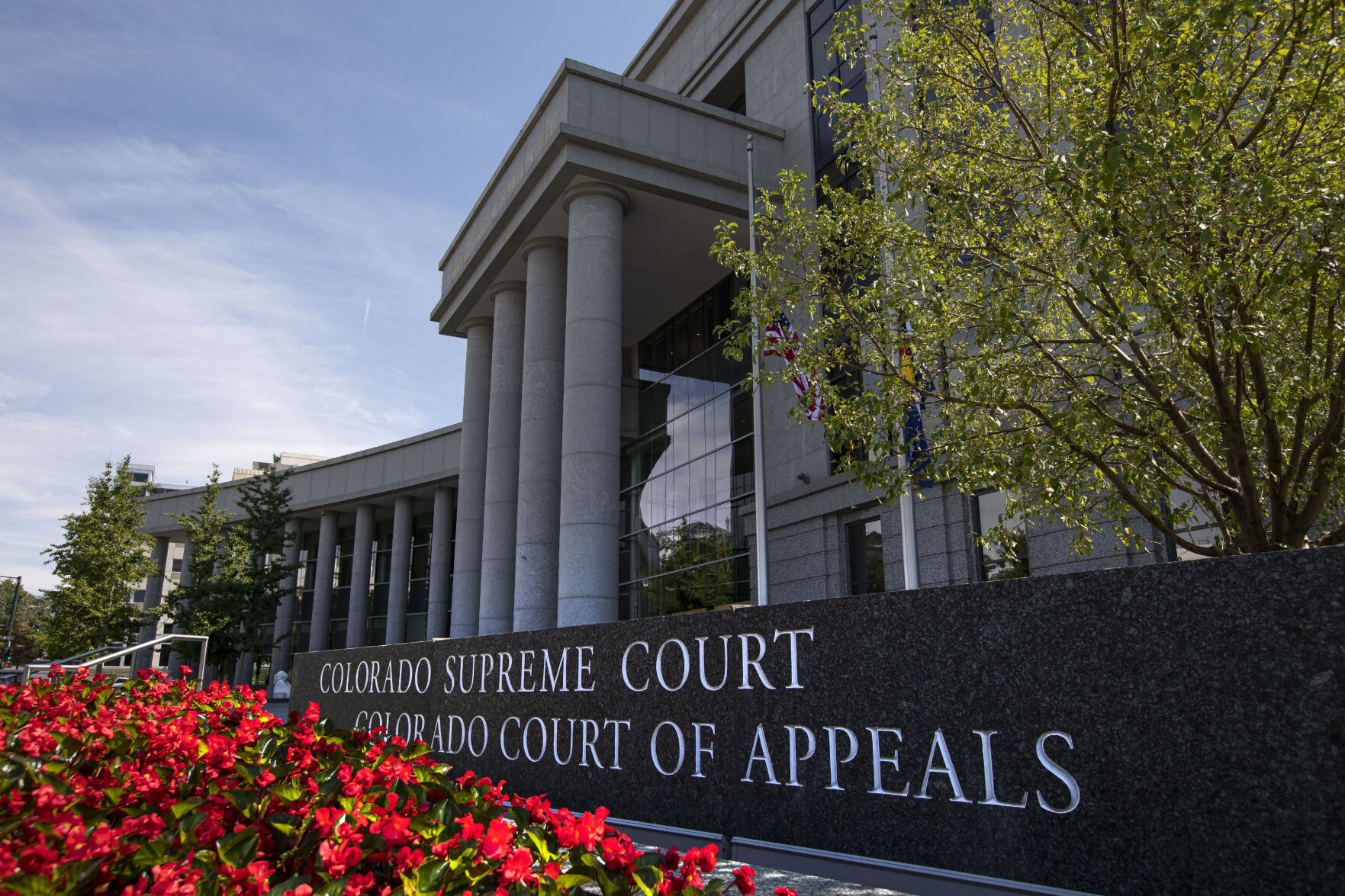
Colorado’s second-highest court last week ruled that the state must disclose general details about child abuse reports at group living facilities in response to an open records request, provided no identifying information is included.
By 2-1, a panel of the Court of Appeals concluded the law generally shielding child abuse and neglect reports from disclosure is ambiguous. Confidentiality applies to the reports themselves, as well as the “name and address of any child, family, or informant,” plus other identifying information.
The Colorado Department of Human Services argued that addresses are always confidential, while 9News and the Colorado Sun countered it was not categorically an infringement on confidentiality to know the number of reports stemming from a particular address, without identifying anyone associated with each report.
The court’s majority agreed with the news outlets.
“In sum, we conclude that the legislature intended to prohibit disclosure of only information that would identify a particular child, family, or informant associated with a child abuse or neglect report,” wrote Judge Elizabeth L. Harris for herself and Judge Christina F. Gomez.
Judge Neeti V. Pawar, writing in dissent, deemed it “unreasonable” for addresses on child abuse and neglect reports to be disclosable sometimes, but not when they could identify the people involved with the alleged abuse.
“In my view, the only reasonable reading is that names and addresses in child abuse reports are always confidential,” she wrote.
Case: Colorado Sun v. Brubaker
Decided: November 2, 2023
Jurisdiction: Denver
Ruling: 2-1
Judges: Elizabeth L. Harris (author)
Christina F. Gomez
Neeti V. Pawar (dissent)
Background: Denver’s Tennyson Center to close its residential program after runaways, overdoses and child’s death
The plaintiffs took the department to court after it denied journalists’ requests for high-level information related to child abuse – specifically, the number of calls made to the child abuse hotline over a three-year period for three facilities: Tennyson Center, Mount Saint Vincent and Cleo Wallace. Each residential facility housed between 24 and 112 children.
The open records requests from 9News’ Jeremy Jojola and the Sun’s Jennifer Brown came after news broke in 2021 that the Tennyson Center in Denver was shutting down, having generated 113 abuse and neglect complaints in 2020. The state offered to provide the total number of reports and tips investigated, but alleged that breaking the data down by facility was “likely to identify the address of the child or informant” in violation of the law.
Denver District Court Judge Darryl F. Shockley subsequently agreed with the department’s justification for denying the request, although he acknowledged it would be “difficult or even impossible” to identify specific people using the requested data.
On appeal, the news outlets contended it would be, in fact, impossible to identify individuals through the information they sought.
“Merely disclosing the number of phone calls, placed over a three-year period, to the child abuse hotline from a facility that housed hundreds of anonymous children and was staffed by hundreds of anonymous staff members, cannot possibly ‘identify’ (e.g., reveal the name of) any ‘child, family, or informant’ who was involved in any of those calls,” wrote attorney Steven D. Zansberg, who also represents Colorado Politics and the Gazette newspapers.
The state insisted that the larger issue was the use of piecemeal records requests to conceivably stitch together the identities of child abuse victims or reporters.
“Names and addresses. This is information that can be linked together to identify an individual,” said Second Assistant Attorney General Ann H. Pogue during oral arguments last year. “While the public might know where these facilities are, what they don’t know is whether there are children that reside there who are the subject of these abuse or neglect records. And that is what the statute is designed to protect.”
“No, the statute is designed to protect the identity of the children who are the subject of the abuse or neglect reports,” responded Harris. “They’re still not gonna know that.”
The appellate panel focused on a decision from last August out of the U.S. Court of Appeals for the 10th Circuit, which found the same law was unconstitutional to the extent it criminalized disclosure of non-identifying information. Pogue argued the decision did not affect the news outlets’ case because the information sought was identifying in nature.
“My concern is that this is precisely the argument that DHS raised in the 10th Circuit and the 10th Circuit said, ‘We are not buying it’,” said Harris. “Why does DHS want to keep this information hidden in the first place?”
Harris elaborated in the Nov. 2 decision that the department’s blanket rule against releasing data with addresses would mean it could withhold information even in cases where it was not possible to identify any individual person.
Such an interpretation “could be an unconstitutional restriction on free speech,” she added.
The panel returned the case to the trial court to determine if releasing the child abuse data by address would compromise any identifying information.
The case is Colorado Sun et al. v. Brubaker.


Denver murder conviction reversed for incomplete self-defense instruction
Michael Karlik
michael.karlik@coloradopolitics.com
Updated 14 hours ago
Colorado’s second-highest court reversed a defendant’s murder conviction last week because a Denver judge gave an incomplete instruction to the jury about the man’s right to self-defense. Donald R. Gonzales and Gary McLaughlin met up in a Capitol Hill parking...
Colorado lawmaker, House leaders named in workplace-retaliation lawsuit
Marianne Goodland
marianne.goodland@coloradopolitics.com
Updated 17 hours ago
A former legislative aide has filed a lawsuit alleging she was mistreated, illegally directed to perform campaign work and harmed by a House leadership structure she charged was fragmented, politicized and ineffective at protecting employees. The lawsuit, filed by Jennifer...

Federal judge hears arguments about Colorado’s 3-day gun purchase waiting period
Michael Karlik
michael.karlik@coloradopolitics.com
Updated 22 hours ago
A federal judge heard arguments on Monday about the constitutionality of a 2023 Colorado law that generally imposes a three-day waiting period on firearm purchases after the initiation of a background check. The test that the U.S. Supreme Court created...
Colorado Supreme Court intervenes in Weld County prosecution dismissed due to Missy Woods misconduct
Michael Karlik
michael.karlik@coloradopolitics.com
Updated 14 hours ago
The Colorado Supreme Court ordered a Weld County trial judge last week to respond to the district attorney’s claim that he improperly dismissed a criminal case because of “outrageous” conduct by the Colorado Bureau of Investigation. Daniel Lee Eatinger stood...
Schoolchildren’s presence at child sex-related trial did not harm Arapahoe County defendant, appeals court says
Michael Karlik
michael.karlik@coloradopolitics.com
Updated 4 days ago
Colorado’s second-highest court decided on Thursday that the presence of a group of schoolchildren on the first day of a child sexual exploitation trial did not violate an Arapahoe County defendant’s constitutional right to a fair trial. Prosecutors charged Jerry...
Appeals court cites week-old Colorado law to reinstate child neglect case at child, father’s request
Michael Karlik
michael.karlik@coloradopolitics.com
Updated 3 days ago
Colorado’s second-highest court invoked a new state law for the first time on Thursday and reinstated a child neglect case that both the child and her father wished to reopen. House Bill 1227 took effect on Aug. 12, reversing a...
Colorado Supreme Court names William Hood as next chief justice
Michael Karlik
michael.karlik@coloradopolitics.com
Updated 5 days ago
The Colorado Supreme Court has selected Justice William W. Hood III to be the next chief justice, the judicial branch announced on Friday. Hood will succeed Chief Justice Monica M. Márquez, who took over the role in July 2024. “I...
Family of slain Lakewood teacher releases statement as murder suspect makes first court appearance
Matt Kyle
matt.kyle@denvergazette.com
Updated 2 days ago
Patrick Theodore Barnett, the Lakewood man accused of killing his wife, a Jeffco Public Schools art teacher, made his first court appearance Friday morning as his wife’s family looked on. The status conference hearing was held before District Court Judge...
Appeals court upholds Park County trophy hunting conviction
Michael Karlik
michael.karlik@coloradopolitics.com
Updated 4 days ago
Colorado’s second-highest court clarified on Thursday that a defendant may stand convicted under the state’s trophy hunting laws if he abandons a bear carcass but returns later to remove the meat. Under Colorado law, it is a felony to detach...
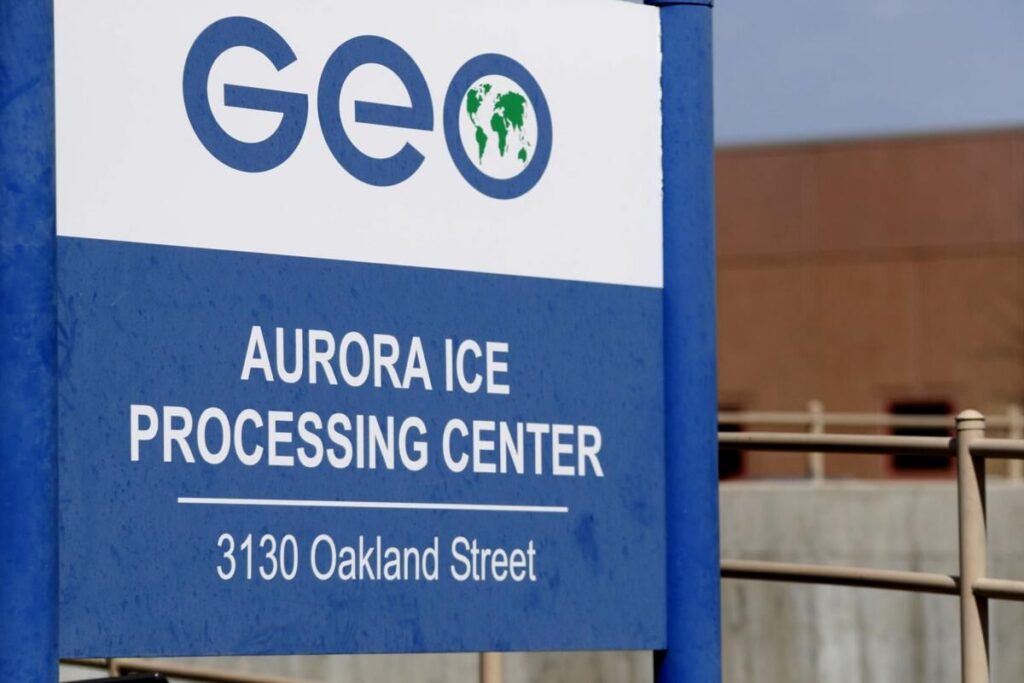
Judge grants partial injunction to GEO in fight against state health inspection law
Kyla Pearce
kyla.pearce@gazette.com
Updated 6 days ago
A judge ruled Thursday that The GEO Group does not have to follow parts of a new state law requiring more frequent health and safety inspections at the U.S. Immigration and Customs Enforcement processing center in Aurora. Under the order...
PREV
PREVIOUS

Deborah Flora wins endorsement from Jane Norton in Colorado's 4th Congressional District GOP primary
Former Colorado Lt. Gov. Jane Norton on Friday endorsed fellow Republican Deborah Flora in the GOP primary for the 4th Congressional District seat held by U.S. Rep. Ken Buck, who announced last week that he isn’t running for reelection. Calling Flora “a principled leader who won’t back down from a fight,” Norton said in a […]
Republicans line up to challenge Congressman Kogovsek | A LOOK BACK
Forty Years Ago This Week: Republican Denver attorney Phil Klingsmith told The Colorado Statesman that he was discussing announcement dates with party officers to throw his hat in the ring against Democratic U.S. Rep. Ray Kogovsek of the 3rd Congressional District. Klingsmith was seen by Statesman reporters in private discussions with both political director Kay […]