

Bison roundup at South Dakota state park draws crowds, boosts species | OUT WEST ROUNDUP

SOUTH DAKOTA
Rare bison roundup rustles up hundreds to maintain health of the species
South Dakota cowboys and cowgirls rounded up a herd of more than 1,500 bison on Sept. 29 as part of an annual effort to maintain the health of the species, which has rebounded from near-extinction.
Visitors from across the world cheered from behind wire fencing as whooping horseback riders chased the thundering, wooly giants across hills and grasslands in Custer State Park. Bison and their calves stopped occasionally to graze on blond grass and roll on the ground, their sharp hooves stirring up dust clouds.
Each year Custer State Park holds one of the nation’s few bison roundups to check the health of the bison and vaccinate calves, park Superintendent Matt Snyder said.
As many as 60 million bison, sometimes called buffalo in the U.S., once roamed North America, moving in vast herds that were central to the culture and survival of numerous Native American groups.
They were driven to the brink of extinction more than a century ago when hunters, U.S. troops and tourists shot them by the thousands to feed a growing commercial market that used bison parts in machinery, fertilizer and clothing. By 1889, only a few hundred remained.
There are now more than 50,000 bison in the U.S., said South Dakota Gov. Kristi Noem, a horseback rider who took part in the roundup.
The park’s herd began with 36 animals bought in 1914. A state ecologist estimated the park can currently sustain about 1,000 bison based on how snow and rain conditions affected the grasslands this past year, according to Snyder.
The other 500 or so will be auctioned off, and over the next week, officials will decide which bison will remain and which will go. About 400 calves are born in the park each year.
ARIZONA
State to cancel leases that let Saudi-owned farm pump groundwater
WASHINGTON – Arizona governor Katie Hobbs said her administration is terminating state land leases that for years have given a Saudi-owned farm nearly unfettered access to pump groundwater in the dry southwestern state.
On Oct. 2, Hobbs, a Democrat, said the state had canceled Fondomonte Arizona’s lease in western Arizona’s Butler Valley and would not renew three other leases up for renewal there next year.
An investigation by the governor’s office found that the foreign-owned farm had violated some of its lease terms. Hobbs called it unacceptable that the farm “continued to pump unchecked amounts of groundwater out of our state while in clear default on their lease.”
Fondomonte Arizona, a subsidiary of Saudi dairy giant Almarai Co., grows alfalfa in Arizona that feeds livestock in the water-stressed Gulf kingdom.
Through a spokesperson, Fondomonte said it would appeal the governor’s decision to terminate its 640-acre lease in Butler Valley. Altogether, Fondomonte farmed about 3,500 acres in the rugged desert area west of Phoenix.
Fondomonte raised eyebrows when in 2014 it purchased nearly 10,000 acres of land for $47.5 million about 20 miles away from Butler Valley in Vicksburg, Arizona. Since then, worsening drought in Arizona has brought renewed attention to the company’s water use and the broader issues of foreign-owned farms and groundwater pumping.
The Arizona governor’s office said the State Land Department decided not to renew three other leases the company had in Butler Valley due to the “excessive amounts of water being pumped from the land – free of charge.”
Foreign entities and individuals control roughly 3% of U.S. farmland, according to the U.S. Department of Agriculture. Canada is the largest holder – mainly of forestland.
OKLAHOMA
Federal judge clears way for ban on medical care for transgender youth
OKLAHOMA CITY – A federal judge in Tulsa declined to stop a new law from taking effect that makes it a felony crime for health care workers in Oklahoma to provide gender-affirming medical care to young transgender people.
U.S. District Court Judge John Heil III issued his order on Oct. 5 denying a motion for a preliminary injunction sought by the plaintiffs, who include a medical provider and family members of transgender children in Oklahoma. Heil wrote that the plaintiffs had not demonstrated that parents have a fundamental right to choose such medical care for their children.
The new law, which bans medical treatments like puberty-blocking drugs or hormones for those younger than 18, was passed by Oklahoma’s Republican-controlled Legislature and signed by Gov. Kevin Stitt in May. Enforcement had been on hold under an agreement between the plaintiffs and Oklahoma Attorney General Gentner Drummond, whose office is defending the law.
Oklahoma’s law includes a six-month transition period for minors who were already receiving puberty-blocking drugs or cross-sex hormones. That period ends in November.
Attorneys for the plaintiffs, including the American Civil Liberties Union, the ACLU of Oklahoma, Lambda Legal and the law firm Jenner & Block LLP, issued a joint statement vowing an appeal and decrying the judge’s decision as a “devastating result for transgender youth and their families.”
NEW MEXICO
Congressional map drawn by Democrats can stand, judge says
SANTA FE – New congressional boundaries approved by Democrats that divided up a politically conservative oil-producing region in New Mexico don’t violate the state constitution, a judge ruled in an order published on Oct. 6.
Judge Fred Van Soelen wrote that the redistricting plan enacted by Democratic state lawmakers in 2021 succeeded in substantially diluting votes of their political opponents, but that the changes fell short of “egregious” gerrymandering.
An attorney for the state Republican Party indicated that the decision will be appealed to the New Mexico Supreme Court. A final decision could influence which party represents a congressional swing district along the U.S. border with Mexico where partisan control has flipped three times in three elections.
Under the map that’s being challenged, Democratic U.S. Rep. Gabe Vasquez in 2022 ousted a first-term Republican incumbent by a competitive 0.7% margin of victory. New Mexico’s 2nd District is one of about a dozen that are in the spotlight nationally as Republicans campaign to keep their slim U.S. House majority in 2024.
Carter Harrison, an attorney for the state GOP, highlighted the judge’s conclusion that the predominant purpose of New Mexico’s redistricting plan was to entrench Democratic Party officials in power by diluting votes.
Leading Democratic state senators said they “respect and appreciate” the judge’s decision and that their redistricting plan creates “three competitive urban/rural congressional districts.”
Utility returns millions to customers who paid after coal plant closed
SANTA FE – New Mexico utility regulators have again approved a settlement calling for monthly credits averaging about $9.28 per customer from the state’s largest electricity utility over the course of a year.
The agreement announced on Sept. 21 by the state Public Regulation Commission aims to return to customers $115 million collected by Public Service Co. of New Mexico for operations at the San Juan Generating Station – even after the last of four units of the massive coal-fired plant closed last September.
The pact still needs to be reviewed by the state Supreme Court, which sent back to the commission an agreement reached in August between the utility, New Mexico Attorney General Raúl Torrez and several environmental and consumer advocacy organizations.
But ratepayers are expected to see credits on their accounts beginning in October.
PNM serves more than 525,000 residential and business customers. Company CEO Pat Vincent-Collawn told the Albuquerque Journal the utility plans to finish retiring the coal-fired plant and was pleased to reach agreement with the parties involved.
At its peak, the San Juan plant was capable of producing almost 1,850 megawatts of electricity for delivery – serving millions of homes and businesses in New Mexico and parts of Arizona and California.


10th Circuit rejects invitation for full-court review of tax-avoidance case
Michael Karlik
michael.karlik@coloradopolitics.com
Updated 1 hour ago
The Denver-based federal appeals court declined to reconsider the standards for holding entities liable for their tax-avoidance schemes, with a majority of judges voting against full-court review on Monday. In April, a three-judge panel of the U.S. Court of Appeals...
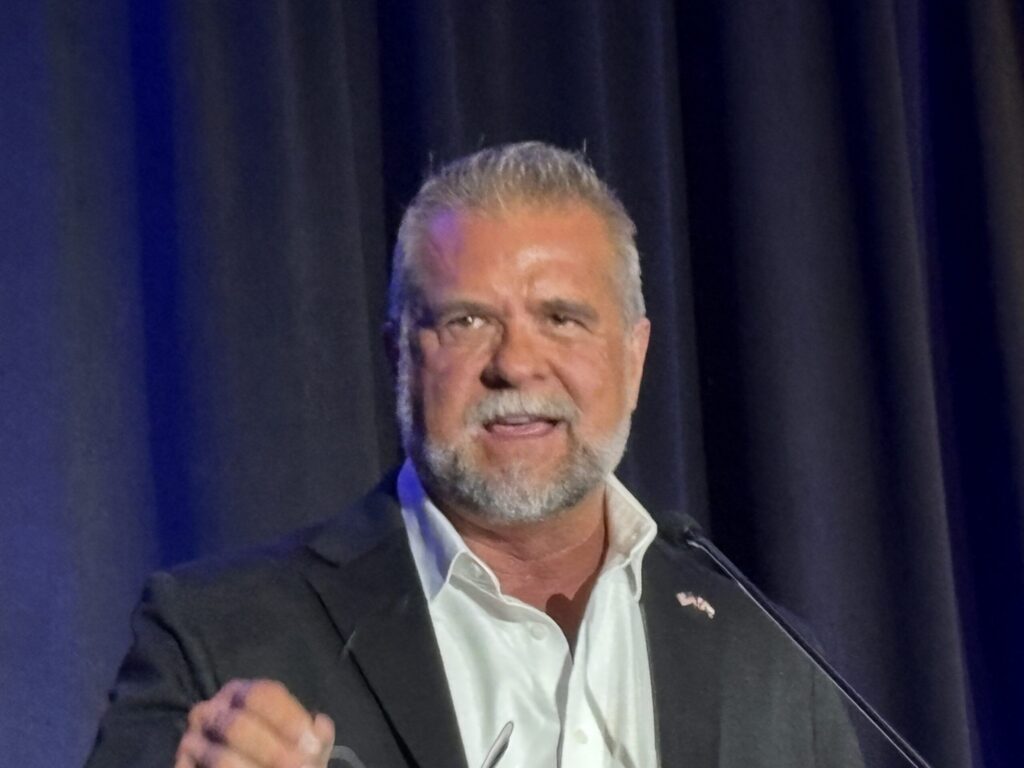
GOP gubernatorial candidate Victor Marx pushes aggressive water-storage expansion at Colorado Water Congress
Marianne Goodland
marianne.goodland@coloradopolitics.com
Updated 15 minutes ago
Victor Marx, the Republican nominee for governor, took the spotlight Wednesday during the opening day of the Colorado Water Congress, laying out how he says the state should approach its water future. Marx told the standing-room-only audience in Steamboat Springs...

Colorado AG sues GEO Group over noncompliance with tuberculosis investigation
Kyla Pearce
kyla.pearce@gazette.com
Updated 3 minutes ago
The Colorado Attorney General’s Office on Wednesday filed a lawsuit against GEO Group, which operates the Aurora ICE Processing Center, alleging the company failed to comply with a state tuberculosis investigation. Weiser’s lawsuit demands that GEO provide “critical information” needed...

U.S. Rep. Lauren Boebert stresses storage, forest health and Upper Basin rights at Colorado Water Congress
Marianne Goodland
marianne.goodland@coloradopolitics.com
Updated 3 minutes ago
Republican U.S. Rep. Lauren Boebert used her brief Wednesday appearance at Colorado Water Congress to tout her record on delivering water projects for the state and her district. Boebert, who is running for her second term representing Colorado’s 4th Congressional...

Trump has a 96% endorsement success rate. Here are the Republicans he’s backed who have lost
Mabinty Quarshie
mabinty-quarshie@coloradopolitics.com
Updated 3 hours ago
President Donald Trump’s 2026 primary endorsement success rate remains staggeringly high, but the president has seen a growing number of losses stack up in recent weeks. According to Ballotpedia, Trump has endorsed in 313 U.S. Senate, U.S. House, and state...
Colorado judge blasts state forensics lab in dismissing child sex case
Jenny Deam
jenny.deam@gazette.com
Updated 3 hours ago
In a potentially widely consequential action, a Weld County district judge dismissed a child sexual assault case, citing the ongoing scandal at the Colorado Bureau of Investigation’s forensic lab that “has left a dark mark on the history of Colorado...
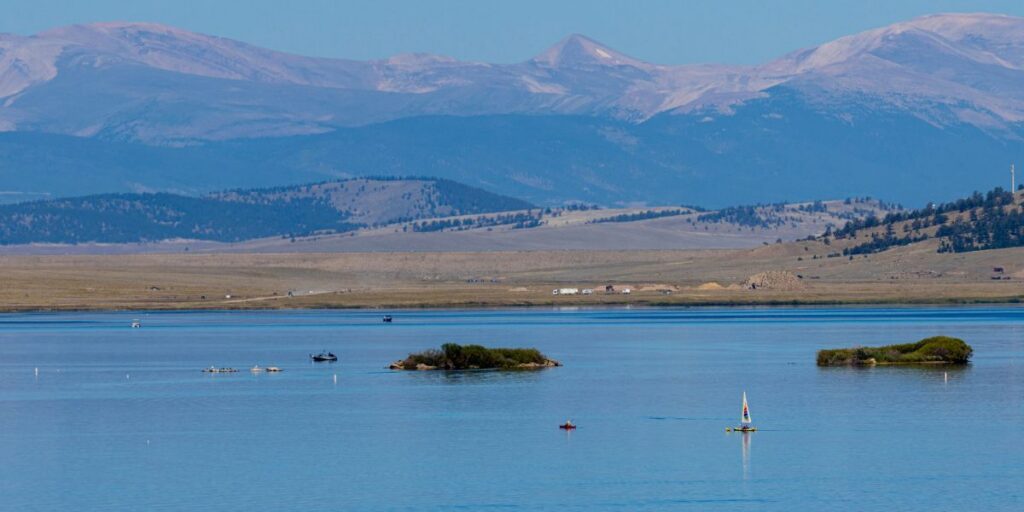
Colorado officials urge stronger water safety after 6 drownings and multiple Front Range rescues
Elizabeth Pond
elizabeth.pond@denvergazette.com
Updated 7 hours ago
At least eight people have drowned in Front Range waters since mid-March, including two at Eleven Mile Reservoir, three at Cherry Creek Reservoir, one at Rockbridge Lake and two at Lake Pueblo State Park. In the wake of these deaths,...

Vehicle registration crackdown across Front Range starts next week
Nick Smith
nick-smith@coloradopolitics.com
Updated 4 hours ago
Colorado drivers with expired tags or unregistered vehicles still have time to get registered before a scheduled enforcement crackdown starts next week. According to an announcement from the Colorado Springs Police Department, a multi-agency enforcement effort will happen across the...

Aurora grapples with affordable housing needs, deficits
Kyla Pearce
kyla.pearce@gazette.com
Updated 5 hours ago
Aurora is grappling with affordable housing needs as demand for project funding increases and the state cuts grant money. Currently, the city needs about 12,000 affordable housing units, Martin Petrov at Aurora Housing Authority told members of the Housing, Neighborhood...

Wheat Ridge considers ordinance to restrict drone use in public spaces
Matt Kyle
matt.kyle@denvergazette.com
Updated 5 hours ago
Drone users may soon have to abide by new restrictions should they wish to fly in Wheat Ridge. During Monday night’s City Council meeting, council members discussed a proposed ordinance that would restrict the use of remote-controlled drones within city...
PREV
PREVIOUS
Get to know Aurora's mayoral candidates | DENVER VOTERS GUIDE
With Aurora’s November election rapidly approaching, city residents will have several big decisions to make in choosing the next city leaders. Voters will choose between several candidates for mayor, at-large councilmembers and councilmembers for districts (called “wards”) IV, V and VI. Three candidates, Mike Coffman, Juan Marcano and Jeffrey Sanford, are running for mayor, a […]

'Things Fall Apart' – A title for our times | SONDERMANN
The book is simply called, “Things Fall Apart.” Written 65 years ago by Nigerian author Chinua Achebe, it portrays pre-colonial life in Igboland, now southeastern Nigeria. Achebe’s beautiful work was one of the first African novels to receive international acclaim. In partaking of the news over recent days and weeks, the book title sprung back […]