

Denver mayor picks south Santa Fe Drive site for first micro-community
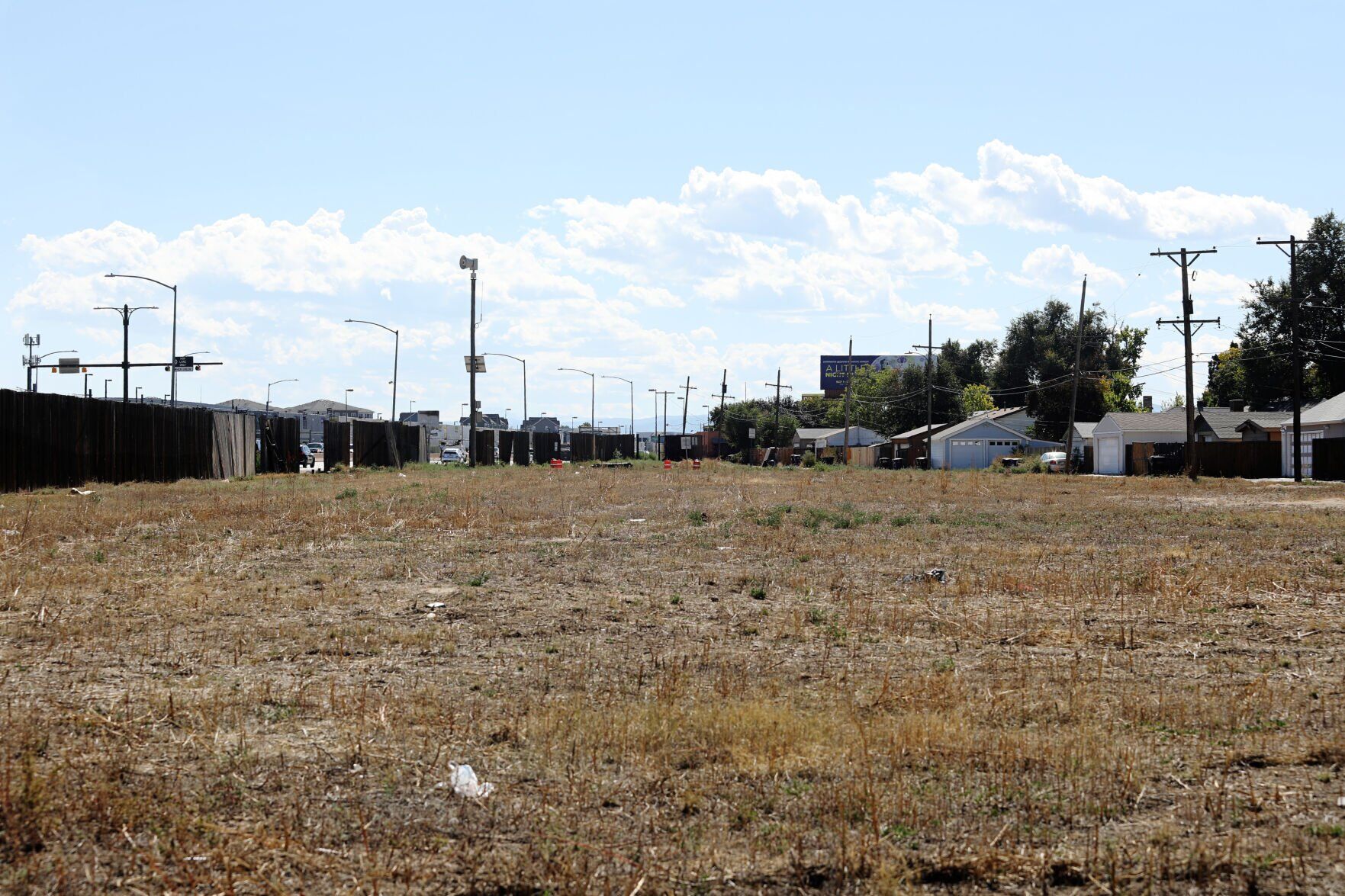
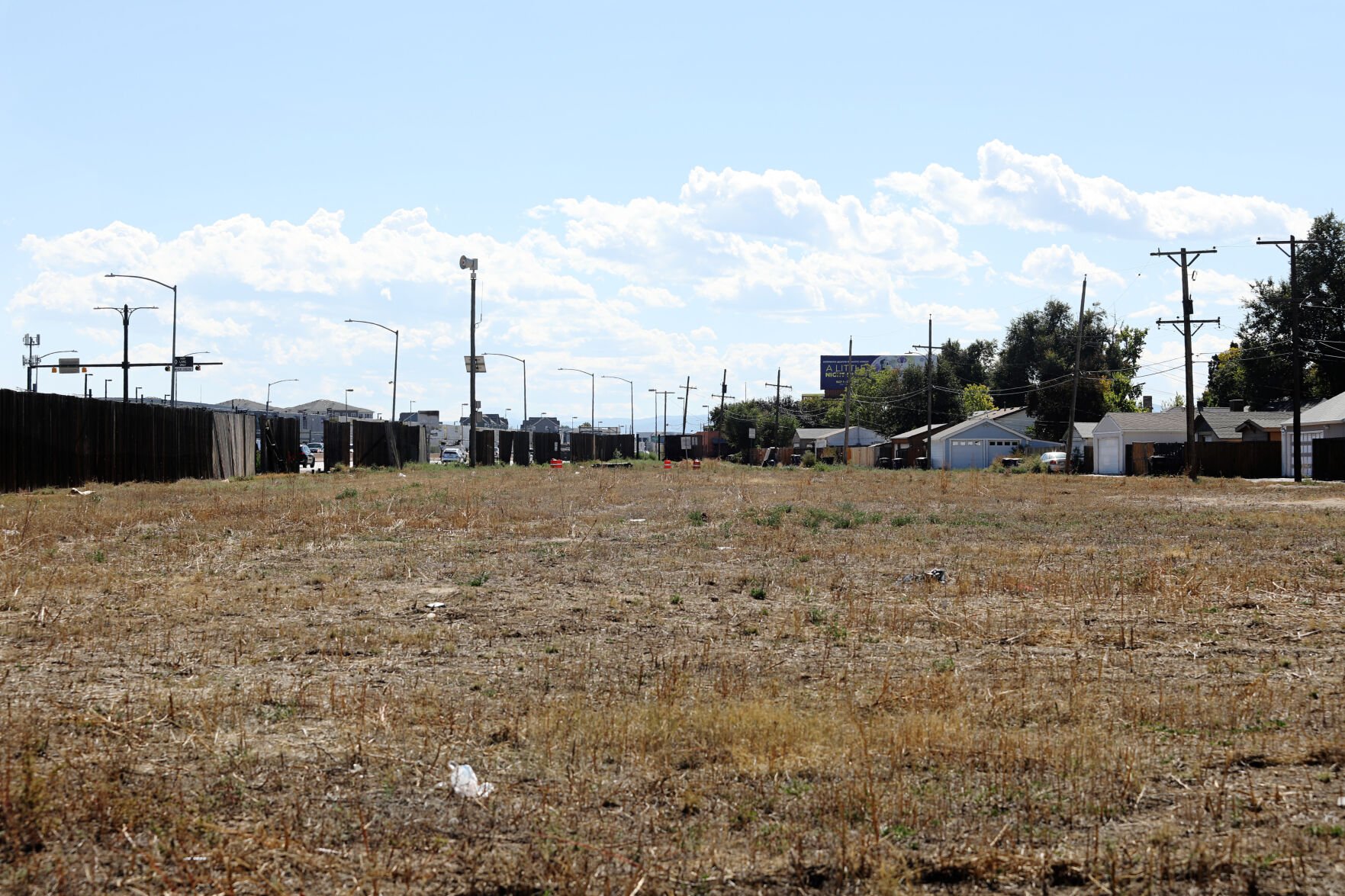
Denver Mayor Mike Johnston announced Monday that Denver’s first micro-community to house homeless people will be built along South Santa Fe Drive.
Johnston, who has vowed to house 1,000 homeless people by year’s end, said city officials will break ground soon at 2301 S. Santa Fe Drive.
But nearby residents have expressed concern about the site being toxic ground. It was once a Denver Radium Superfund Site.
The micro-community is planned to house 120 people, open before year’s end and operate 24/7, the mayor’s office said in a news release.
Denver plans to break ground on the site, currently an empty lot, in the coming week.
“This development is a significant step forward in the ongoing effort to combat homelessness and improve the lives of those in need with our city,” the mayor’s office said, noting the site “has been carefully chosen to accommodate the specific needs of its future residents.”
Micro-communities are a strategy by Johnston to put homeless people in a community of air conditioned and heated shelters, with wraparound services such as mental health treatment and employment help, bathrooms, and community spaces. Sites are monitored by staff 24/7.
The goal is to provide temporary housing to transition homeless people into more permanent, affordable housing solutions, the mayor said.
Micro-communities are perhaps the most controversial housing strategy Johnston has put forth. The city proposed 11 sites across the city where some nearby residents have expressed concerns about traffic, health, drug-use, crime, and quality of living.
In this case, nearby residents said it is an unsafe area due to formerly toxic land. The site used to have a toxic waste dump within a five-block radius, according to nearby resident Daniel Reiling.
The Santa Fe Drive and Evans Avenue area became subject to controversy in the 1980s and 1990s when radioactive material was allowed to be disposed on site, rather than being excavated or removed, Overland Park Neighborhood records show.
The plot is currently owned by the Colorado Department of Transportation, according to Denver Assessor records.
According to the Colorado Department of Public Health and Environment’s website: “In 2001, the United States, the State of Colorado and the S.W. Shattuck Chemical Company settled the natural resource damage claim resulting from the release of hazardous substances from the Denver Radium Superfund Site, in southwest Denver, northeast of the intersection of Evans Avenue and Santa Fe Drive.”
A meeting Sunday night brought in concerned residents.
“We really didn’t have a choice as to whether or not they cared,” Reiling said about concerns shared with officials.
Reiling has a bachelor’s degree in architecture and worked in commercial real estate for multi-family housing. He has researched the housing crisis and how zoning affects housing affordability and said the mayor has not explored every option.
In response to concerns raised by neighbors about the site, Johnston told the Denver Gazette, “I think the neighbors have been active partners in it.”
He added, “I think they’ve engaged in a really generous spirit, which is they both want to see it succeed, and they want to provide safety in the neighborhood and we are committed to doing both. So I thought this has been a really good symbol of the broader progress.
“We made sure to deliver what the neighborhood expects in terms of accountability and safety.”
One nearby resident, Estancia Montoya, lives less than three blocks away from 2301 S. Santa Fe Drive. She said 70 letters were sent opposing the Santa Fe micro-community.
“We were all upset, we were all saying we do not want this,” Montoya said. “Everyone is still going to fight.”
Each site undergoes environmental assessments for zoning, building, fire, safety, public health concerns, and traffic/transportation impacts, according to the mayor’s office.
“This future micro-community will help get unhoused neighbors off the street and into safe, stable, supportive transitional housing while also helping us close unsafe encampments and keep neighborhoods closed to future camping,” Johnston said in the news release. “The groundbreaking marks important progress in our goal to get 1,000 unhoused Denverites into transitional housing before Dec. 31.”
Reiling, however, said the micro-community site was considered with “no information regarding solid plans for the safety of our neighborhood,” he said. “Really disappointing for people who are scared about this.”
The Santa Fe micro-community will be fenced and gated to “ensure the safety and security of its residents, neighbors and community,” the mayor’s office said.
Facilities and services at the micro-community to support Johnston’s goal of transitional housing include:
- Employment assistance and resources
- Supportive services
- Restroom facilities
- Fully-equipped communal kitchens
- On-site laundry facilities
- Trash disposal services
“Mayor Johnston and his team will continue working to identify additional micro-community locations,” the mayor’s office said. “The work will include evaluating community feedback to deliver the best solution both for unhoused Denverites and for neighborhoods and businesses.”


Colorado Politics Calendar Apr. 6-12
Rachael Wright, Special to Colorado Politics
rachael.wright@coloradopolitics.com
Updated 3 days ago
CoPo’s weekly political calendar will help you find political and public-policy events throughout Colorado. It includes candidate and issue campaign events, public policy meetings, court hearings, state and local party conventions, assemblies, debates, rallies, parades, speaking engagements, traveling dignitary appearances,...

Democrats rebounding without learning necessary lessons | SONDERMANN
Thelma Grimes
thelma.grimes@coloradopolitics.com
Updated 2 days ago
“When we fight, we win!” That, reportedly, was the chant heard over and over again at the Colorado Democratic Assembly a week ago. It suggests that pugilism has been the piece missing from the Democratic toolkit. Perhaps it was just...
An April Fool’s Day to remember | Capitol M | Week of April 4, 2026
Marianne Goodland
marianne.goodland@coloradopolitics.com
Updated 2 days ago
The lighter side of the Capitol, and if light were weight, the Capitol would have lifted off better than the Artemis II rocket on April Fool’s Day. There was a plethora of Fools at the Capitol for April Fool’s Day...
Federal judge sides with Mesa County school district in ex-student’s First Amendment claims
Michael Karlik
michael.karlik@coloradopolitics.com
Updated 9 hours ago
A federal judge concluded last week that Mesa County Valley School District 51 and three of its administrators did not violate the First Amendment rights of a former student when they imposed minor discipline in response to disruptive behavior. In...

Colorado Supreme Court intervenes in 4 ongoing cases
Michael Karlik
michael.karlik@coloradopolitics.com
Updated 12 hours ago
The Colorado Supreme Court recently moved to intervene in four ongoing cases, including two criminal prosecutions, a civil lawsuit, and a child welfare proceeding. At least four of the court’s seven members must agree to hear a case outside of...

Colorado ski resorts announce early closures amid historic snowpack lows, high temperatures
Kyla Pearce
kyla.pearce@gazette.com
Updated 13 hours ago
Vail Resorts is the latest area to announce season closure Wednesday As Colorado’s historically low snowpack year comes to a close and spring conditions take over the mountains, the state’s major ski resorts are announcing closing dates — some of...

Kentucky Gov. Andy Beshear set to headline Colorado Democrats’ annual fundraising dinner
Ernest Luning
ernest.luning@coloradopolitics.com
Updated 13 hours ago
Kentucky Gov. Andy Beshear, one of the Democrats’ top 2028 presidential prospects, is scheduled to deliver the keynote address at the Colorado Democratic Party’s annual fundraising dinner in June in Denver, the party said Friday. Serving his second term as...
Gov. Polis names new leaders for Colorado health agencies in wake of Medicaid turmoil
Marianne Goodland
marianne.goodland@coloradopolitics.com
Updated 14 hours ago
Gov. Jared Polis, on Thursday, announced he was appointing Gretchen Hammer to serve as acting executive director of the Colorado Department of Health Care Policy and Financing, and deputy executive director Stephanie Beasley to become the next commissioner of the...
Federal judge releases man immediately as consequence for immigration judge disobeying orders
Michael Karlik
michael.karlik@coloradopolitics.com
Updated 12 hours ago
A federal judge ordered a man’s immediate release from immigration detention on Thursday after finding an immigration judge disregarded his prior orders requiring a bond hearing. For the past year, Colorado’s federal district court has faced a flood of “habeas corpus”...
Colorado sues Trump administration, calling new election order ‘unconstitutional’
Marissa Ventrelli
marissa.ventrelli@coloradopolitics.com
Updated 16 hours ago
Colorado Attorney General Phil Weiser has joined a multistate coalition suing President Donald Trump over a new executive order on elections, arguing the directive unlawfully intrudes on states’ authority to run their own voting systems and threatens access to mail...
PREV
PREVIOUS

Polis creates new group, seeks legislators' support in creating permanent entity on criminal justice
Following the legislature’s decision to dissolve a commission on criminal and juvenile justice, Gov. Jared Polis on Monday announced the establishment of a new group to carry on some of that work but ultimately help create a permanent entity that would regularly recommend policy changes for lawmakers to tackle. In an executive order, the governor […]

No licenses needed for funeral home directors in Colorado, but laws could change after 115 bodies found in Penrose
The funeral home industry might see new regulations after 115 improperly stored bodies were discovered in a building in Penrose last week. Six days after a horrific smell led to the discovery of the bodies at the Return to Nature Funeral Home, numerous officials were working on the investigation around the building Monday, including the […]