

Polis creates new group, seeks legislators’ support in creating permanent entity on criminal justice
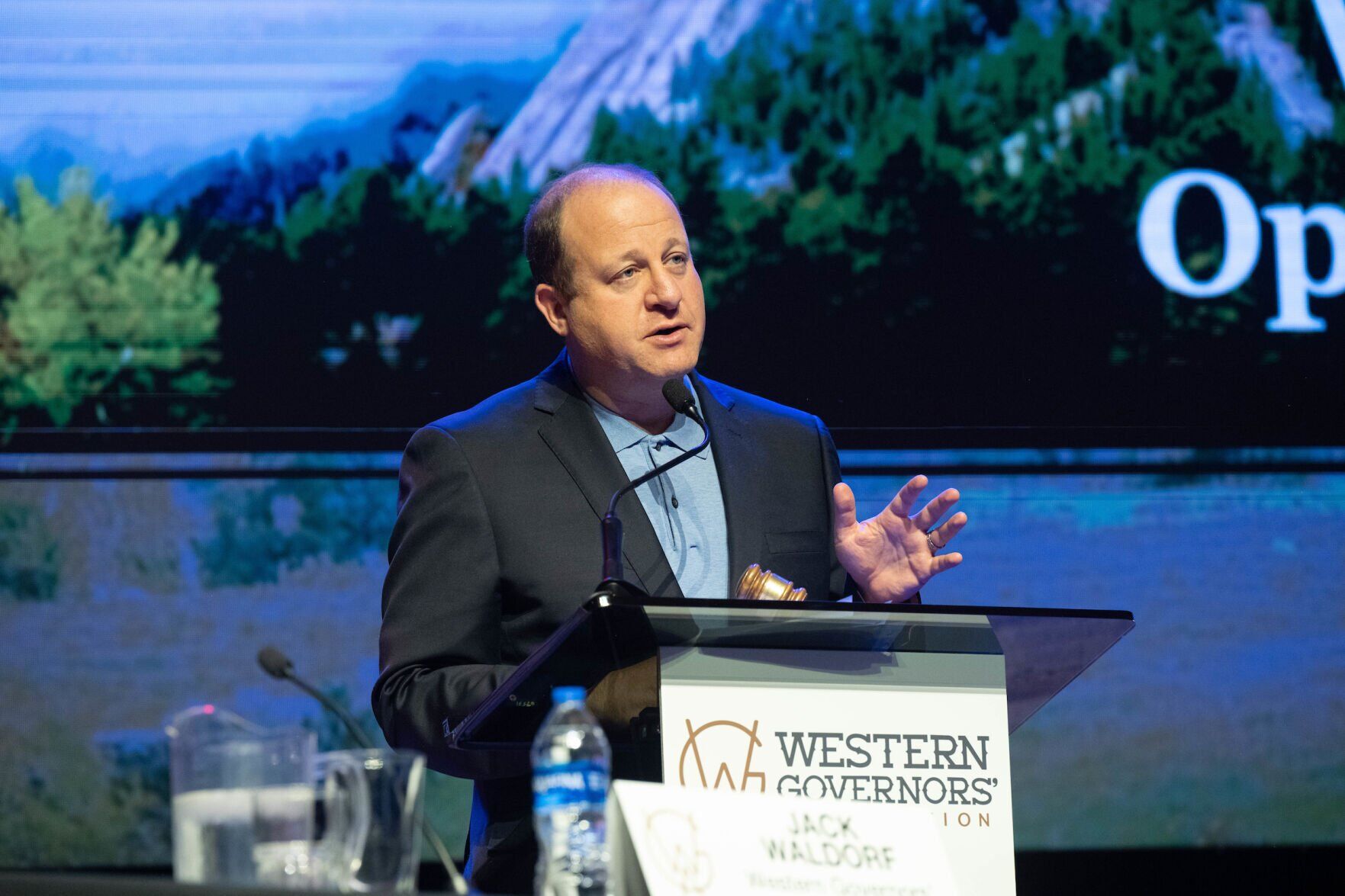
Following the legislature’s decision to dissolve a commission on criminal and juvenile justice, Gov. Jared Polis on Monday announced the establishment of a new group to carry on some of that work but ultimately help create a permanent entity that would regularly recommend policy changes for lawmakers to tackle.
In an executive order, the governor created the Working Group on Transforming Criminal and Juvenile Justice, tasking the body to study evidence-based best practices, conduct outreach and develop a recommendation by March 1 on forming an entity – or entities – similar to the Colorado Commission on Criminal and Juvenile Justice.
Lawmakers decided not to extend the life of the commission beyond September of this year.
Polis told Colorado Politics that not having such a permanent entity is “shortsighted,” particularly in light of what the Colorado Commission on Criminal and Juvenile Justice accomplished – more than 100 bills and 150-plus policy recommendations.
The commission was successful, Polis said, because it involved legislators but also engaged prosecutors, public defenders, law enforcement, victim advocates, human services and others in coming up with common-sense recommendations that were then introduced in the legislature.
“There is ongoing work around juvenile justice, sentencing, and making a thoughtful approach (to criminal justice),” Polis said.
In a statement, the governor’s office said the state has the opportunity to establish a “permanent entity or entities that will continue the state’s work to improve the future of Colorado’s justice system.”
“Making Colorado one of the Top 10 safest states will take working together. This executive order brings together experts to help provide a path for the important work ahead and ensure that criminal and juvenile justice-related policies work to make Colorado safer and improve outcomes across the system,” Polis said in the news release. “This action includes a wide range of stakeholders and our administration looks forward to working with them and the legislature on data-driven ideas from across the spectrum on this important issue.”
The state launched the Colorado Commission on Criminal and Juvenile Justice in 2007, the goal of which was to improve the state’s criminal justice system and evaluate ways to make practices and laws more effective.
Under his new order, the Working Group on Transforming Criminal and Juvenile Justice will consist of 17 members with different lived experiences and criminal justice backgrounds, including the following:
-
A county human services representative
-
A victim advocate
-
A person who is a victim of crime
-
A person who is a former offender
-
A representative in the field of behavioral health or mental health, or a substance use disorder treatment provider
-
A representative of law enforcement
-
A person with criminal defense experience
-
An academic specializing in matters related to criminal justice
-
The attorney general or designee
-
Executive director of the Department of Public Safety or designee
-
Executive director of the Department of Corrections or designee
-
Executive director of the Colorado District Attorneys’ Council or designee, who will serve as a co-chair
-
State Public Defender or designee, who will also serve as a co-chair of the Working Group.
Polis’ office said invitations were also sent to four legislators to participate, starting with the chairs and ranking members of the House and Senate judiciary committees.
Polis tasked the group with reviewing the previous structure of the criminal justice commission and offer a final recommendation. Additionally, Polis wants the group to seek input, when considering juvenile justice, from experts in education and behavioral health, as well as from health care providers, people with experience in brain development and youth psychology, child welfare. He also said the group should consider ways to reduce the “school-to-prison pipeline.”
The governor’s office also cited support from the president of the Colorado Association of Chiefs of Police and the attorney for the 20th Judicial District.
“The complexities of policy surrounding criminal and juvenile justice demand thoughtful and judicious deliberation and consideration,” said Debra Funston, the president of the association and chief of the Rifle Police Department. “The CACP strongly supports the formation of the Working Group on Transforming Criminal and Juvenile Justice to forge a new path for a fair and open forum in which such deliberation and consideration can occur.”
“I strongly support this effort by Governor Polis,” added District Attorney Michael Dougherty. “Public safety and criminal justice reform are best served through an objective, collaborative, and data-driven effort to develop criminal justice policies. It is my hope that this working group will provide a roadmap for the future.”
“Ideally, Colorado will have an independent and diverse group of criminal justice stakeholders to help develop sound policies and recommendations to enhance community safety and improve the justice system,” Dougherty also said.
The General Assembly’s decision earlier this year to allow the Colorado Commission on Criminal and Juvenile Justice to lapse had not gone over well Polis, who vetoed a plan by legislative Democrats to replace the commission. In a letter announcing the veto, the governor chided them for the pair of moves.
“I would be remiss if I did not mention that the type of study contemplated by HB23-1258 would have been appropriately scoped and conducted by the soon-to-sunset Colorado Commission on Criminal and Juvenile Justice,” Polis then wrote.
HB 1258 would have set up a drug crime task force to “study state and local government costs associated with enforcing drug laws, investigating and punishing drug crimes, and rehabilitating those convicted of drug crimes.” The group would then make recommendations to the legislature on how cost savings from fewer drug crimes could be used to fund substance use and dependence programs.



Judge rules that Colorado law makes it too hard for parties to bar unaffiliated voters from primaries
Ernest Luning
ernest.luning@coloradopolitics.com
Updated 1 hour ago
A federal judge ruled in favor of the Colorado Republican Party late Tuesday, saying that a portion of the state law that allows unaffiliated voters to cast ballots in party primaries is unconstitutional because it imposes an unrealistic burden on...

10th Circuit upholds regulator’s methodology for Tri-State exit fees
Michael Karlik
michael.karlik@coloradopolitics.com
Updated 2 hours ago
The Denver-based federal appeals court upheld a regulatory agency’s methodology for calculating the fee owed by entities seeking to withdraw from Tri-State Generation and Transmission Association last week. Tri-State is a Westminster-based cooperative that provides and transmits electricity to member...
Federal judge proposes sanctions against Mike Lindell’s lawyers for continued fake citations
Michael Karlik
michael.karlik@coloradopolitics.com
Updated 3 hours ago
A federal judge is once again pursuing sanctions against lawyers for MyPillow CEO Mike Lindell for continuing to cite to court cases that do not exist, likely based on the faulty output of artificial intelligence tools. Last year, a jury...

Front Range cities oppose Democratic proposal to permit lot‑splitting as a path to affordable housing
Marianne Goodland
marianne.goodland@coloradopolitics.com
Updated 3 hours ago
Colorado lawmakers are pressing ahead with a plan to let homeowners split their lots to make room for smaller, more affordable houses. The proposal has drawn sharp opposition from Aurora, Colorado Springs, Denver and other Front Range cities that argue...
Susan Blanco signals views on role of appellate courts in first opinion as Colorado justice
Michael Karlik
michael.karlik@coloradopolitics.com
Updated 6 hours ago
Justice Susan Blanco’s first solo opinion as a new member of the Colorado Supreme Court made clear her view of the guardrails that keep the state’s highest court tethered to the issues it is asked to decide. On Monday, the...

Hegseth features Fort Carson soldiers after returning from Middle East, gives warning on Iran war
Reuters
reuters@gazette.com
Updated 7 hours ago
Defense Secretary Pete Hegseth said on Tuesday the next few days in the war against Iran would be decisive and warned Tehran that the conflict would intensify if it did not make a deal. Hegseth also highlighted his trip to the Middle...

Denver Council narrowly approves deal with Axon
Deborah Grigsby
deborah.smith@denvergazette.com
Updated 11 hours ago
After weeks of delay, the Denver City Council narrowly approved a one-year $150,000 contract with Axon for 50 automated license plate-reading cameras and the necessary system hardware, replacing the city’s former vendor, Flock. The 7-6 vote came during Tuesday’s regular...

Colorado leaders weigh next steps after Supreme Court rejects state ban on ‘conversion therapy’
Marissa Ventrelli
marissa.ventrelli@coloradopolitics.com
Updated 24 hours ago
Colorado leaders said they are weighing next steps after the U.S. Supreme Court on Tuesday rejected the state’s ban on “conversion therapy” for children, as critics and supporters cheered or lambasted the ruling. The court’s near-unanimous decision called the Colorado...
Aurora homeless shelter opened too early, CEO says, as mold and plumbing issues emerge
Kyla Pearce
kyla.pearce@gazette.com
Updated 10 hours ago
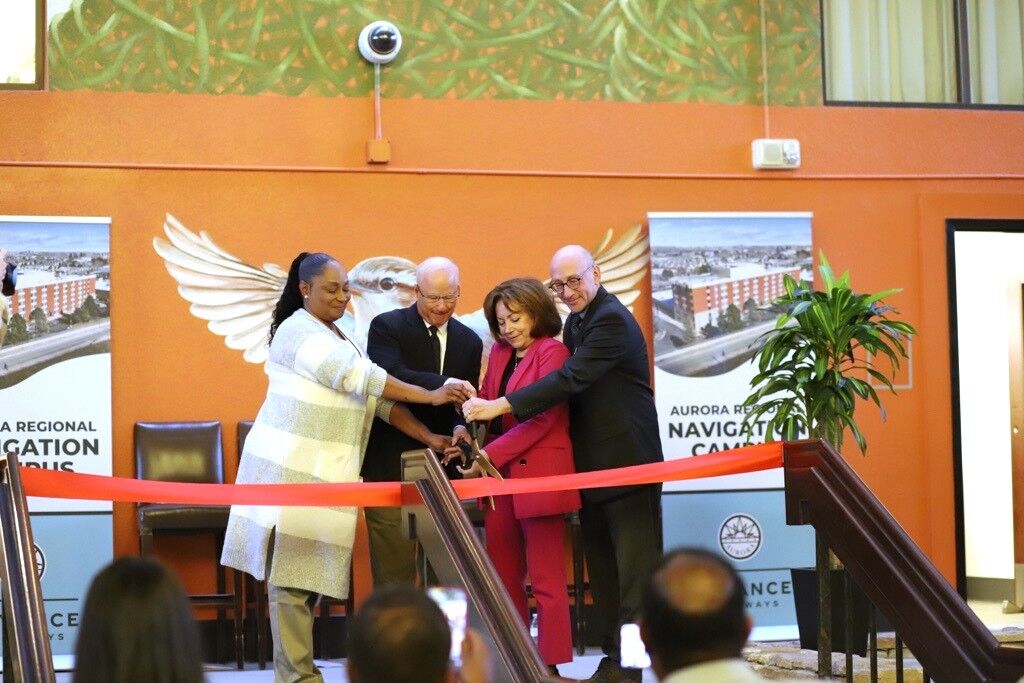
Aurora’s largest homeless services project launched “way too early,” its CEO told city leaders Tuesday, saying the rushed opening left residents living amid mold, plumbing failures, and other issues inside the former hotel. During Tuesday’s Housing, Neighborhood Services and Redevelopment...
Gov. Polis declares April ‘dig safely month’ to mark 40th anniversary of Colorado 811
Scott Weiser
scott.weiser@gazette.com
Updated 10 hours ago
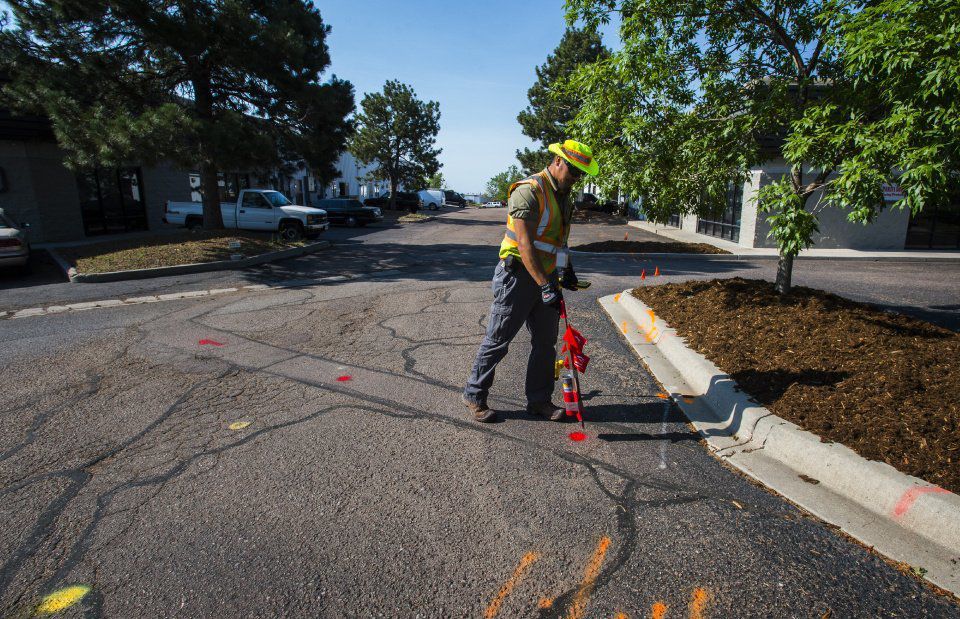
Gov. Jared Polis declared April 2026 as “Dig Safely Month” in Colorado, an annual observance that this year highlights the 40th anniversary of Colorado 811, the state’s One-Call Notification System. “Before everyone starts their warm weather projects around the house,...
PREV
PREVIOUS

Federal judge agrees colleague need not recuse in case due to prior employment
A federal judge agreed last week that her colleague, a new appointee to Colorado’s U.S. District Court after a career representing the federal government, does not need to recuse from a recent civil case brought against the government. U.S. Magistrate Judge Susan Prose joined the federal trial court earlier this year, appointed by the life-tenured […]

Denver mayor picks south Santa Fe Drive site for first micro-community
Denver Mayor Mike Johnston announced Monday that Denver’s first micro-community to house homeless people will be built along South Santa Fe Drive. Johnston, who has vowed to house 1,000 homeless people by year’s end, said city officials will break ground soon at 2301 S. Santa Fe Drive. But nearby residents have expressed concern about the […]