

Federal judge refuses to dismiss claims against Colorado state troopers for alleged wrongful arrest

A federal judge on Tuesday slammed the Colorado Attorney General’s Office’s attempt to minimize the behavior of two state troopers, who allegedly arrested a man without probable cause and ridiculed him because he was a Mexican citizen who did not speak English well.
Trooper Jeremy Sugai and Corporal Joshua Curtis participated in the arrest of Ezequiel Bahena in the early morning hours of July 31, 2021. Although they believed Bahena exhibited signs of driving under the influence, Bahena alleged the men immediately profiled him, ignored multiple pieces of evidence disproving drug use, and labeled him “obstinate” – when he actually had limited English proficiency.
At a Sept. 5 hearing, U.S. District Court Judge Charlotte N. Sweeney rejected the defendants’ request to dismiss Bahena’s claims of malicious prosecution and violating his right to equal protection under the laws. In doing so, Sweeney waved aside the government’s belief that Sugai and Curtis’ conduct was merely “unprofessional,” or that the real problem was a lack of sensitivity to Bahena’s native language.
“This is, frankly, the epitome of the typical race discrimination case,” she said. “Officers cannot open an investigation based on racial stereotypes and expect to be protected by the law.”
According to Bahena’s lawsuit, Sugai pulled him over on Interstate 25 in Larimer County around 2 a.m. Sugai’s statement in support of a warrantless arrest described Bahena’s vehicle as weaving “several times” out of its lane and speeding.
“Almost immediately,” Bahena alleged, Sugai accused Bahena of transporting drugs or being under the influence. He also claimed Bahena had an arrest warrant. Despite no outward indications of intoxication, Sugai requested a drug-detection dog.
Baneha blew a zero on a breath test, but Sugai arrested Bahena and took him to a hospital, where Bahena underwent a blood draw. Sugai transported Bahena to a state patrol office in Fort Collins, where he blew another zero on a breath test.
At the station, Curtis and Sugai allegedly “ridiculed” Bahena’s inability to speak English well. They told him they would only communicate in English and ordered him to “stop speaking Spanish.” They allegedly interpreted the language barrier as Bahena being “obstinate,” as he struggled to understand his Miranda warning.
After four hours, reportedly with no signs of intoxication, Sugai and Curtis booked Bahena into the Larimer County jail on suspicion of misdemeanor driving under the influence, where he spent three days. His blood test later showed no drugs in his system. Less than two months later, prosecutors dropped the criminal charges.
Bahena filed a federal lawsuit, alleging unlawful arrest, malicious prosecution and an equal protection violation. Sugai and Curtis moved to dismiss only the latter two claims. The government argued Bahena simply disagreed with the troopers’ observations, but that did not amount to malice on the defendants’ part.
“In his mind, he believes he passed the test. The officers who are highly trained didn’t think he did,” Senior Assistant Attorney General Amy Colony told Sweeney at the hearing.
As for Baneha’s claim that the troopers treated him differently because of his race or national origin, Colony warned Bahena’s lawsuit would effectively require law enforcement to speak in suspects’ native language, when no such requirement exists. She also called it “serious and offensive” to accuse the troopers of racial profiling.
“For all we know, Trooper Sugai maybe treats all the drivers that way at 2 o’clock in the morning,” Colony said. “And there is no case law that holds a language barrier in an arrest equates to national origin discrimination.”
She added that it was “ironic” Bahena alleged the troopers were ridiculing him for his lack of English proficiency if Bahena truly could not comprehend what they were saying in English.
“I’m concerned you’re still thinking this is just about the language,” Sweeney interjected. “What about (Sugai) pulling him over and, immediately upon seeing him – presumably realizing he was Hispanic – accusing him of running drugs? Doesn’t that tap into a well-known racial stereotype right off the bat?”
Ultimately, Sweeney allowed Bahena’s claims to proceed. Bahena credibly alleged the troopers lacked probable cause to arrest him, and that they omitted evidence suggesting Bahena was not actually under the influence from their arrest statement – including his clean breath tests and lack of intoxication signs.
She reserved her most pointed words for Colony’s insistence that Bahena’s claims would fundamentally alter how law enforcement should act with people of limited English proficiency.
“This case is not about forcing somebody to speak English or understand English,” Sweeney said. “This is not heading down a dangerous road. What we have here is two officers, according to the plaintiff, that targeted him because of his national origin and heavy accent, and assumed he was running drugs and had warrants out for his arrest, while having no information to support that.”
Bahena’s claim, she concluded, is “more than an allegation of unprofessional conduct. This is an allegation that goes to the heart of race discrimination.”
The case is Bahena v. Curtis et al.



10th Circuit partially revives lawsuit over 2020 Denver protest injuries
Michael Karlik
michael.karlik@coloradopolitics.com
Updated 1 day ago
The Colorado-based federal appeals court revived a man’s claims against Denver on Friday after concluding a trial judge resolved the case in the city’s favor without analyzing two of the three instances of alleged excessive force and other constitutional violations....
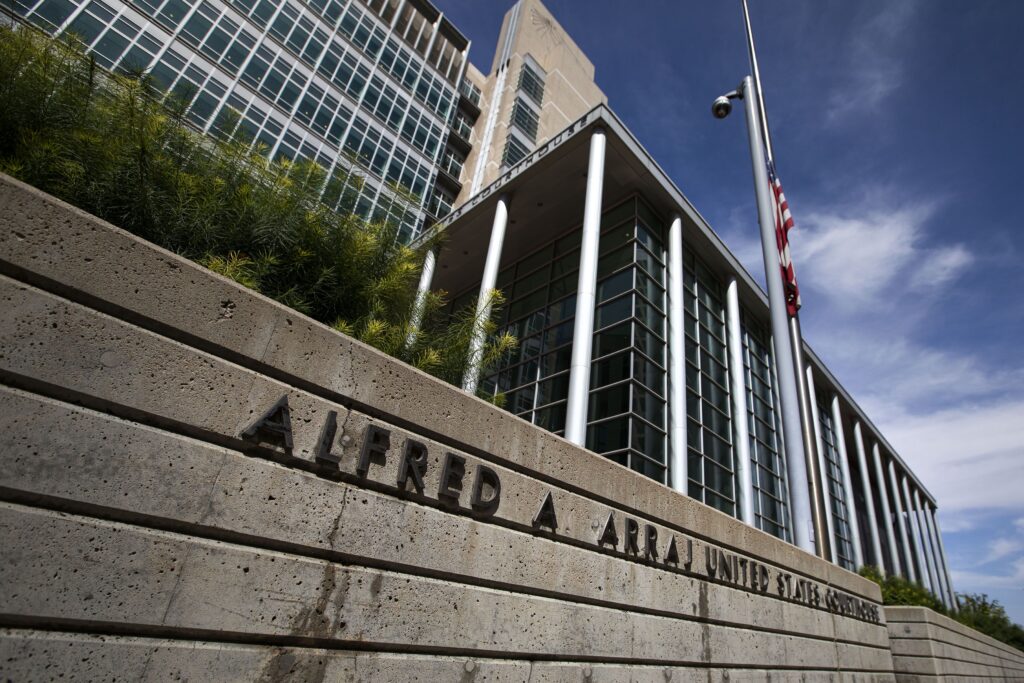
Federal judges find Colorado immigration judge violated several orders
Michael Karlik
michael.karlik@coloradopolitics.com
Updated 8 hours ago
Multiple federal judges in Colorado have freed people from immigration custody after determining that one immigration judge violated their directives for properly conducting bond hearings. For nearly a year, Colorado’s U.S. District Court has faced a flood of habeas corpus petitions...

Misconduct complaints from ex-Colorado judicial discipline director dismissed against federal judges
Michael Karlik
michael.karlik@coloradopolitics.com
Updated 2 days ago
The administrative body for the Denver-based federal appeals court upheld a finding last week that misconduct complaints against Colorado’s chief federal trial judge and the chief appeals judge warranted dismissal and appeared to be a “litigation tactic” by the complaining...

First-ever Red Rocks naturalization ceremony draws most diverse group of new citizens
Michael Karlik
michael.karlik@coloradopolitics.com
Updated 6 hours ago
Colorado’s federal trial court held its first-ever naturalization ceremony for nearly 300 new citizens on Thursday at Red Rocks Park and Amphitheatre. “We’re doing it to commemorate the 250th anniversary of the Declaration of Independence and the United States. Red...
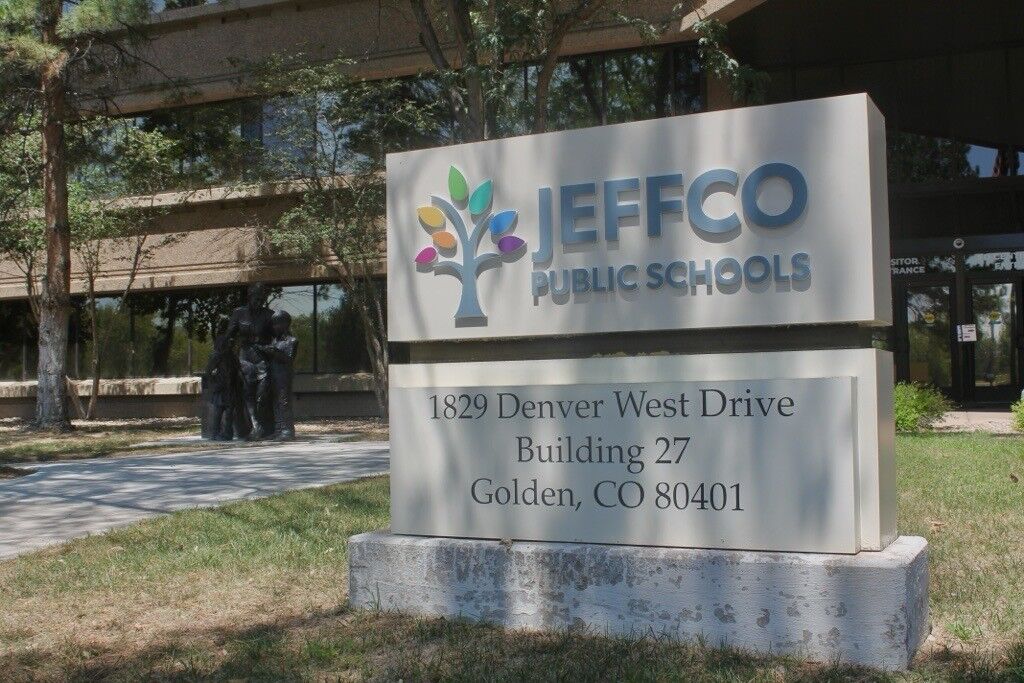
Jeffco taxpayers could be on the hook for a possible child sex assault settlement
Matt Kyle
matt.kyle@denvergazette.com
Updated 2 days ago
Taxpayers may end up on the hook for a child sexual assault settlement, possibly worth up to $15 million, after Jeffco Public Schools failed to notify its insurance company in a timely manner about the case. The incident stems from...
10th Circuit finds no fair housing violation by Littleton landlord for worker’s alleged rape of tenant
Michael Karlik
michael.karlik@coloradopolitics.com
Updated 9 hours ago
The Denver-based federal appeals court concluded on Monday that Littleton’s housing authority could not be held liable for a maintenance worker’s alleged rape of a tenant, as the worker’s employment did not provide any special access to the victim. A...

Jeffco Public Schools sues Trump administration to protect funding after alleged transgender policies violation
Matt Kyle
matt.kyle@denvergazette.com
Updated 3 days ago
In the wake of several threats by the Trump administration to revoke federal funding, Jeffco Public Schools filed a lawsuit against the Department of Education seeking to protect that badly needed money. Jeffco has been under investigation by the DOE’s...
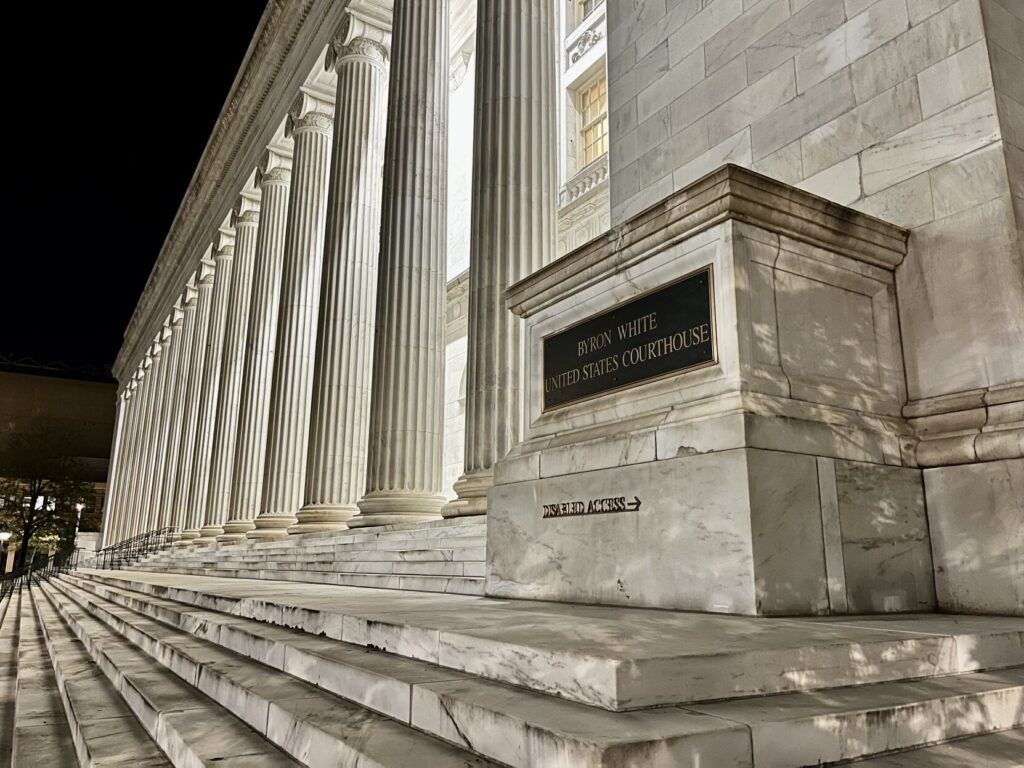
Denver detox center did not violate man’s rights with 10-hour hold, 10th Circuit says
Michael Karlik
michael.karlik@coloradopolitics.com
Updated 4 days ago
The Colorado-based federal appeals court concluded on Tuesday that Denver’s detoxification facility did not violate a man’s rights by holding him against his will for 10 hours until his blood alcohol content was projected to reach zero. Unusually, Brian Garrett’s...

Federal judge clarifies ex-GOP treasurer candidate’s burden to prove defamation claims
Michael Karlik
michael.karlik@coloradopolitics.com
Updated 4 days ago
A federal judge clarified last week that businessman and former Republican statewide candidate Brian Watson will need to surmount a higher hurdle in proving his claim that a party guest’s alleged description of him as a “criminal” amounted to defamation....
Colorado board permits state to appeal injunction against arthritis drug price cap
Marissa Ventrelli
marissa.ventrelli@coloradopolitics.com
Updated 5 days ago
A Colorado board voted Friday to allow the Attorney General’s Office to fight an injunction against a price cap on a drug that treats arthritis. A U.S. district court judge had granted the company Amgen a preliminary injunction, temporarily blocking...
PREV
PREVIOUS

Colorado legislators request settlement in illegal meetings lawsuit
Leaders of the Colorado House have agreed not to violate the state open meetings law in a proposed settlement to a lawsuit filed by two first-year Democratic legislators. Pending approval from a judge, the settlement states that House representatives will not communicate using automatically-deleting functions on electronic messaging services, nor will they meet in quorum to […]

Aurora Community College starts new program to educate, employ law enforcement cadets
The Community College of Aurora, in partnership with the Aurora Police Department, will begin a program this fall to connect students interested in law enforcement with education and career resources and the opportunity to get their education costs covered. Students in the Cadet Pilot Program can earn an associate degree from Community College of Aurora […]