

Colorado Supreme Court green lights $2 billion property tax relief measure for ballot
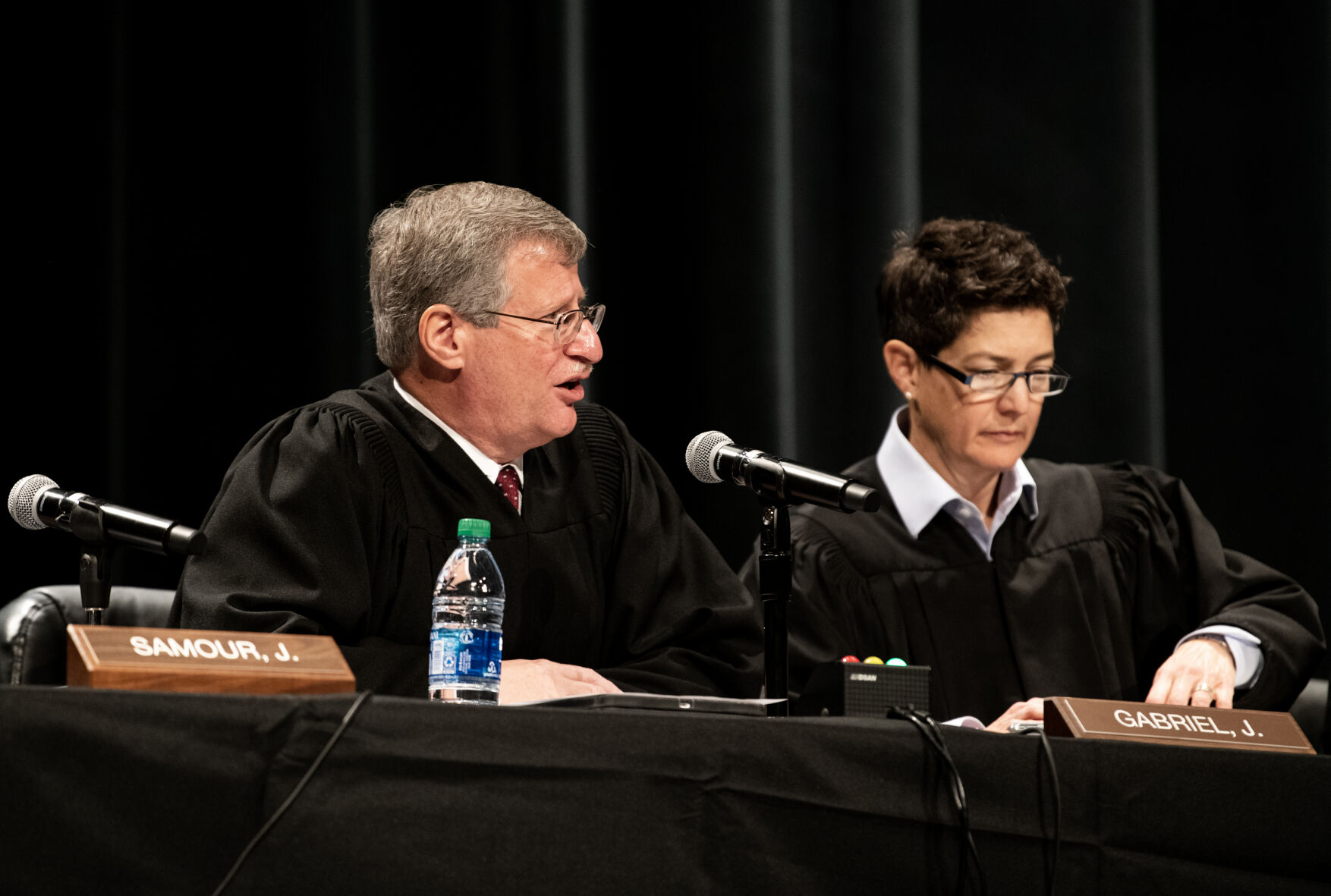
The Colorado Supreme Court on Monday cleared the way for a multi-year, multibillion-dollar property tax relief measure to appear on the November ballot, declining to address the argument from a group of largely Republican challengers that Proposition HH violates the state constitution’s single-subject requirement.
The lawsuit rocketed through the legal system, with only three months between its filing and the decision from the state’s highest court, due to the looming Sept. 11 deadline for the secretary of state to sign off on the contents of the 2023 ballot. The outcome favors Democrats’ legislative solution to soaring property valuations, which went up by 40% on average in some areas of the state.
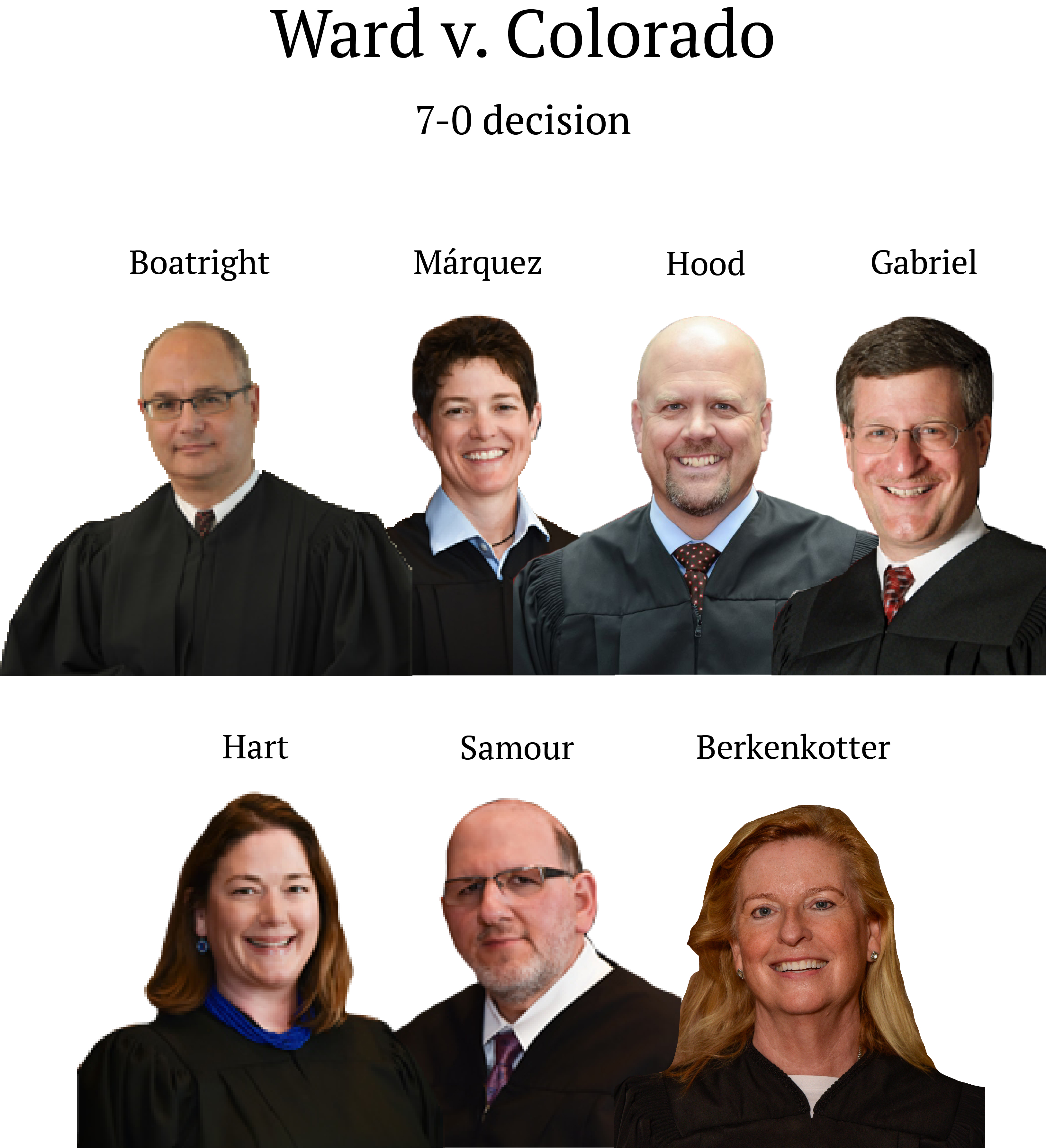
Justice Richard L. Gabriel, in the Aug. 21 opinion, noted the Supreme Court’s own precedent barred it from reviewing the challenged provisions of a referred measure that voters have yet to approve or reject.
“Accordingly, we conclude that the district court did not have, and we do not have, subject matter jurisdiction to review (Proposition HH) for compliance with our constitution’s single subject requirement unless and until those measures have been approved by Colorado voters,” he wrote.
However, Gabriel cautioned that if voters were to enact Proposition HH in November, courts could then review the law for its constitutionality and void any non-compliant features.
A multi-faceted proposal
With an aim of putting a brake on rapidly rising property values, Proposition HH would temporarily reduce the assessment rate for property classes and valuations – and the taxes tied to those valuations – while setting aside hundreds of millions of dollars each year to “backfill” the loss to local governments and school districts.
Republican lawmakers, who balked at the proposal, walked out on the final day of the legislative session.
On the day Gov. Jared Polis signed Senate Bill 303, which stipulated that voters would need to enact the property tax relief through the related Proposition HH, a collection of GOP elected officials, Republican-led counties and others filed suit to void the legislation.
Specifically, they argued SB 303 and Proposition HH contained more than one subject, which the state constitution prohibits. In addition to decreasing residential and commercial tax burdens, the law would also increase by $2.2 billion the amount of revenue the state could collect in the next decade without refunding it to taxpayers. It would divert up to $20 million to ameliorate the effects of property tax increases on renters and set aside $72 million for education funding.
Further, they took issue with the fact that a separate piece of legislation would take effect if Proposition HH were to pass, providing equally distributed refunds under the Taxpayer Bill of Rights (TABOR) in the short term, instead of the current system, where the amount stems from a six-tier formula tied to income levels.
However, there was no mention of that linkage in the ballot title voters would see.
In the alternative, the plaintiffs requested that the courts rewrite the title, providing more detail about Proposition HH’s various provisions and its effect on TABOR refunds.
Denver District Court Judge David H. Goldberg quickly shot down the challenge. Primarily, he did not believe he could weigh in on the constitutionality of Proposition HH before its enactment. He cited a 1996 decision of the Colorado Supreme Court where the justices, 6-1, decided the separation of powers prohibited them from intervening in the legislative process without authorization. That process extended to situations where the General Assembly referred a measure to the ballot and a vote had not yet occurred.
Goldberg found he had the ability to decide if Proposition HH’s title sufficiently alerted voters to its contents, and concluded it did.
“A title is meant to be a title, not a summary of the specifics of a proposition,” he wrote in June. “The title alerts the reader to the general object to be attained by the proposed legislation: reducing property taxes and making up the difference with excess revenues.”
Noting the “extraordinary time crunch” in the case, Goldberg elected to analyze the constitutionality of SB 303 and Proposition HH anyway to hasten the resolution. He determined the challenged features of the law were all related to the broad goal of providing property tax relief and addressing the fallout from revenue losses.
Judicial review not applicable
The plaintiffs, who included former Sen. Jerry Sonnenberg, R-Sterling, several GOP-led counties and the conservative advocacy group Advance Colorado, appealed to the Supreme Court, contending its precedent did not shield Proposition HH from review prior to its enactment. Further, they argued SB 303 and Proposition HH try to accomplish too much by revising property valuations, spending on education and altering TABOR refund methodology.
“The constitution does not exempt ‘complex’ policy matters from the single subject requirement. The opposite is true. Complex legislation is precisely why the single subject requirement exists,” the challengers’ lawyers wrote.
The state countered that altering local governments’ property tax collections necessarily involved deciding how to preserve funding for services and where to obtain the money – and that even if Proposition HH contained more than one subject, the proper procedure was not to void it outright.
“Instead, if a measure is found to contain more than one subject, the court is limited to a single, post-election remedy: voiding matters not expressed in the title’s subject,” wrote the Colorado Attorney General’s Office.
The Supreme Court agreed with the state that nothing gave it the authority to review the substance of Proposition HH unless voters enacted the challenged provisions. Further, while the ballot title did not address every facet of the measure, Gabriel wrote that it is good enough, and that the plaintiffs’ proposed revisions also provided an incomplete narrative.
“The title alerts voters to the general object to be accomplished, and we perceive nothing in the title that would mislead a voter of ordinary intellect as to the title’s purpose,” he explained.
In a statement, Sonnenberg said he and the other plaintiffs are now “going to make sure that every voter knows how they have been deceived and how they can defend their TABOR refunds.”
Senate President Steve Fenberg, D-Boulder, who sponsored SB 303, responded in his own statement that he looks forward to Coloradans being able to vote on the property tax relief measure. He added, inaccurately, that the Supreme Court affirmed “Proposition HH is constitutional.”
The case is Ward et al. v. Colorado et al.

Federal judge green-lights civil trial against ex-Fort Collins DUI officer
Michael Karlik
michael.karlik@coloradopolitics.com
Updated 20 hours ago
A federal judge ruled on Thursday that Fort Collins’ former “DUI officer” will face a civil trial for allegedly investigating a motorist for impaired driving without any reasonable suspicion to do so. In recent years, several people arrested by Officer...

Colorado Supreme Court suspends Mesa County judge pending misconduct investigation
Michael Karlik
michael.karlik@coloradopolitics.com
Updated 23 hours ago
The Colorado Supreme Court suspended Mesa County Court Judge Michael J. Grattan on Thursday amid a misconduct investigation. The court’s Sept. 10 order gave Grattan 21 days to explain why his paid suspension should not continue through the end of...
Colorado Supreme Court changes course, dismisses case about special district bonds
Michael Karlik
michael.karlik@coloradopolitics.com
Updated 19 hours ago
The Colorado Supreme Court declined on Friday to decide a dispute between a large-scale Commerce City development and the various districts financing it, after initially showing interest in the ongoing case. Colorado has roughly 2,800 special districts, which are local...
10th Circuit tosses GEO Group’s pretrial appeal in human trafficking lawsuit
Michael Karlik
michael.karlik@coloradopolitics.com
Updated 2 days ago
The Denver-based federal appeals court dismissed an attempt by The GEO Group on Wednesday to appeal a trial judge’s non-existent decision two months before the company is scheduled to face a civil trial over alleged trafficking violations at the Aurora...
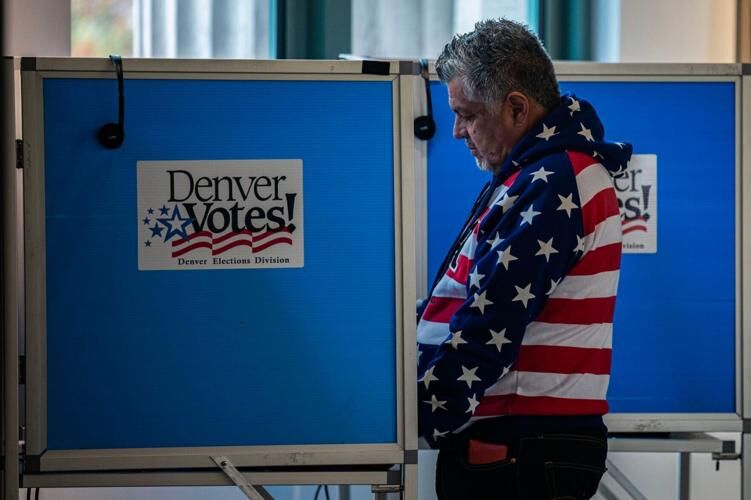
Denver sues Trump to block armed ICE agents from polling sites
Deborah Grigsby
deborah.smith@denvergazette.com
Updated 2 days ago
The city of Denver, along with several groups, sued the Trump administration Thursday, seeking to block U.S. Immigration and Customs Enforcement officers who are armed from polling sites during the upcoming midterm elections. In fact, there are no official orders...

Federal judge takes no action against ICE in Colorado after hearing about mistakes, not ‘blatant violations’
Michael Karlik
michael.karlik@coloradopolitics.com
Updated 17 hours ago
A federal judge declined to take action against U.S. Immigration and Customs Enforcement on Thursday after hearing that a pattern of alleged lawbreaking amounted to mistakes and a misunderstanding of the government’s position in court. For nearly a year, Colorado’s...
Colorado doctors, dentists challenge state law on gender‑transition services in new federal lawsuit
Marissa Ventrelli
marissa.ventrelli@coloradopolitics.com
Updated 14 hours ago
A group of Christian doctors and dentists has filed a federal lawsuit challenging a Colorado law they say requires them to provide gender‑transition services that conflict with their religious and ethical beliefs. The lawsuit, filed by the Christian Medical and...
Federal judge directs plaintiff to revise complaint alleging Denver officers’ constitutional violations
Michael Karlik
michael.karlik@coloradopolitics.com
Updated 19 hours ago
A federal judge directed a plaintiff to revise his allegations on Wednesday to more precisely state what two Denver officers and the city itself allegedly did to violate his constitutional rights by facilitating his prosecution for murder until prosecutors dropped...

Lawsuit challenges Douglas County commissioners’ ballot actions
Nicholas Fogleman
nicholas.fogleman@denvergazette.com
Updated 2 days ago
A new lawsuit against Douglas County commissioners seeks to invalidate the board’s intervention in efforts to expand the commission from three members to five and restore the original ballot language approved by more than 20,000 petition signers. The suit marks...
Federal judge explores new sanctions against ex-Colorado judicial discipline director
Michael Karlik
michael.karlik@coloradopolitics.com
Updated 2 days ago
A federal judge on Wednesday directed Colorado’s former judicial discipline director, for the third time this year, to explain why she should not sanction him for his latest conduct in his litigation against the state’s judiciary. Christopher S.P. Gregory, who served...
PREV
PREVIOUS

Polis' property tax relief plan will help schools, analysis says
A Democrat-backed proposal will provide billions of dollars in property tax relief over a decade in a way that helps schools, according to a new analysis. The analysis from the Bell Policy Center said all Colorado property owners will receive property tax relief under Proposition HH, but it would be particularly helpful to low- and […]

Colorado Supreme Court's transition plan, fallout from judicial disclosure lapses | COURT CRAWL
Welcome to Court Crawl, Colorado Politics’ roundup of news from the third branch of government. The state Supreme Court has set itself apart from its peers around the country by developing a written transition plan for its chief justices, and a recent report about judges’ financial disclosures has drawn the interest of Colorado’s judicial discipline […]