

Polis’ property tax relief plan will help schools, analysis says

A Democrat-backed proposal will provide billions of dollars in property tax relief over a decade in a way that helps schools, according to a new analysis.
The analysis from the Bell Policy Center said all Colorado property owners will receive property tax relief under Proposition HH, but it would be particularly helpful to low- and middle-income households.
“Low- and middle-income households will benefit the most,” the analysis said.
Under Proposition HH, property tax bills would be lowered first by reducing the rate at which a home’s assessed values are taxed and it would also decrease the amount of taxable property value through value reductions, “a progressive mechanism that benefits lower-value homes more than higher-value homes,” the analysis said.
The analysis noted each household’s property tax bill will still increase, but those increases would be smaller if voters approved Proposition HH.
The analysis, however, ignored the funding mechanism for reducing property taxes under the proposal: the TABOR surplus, which provides refunds to Colorado taxpayers.
While a companion measure to Proposition HH would provide a one-time only equalized TABOR refund to all taxpayers – whether property owners or renters – the analysis did not point out that TABOR refunds would be reduced over the next decade, beginning in 2025.
Critics of Proposition HH have argued the measure would eventually eliminate TABOR refunds entirely. In addition, critics noted that renters, who make up 40% of the housing market, will have to forego TABOR refunds after 2024 and for the foreseeable future, and be hit with higher rent costs as a result of still increasing property taxes landlords will face.
Under Proposition HH, homeowners will realize about $600 in property tax savings and smaller TABOR refunds.
Democratic lawmakers touted the measure, sent to the ballot through Senate Bill 23-303, as a way of saving people money on property taxes.
Bell’s analysis pointed out that a major effect from the measure is to put more money into public education.
The analysis estimated Proposition HH could pump as much as $2.3 billion into the State Education Fund by fiscal year 2031-2032.
“This amount reflects the massive needs of our schools, which are still grappling with nearly $10 billion of cumulative underfunding over the past decade, though it’s important to recall that first, Colorado needs to dig itself out of a $10 billion hole,” the analysis said. “This additional funding would ensure that schools don’t incur additional financial setbacks.”
Under Proposition HH, an additional 1% of state income tax revenue would be retained and spent above the existing Referendum C cap, in part to backfill local governments for reductions in property tax revenue. Once that’s paid for, up to $20 million would be appropriated for rental assistance. In the third year, property tax backfill needs would subside and funding will be directed to the State Education Fund, the analysis said.
The Referendum C cap is a voter-approved change to TABOR revenue limits, which allows those limits to increase by population and inflation.
The Bell’s analysis came just days after a Common Sense Institute study that said taxpayers would lose, on average, more than $5,000 in TABOR refunds over the next decade due to Proposition HH and the lost of TABOR refunds is, in fact, a tax increase.
Bell President Scott Wasserman told Colorado Politics that the long-term reduction of TABOR surplus funds should not be characterized as a tax cut.
TABOR delegates the return of surplus dollars back to the legislature, he said, and lawmakers have returned surplus dollars in the past through a variety of ways, such as targeted tax credits or reimbursing local districts.
“It is irresponsible to assume that taxpayers will see surpluses continue to translate into temporary income or sales tax reductions – or that will be experienced equally by everyone,” Wasserman wrote in an email.
The claim by Common Sense Institute and the measure’s critics that Proposition HH is a tax increase “is false,” Wasserman said.
Using an “average” across renters and property owners to calculate what they might gain or lose omits the fact that outside of tax year 2023, when TABOR rebates would be equalized if Prop HH passes, taxpayers will see varying TABOR rebates based on their income, under which those with higher incomes will get more money and those who earn less will get less, Wasserman said.
“Considering that renters are disproportionately represented in lower income quintiles, claiming that they will lose $5,119 is an extreme overstatement of what will likely happen,” he said.
“Furthermore, many homeowners are likely in those lower income quintiles and will likely see more property tax relief than loss of TABOR rebate dollars. By averaging TABOR rebate dollars, this report attempts to shrink the wide variety of savings and TABOR rebates that will affect Coloradans if Prop HH passes,” he said.
Chris Brown, one of the authors of the CSI analysis, stood by the report’s findings and said Proposition HH is one of the “most complex measures to ever appear on the ballot.”
“Voters are being asked to give up future TABOR refunds to pay for slowing the growth in their property taxes,” Brown said. “As others have pointed out, and our report now quantifies, the typical household could give up $5,119 in TABOR refunds over the next decade, surpassing what they might save on their property taxes.”
He added: “And renters, who represent 1/3 of all households, are the biggest losers. Renters would simply face TABOR refund reductions without any direct property tax relief. “
Six issue committees have been formed to oppose Proposition HH, including the latest, backed by TABOR author and convicted tax felon Douglas Bruce of Colorado Springs. One issue committee that favors Proposition HH, backed by Democratic-aligned organizations and donors, has raised more than $360,000, the most raised so far on the issue.



Aurora student journalist cleared of disciplinary charges after ignoring ‘gag order’
Kyla Pearce
kyla.pearce@gazette.com
Updated 13 hours ago
A Community College of Aurora student who accused the college of putting an “unconstitutional gag order” on his student-run publication was cleared of disciplinary charges against him. CCA student Andrew Green tried to register his independent student publication, called “FoxTalk,”...
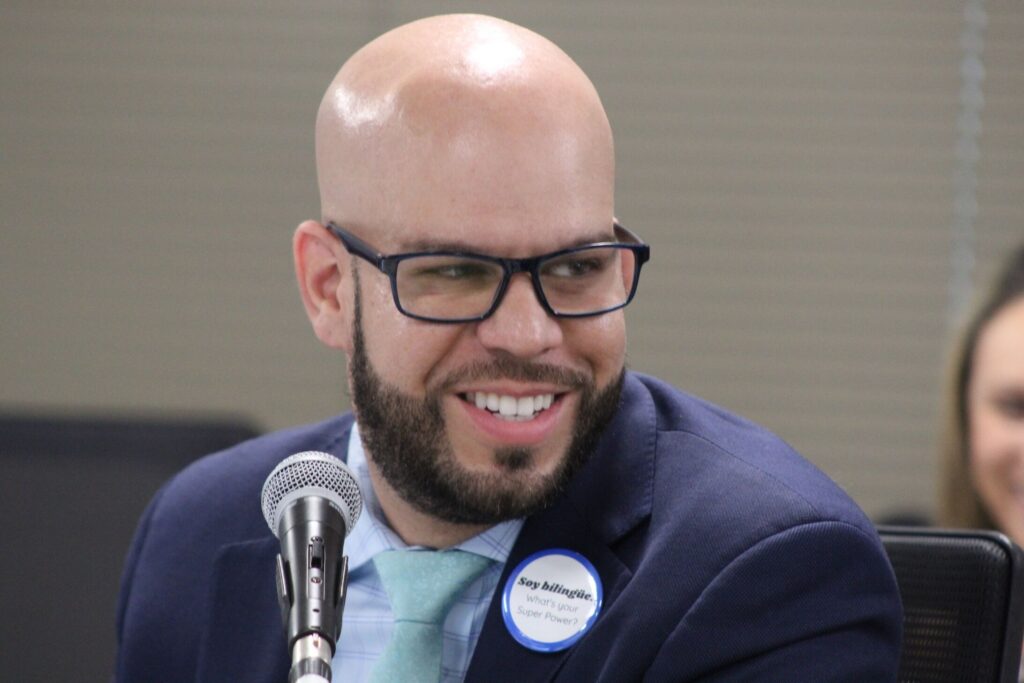
DPS meets Marrero’s academic goals, but most students remain below state standards
Nico Brambila
nico.brambila@denvergazette.com
Updated 15 hours ago
The majority of Denver Public Schools students do not meet state standards — and the academic goals set by Superintendent Alex Marrero’s administration do not expect them to. Marrero’s first strategic road map in 2021 set a goal of 10%...

Douglas County School District, Castle Rock clash over school land and fee use
Nicholas Fogleman
nicholas.fogleman@denvergazette.com
Updated 15 hours ago
The Town of Castle Rock and the Douglas County School District are at odds over a proposed ordinance change that would give the town greater discretion over how land and cash dedicated for school facilities can be used. Under Castle...

Federal science agency gives CU Boulder $37.5M to supercharge its quantum studies
Bernadette Berdychowski
bernadette.berdychowski@denvergazette.com
Updated 2 days ago
The University of Colorado Boulder was awarded $37.5 million from a federal research agency to propel its quantum research, the U.S. National Science Foundation announced Tuesday. The school was one of eight academic institutions to receive a total of $290...

Denver Public Schools welcomes 89,000 students back to the classroom
Elizabeth Pond
elizabeth.pond@denvergazette.com
Updated 4 days ago
A swarm of students — some happily greeting teachers and reuniting with friends, others nervously clinging to their parents’ legs and rubbing bleary eyes — kicked off the first day of the new school year on Monday at Newlon Elementary...

Colorado schools reopen with measles vaccination rates below protective threshold
Nico Brambila
nico.brambila@denvergazette.com
Updated 5 days ago
Colorado is entering the new school year without active measles transmission, but health officials remain concerned as kindergarten MMR coverage sits at just 87.8% and most counties fall below the 95% threshold considered protective against outbreaks. “These declining vaccination rates,...
Jeffco Public Schools board votes to put $133M mill levy override before voters
Matt Kyle
matt.kyle@denvergazette.com
Updated 5 days ago
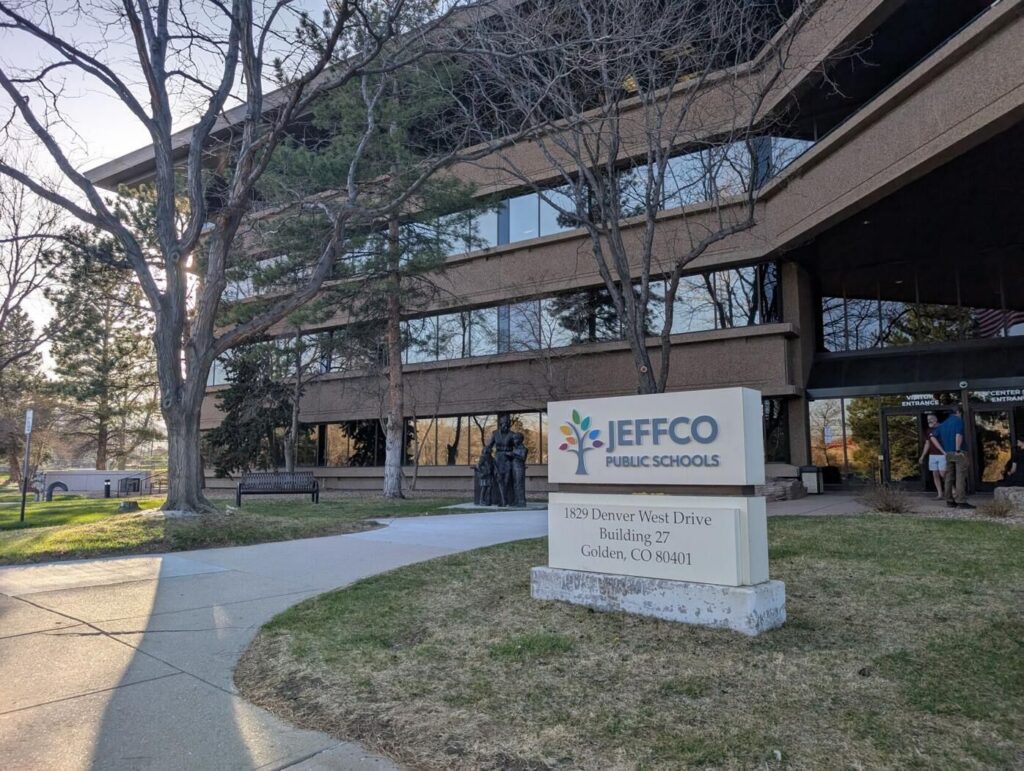
Voters in Jefferson County will decide this November whether or not to approve a $133 million mill-levy override that Jeffco Public Schools officials say is needed to cover funding shortfalls in the district. The Jeffco Public Schools Board of Education...
District 49 dissolves longtime provider of special services
Eric Young
eric.young@gazette.com
Updated 1 week ago
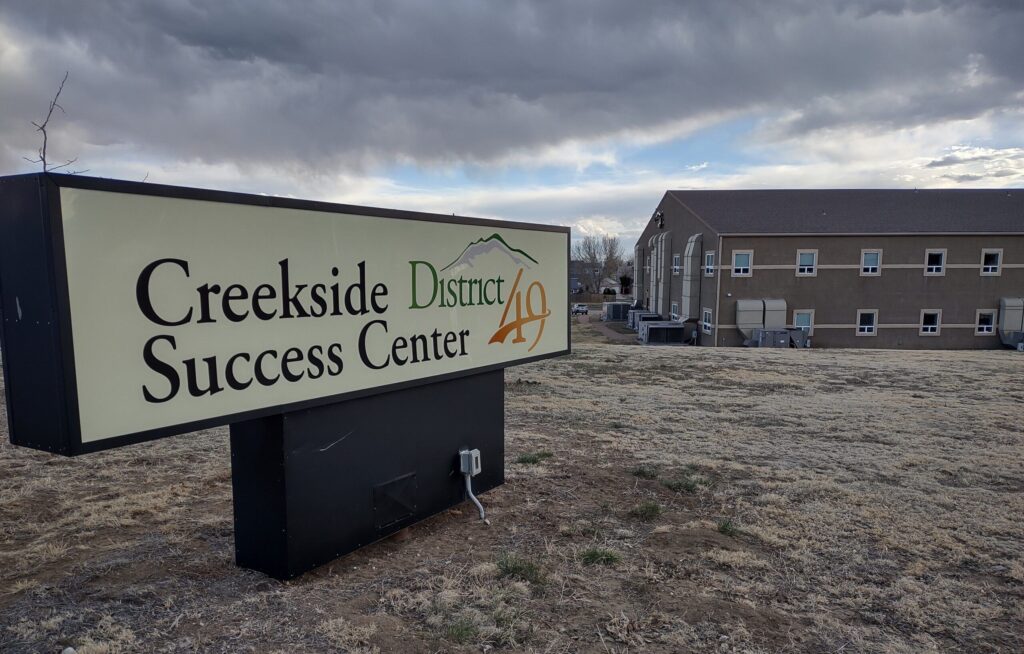
A longtime education service provider that has been subject to recent public and government scrutiny is shutting down. School District 49’s Board of Education approved the dissolution of the Education ReEnvisioned Board of Cooperative Education Services (ERBOCES) during a special...
Colorado math scores hit record high as Denver-area districts show gains
Nico Brambila
nico.brambila@denvergazette.com
Updated 1 week ago
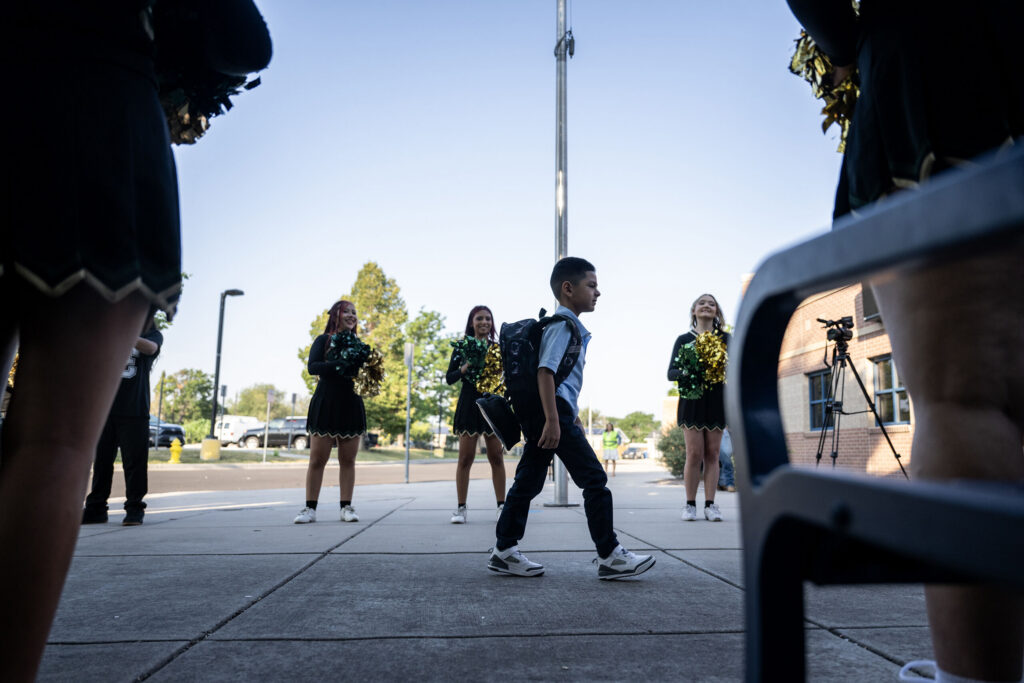
Despite gains, the majority of students do not meet or exceed expectations in math or English Math emerged as a bright spot in Colorado’s latest standardized test results, with students posting record scores in a subject where they have historically...
District 49 dissolves longtime provider of special services
Eric Young
eric.young@gazette.com
Updated 2 weeks ago
A longtime education service provider that has been subject to recent public and government scrutiny is shutting down. School District 49’s Board of Education approved the dissolution of the Education ReEnvisioned Board of Cooperative Education Services (ERBOCES) during a special...
PREV
PREVIOUS

State judicial discipline panel seeks information on more than 120 judges
Colorado’s Commission on Judicial Discipline is compiling “in-depth” information on more than 120 judges who The Denver Gazette recently revealed had not filed personal financial disclosure reports to the state this year despite a law requiring it, according to emails obtained by the newspaper. More than two dozen of the judges haven’t had a disclosure […]

Colorado Supreme Court green lights $2 billion property tax relief measure for ballot
The Colorado Supreme Court on Monday cleared the way for a multi-year, multibillion-dollar property tax relief measure to appear on the November ballot, declining to address the argument from a group of largely Republican challengers that Proposition HH violates the state constitution’s single-subject requirement. The lawsuit rocketed through the legal system, with only three months […]