

‘Blockbuster’ court decision requires more transparency on Colorado developers’ projects

The El Paso County District Court has ordered a business improvement district on Colorado Springs’ north side to release all construction contracts, plans and payments related to public improvements, such as roads and water lines.
“It’s a blockbuster decision,” said John Henderson with Coloradans for Metro District Reform. “We are going to use it every chance we get to pull the curtain back.”
The court decision could set a higher standard for transparency around spending by contractors that is later reimbursed by taxes and open the door to public inspection of documents that show whether the millions in reimbursements developers ask taxpayers to pay for are justified, Henderson explained. The attorney has worked on statewide reform for developer-run taxing districts but did not work on this case.
“There is no accountability unless you have access to the financial records that account for the expenditure of public money,” he said.

Previously, developers argued that private contracts for infrastructure, even if it included work on public projects such as roads, were not public documents. However, developers in Colorado are often reimbursed for public infrastructure through property taxes paid to special districts that they control. Since those districts are forms of local government, records of spending on public infrastructure should be available to taxpayers, Henderson said.
“As soon as you create that district, I’m sorry, you are the government and you are obligated just as every other government in the United States to disclose financial records on how you spent public money,” Henderson said.
Colorado developers have argued in the past a third-party engineer’s certification is enough to determine whether the requests for reimbursement of public infrastructure are proper. But Henderson and others noted that engineers hired by the developers who control the districts are not truly independent.
2023-07-10 Order Granting in Part Motion to Compel Compliance (Denying Discovery) (1).pdf
In this case, the recent ruling will allow the public to complete an audit of how the Norwood Development Group spent money on public infrastructure in the InterQuest North Business Improvement District, enabling greater transparency, said Tim Leonard, who represents a business in the shopping district, Cheddar’s Scratch Kitchen in district elections.
The InterQuest North district controlled by Norwood covers businesses near InterQuest Parkway and Federal Drive, such as Scheels All Sports and Great Wolf Lodge. The businesses pay property taxes to the district to cover the payments on about $25 million in debt spent on public infrastructure.
Prior to the district court’s decision on July 10, Leonard said he received 9,000 pages of documents from the district via open records requests, but they were a “nightmare” to review and did not show how much was spent on public improvements. They did show that Norwood packaged together both public and private improvements in the same contract, he said.
Open records case to shed light on InterQuest shopping center
Tim Seibert, Norwood’s senior vice president, said the company contracted for both public and private improvements on the same projects because it allows for efficient construction and engineering. Once the work is complete, the company asks the district to reimburse the cost of improvements that benefit the whole district through property taxes.
He defended the practice of using an engineer hired by the developer-controlled district to certify improvements, saying the engineers could lose their licenses if they are not completing work properly.
In terms of transparency, Seibert said Norwood and the district it controls have worked to comply with the state’s open records law throughout the suit.
The district did not disclose contracts initially because the district’s attorney advised it could set a “dangerous precedent” that the state’s open records law requires the inspection of “the internal records of any private entity which does business with the public entity.”
The first court ruling sided with Norwood. When the Court of Appeals reversed the decision, Norwood provided records to Leonard, such as spreadsheets and supporting invoices, Seibert said. He also noted the July court ruling denied Leonard’s request for depositions of contractors and Norwood employees and to issue subpoenas to district engineers.
Following the final court ruling this month, Leonard said he planned to file another request for documents dating back to the beginning of the InterQuest North project in the mid-2000s in a form that would be easier to review.
He also called on the Colorado Springs City Council to require more transparency from business improvement districts.
In a letter to the council, Leonard noted that the city declined to support his call for more transparency from the district in the past saying it was a private matter and so his fight for transparency through the courts has lasted three years and cost tens of thousands of dollars that will have to be reimbursed by the district.
“I would impress upon the current Councilmembers to request more transparency and accountability from the BIDs and metro districts which are under your oversight. Shifting this responsibility to single taxpayers is unfair and very inefficient,” he wrote.
Colorado Springs is home to about 20 business improvement districts, which include about 10 controlled by Norwood, such as districts used to fund construction near Barnes Road and Powers Boulevard and the First and Main shopping center near Powers and Carefree Circle.
The City Council reviews the business improvement districts’ budgets each year, but City Auditor Jackie Rowland said previously the city does not have the authority to audit them, because they are separate entities.
City Council President Randy Helms said business improvement districts must follow approved plans and budgets, but he planned to look into whether the city should provide greater oversight after budget approvals.


Wrongfully deported man to be returned to U.S., Colorado federal judge orders
Michael Karlik
michael.karlik@coloradopolitics.com
Updated 43 minutes ago
Colorado’s chief federal judge took the extraordinary step of directing the government on Tuesday to do everything it can to return a man it deported in violation of his order. At the same time, Colorado’s chief magistrate judge has set...
Denver murder, assault convictions reversed due to faulty jury instructions
Michael Karlik
michael.karlik@coloradopolitics.com
Updated 16 hours ago
Colorado’s second-highest court reversed a defendant’s convictions for murder and assault last week after concluding a Denver judge incorrectly omitted key jury instructions that could have affected the verdict and sentencing. Stephen C. Swainson fatally stabbed Israel Casillas in downtown...
‘Understand people for who they are’: 2 federal judges talk about compassion in courtroom
Michael Karlik
michael.karlik@coloradopolitics.com
Updated 23 hours ago
Before taking the bench in 2022, U.S. District Court Judge Charlotte N. Sweeney was an employment discrimination attorney. While the cases could be emotionally charged, they were different from the criminal proceedings she is now handling. “It wasn’t necessarily affecting...

Denver murder conviction reversed for incomplete self-defense instruction
Michael Karlik
michael.karlik@coloradopolitics.com
Updated 2 days ago
Colorado’s second-highest court reversed a defendant’s murder conviction last week because a Denver judge gave an incomplete instruction to the jury about the man’s right to self-defense. Donald R. Gonzales and Gary McLaughlin met up in a Capitol Hill parking...
Colorado lawmaker, House leaders named in workplace-retaliation lawsuit
Marianne Goodland
marianne.goodland@coloradopolitics.com
Updated 2 days ago
A former legislative aide has filed a lawsuit alleging she was mistreated, illegally directed to perform campaign work and harmed by a House leadership structure she charged was fragmented, politicized and ineffective at protecting employees. The lawsuit, filed by Jennifer...
Federal judge hears arguments about Colorado’s 3-day gun purchase waiting period
Michael Karlik
michael.karlik@coloradopolitics.com
Updated 2 days ago
A federal judge heard arguments on Monday about the constitutionality of a 2023 Colorado law that generally imposes a three-day waiting period on firearm purchases after the initiation of a background check. The test that the U.S. Supreme Court created...

Colorado Supreme Court intervenes in Weld County prosecution dismissed due to Missy Woods misconduct
Michael Karlik
michael.karlik@coloradopolitics.com
Updated 2 days ago
The Colorado Supreme Court ordered a Weld County trial judge last week to respond to the district attorney’s claim that he improperly dismissed a criminal case because of “outrageous” conduct by the Colorado Bureau of Investigation. Daniel Lee Eatinger stood...
Schoolchildren’s presence at child sex-related trial did not harm Arapahoe County defendant, appeals court says
Michael Karlik
michael.karlik@coloradopolitics.com
Updated 5 days ago
Colorado’s second-highest court decided on Thursday that the presence of a group of schoolchildren on the first day of a child sexual exploitation trial did not violate an Arapahoe County defendant’s constitutional right to a fair trial. Prosecutors charged Jerry...
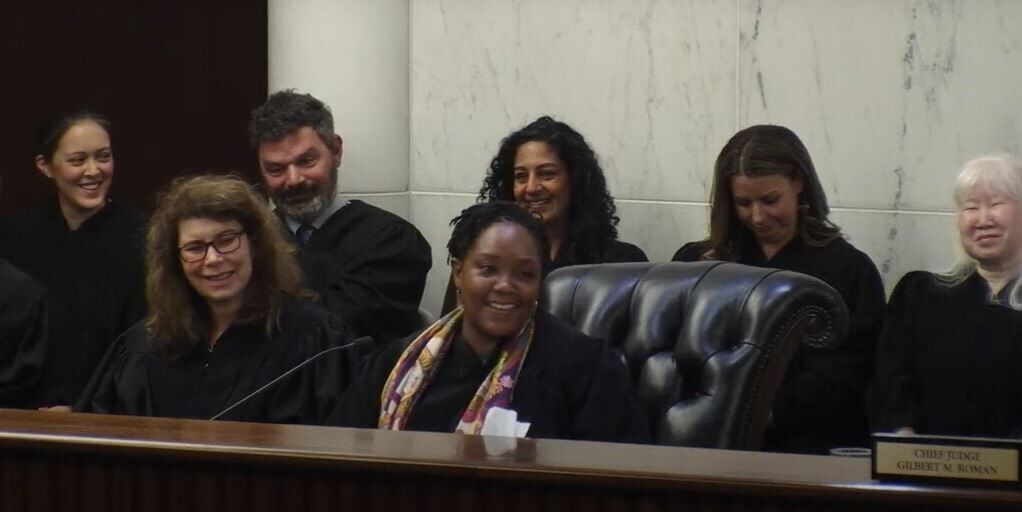
Appeals court cites week-old Colorado law to reinstate child neglect case at child, father’s request
Michael Karlik
michael.karlik@coloradopolitics.com
Updated 4 days ago
Colorado’s second-highest court invoked a new state law for the first time on Thursday and reinstated a child neglect case that both the child and her father wished to reopen. House Bill 1227 took effect on Aug. 12, reversing a...
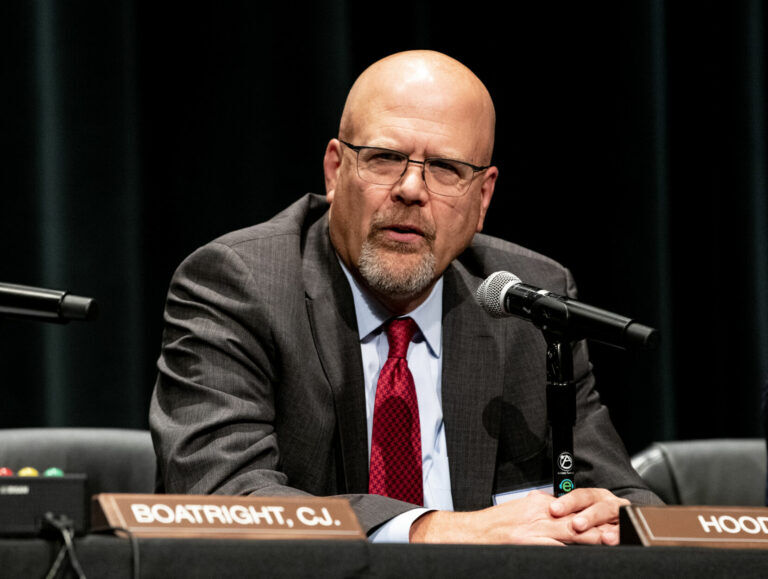
Colorado Supreme Court names William Hood as next chief justice
Michael Karlik
michael.karlik@coloradopolitics.com
Updated 6 days ago
The Colorado Supreme Court has selected Justice William W. Hood III to be the next chief justice, the judicial branch announced on Friday. Hood will succeed Chief Justice Monica M. Márquez, who took over the role in July 2024. “I...
PREV
PREVIOUS

Colorado's first human case of West Nile virus in 2023 confirmed amid 'historic' mosquito activity
Colorado’s first human case of West Nile virus in 2023 has surfaced in La Plata County, according to a Monday news release from the Colorado Department of Public Health and Environment. West Nile virus is a mosquito-borne virus that can be passed to humans through mosquito bites. The virus can be fatal and resulted in […]

Feds tell judge Gunnison landlords continue to thumb nose at non-discrimination order
A group of Gunnison landlords continues to ignore the consent decree they entered into – and now a federal judge’s order – requiring them to cease discriminating against families with children in the condo complex they operate. On July 14, a lawyer for the U.S. Department of Housing and Urban Development (HUD) reported that, to his knowledge, David […]