

‘It took courage’: First-term Democrats challenge decades of illegal meetings at Colorado’s legislature | COVER STORY

When a walkout by Republican legislators threw the Colorado House into chaos on the last day of the 2023 session, the Democratic caucus hurried off the House floor and into a backroom.
What followed were discussions of decorum, legislation soon to be lost, legislation soon to be passed and priorities for next year’s work. But, as a handful of reporters feverishly searched the Capitol for the undisclosed meeting location, one Democratic lawmaker waited in the hallway. Rep. Elisabeth Epps of Denver did not enter the caucus meeting until members of the press were present.
Epps refused to join her caucus because these meetings, she argues in a new lawsuit, are illegal.
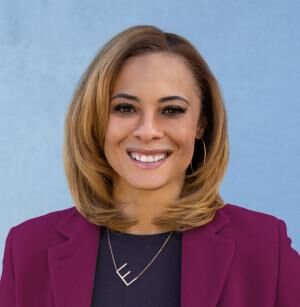
The lawsuit, also filed by Democrat Rep. Bob Marshall of Highlands Ranch, claims legislators from both parties with support from House leadership regularly participate in meetings that violate the Colorado open meetings law (COML).
Besides impromptu meetings, like the one held the last day of the session, the lawsuit alleges intentional and repeated skirting on the law.
The lawsuit claims the Democratic and Republican caucuses each held mandatory secret meetings at least weekly during the 2023 session, directing legislative aides to omit or disguise the meetings on legislators’ calendars. The meetings were said to include presentations of legislation by bill sponsors, question and answer periods, and discussions of how members would vote on legislation.
The lawsuit also claims that both party caucuses regularly use the encrypted messaging service Signal to discuss public business outside of public view, with the messages set for automatic deletion.
“We repeatedly went to House leadership seeking solutions to COML violations,” Epps and Marshall said in a joint statement. “After six months of effort, we had to conclude that the Colorado General Assembly is unable or unwilling to properly address COML on its own.
“Violating COML is not inevitable and must not be accepted as normal.”
But violations of COML have been the norm at the General Assembly for years, not the exception.
Several current and former state legislators have called the provisions of COML unworkable, arguing it would impede business too severely to follow the law as written.
Former state Sen. Don Coram, R-Montrose, told Colorado Politics the law’s requirements are “plain bull—-.”

“I was there 12 years and there were multiple times that I sat with one or more representatives and talked about working out solutions to a bill,” Coram said. “If you eliminate that, you’re going to totally stifle legislation and you’ll end up with a lot of legislation that probably could have been a lot better had there been more involvement.”
Coram said that, during his time in the House and Senate from 2010 to 2022, he did not see the open meetings law or alleged violations as a concern.
However, according to the lawsuit, at least one legislative staff member complained to House leadership about open meetings violations in 2022, even providing detailed proposals for how to come into compliance with the law that were ignored.
“(The lawsuit) sounds like a couple of people that just want to be sour grapes to me. … Grow up and try to learn what it takes to be a legislator,” Coram said. “That’s putting you on very thin ice because, when you get legislators that are afraid to talk to each other, you’re asking for trouble.”
Former House Speaker Terrance Carroll, D-Denver, said formal meetings, such as caucus meetings, were always made public under his leadership in 2009 and 2010, with members of the press frequently attending. But he said it is difficult to comply with COML, while still leaving room for legislators to have candid discussions.
Carroll said he thinks informal private meetings where legislators step out of the room to make deals on policy “have to happen.”
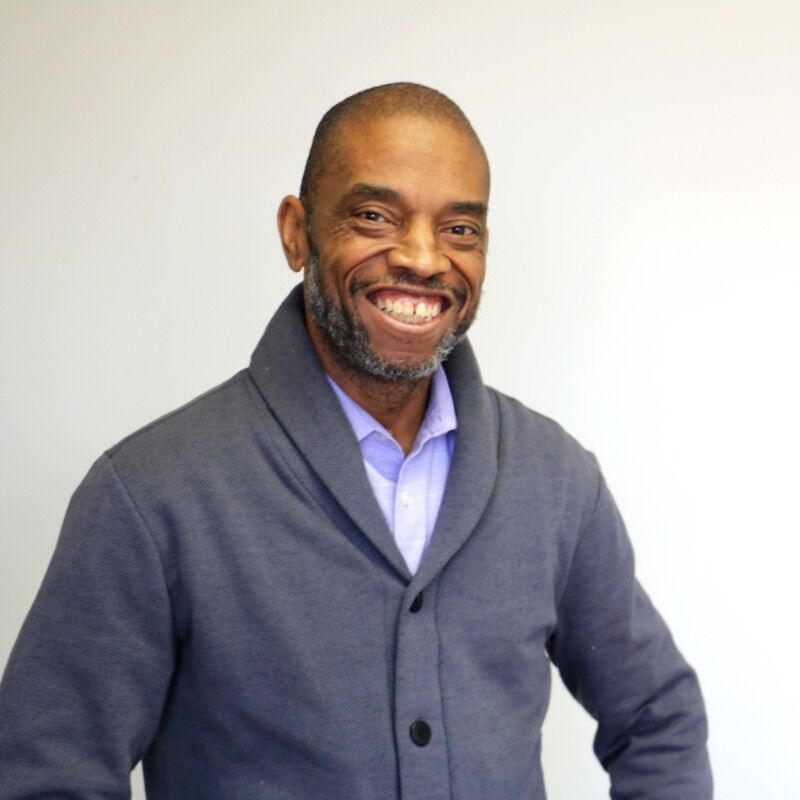
“Oftentimes, when you negotiate in public with a crowd around you and the media around you, there’s a tendency for people to want to be superstars,” Carroll said. “When you know that you’re being recorded or being written about, it changes the dynamic and, sometimes, you don’t get people’s most candid and honest assessments.”
He added: “The legislature needs to find a way to strike that balance between providing transparency and openness, with the ability to have candid discussions necessary to forge legislative compromise … in an environment where there’s not performative art.”
Carroll said he is “completely surprised” by the lawsuit, saying it is “disappointing” legislators felt the conflict couldn’t be resolved internally by working with leadership.
“I wish it didn’t come to that point,” he said.
This appears to be the first time a Colorado legislator has sued their own party or party leadership. There are no records of such lawsuits occurring in at least the last 20 years, according to the Office of Legislative Legal Services. Jeff Roberts, a former state legislative reporter who is now executive director of the Colorado Freedom of Information Coalition, said he has “never seen anything like” the lawsuit in his decades-long career.
Former state treasurer and former state Sen. Mark Hillman, R-Burlington, applauded the lawsuit. Hillman, who served as both Senate majority and minority leader in the early 2000s, said the allegations in the lawsuit go far beyond reasonable transgressions.
“It’s one thing if a couple legislators huddle behind closed doors to work out a difficult policy dilemma, but that is far different than a system broadly used for the specific purpose of avoiding scrutiny by the public or the press,” Hillman said. “Regardless of how or when this practice started, I hope legislative leaders will put an end to it now. It took courage for two freshmen lawmakers from very different perspectives to blow the whistle on this practice.”
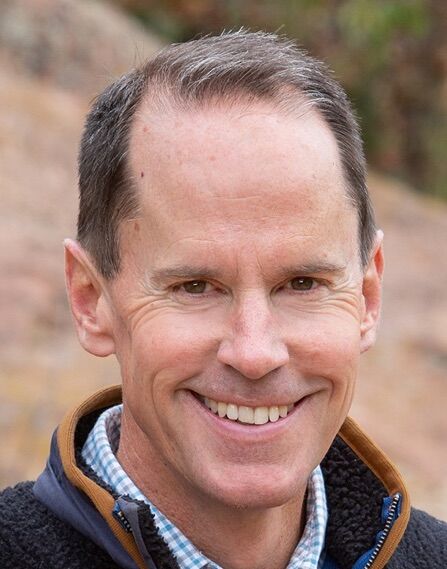
Marshall told Colorado Politics that he didn’t want the issue to go to the courts, and he’s still hoping to avoid a trial if House leadership confesses to the complaint and agrees to accept an injunction. That’s why they’ve held back on filing a preliminary injunction motion, he said.
Marshall said both he and Epps individually went to leadership for months trying to resolve the alleged open meetings violations. Marshall was under the impression that an interim committee would be assigned over the summer to analyze the open meetings law so the law – or the legislature’s operations – could be adjusted as needed next session.
But the committee was not appointed, and there was never even a vote to discuss it, he said. Then, Marshall learned of the alleged complaint made by a legislative staffer in 2022 and how that, too, resulted in no changes.
“I just didn’t see the institution being able to change without outside intervention,” Marshall said. “This is entrenched. This stuff’s been going on for decades, there’s no doubt. It’s just custom and practice.”
“This is meant to be a loving intervention with an alcoholic that just can’t change,” he added.
Rules for thee, not for me
It’s been just over 50 years since voters told the General Assembly they wanted more transparency in how lawmakers conduct the public’s business. Colorado’s Sunshine Law of 1972, a ballot initiative sponsored by the League of Women Voters and Common Cause, put the issue of open meetings at both the state and local public body level in front of voters.
It won widespread support, with approval from 60%?of voters.
The statutory* language is simple to understand: Wherever two or more lawmakers are gathered, that’s an open meeting, in which minutes must be taken and made available to the public.
The statutory citation for the Sunshine Law that became known as COML says: “It is declared to be a matter of statewide concern and the policy of this state that the formation of public policy is public business and may not be conducted in secret.”
Named after Florida where it was first passed, the Sunshine Law stemmed from growing distrust of government that started in the late 1960s and reached its peak during Watergate and the Nixon administration, according to former Capitol reporter Fred Brown.
Once adopted by voters in Colorado, lawmakers on either side of the aisle chafed at its provisions and, within a year, had filed a lawsuit seeking to declare it unconstitutional. They believed it conflicted with Article V Section 14 of the state constitution that says only that sessions of each house and committees of the whole shall be open “unless when the business is such as ought to be kept secret.”
But that’s the end of the section. The constitution doesn’t give any guidance on what could be kept secret and there’s never been a court case providing that kind of guidance.
Sen. Ralph Cole – a Republican who represented Arapahoe, Crowley, Douglas, Elbert and Lincoln counties – in December 1973 sought a declaratory judgment in Denver District Court, arguing COML did not apply to legislative caucus meetings, and that to apply the law to those gatherings violated his rights of free speech and association. The lower court ruled against him.
The Supreme Court upheld that decision, stating the open meetings law “was clearly intended to afford the public access to a broad range of meetings at which public business is considered.” The court believed citizens must be given “a greater opportunity to become fully informed on issues of public importance so that meaningful participation in the decision-making process may be achieved.”
The court also noted the General Assembly had provided exemptions to the law for certain gatherings, but legislative caucuses weren’t included. In addition, the court said, “while a legislative caucus is not an official policy-making body of the General Assembly, it is, nonetheless, a ‘de facto’ policy-making body which formulates legislative policy.”
Colorado Politics could find only one major lawsuit filed against the General Assembly for failing to comply with COML.
In 1978, the state Senate was sued for failing to provide timely notice of committee meetings. But the Colorado Supreme Court ruled Sen. Harold McCormick, who chaired the Senate business committee, provided appropriate notice by, among other things, relying on the secretary of the Senate to publish a list of all bills that could be considered on a particular day by his committee in the Senate calendar.
Still, Colorado legislators have seemingly been breaking the open meetings law since its inception.
“(The lawsuit) is bringing out allegations of things that people have known have been going on for a long time,” said Roberts of the Colorado Freedom of Information Coalition. “It’s not always easy to prove. That’s the thing. You suspect.”
Roberts, a state legislative reporter in the ’80s and ’90s, said even then, reporters would have to push their way into meetings when legislators ducked into backrooms to discuss policy in private. Sometimes legislators would stop talking when the reporters entered, or the reporters couldn’t get it or weren’t aware of the meetings at all.
As recently as 2020, a Colorado Politics reporter had to assert the open meetings law to gain access to a closed-door meeting among legislators, and then she was still asked to leave when the legislators decided they needed to call the governor.
On the last day of the 2020 session, the state Senate was poised to vote on appointments to the Colorado State Fair Authority board. The vote had been delayed for months after Coram and other Republicans complained about lack of representation on the board by Eastern Colorado residents and gained enough votes from Democrats to kill the appointments. Instead of holding the vote, Senate Majority Leader Steve Fenberg of Boulder canceled it.
Senators, including leadership of both caucuses, first gathered in the front of the chamber to discuss Fenberg’s decision. A bipartisan group of eight lawmakers then adjourned to Senate President Leroy Garcia’s office, with no announcement of the closed-door meeting.
During the meeting, Coram shouted at Fenberg, who accused Coram of trying to embarrass Gov. Jared Polis. Coram replied he viewed it as “an education for the governor.” Assistant Minority Leader Sen. John Cooke of Greeley said that it looked like Democrats were trying to protect the governor.
“If the votes are there, the votes are there,” Garcia said.
“Let’s find out!” Coram replied.
After 20 minutes, senators appeared to be at an impasse, and decided to call the governor. Colorado Politics reporter Marianne Goodland turned down a request from Senate Minority Leader Chris Holbert of Parker to step out of the room while they talked to him.
The call went forward, and Polis pledged to do better in the future with Eastern Plains representation on boards and commissions, although the vote on the three appointees never took place.
Open season on closed meetings
During the 2023 session, anyone could stand outside the Capitol’s south steps and watch as Democrats walk across the street to the First Baptist Church on Mondays around noon for their caucuses. Republicans have held their caucus meetings in a variety of places, both within the Capitol and in private offices outside of the Capitol complex.
Senate GOP Spokesman Josh Bly told Colorado Politics the meetings are open to the public and press, but left out the where and when.
“Accomplishing the peoples’ business requires our members to meet constantly,” Bly said in an email to Colorado Politics. During the 2023 session, “members met in a number of different venues and formats, from the corner of the Senate chamber, to committee hearing rooms and member offices, all of which were periodically visited by members of the public and press. This included a Monday morning meeting to review the legislative calendar and what may or may not happen during the week.”
Those meetings were never announced.
Through a spokesman, House Democrats, citing the pending legislation, refused to talk about their caucus meetings.
Besides alleged secret caucus meetings, Roberts said other violations of COML are more blatant. He pointed to the “quadratic voting” system the Colorado Democrats use to prioritize funding for legislation as an unrecognized transgression.
Since 2019, legislators have used secret ballots to rank which bills they want to get funding, with each legislator’s votes kept hidden from the public. The Colorado Freedom of Information Coalition wrote a letter to the legislature last year objecting to the practice, but Roberts said they never received a response.
“That’s not one of the allegations in this lawsuit, but to me it’s the same type of thing. They’re essentially meeting in secret to discuss the public’s business,” Roberts said. “Or in committee hearings where they get stuck on some question when they’re trying to decide a bill. Then they take a ‘senatorial five’ and go out of the room. They come back in the room, and they figured it out.”
“People let them do that, but is that what the law says?”
Lawmakers are routinely advised of their responsibilities under COML, most recently, in an updated opinion last October that clearly stated how the law applies to lawmakers.
While the memo from the Office of Legislative Legal Services pointed out the basics of the law, its scant enforcement was a topic of concern in a publication on open meetings from the Colorado Municipal League.
The publication warned the potential for a “serious loss of confidence in the government when official actions are invalidated because laws aimed at assuring open government are violated.”
Brown believes the legislature’s adherence to transparency has gotten worse over the years, noting that legislative caucuses used to be held as open meetings before they were even required to.
A longtime member of the Colorado Freedom of Information Coalition, Brown said the group is seeing more problems with each passing year.
“There’s a certain self-fulfilling prophecy about laws like this. If people pass laws that say ‘we can’t trust government to do the right thing,’ people who would do the right thing” won’t, he said.
Marshall said his and Epps’ experience dealing with the open meetings law made them especially sensitive to spotting violations when they took office in January, saying he doesn’t blame his colleagues or House leadership for continuing the status quo. Marshall is also the plaintiff in a lawsuit alleging the Douglas County Board of Education violated Colorado’s open meeting laws when planning former superintendent Cory Wise’s ouster by using a series of one-on-one and private meetings.
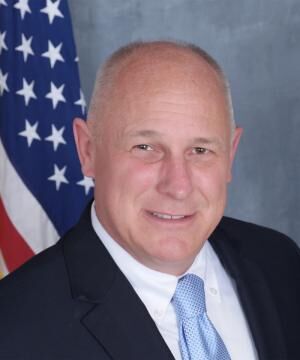
But even if not malicious, Marshall said the constant violations have made it difficult to do his job, in addition to requiring legislators to choose between “knowingly violating the law or representing our constituents properly” by participating in illegal meetings where policy decisions are made.
“I’m on the Judiciary Committee and we’re yelling at county sheriffs who won’t enforce the law, rightfully so. And we’re yelling at the governor because they don’t put together transparent rules to do pardons and clemency, rightfully so. … It’s kind of hard to do that when you’re being a hypocrite,” Marshall said.
Ultimately, Marshall said he wants to adjust COML to make it more manageable for the legislature. He suggested, for example, no longer classifying emails between legislators as open meetings, but said he is willing to discuss any potential changes that would help end the current culture of disregarding the law completely.
“We’re blatantly and brazenly violating (COML) constantly,” Marshall said. “The law is clear on what we’re supposed to be doing and we’re not. The answer is not to just ignore it, the answer is to change it.”
Correction: An earlier version of this story noted Colorado lawmakers must publicly notice all meetings. Lawmakers must publicly notice meetings where formal action taken, or a quorum is expected to be present. In addition, the Sunshine Law is statutory, not constitutional.

Federal judge dismisses ex-Colorado judicial discipline director’s conspiracy lawsuit
Michael Karlik
michael.karlik@coloradopolitics.com
Updated 9 hours ago
A federal judge dismissed a lawsuit from Colorado’s former judicial discipline director on Tuesday, finding that he failed to adequately state claims for conspiracy or constitutional violations. Christopher S.P. Gregory, who served as the executive director of the Colorado Commission on Judicial...
Federal judge allows retaliation claims to proceed against prison officials
Michael Karlik
michael.karlik@coloradopolitics.com
Updated 7 hours ago
A federal judge agreed last week that a man incarcerated at Sterling Correctional Facility had credibly alleged that employees retaliated against him for filing grievances, including by taking away his disability accommodations and turning off his electricity. Louis Peoples Jr.,...
Treasury releases five-step guidance for employers to make contributions to Trump Accounts
Christian Datoc
christian-datoc@coloradopolitics.com
Updated 13 hours ago
Treasury Secretary Scott Bessent published new guidance Tuesday outlining the specific steps employers must take to contribute to employee Trump Accounts. The accounts, one of the most popular provisions included in President Donald Trump’s One Big Beautiful Bill Act, are...

Denver schools to refinance bonds to create capacity for future borrowing
Nico Brambila
nico.brambila@denvergazette.com
Updated 10 hours ago
Less than two years after voters approved a record $975 million school bond, Denver Public Schools is refinancing older debt — a move district officials say will save taxpayers money while creating capacity for another bond election. The district has...

Russia frees imprisoned US Marine over health concerns
Brady Knox
brady-knox@coloradopolitics.com
Updated 14 hours ago
Russia freed former U.S. Marine Robert Gilman upon the urging of U.S. officials so he could receive medical care in the United States. Gilman, 32, was released after 1,666 days in prison, having been arrested on Jan. 17, 2022. Eric...

Colorado students push AI task force as schools navigate new tech era
Marissa Ventrelli
marissa.ventrelli@coloradopolitics.com
Updated 7 hours ago
A group of students is urging lawmakers to establish a task force on artificial intelligence in education to advise districts on how to ensure that pupils and educators use the technology effectively without becoming overly reliant on it. The students...

Parker data center could get $19M tax rebate from Douglas County
Nicholas Fogleman
nicholas.fogleman@denvergazette.com
Updated 16 hours ago
At a time when Denver and Front Range governments are restricting or banning data center development, Douglas County commissioners are poised to approve a $19.3 million tax rebate agreement Tuesday for a new data center under construction in Parker. The...
Denver City Council rejects contract that would have given video maker 8-year deal
Deborah Grigsby
deborah.smith@denvergazette.com
Updated 19 hours ago
Denver’s Office of Human Resources will have to get creative to attract new city employees and place them in “hard-to-fill” jobs after a proposed five-year contract extension, valued at $600,000, failed to gain favor with the Denver City Council. The...
Denver Mayor Mike Johnston files to run for reelection in 2027
Michael Braithwaite
michael.braithwaite@gazette.com
Updated 19 hours ago
Denver Mayor Mike Johnston officially filed his paperwork Monday to run again for Denver’s mayoral office next year. The filing comes weeks after Johnston confirmed to The Denver Gazette that he would seek reelection as he focuses the final year...

U.S. Rep. Lauren Boebert’s son arrested, faces charges of sexual exploitation of minor
Matt Kyle
matt.kyle@denvergazette.com
Updated 1 day ago
U.S. Rep. Lauren Boebert’s son Tyler Jay Boebert has been arrested and accused of recording and sharing a video depicting himself having intercourse with a minor, according to court records. The case originated in Garfield County in Western Colorado and...
PREV
PREVIOUS

Denver residents seek renewed focus on ending traffic deaths: 'Lives are at stake'
Since Mayor Michael Hancock committed to eliminating traffic deaths seven years ago, Denver’s roads have only gotten deadlier. As Mayor-elect Mike Johnston prepares to take the city’s reins, Denverites are asking for change. More than 100 Denver residents squeezed into a packed rec room on Thursday evening for the chance to tell Johnston how he […]

Colorado legislature takes first steps to defend lawsuit filed by own members
After two lawmakers alleged in a lawsuit Colorado’s legislature habitually violates the state’s open meetings law, the General Assembly’s Committee on Legal Services on Friday took the first steps to figuring out how to respond legally. Members of the committee opted to hire two attorneys well known in political circles to represent those named defendants […]