

Colorado universities signal modifying DEI approach after Supreme Court strikes down affirmative action
Colorado universities signaled they would modify their approach to diversity goals following the U.S. Supreme Court’s decision to strike down the race-based components of the admissions programs at Harvard College and the University of North Carolina.
Education officials said their commitment to “diversity, inclusion, equity and access” will “not diminish.”
But the overarching question facing universities is how.
A statement from the University of Colorado – signed by the president and chancellors – hints at how the educational system intends to achieve its diversity goals in light of the court’s sweeping conclusion that “eliminating racial discrimination means eliminating all of it.”
“Many universities have for too long wrongly concluded that the touchstone of an individual’s identity is not challenges bested, skills built, or lessons learned, but the color of their skin,” the court’s opinion stated. “This Nation’s constitutional history does not tolerate that choice.”
In response, the university noted that diversity also encompasses “demographic characteristics, while also encompassing diverse life experiences and perspectives.”
“We will continue to employ admission processes that consider the whole student and their ability to succeed in our academically rigorous and supportive environment,” the officials said. “Our dedication to cultivating a diverse university community runs deep. In fact, our board has set policy that makes it clear that diversity encompasses demographic characteristics while also encompassing diverse life experiences and perspectives.”
In a separate statement, CU Boulder Chancellor Philip DiStefano said the court’s decision “recognizes that universities may still consider the unique experiences of individual students, which might include how race has affected the applicant’s life.”
“Those experiences,” he added, “can demonstrate an applicant’s unique ability to contribute to the university.”
DiStefano was referring to the court’s opinion that said nothing prohibits universities from considering an applicant’s “discussion of how race affected the applicant’s life, so long as that discussion is concretely tied to a quality of character or unique ability that the particular applicant can contribute to the university.”
CU Boulder, in particular, outlined several approaches to achieve its goals “consistent with the principles” of the court ruling.
Those approaches include employing admission processes that “consider the whole student and their ability to succeed in our academically rigorous and supportive environment”; “aggressively” recruiting students from minoritized backgrounds; awarding financial aid to students who demonstrate academic promise and financial need; and, creating a “welcoming living and learning communities.”
The university also it would “amplify the voices of marginalized communities.”
Colorado College leaders took a similar approach.
In a statement signed by President L. Song Richardson and other officials, the college said the decision “does not prevent us from doing what we have always done.”
“We will continue to consider how each student’s background, strengths, and characteristics contribute to our intellectually stimulating, creative, and unique community. We will continue to admit talented and well-rounded students who think differently, demonstrate courage and resilience, have the enthusiasm to learn within our immersive Block Plan, and seek to collaborate with and learn from diverse communities,” the officials said.
CSU President Amy Parsons sent to campus this morning following the SCOTUS decision on Affirmative Action. You’ll also find a statement CSU System Chancellor Tony Frank shared.
Meanwhile, Colorado State University President Amy Parsons sought to reassure students considering going to CSU that the court decision would not effect them.
“This constitutional ban on race-conscious admissions will impact admissions practices at many institutions. Here at CSU, the court’s decision will not affect the undergraduate admissions process we have had in place for decades,” Parsons said. “CSU’s process assesses the student holistically through a wide range of factors, including personal experiences and academic achievements. At CSU, a public land-grant university, no qualified student is turned away from earning a world class 4-year degree.”
Because MSU is a modified open access institution with 54% of the student body at are people of color, officials there said they believe the court’s decision will not have a direct impact.
“This has been coming for a while,” said Vaughn Toland, MSU director of admissions and outreach. “It’s not a huge shock, the decision.”
Justices created a carveout in their ruling. Military service academies – such as the Air Force Academy just north of Colorado Springs – are exempt from the ban. This means, at least for now, that military academies can continue using race as a factor in admissions. Dean Miller, an Academy spokesperson, declined to comment on the ruling.
Some faculty members blasted the court ruling, calling the idea of “colorblindedness … a complete farce.”
Alexi Freeman, associate dean of Diversity, Equity and Inclusion at the University of Denver’s law school, said her classroom benefits when people with varying “lived experience” are included. Speaking for herself and not on DU’s behalf, she added that affirmative action has helped institutions reckon with the historical lack of access to educational opportunities some communities have experienced due to racism.
“As a woman of color, I cried this morning thinking about the validation of the concept of colorblindness,” Freeman said. “Colorblindness is a complete farce, but has essentially been sanctioned by this Court. How terrifying and disappointing.”
The fallout from the landmark U.S. Supreme Court’s 6-3 decision will likely mean a decline in students from historically underrepresented backgrounds, several postulated.
In the lead up to Thursday’s decision by nation’s highest court, officials at the Colorado Department of Higher Education based that assessment on laws enacted in Michigan and California that prohibited race-based admissions, which resulted in admission declines among racial minorities in those states.
In a University of Michigan amicus brief supporting Harvard University and the University of North Carolina – the two universities at the center of the case – officials noted that the institute experienced a sharped drop in minority enrollment, with the number of Black students falling by 44% and Native American by 90%.
At least nine states – California, Washington, Florida, Michigan, Nebraska, Arizona, New Hampshire, Oklahoma and Idaho – have banned affirmative action in college admissions.
Nearly 20% of four-year universities in the U.S. reported in 2015 that they considered race in the admissions process, according to BallotPedia.
It’s unclear how many Colorado institutions of higher education make race-conscious admissions.
The state doesn’t track this, said Megan McDermott, a Colorado Department of Higher Education spokesperson.
“Today’s Supreme Court decision to end almost all consideration of race in college admissions – putting an end to affirmative action in higher education – is troubling, disappointing, and will alter the lives of many students of color in pursuit of their dreams and the entire student body that benefits from a diverse student population,” Angie Paccione, executive director of the Colorado Department of Higher Education, said in a statement.
Paccione added, “During our history, race too often resulted in economic disadvantages and missed educational opportunities and access. Colorado will continue to prioritize and lead to erase equity gaps and help all students realize their dreams.”
Reaction to the court decision was swift, although many also anticipated it.
State House Minority Leader Mike Lynch lauded the court’s decision.
“No American under our U.S. Constitution should ever be denied opportunity because of the color of their skin or because of their race,” Lynch said. “Many brave Americans, over the course of several generations have died to ensure these rights and today our highest court has again correctly affirmed this fact to be true.”
“Today’s Supreme Court decision is good news for all of us: Students will now be able to compete based on equal standards and individual merit,” he added.
Colorado Attorney General Phil Weiser called the ruling “misguided” and harmful to America’s higher education.
“Under the Court’s ruling, preference for legacy admissions will be permitted, but efforts to open the doors of higher education to previously excluded groups who still face barriers to equal opportunity and to ensure diverse learning environments will not,” Weiser said in a statement. “Moreover, studies and history tell us that colleges and universities will likely see a sudden drop in Black and Hispanic enrollment because of the Court’s ruling. This ruling will cause unneeded disruption and harm to our universities, students, and administrators.”
U.S. Senator Michael Bennet, a Democrat, agreed.
“Today’s Supreme Court decision undermines our nation’s promise of equal opportunity for all, especially for those citizens who have been historically denied it,” Bennet said in a statement.
So did state state Senate President Steve Fenberg: “I am disappointed in today’s ruling which will exacerbate racial inequities by closing off pathways for students who otherwise would not be given the opportunity to attend those institutions, a result that will unfortunately harm both those students and higher education institutions in general.”
In a joint statement, state House Speaker Julie McCluskie, Majority Leader Monica Duran, and Assistant Majority Leader Jennifer Bacon said they, too, are disappointed by the ruling, saying the U.S. Supreme Court has “struck down the decades-old admissions practice that offsets the disparity in opportunities that kids of color face.”
“For many, affirmative action was seen as a small, but critical remedy to right centuries of deliberate discrimination that prevented advancement for racial minority groups. Today’s ruling creates additional barriers for hopeful college students, limiting their access to quality higher education and impacting future financial stability and socioeconomic mobility,” they said.
They added: “Just as we’ve done in the past with reproductive rights, we will continue to support the work done over decades to further protect the diverse people who are America. We stand with kids across Colorado and the country – we must work to ensure all of our students have the opportunity to thrive in higher education and beyond.”
U.S. Rep. Ken Buck, a Republican, welcomed the ruling.
“I applaud this decision by the Court as a first step to bringing our collegiate institutions back to merit-based admissions,” he said on Twitter.
U.S. Rep. Lauren Boebert, also a Republican, echoed the view.
“Affirmative action is unconstitutional and has always been unconstitutional,” she said on Twitter. “This country should only be based on merit, not racism. This ruling will go a long way towards achieving a country where we are judged by the content of our character, rather than the color of our skin.”

10th Circuit finds no fair housing violation by Littleton landlord for worker’s alleged rape of tenant
Michael Karlik
michael.karlik@coloradopolitics.com
Updated 2 hours ago
The Denver-based federal appeals court concluded on Monday that Littleton’s housing authority could not be held liable for a maintenance worker’s alleged rape of a tenant, as the worker’s employment did not provide any special access to the victim. A...
Fauci’s Fifth Amendment answers may test Biden pardon as GOP eyes contempt
Kaelan Deese
kaelan-deese@coloradopolitics.com
Updated 1 hour ago
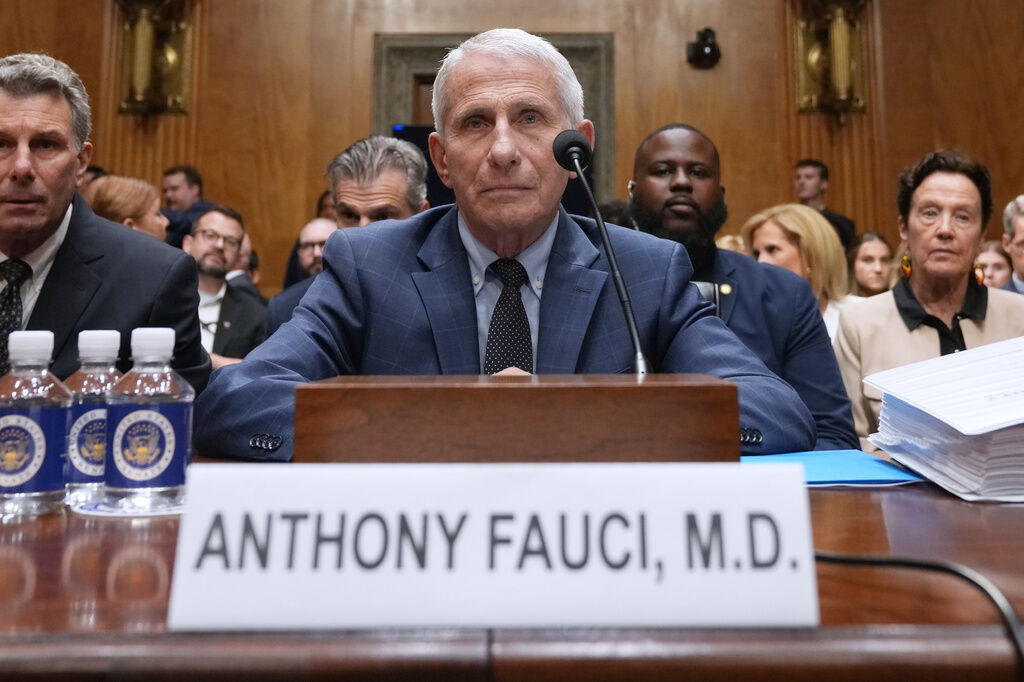
Dr. Anthony Fauci invoked his Fifth Amendment right against self-incrimination more than 100 times on Wednesday, a move legal experts described as strategically sound despite the politically damaging optics. Sen. Rand Paul (R-KY), chairman of the U.S. Senate Committee on...

Democrats must win 57 out of 77 competitive House seats to take majority: Cook Political Report
Hailey Bullis
hailey-bullis@coloradopolitics.com
Updated 3 hours ago
Democrats’ path to retaking the House in November has significantly slimmed as a result of the mid-decade redistricting war this cycle, a new analysis found. The nonpartisan Cook Political Report found that under the newly drawn maps across 10 states,...
Denver labor acknowledgment proposal faces council committee questions
Deborah Grigsby
deborah.smith@denvergazette.com
Updated 7 hours ago
A proposal to add a labor acknowledgment to Denver City Council proceedings has been delayed by the Finance and Business Committee after members raised questions about its wording, intentions and place in the council’s opening proceedings. The proposal, put forth...
Fauci invokes the Fifth Amendment and declines to testify in GOP-led Senate panel’s COVID-19 hearing
The Associated Press
the-associated-press@coloradopolitics.com
Updated 9 hours ago
WASHINGTON (AP) — Dr. Anthony Fauci on Wednesday invoked the Fifth Amendment and declined to answer questions from senators in a Republican-led committee hearing about his handling of the COVID-19 pandemic. The move injects new drama into the lingering tensions...

Colorado residents rush to buy guns ahead of new restrictions, breaking sales records for several stores
By Debbie Kelley
by-debbie-kelley@coloradopolitics.com
Updated 8 hours ago
Colorado residents are lining up to buy guns ahead of the latest weapons restrictions set to take effect this Saturday. The new law mandates individuals seeking to purchase semiautomatic firearms with detachable magazines to first complete a firearm safety course...

Crime continues to decline in Aurora, police chief says
Kyla Pearce
kyla.pearce@gazette.com
Updated 8 hours ago
Crime in Aurora continued to decline in the first half of 2026, according to Aurora Police Department officials. Crime overall in the city has been on a downward trend since 2024, according to APD. Between Jan. 1 and June 30,...

El Paso County rejects multi-family zoning request near Monument Academy
Savannah Eller
savannah-eller@coloradopolitics.com
Updated 7 hours ago
The El Paso County Board of Commissioners narrowly rejected a developer’s bid to convert land from low- to high-density residential zoning. The request, made by MA Infrastructure, LLC, would have allowed 12 units per acre on half of a 14-acre...
Atop taxes, here’s how much each Colorado resident pays in fees
Marissa Ventrelli
marissa.ventrelli@coloradopolitics.com
Updated 24 hours ago
Each Colorado resident paid nearly $5,000 in state-sanctioned fees last year, according to a report by a policy think tank. The report, which analyzed how fees have affected Colorado’s economy, found that fee revenue has more than tripled since 2008...

Colorado National Guard, Swiss Armed Forces celebrate partnership
Marissa Ventrelli
marissa.ventrelli@coloradopolitics.com
Updated 2 hours ago
Colorado’s National Guard marked a year of partnership with the Swiss Armed Forces at the Governor’s Mansion on Monday. “This anniversary marks one strong year of friendship and collaboration between the State of Colorado and Switzerland,” said Gov. Jared Polis....
PREV
PREVIOUS

Colorado appeals court, 2-1, reverses sex assault convictions due to testimony about victim's reaction
A Boulder County judge was wrong to permit an alleged victim of sex assault and three of her friends or coworkers to testify about how she changed after the disputed rape, Colorado’s second-highest court ruled last month in reversing the defendant’s convictions. By 2-1, a three-judge panel for the Court of Appeals concluded the victim’s […]

New members to Colorado's judicial discipline commission could mean new direction
Half the membership of Colorado’s judicial discipline commission is expected to be replaced by new appointees as early as Friday, a move that could put the panel on a new path during a crucial transition to how it does its work. The appointments of six of the panel’s 10 members expire July 1, leaving Gov. […]