

Colorado Supreme Court, 4-3, finds Thornton detectives coerced murder suspect into talking

Two Thornton detectives made multiple misleading statements to a murder suspect before asking him to give up his Miranda rights, effectively coercing the man into talking, the Colorado Supreme Court ruled on Monday.
Detectives repeatedly reassured Thorvyn Bullcalf Evan Smiley he would leave the interrogation room a free person and was “not in trouble.” They also attempted to paint Smiley’s Miranda rights as a minor paperwork issue. In reality, Smiley was their only suspect in an unsolved murder and the detectives would arrest him after Smiley agreed to talk.
By 4-3, the Supreme Court agreed with an Adams County trial judge that Smiley’s statements in the interrogation room, including his confession to the murder, cannot be used as evidence. Given the detectives’ misleading promises about his freedom, Smiley’s decision to give up his Miranda rights – namely the right to remain silent and to consult with an attorney – was not voluntary, the majority concluded.
“By telling Smiley that he was not in trouble and that he would be leaving the police station that day, the detectives were engaging in a form of psychological coercion for which the law has less tolerance,” wrote Justice William W. Hood III in the June 12 opinion.
Writing in dissent, Justice Carlos A. Samour Jr. slammed the majority’s opinion, claiming it would cripple the ability of police to “effectively investigate crimes.”
“At most, the detectives’ statements lulled Smiley into feeling comfortable and safe. But that does not constitute coercion – psychological or otherwise,” Samour argued, writing for himself, Chief Justice Brian D. Boatright and Justice Monica M. Márquez.
Although the Supreme Court’s majority readily acknowledged law enforcement is not required to be completely forthright during interrogations, Smiley’s case examined the degree to which police can mislead suspects immediately before asking them to give up their constitutional protections and potentially incriminate themselves.

In September 2021, Thornton police received a break in a murder case. They had encountered Jamie William Whitehead near a restaurant dumpster 10 months prior, dead. Now, authorities learned Smiley’s DNA and fingerprints were found on items at the scene.
Detectives Melissa Hawkins and Eloy Silva traveled to Farmington, N.M., where Smiley was recently arrested for an unrelated offense. They came equipped with an order to take Smiley’s DNA, fingerprints and palm prints. While Smiley was their only suspect, Hawkins and Silva did not yet have probable cause to arrest him.
In the interrogation room, the detectives elicited a key piece of incriminating information from Smiley: that he had been in the Denver area at the time of Whitehead’s murder. Hawkins then mentioned the need to read Smiley his Miranda rights – a product of the U.S. Supreme Court’s Miranda v. Arizona decision, which found it necessary to protect suspects from being pressured into incriminating themselves. Hawkins’ mention of Miranda rights prompted a visible reaction from Smiley.
“You’re not in trouble,” she reassured Smiley. “You are leaving here today.”
After Silva echoed that Smiley would walk out of the interrogation room and Hawkins repeated it for the third time, Hawkins said, falsely, the detectives needed to read Smiley’s Miranda rights “just because we are from out of state and stuff like that.”
Silva then characterized Smiley’s rights against self-incrimination and to a lawyer as “just a form … like on TV.” Smiley agreed to relinquish his rights and speak to the detectives. After Smiley confessed to the murder, the detectives arrested him.
In October 2022, District Court Judge Robert W. Kiesnowski Jr. considered whether Smiley had voluntarily given up his rights, in which case his incriminating statements could be used against him, or, alternatively, whether the detectives coerced him into talking. Kiesnowski concluded Hawkins and Silva’s deceit played a significant role in Smiley’s decision to forgo his constitutional protections.
“Here, central to the voluntariness issue is the fact that immediately before Mr. Smiley was Mirandized, Detectives Hawkins and Silva stated to Mr. Smiley that he was not in trouble and twice that he would be leaving the Farmington Police Department ‘today’,” Kiesnowski wrote. “Detectives Hawkins and Silva knew that their statements that Mr. Smiley was not in trouble were false and that they acted with a reckless disregard as to the truth or falsity of whether Mr. Smiley was leaving the Farmington Police Department as a free man.”
The 17th Judicial District Attorney’s Office appealed directly to the state Supreme Court. Hawkins and Silva’s statements about Smiley’s freedom were technically true, the prosecution argued, because they only developed probable cause after hearing Smiley talk.
“Simply put, it is unreasonable to require law enforcement to anticipate that a suspect will confess to a crime – particularly one as serious as murder – and choose their words beforehand accordingly,” wrote Senior Deputy District Attorney Todd Bluth.
The Supreme Court’s majority disagreed. Hood described a suspect’s Miranda rights as akin to throwing someone a lifeline who is floating down a river. The suspect can invoke his rights – taking the lifeline – or choose to continue unaided. But if police claim the lifeline is unnecessary, the suspect’s choice to give up his constitutional protections may have been corrupted by the false promise.
Hawkins and Silva made “affirmative misrepresentations apparently employed to trick Smiley into waiving his rights and making inculpatory statements,” Hood wrote. “The detectives also couldn’t honestly promise that Smiley would be leaving after talking to them. Yet, they did anyway.”
Consequently, the detectives’ actions played an improper role in coercing Smiley’s decision to talk, the majority decided. The Innocence Project has estimated that false confessions, which can be the product of coercive interrogations, were a factor in 29% of exonerations by DNA.
The dissenting justices downplayed the relevance of Hawkins and Silva’s statements. Samour disagreed the detectives had promised Smiley anything, and argued they had not said Smiley would “never” be in trouble. He noted the interrogation took place in a “spacious” room and the detectives had not even threatened Smiley.
“Where was the exploitation here?” Samour asked. “If that’s all it takes, then every legitimate police interrogation will inherently involve exploitation of a defendant’s vulnerability. The reality is that there was zero exploitation.”
The case is People v. Smiley.


Colorado board permits state to appeal injunction against arthritis drug price cap
Marissa Ventrelli
marissa.ventrelli@coloradopolitics.com
Updated 12 hours ago
A Colorado board voted Friday to allow the Attorney General’s Office to fight an injunction against a price cap on a drug that treats arthritis. A U.S. district court judge had granted the company Amgen a preliminary injunction, temporarily blocking...

Federal judge rejects constitutional claims, ‘expressions of hatred’ by Club Q defendant
Michael Karlik
michael.karlik@coloradopolitics.com
Updated 12 hours ago
A federal judge rejected a defendant’s claims that he received constitutionally ineffective assistance of counsel while facing federal hate crime and firearms charges for murdering five people at a Colorado Springs LGBTQ nightclub in 2022. Anderson Lee Aldrich is serving...

Divided 10th Circuit upholds Colorado congestion fee on car rentals
Michael Karlik
michael.karlik@coloradopolitics.com
Updated 8 hours ago
The Denver-based federal appeals court concluded on Monday that a 2024 “congestion impact fee” that lawmakers imposed on short-term vehicle rentals did not conflict with a federal prohibition on certain airport-related charges. Beginning in the 1970s, Congress began limiting the...
10th Circuit dismisses woman’s lawsuit following 10-year attempt to undo restraining order
Michael Karlik
michael.karlik@coloradopolitics.com
Updated 3 days ago
The Denver-based federal appeals court rejected a woman’s challenge on Friday to a restraining order imposed on her more than a decade ago, finding that she cannot credibly claim she will be prosecuted for violating the restraining order through her...
10th Circuit dismisses woman’s lawsuit following 10-year attempt to undo restraining order
Michael Karlik
michael.karlik@coloradopolitics.com
Updated 4 days ago
The Denver-based federal appeals court rejected a woman’s challenge on Friday to a restraining order imposed on her more than a decade ago, finding that she cannot credibly claim she will be prosecuted for violating the restraining order through her...
Colorado equal pay law does not require plaintiffs to allege gender-based retaliation, appeals court finds
Michael Karlik
michael.karlik@coloradopolitics.com
Updated 3 days ago
The 2019 Colorado law aimed at rooting out pay discrimination on the basis of sex does not require a plaintiff to allege their employer retaliated against them for sex- or gender-related reasons, the state’s second-highest court decided on Thursday. Lawmakers...
Hudson faces lawsuit over ICE detention facility
Nicole C. Brambila
nicole-c-brambila@coloradopolitics.com
Updated 4 days ago
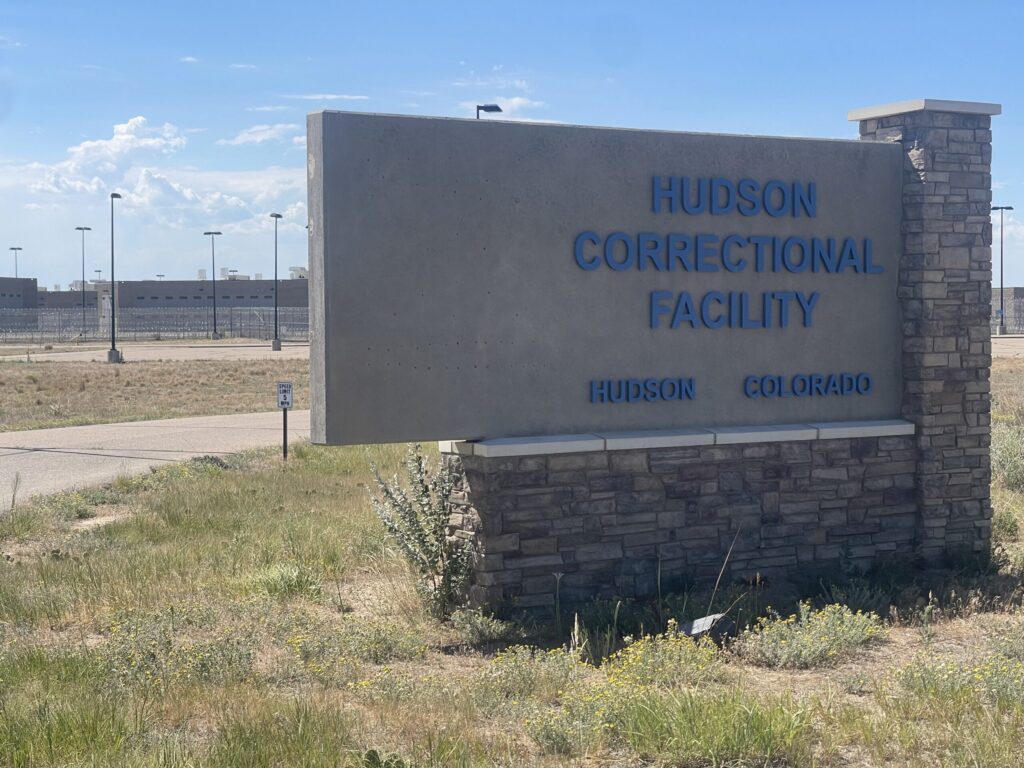
A nonprofit organization filed a lawsuit against the Town of Hudson Wednesday, challenging plans to reopen a former federal prison in the town as a U.S. Immigration and Customs Enforcement detention facility. Together Colorado, along with Janet E. Carlson, filed...
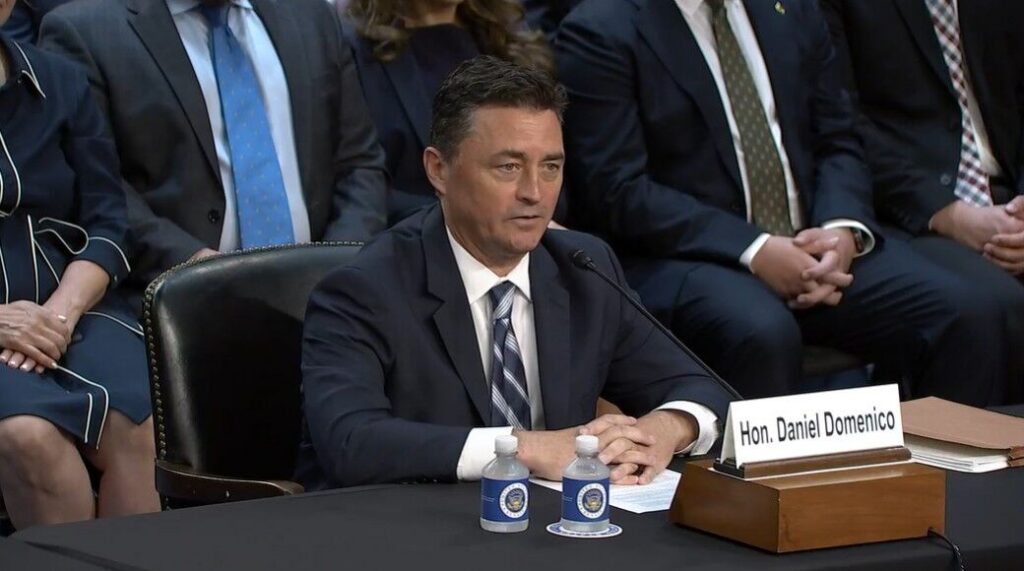
Senate committee advances Trump’s 10th Circuit nominee, as Domenico responds to questions about delays
Michael Karlik
michael.karlik@coloradopolitics.com
Updated 4 days ago
The U.S. Senate Judiciary Committee advanced President Donald Trump’s nominee to the Denver-based federal appeals court on Thursday by a party-line vote of 12-10. U.S. District Court Judge Daniel D. Domenico, who was Trump’s first-term appointee to Colorado’s federal trial...
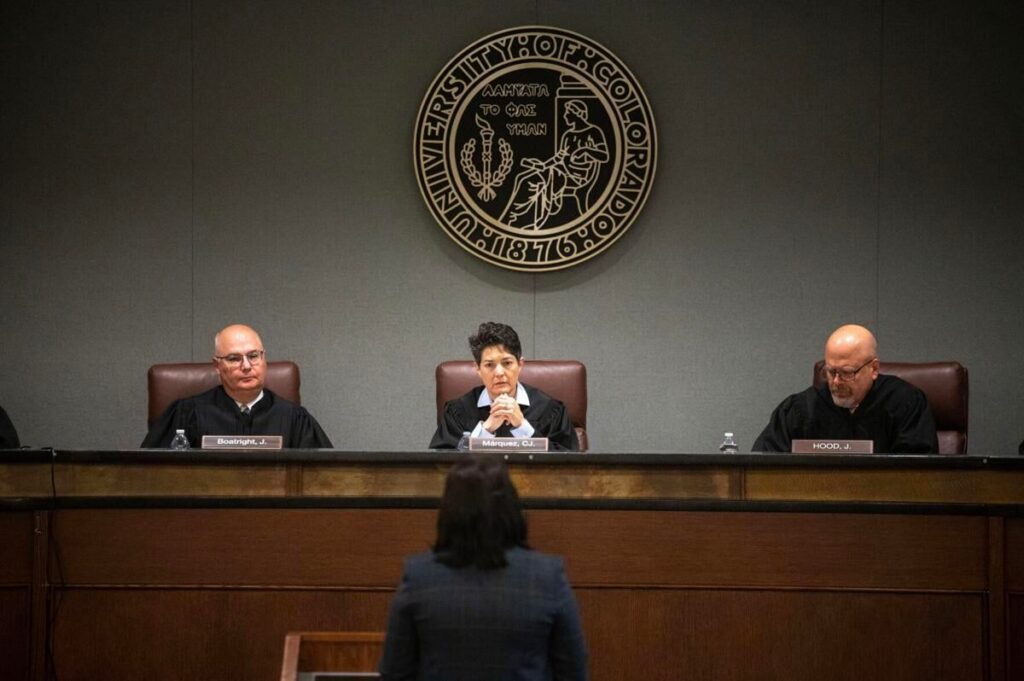
Colorado justices to hear embryonic donation dispute
Michael Karlik
michael.karlik@coloradopolitics.com
Updated 4 days ago
The Colorado Supreme Court announced on Monday that it will decide whether lower court judges properly applied its framework for adjudicating disputes over the fate of pre-embryos, in which one person wants to use them to become a parent and...

Isolation, emotion, persona: Colorado judicial programming prepares people for life on the bench
Michael Karlik
michael.karlik@coloradopolitics.com
Updated 5 days ago
As a trial judge and now as a member of the Colorado Supreme Court, Justice Carlos A. Samour Jr. has heard the view that being a judge is isolating. “In neither court have I felt isolated. I’ve always interacted a...
PREV
PREVIOUS
Q&A with Rep. Ron Weinberg | First-year lawmaker on building bridges
The 2023 legislative session was one of the most contentious the state has seen. But you wouldn’t know that from watching Rep. Ron Weinberg. In a year defined by dissension, the first-year Republican lawmaker from Loveland stood out as a beacon of camaraderie and bipartisanship. From grilling dinner for the lawmakers during late-night debates to being […]

Colorado Supreme Court, 4-3, orders new trial after judge blocked defense from questioning alternate suspect
In the face of strong evidence suggesting a woman sentenced to four years in prison for burglary did not actually commit the crime, the Colorado Supreme Court on Monday agreed a Weld County judge improperly barred the defense from questioning an alternate suspect during trial. The 4-3 decision held that the inability of Nora Hilda Rios-Vargas […]