

Biden administration says huge lithium mine can proceed under 1872 Mining Law | OUT WEST ROUNDUP
NEVADA
Feds say huge lithium mine can proceed under 1872 Mining Law
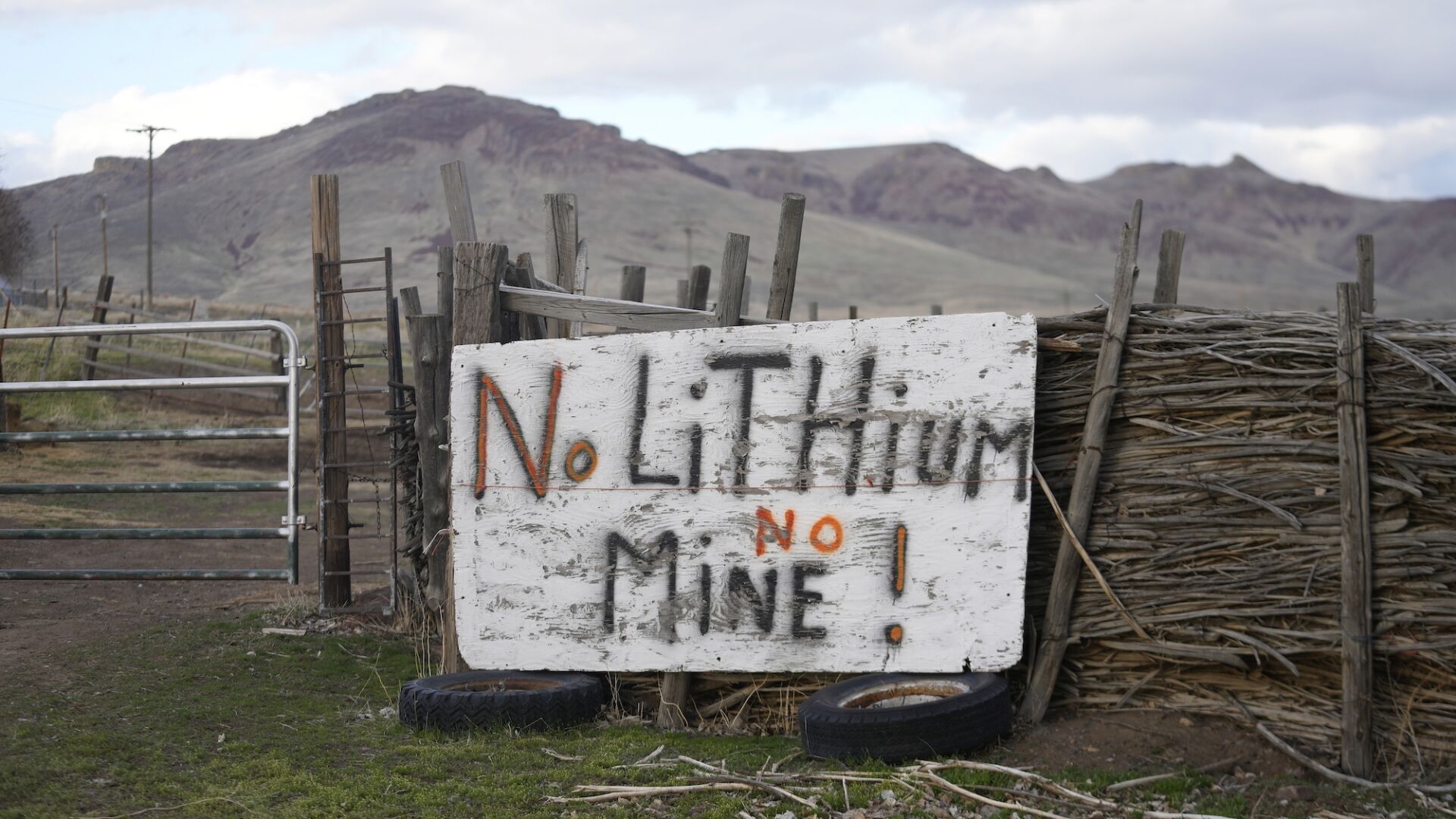
RENO – The Biden administration says it has completed a court-ordered review that should ensure construction continues at a Nevada lithium mine, despite legal challenges brought by conservationists and tribal leaders.
At the same time, in a broader response to recent U.S. court rulings that more strictly interpret a Civil War-era mining law, the Interior Department announced on May 16 it is taking steps to clarify mineral rights under the 1872 law to reflect the “realities of the 21st century.”
Lithium is a key element needed to manufacture batteries for electric vehicles – a centerpiece of President Joe Biden’s “clean energy” agenda intended to expedite a transition from fossil fuels to renewable forms of energy.
The 9th Circuit’s so-called “Rosemont decision” upended the government’s long-held position that the 1872 Mining Law conveys the same rights established through a valid mining claim to adjacent land for the disposal of tailings and other waste. The 9th Circuit held instead that the company must establish – and the government must validate – that valuable minerals are present under such lands for a claim to exist.
U.S. District Judge Miranda Du in Reno adopted the new standard in a ruling in February that found the U.S. Bureau of Land Management failed to comply with the law when it approved a Canadian company’s plan to open the Thacker Pass mine about 200 miles northeast of Reno.
Interior Department officials announced on May 16 that the land management bureau has completed the review necessary to establish mineral rights on the land adjacent to Lithium Americas’ project and is convinced it will satisfy Du’s requirement.
A group of Native Americans and some supporters have been staging a protest since near the site where the open pit mine is planned. The mine would ultimately be deeper than the length of a football field. They say federal law prohibits construction of the project near where dozens of Paiute tribal members were massacred by the U.S. cavalry in 1865.
NEW MEXICO
US greenlights major transmission line for renewable energy
ALBUQUERQUE – The U.S. government is greenlighting a proposed multibillion-dollar transmission line that would send primarily wind-generated electricity from the rural plains of New Mexico to big cities in the West.
The Interior Department announced its record of decision for the SunZia project on May 18. It comes about a year after an environmental review was completed as part of a broader effort by the Biden administration to clear the way for major transmission projects as it looks to meet climate goals and shore up the nation’s power grid.
The SunZia transmission project in New Mexico has been more than a decade in the making. The U.S. Defense Department and others initially raised concerns about the path of the high-voltage lines, prompting the developer to submit a new application in 2021 to modify the route.
New Mexico’s renewable energy authority is among those invested in the SunZia project, which would include roughly 520 miles of transmission lines and a network of substations for getting wind and solar power to Arizona and California.
The anchor tenant is California-based Pattern Energy, which has been busy building massive wind farms in central New Mexico.
The Bureau of Land Management has approved nearly three dozen renewable energy and grid improvement projects since 2021. Included are solar and geothermal projects that officials said would be capable of producing enough electricity to power more than 2.6 million homes.
ARIZONA
FBI, tribe’s police probe fatal shooting of tribal member by border patrol agents
AJO – The FBI and Tohono O’odham Nation police are investigating the fatal shooting of a tribal member by U.S. Border Patrol agents in southern Arizona.
Customs and Border Protection officials said agents from the Ajo Border Patrol Station were involved in a fatal shooting on the Tohono O’odham reservation near Ajo around 10 p.m. on May 18.
They said the incident is under review by Customs and Border Protection’s Office of Professional Responsibility. But they haven’t released any additional information.
Tribal chairman Ned Norris Jr. said in a statement that the shooting occurred in the Meneger’s Dam community of the Tohono O’odham Nation and identified the victim as Raymond Mattia. He declined to comment further.
Tucson TV station KVOA reported that Mattia had called Border Patrol because there were multiple migrants who had trespassed into his yard, and he wanted assistance getting them out of his property.
Meneger’s Dam is only a few miles from the U.S-Mexico border.
According to KVOA, Mattia’s family told them that he went outside when he saw the agents, and he was shot for an unknown reason.
UTAH
State allocates millions for flood damage after wet winter
SALT LAKE CITY – As the winter’s record snowpack melts and cascades down from the Rockies, Utah lawmakers on May 17 set aside millions of dollars to prepare for potentially historic flooding.
The state is among the many in the American West confronting the wet winter’s consequences, with many places ending the season with more than double the 30-year median measurements for snow-water equivalent, federal data shows. State and local officials from eastern California to western Colorado are anticipating runoff in the coming months drenching agricultural fields and battering infrastructure, with water overflowing out of creeks and reservoirs and running through city streets.
The spring’s moderate temperatures have allowed snow to melt gradually and forestalled most danger and damage. But runoff has flooded neighborhoods throughout the Salt Lake City area, opening sinkholes and causing mudslides in residential streets.
The flooding, though potentially damaging, is a welcome change for Utah officials more accustomed to dealing with the region’s worst drought in at least 1,200 years.
Drought indexes based on long-term yearly averages suggest much of the western United States remains in a drought that won’t be solved with one wet year.
After a special session convened to extend Utah’s state of emergency for flooding, lawmakers have allocated a total of $40 million to combat flood damages. The money was drawn from sources including the state’s general fund, transportation fund and funding earmarked for wildfire suppression.
WYOMING
Black bear hunter accused of killing protected grizzly
CHEYENNE – A Wyoming hunter faces up to a year in jail and a $10,000 fine if convicted of killing a protected grizzly bear he allegedly claims he mistook for a legal-to-hunt black bear outside Yellowstone National Park.
The male grizzly weighing about 530 pounds drew a lot of attention from drivers after its death May 1 near U.S. 14-16-20, the eastern approach into Yellowstone.
Patrick M. Gogerty, of Cody, turned himself in early the next morning, Wyoming Game and Fish Department game warden Travis Crane wrote in an affidavit filed in Park County Circuit Court.
Grizzlies in the Yellowstone region of southern Montana, eastern Idaho and northwestern Wyoming are a federally protected species. Killing one without a good reason, such as self defense, can bring tough penalties under state and federal law.
Gogerty is charged under Wyoming law with killing a grizzly bear without a license, a misdemeanor. Along with the jail time and hefty fine, he would face having to pay as much as $25,000 in restitution if convicted.
Black bears are typically smaller and darker than grizzly bears. Large black bears with brownish coloring, and small grizzly bears with darker coloring, sometimes get mistaken for the other species, however.

Colorado Supreme Court narrows consumer protection law for insurance claims
Michael Karlik
michael.karlik@coloradopolitics.com
Updated 9 hours ago
The Colorado Supreme Court ruled on Monday that the legislature’s consumer protections requiring insurance companies to take certain steps before they allege a policyholder failed to cooperate do not apply to any obligation specifically laid out in the policy. In...
Car rental companies are not ‘insurers,’ Colorado Supreme Court rules
Michael Karlik
michael.karlik@coloradopolitics.com
Updated 9 hours ago
The Colorado Supreme Court decided on Monday that car rental companies offering insurance policies are not also “insurers” under state law, who may be sued for their failure to pay out benefits on claims. By 4-3, the justices further concluded...

Lifetime sex offender registration not ‘punishment,’ Colorado justices say
Michael Karlik
michael.karlik@coloradopolitics.com
Updated 9 hours ago
The Colorado Supreme Court concluded on Monday that lifetime sex offender registration is not cruel and unusual punishment because it is not “punishment.” At the same time, two members urged lawmakers to heed the advice of the Sex Offender Management...

Lauren Boebert’s private financial records sought by Biden’s DOJ, U.S. House committee says
Colorado Politics
colorado-politics@coloradopolitics.com
Updated 11 hours ago
A U.S. House committee is seeking documents from a Colorado bank, saying new information shows that the Biden administration might have sought the private financial records of U.S. Rep. Lauren Boebert. This comes as part of a congressional investigation into...

Colorado declares April 27 ‘Denver Summit FC Day’
Marissa Ventrelli
marissa.ventrelli@coloradopolitics.com
Updated 11 hours ago
Gov. Jared Polis signed a proclamation declaring April 27 Denver Summit FC Day in Colorado in celebration of the state’s first professional women’s sports team. “Colorado is a sports state and Denver Summit has hit the field running, breaking NWSL...

Melania Trump slams ‘coward’ Jimmy Kimmel for WHCD parody skit about first family
Sydney Topf, Washington Examiner
sydney.topf.washington.examiner@gazetteedit.wpenginepowered.com
Updated 16 hours ago
First lady Melania Trump called on ABC to remove late-night host Jimmy Kimmel from the airwaves, after a controversial monologue delivered on the network before a shooting at the White House Correspondents’ Association Dinner occured Saturday. “Enough is enough,” Trump...

Colorado Supreme Court oral arguments, chief appeals judge to retire | COURT CRAWL
Michael Karlik
michael.karlik@coloradopolitics.com
Updated 9 hours ago
Welcome to Court Crawl, Colorado Politics’ roundup of news from the third branch of government. The state Supreme Court held oral arguments in multiple cases and traveled to the Eastern Plains to visit with students, plus the chief judge of...
Supreme Court punts on school secret gender transition cases
Jack Birle, Washington Examiner
jack.birle.washington.examiner@gazetteedit.wpenginepowered.com
Updated 16 hours ago
The Supreme Court declined to take up a case over the constitutionality of a school’s policy hiding student gender transitions from parents on Monday, a week after the justices passed on taking up a similar case for its next term....
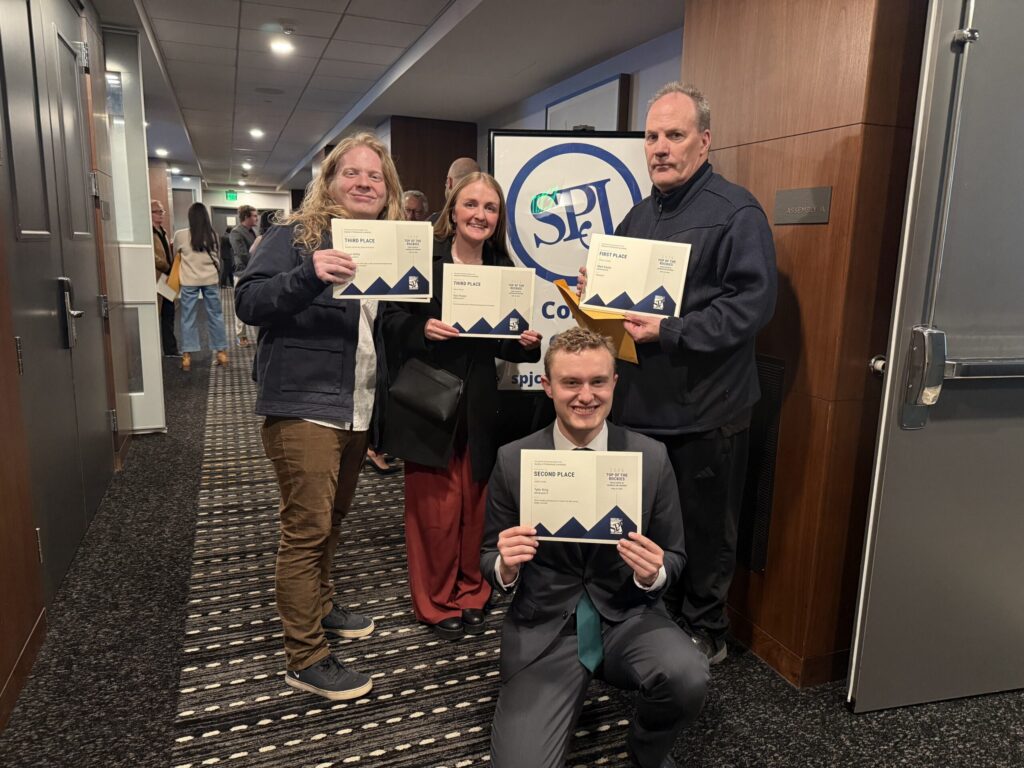
Gazette newspapers win 51 awards at Top of the Rockies
Nicholas Fogleman
nicholas.fogleman@denvergazette.com
Updated 21 hours ago
The Gazette family of newspapers won more than 50 awards at the Society of Professional Journalists’ 2026 Top of the Rockies Excellence in Journalism contest. The Gazette family, which includes The Denver Gazette, The Colorado Springs Gazette and Colorado Politics, collectively...

King Charles III to US will ‘proceed as planned’ despite WHCA dinner shooting
Washington Examiner Staff, Washington Examiner
washington.examiner.staff.washington.examiner@gazetteedit.wpenginepowered.com
Updated 16 hours ago
King Charles III of the United Kingdom will continue his trip to the United States as planned on Monday, despite the shooting that occurred Saturday night at the White House Correspondents Association dinner. President Donald Trump and administration officials were...
PREV
PREVIOUS
32 bills died without votes in the Colorado legislature this year. Here's what they'd do.
Some bills end not with a bang but a whimper. In Colorado’s 2023 legislative session, 32 bills died on the calendar. That means the bills failed not because lawmakers voted to reject them, but because they never got around to holding a vote in the first place. Lawmakers often choose to kill bills in this […]

A springtime menu of small bites | SONDERMANN
For this week, we have a sampling of small bites instead of the usual heavy meal. Eric Sondermann Let’s start with: And the cynic is… A year ago, Gov. Jared Polis labeled as cynics any who dared to question his “Colorado Cashback” tax refund checks amidst his reelection campaign. He and his legislative allies protested […]