

Kudos for cooperation on critical Colorado water issues related to tribal communities | Hal Bidlack
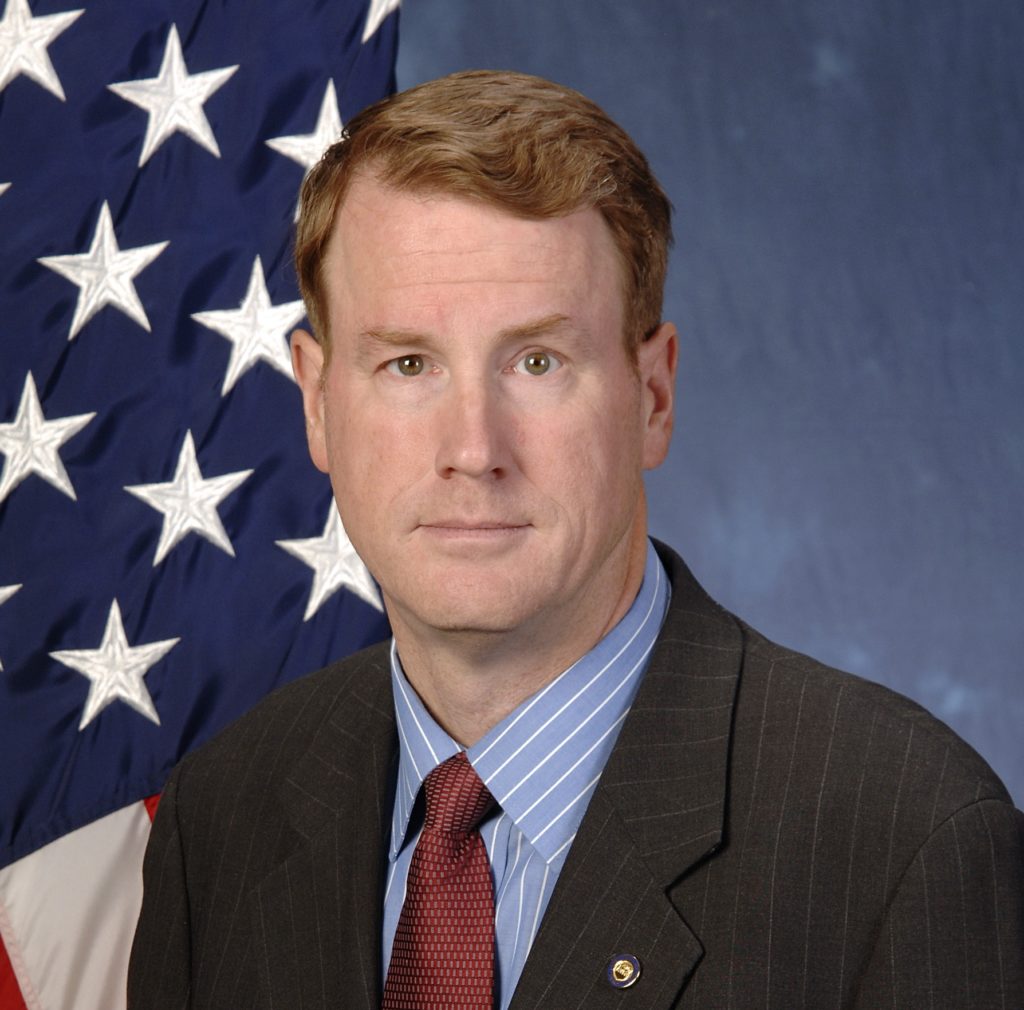
Way back in 1997, while I was still an active-duty Air Force officer, I was working a summer temporary duty assignment during the academic break at the Air Force Academy. I ended up doing this work for two summers, and it was some of the most exciting work I ever did in my 25-plus year military career.
Specifically, I was assigned to the National Security Council at the White House. It was a magical place to work, frankly. Having taught courses on our national government and the presidency in particular, it was a thrill, every day, to work my way through the tourists muddling around and passing through security and onto the White House grounds. I never forgot to tingle, just a little bit, as I walked up the road between the White House proper and the Old Executive Office Building, now called the Eisenhower Office Building, where my own office was. But I spent as much time as I could in the West Wing (spoiler: though a great TV show, “The West Wing” is wildly inaccurate in terms of the layout of that building. They got the Oval Office about right, but the rest, not so much…
Anyway…
My Ph.D. work and dissertation focused on environmental security for the U.S. and the world, and I worked on lots of environmental issues with security implications, large and small. I was, for example, the White House point person on what I started calling “the Great Canadian Salmon War.” It was actually a minor kerfuffle about fishing rights, but it got tense there for a bit.
Toward the end of my first White House tour, I was tasked by my NSC boss, at the suggestion of the DOD undersecretary for environmental issues, to write up a very interesting document. President Bill Clinton had ordered each cabinet department to report on the likely future effects of climate change (often mistakenly called “global warming”) on that department’s primary missions.
Because of my background, I was tasked with evaluating and summarizing the effects of climate change on the Department of Defense (sorry, certain current officials, it is still the DOD, and not the “Department of War.” It takes an act of Congress to change a department’s name, not just some bold claim by a foolish president and some new letterhead).
But I digress…
Ultimately, back in 1997 I concluded that, for the DOD, many of the most significant effects would be around water and water use. For example, rising sea levels due to ice melting would cause some Navy facilities to need to raise their docks, a costly exercise. And that is exactly what is happening now, some 29 years later. Oh, and an interesting aside — ice that is floating in water, such as icebergs and the Arctic ice pack, do not contribute to sea level rise, as ice takes up more physical space as ice than it does as water when it melts. That’s why your iced drink doesn’t run over the top of the glass when the ice melts.
What really matters is when ice located on land melts.
Think Greenland and Antarctica. That ice is out of the water and when it melts, the runoff raises ocean levels. There are places like Bangladesh where the highest point in the country is only four meters above sea level, and you can imagine the problem.
The other main conclusion my report reached concerned drinking water, obviously a vital interest of any nation. I predicted there would be two types of future wars over drinking water. The first type would be war fought over access to drinking water (think Lebanon today), wherein militaries would fight to gain access and control over sources of water for drinking, agriculture and other needs.
The second type of war I predicted would involve water would be conflicts that are seemingly “traditional” in nature, but where water becomes a force multiplier, an added complication to achieving peace.
My report was accepted and served as the basis for the final DOD product, I’m told.
But what about conflicts over water within a country? Let’s turn to Colorado, shall we? (Editor: it’s about time). A recent Colorado Politics story, based on a press release from U.S. Rep Jeff Hurd of the 3rd Congressional District, notes quite a bit of cooperation, across the aisle, on critical water issues related to tribal communities, especially in western and southern Colorado.
Last week I startled my editor by saying nice things about Hurd, and here’s even more good stuff: he’s working across the aisle with my old boss, U.S. Sen. Michael Bennet, as well as Sen. John Hickenlooper and U.S. Rep. Brittany Pettersen to introduce the “Western Tribal Water Act.” Reliable water is both vital and problematic in many tribal areas
Building on earlier legislation, this new act would specifically reauthorize the existing Indian Reservation drinking water program through 2028, as well as increase water spending and prioritizing 10 different tribal drinking water programs in the Upper Colorado River Basin.
There are so many reasons why this is a good proposal, not the least of which is it is about darn time we recognize the moral obligation our nation has to tend to our first citizens.
I admit, it pains me a bit to — twice now — praise Rep. Hurd, but when someone does the right thing, he or she should be applauded. I confess I’m not terribly optimistic this legislation will make it through the House and Senate, let along get a signature from a president who seems to have declared war on quite a few things, including the environment, but I hope so.
It is a good piece of legislation, proffered in a bipartisan manner, specifically to help groups of Americans all too often overlooked. But, fingers crossed, let’s hope for the best.
Stay tuned.
Hal Bidlack is a retired professor of political science and a retired Air Force lieutenant colonel who taught more than 17 years at the U.S. Air Force Academy in Colorado Springs.


Jeff Crank, Jessica Killin set to face off in 2 debates in Colorado’s 5th Congressional District
Ernest Luning
ernest.luning@coloradopolitics.com
Updated 3 hours ago
Republican U.S. Rep. Jeff Crank and Jessica Killin, his Democratic challenger, have agreed to debate twice in the weeks leading up to the general election in Colorado’s 5th Congressional District, their campaigns have said. Crank is seeking a second term...

CSI study reviews impacts of Colorado’s mandatory sex‑trafficking sentencing measure
Marissa Ventrelli
marissa.ventrelli@coloradopolitics.com
Updated 4 hours ago
A new report by the think-tank Common Sense Institute examines what could happen if Colorado voters approve Initiative 108, which establishes mandatory life sentences for offenders convicted of sexual trafficking of a minor. The measure is backed by Protect Kids...
Three districts that will answer key Colorado political questions | Paula Noonan
Paula Noonan
paula-noonan@coloradopolitics.com
Updated 2 days ago
Colorado’s legislature used to be a place where neither party was dominant. Dozens of seats were competitive and House and Senate majorities switched regularly. From 2010 to 2020, the House was predominantly Democratic with one two-year assembly under Republicans. The...
‘Ticked off’: Third-party U.S. Senate candidate in Colorado launches $1.3 million TV ad campaign
Ernest Luning
ernest.luning@coloradopolitics.com
Updated 1 day ago
Bob Chew, the Forward Party nominee for U.S. Senate in Colorado, sends household objects flying in a TV ad set to run statewide through September, backed by $1.3 million in ad reservations across multiple platforms, his campaign told Colorado Politics....

Colorado shifts vaccine authority to state as Trump administration revises childhood framework
Marissa Ventrelli
marissa.ventrelli@coloradopolitics.com
Updated 2 days ago
As the Trump administration rolls out a revised childhood vaccine framework, Colorado’s law allowing the state to set its own immunization schedule has now taken effect. Issued Monday, President Donald Trump’s executive order separates childhood and adolescent vaccines into three...

Colorado NRA chapter seeks injunction against new gun‑training requirement
Marissa Ventrelli
marissa.ventrelli@coloradopolitics.com
Updated 1 day ago
The Colorado chapter of the National Rifle Association is seeking an injunction to stop the state from enforcing a new law that took effect earlier this month. The new law requires anyone buying or selling certain firearms to first complete...

Hunting is a privilege, not a constitutional right | PODIUM
Colorado Politics
colorado-politics@coloradopolitics.com
Updated 2 days ago
By Roland Halpern Colorado voters may soon be asked to place hunting and fishing in the state constitution. Proposition 302 would establish the right to hunt, fish and take wildlife using “traditional methods,” while declaring hunting and fishing are the...

DEA’s Miguel Chino describes Colorado’s place on the ‘fentanyl pill superhighway’ | The OpEdge Podcast
Tony Olivero
tony.olivero@gazette.com
Updated 3 days ago
Miguel Chino, Acting Special Agent in Charge of the Drug Enforcement Administration’s Rocky Mountain Field Division, joins The OpEdge to paint the picture of Colorado’s place on America’s “fentanyl pill superhighways.” Chino updates Gazette and Colorado Politics Deputy Opinion Editor...

Colorado students push AI task force as schools navigate new tech era
Marissa Ventrelli
marissa.ventrelli@coloradopolitics.com
Updated 1 hour ago
A group of students is urging lawmakers to establish a task force on artificial intelligence in education to advise districts on how to ensure that pupils and educators use the technology effectively without becoming overly reliant on it. The students...
A right to buy a product? | Hal Bidlack
Hal Bidlack
hal-bidlack@coloradopolitics.com
Updated 4 days ago
A recent story in Colorado Politics caught my eye, as I learned of a “citizen initiative” that has qualified for the November ballot. It seems supporters of Initiative 177 have collected enough signatures, 146,165 legitimate ones out of a total...
PREV
PREVIOUS

Lawmakers pile on Colorado taxpayers — even more | OPINION
By Mark Hillman That our two political parties have such different philosophies regarding business and taxes is exasperating because prosperity would serve even the very different interests of Democrats and Republicans. Democrats want more revenue for government to spend it on social welfare, health care and schools. Republicans want to stimulate the economy, leading to more […]

Dick Wadhams charts Colorado's rocky political shifts | The OpEdge Podcast
In the latest episode of The OpEdge — The Gazette’s new opinion podcast — veteran campaign winner, political analyst and Gazette columnist Dick Wadhams dissects the electoral shifts of Colorado politics with OpEdge host and investigative columnist Jimmy Sengenberger. Wadhams charts the curious cases of Colorado’s Democratic and Republican Parties, the surge of unaffiliated voters and […]