

Ghost guns ban wins final approval from House Democrats

The bill to ban ghost guns on Friday won a party-line vote in the Colorado House and is headed to Gov. Jared Polis’ desk.
Senate Bill 279 would ban the manufacture and possession of un-serialized frames and receivers, the outer shell that holds the components for a gun.
Ghost guns can be assembled with kits that include all or part of a gun, as well as created through 3-D printers. However, the bill does not ban the sale of kits that do not include the frames or receivers, nor components that can be used to create a gun on a 3-D printer, so long as the components don’t include the frame or receiver.
The bill also creates a new misdemeanor charge for possessing an un-serialized firearm, which can be made with kits, or even with 3D printers.
SB 279 does provide an opportunity for owners of ghost guns to get serial numbers added onto their firearms, which can be done by any licensed dealer, but would also likely require a background check under existing state law. That window expires at the end of the year.
Rep. Andrew Boesenecker, D-Fort Collins, noted the kits are available online to anyone, including those who would be legally prohibited from possessing firearms.
Ghost guns are turning up more frequently in Denver, according to co-sponsor Rep. Junie Joseph, D-Boulder. Denver Police confiscated more than 100 last year and 166 in 2021, Joseph said.
“Those guns … are a growing threat to community safety because they are often used by violent criminals and have no serial numbers,” she said.
Republicans maintained during debate on Thursday and prior to Friday’s final vote that the bill makes criminals out of law-abiding citizens.
Rep. Ryan Armagost, R-Berthoud, said his biggest concern are the bill’s unintended consequences.
“We’re using language and buzzwords, painting un-serialized firearms as dangerous weapons. There’s nothing inherently dangerous about an inanimate object,” he said.
This would affect law-abiding citizens who collect firearms and use them at firing ranges, for example, he said.
“No matter what we do to ban anything, criminals will find a way to get firearms illegally,” he said.
Joseph countered that the bill is about accountability and protecting the lives of Coloradans, a primary concern for all lawmakers.
SB 279 was backed by the Colorado District Attorneys’ Council; the mayors of Aurora, Colorado Springs and Denver; and, various gun control groups.
Polis advocated for legislation on ghost guns and is expected to sign it, making it the fifth major gun measure approved in the 2023 session.
The bill is in addition to legislation raising the minimum age for purchasing firearms from 18 to 21; establishing a three-day waiting period before delivery of a firearm; allowing gun violence victims to sue firearms manufacturers and dealers in civil court; and, expanding the list of those who can seek an “extreme risk protection order” to include district attorneys, medical and mental health professionals, K-12 teachers and higher education faculty.
The measure was one of two gun bills that got final resolution in the last 24 hours.
But while SB 279 now heads to Polis’ desk, House Bill 1165, which sought to allow counties to prevent firearms discharges in neighborhoods with 35 dwellings per square mile, met a different fate.
Two months after it was approved by the House, the Senate Local Government and Housing Committee on Thursday killed the bill, among the rare defeats for gun control measures in the 2023 session.

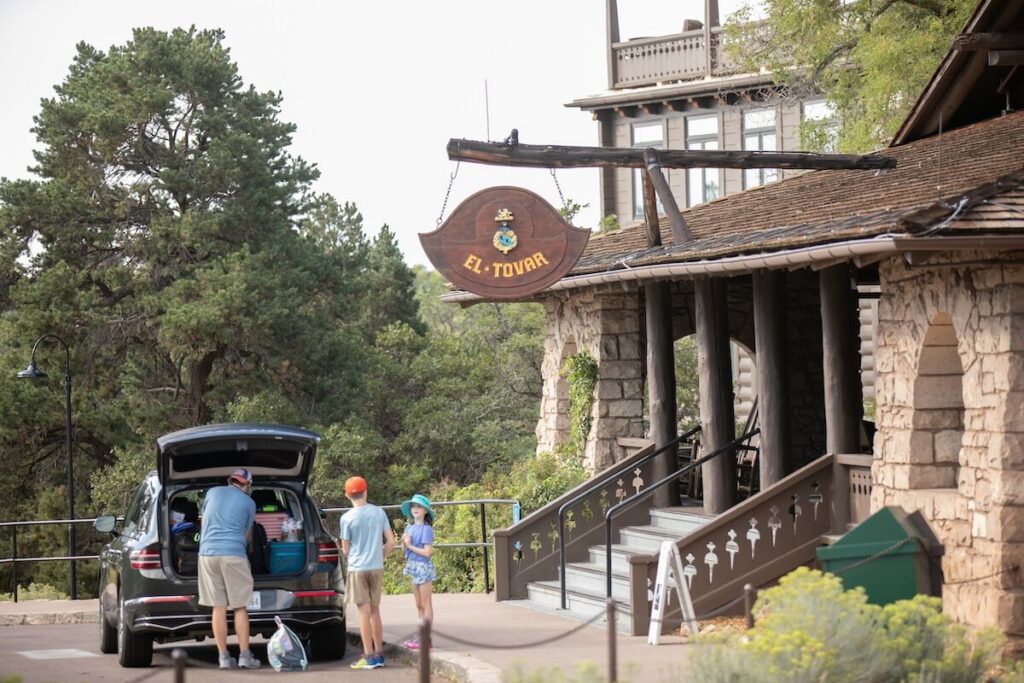
Grand Canyon flooding threatens economy that’s still recovering from a fire | OUT WEST ROUNDUP
Ernest Luning
ernest.luning@coloradopolitics.com
Updated 3 days ago
ARIZONA Flooding slams park’s economy Deadly flooding at the Grand Canyon is damaging the area’s economy, with a washed-out pipeline severing the South Rim’s water supply and shutting down lodging at the popular tourist vista for an indefinite period. The...

Immigration reporting measure fuels debate over Colorado’s role with ICE
Marissa Ventrelli
marissa.ventrelli@coloradopolitics.com
Updated 13 hours ago
A coalition of advocacy groups and several district attorneys rallied outside the Colorado Capitol on Thursday to oppose a ballot measure that, if approved by voters in November, would require state and local law enforcement to cooperate with federal immigration...
Colorado Politics Calendar Sept. 14-20
Rachael Wright, Special to Colorado Politics
rachael.wright@coloradopolitics.com
Updated 4 days ago
CoPo’s weekly political calendar will help you find political and public-policy events throughout Colorado. It includes candidate and issue campaign events, public policy meetings, court hearings, state and local party conventions, assemblies, debates, rallies, parades, speaking engagements, traveling dignitary appearances,...
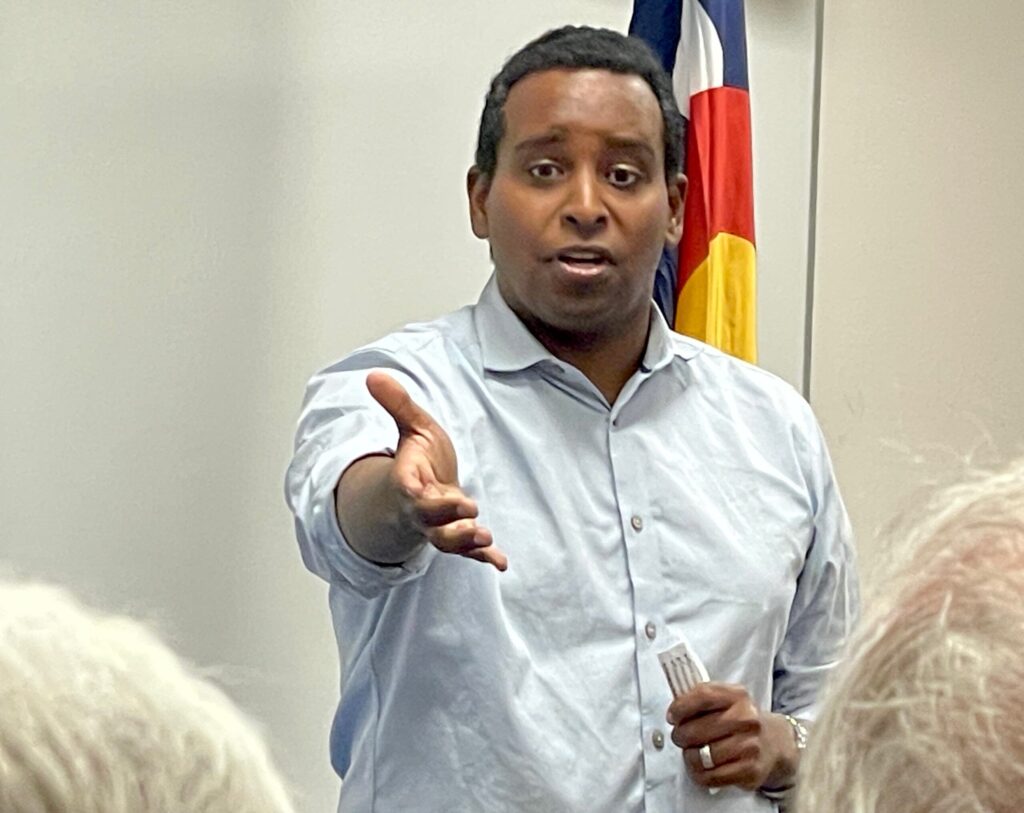
The African roots of three Colorado leaders | SONDERMANN
Eric Sondermann
eric-sondermann@coloradopolitics.com
Updated 3 days ago
Colorado’s political transformation is measured in many ways. A once reliably red state (with asterisks) became purple and is now a rather deep blue. For better or worse, probably the latter, power is ever more consolidated along the Front Range...
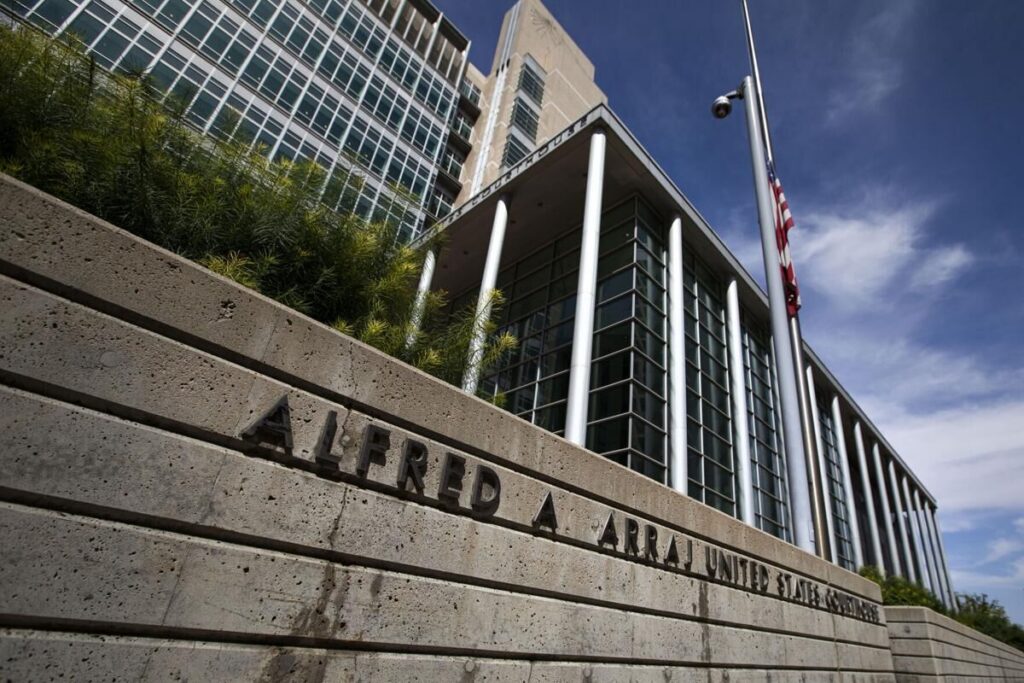
Federal judge green-lights civil trial against ex-Fort Collins DUI officer
Michael Karlik
michael.karlik@coloradopolitics.com
Updated 2 days ago
A federal judge ruled on Thursday that Fort Collins’ former “DUI officer” will face a civil trial for allegedly investigating a motorist for impaired driving without any reasonable suspicion to do so. In recent years, several people arrested by Officer...

Denver police reopen 13 sex assault cases after retesting Missy Woods’ CBI work
Jenny Deam
jenny.deam@gazette.com
Updated 1 day ago
Thirteen previously closed Denver sexual assault cases have been reopened after the city’s crime lab retested DNA evidence once analyzed by former Colorado Bureau of Investigation forensic analyst Yvonne Woods. A police spokesperson told The Denver Gazette the once-closed cases...

Ballot measure aims to shift Colorado sporting goods tax revenue to land, water and wildfire projects
Marissa Ventrelli
marissa.ventrelli@coloradopolitics.com
Updated 13 hours ago
Colorado voters this November will decide whether to direct a share of sales tax revenue from sporting goods — including bicycles and skiing equipment — toward land and water conservation, wildfire prevention and expanding outdoor recreation. Supporters say the measure...

Colorado Supreme Court suspends Mesa County judge pending misconduct investigation
Michael Karlik
michael.karlik@coloradopolitics.com
Updated 15 hours ago
The Colorado Supreme Court suspended Mesa County Court Judge Michael J. Grattan on Thursday amid a misconduct investigation. The court’s Sept. 10 order gave Grattan 21 days to explain why his paid suspension should not continue through the end of...

Trump honors the fallen of the 9/11 terrorist attacks during Pentagon speech
Mabinty Quarshie
mabinty-quarshie@coloradopolitics.com
Updated 2 days ago
President Donald Trump and first lady Melania Trump honored the roughly 3,000 Americans killed during the Sept. 11, 2001, terrorist attacks during a ceremony at the Pentagon. The event marking the 25th anniversary of the deadliest attack on American soil...
Colorado Supreme Court changes course, dismisses case about special district bonds
Michael Karlik
michael.karlik@coloradopolitics.com
Updated 15 hours ago
The Colorado Supreme Court declined on Friday to decide a dispute between a large-scale Commerce City development and the various districts financing it, after initially showing interest in the ongoing case. Colorado has roughly 2,800 special districts, which are local...
PREV
PREVIOUS

How to appeal your Colorado home property value assessment
June 8 is the deadline to convince the county assessor that your home is crappier than they think it is. Any property owner can protest their home value assessment that counties in Colorado sent out last week. It can be as simple as filling out and returning the card that came in the mail, or […]

Colorado legislature OKs non-gendered bathrooms, baby changing stations in public buildings
An effort to add non-gendered bathrooms and baby changing stations to Colorado’s public buildings passed its last major legislative hurdle on Friday. House Bill 1057 requires newly constructed public buildings owned or operated by the government to provide non-gendered bathrooms on each floor where gendered bathrooms are available, beginning in 2024. The buildings would also need to provide […]