

Colorado appeals court orders El Paso County judge to reopen case of man serving 100+ years

Colorado’s second-highest court last week ordered an El Paso County judge to hold a hearing on an incarcerated man’s claim that he received constitutionally-ineffective assistance of counsel, based on his trial lawyer’s decision not to call multiple witnesses who would have corroborated the defendant’s alibi.
Antonio Jose Vargas Jr. is serving a 96-year sentence for kidnapping and an additional sentence of 48 years to life for sexual assault. A jury found Vargas guilty in 2009 and the Court of Appeals upheld his convictions in 2013.
Now, Vargas is asserting his trial lawyer was deficient for not presenting four witnesses: Vargas’ son, mother, family friend and employee. Two of them would have testified Vargas was not with the victim the night of the crime, and the other two would have explained the victim did not appear injured or rattled the morning after the crime.
Such testimony, “if found credible, would seem to corroborate Vargas’ hotly disputed alibi,” wrote Judge Craig R. Welling in the April 13 opinion of a three-judge appellate panel.
According to the evidence, Vargas abducted the victim, bound her hands and mouth, and took her to his property, where he sexually assaulted her. Vargas maintained he did have consensual sex with the victim two days earlier, but he was not with her the night of the assault. He offered a theory for why the victim would fabricate allegations against him.
In 2015, Vargas filed a petition for postconviction relief, claiming specifically his trial lawyer’s performance dipped below the constitutionally-required level of effectiveness.
District Court Judge Gregory R. Werner held a hearing on one of Vargas’ claims and found Vargas to not be credible. He then denied all of Vargas’ claims for relief, including Vargas’ contention that he was actually innocent.
The Court of Appeals panel agreed with Werner’s handling of the case in part. Welling acknowledged in the opinion that it is unclear whether Colorado courts can act upon a claim of innocence that is untethered to a constitutional violation. But if an innocence claim exists, it has an “extraordinarily high threshold” that Vargas had not satisfied in this instance, Welling added.
The panel then parted ways with Werner on Vargas’ allegation that his trial lawyer neglected to call four witnesses who would have cast doubt on the victim’s story.
Although one of Vargas’ sons did testify that Vargas was at home the night of the kidnapping and sexual assault, Vargas’ other son and a family friend would have also corroborated that alibi. At the time of trial, Vargas’ non-testifying son was allegedly “on the run” and the prosecution was “unable to locate” the friend. However, there were no further details and no clear understanding of whether both witnesses were unable to testify.
“Because the record regarding (the friend) doesn’t establish why defense counsel didn’t call him to testify … we remand this issue for an evidentiary hearing,” wrote Welling, reaching the same conclusion for Vargas’ son.
As for Vargas’ mother and employee, both had breakfast with Vargas and the victim the morning after the crime. They now say they would have testified the victim did not appear injured and acted normally.
The prosecution argued to the Court of Appeals that the victim testified she “pretended to be fine,” and additional witnesses would not have undermined her account.
“In our review of the transcript, however, there is no instance where the victim says she ‘pretended’ to be fine while eating,” Welling countered. “While it may be true that some parts of the testimony by Vargas’ mother and his employee would have been consistent with the victim’s trial testimony, the proffered testimony, if credible, would seem to corroborate Vargas’ theory of defense.”
The appellate panel returned the case to Werner for a hearing on whether Vargas’ trial lawyer was constitutionally ineffective for failing to call those witnesses. Under U.S. Supreme Court precedent, Vargas must show the attorney’s performance was below an “objective standard of reasonableness” and, in the absence of the attorney’s errors, the outcome likely would have been different.
The case is People v. Vargas.


Divided appeals court upholds warrantless DNA collection in Colorado cold case, cautions of government overreach
Michael Karlik
michael.karlik@coloradopolitics.com
Updated 2 hours ago
Colorado’s second-highest court upheld the warrantless collection of a suspect’s DNA from a discarded soda can as constitutional on Thursday, while warning about potential abuse of DNA privacy in the absence of further guardrails. By 2-1, a three-judge Court of...
10th Circuit grants immunity to officers for fatal Manitou Springs shooting
Michael Karlik
michael.karlik@coloradopolitics.com
Updated 46 minutes ago
The Denver-based federal appeals court ruled on Wednesday that responding officers from Manitou Springs and El Paso County cannot be held constitutionally liable for shooting and killing a man after a 20-minute standoff. Wilford Deweese allegedly pulled out a gun...
10th Circuit rejects invitation for full-court review of tax-avoidance case
Michael Karlik
michael.karlik@coloradopolitics.com
Updated 18 hours ago
The Denver-based federal appeals court declined to reconsider the standards for holding entities liable for their tax-avoidance schemes, with a majority of judges voting against full-court review on Monday. In April, a three-judge panel of the U.S. Court of Appeals...
Colorado judge blasts state forensics lab in dismissing child sex case
Jenny Deam
jenny.deam@gazette.com
Updated 19 hours ago
In a potentially widely consequential action, a Weld County district judge dismissed a child sexual assault case, citing the ongoing scandal at the Colorado Bureau of Investigation’s forensic lab that “has left a dark mark on the history of Colorado...
10th Circuit sympathetic to Colorado consumer protection law governing interest rates
Michael Karlik
michael.karlik@coloradopolitics.com
Updated 2 days ago
Members of the Denver-based federal appeals court appeared sympathetic on Tuesday to Colorado’s assertion that it can lawfully require certain out-of-state banks to abide by the state’s own ceilings on interest rates when they lend to consumers in Colorado. The...
Colorado justices to decide insurance companies’ obligation to disclose relevant policies
Michael Karlik
michael.karlik@coloradopolitics.com
Updated 1 day ago
The Colorado Supreme Court announced on Monday that it will decide whether an insurance company violated state law by withholding an at-fault driver’s policy for nearly a year when there was no dispute that the policy was not in effect...

Judicial performance evaluations released, Montezuma County judge disciplined | COURT CRAWL
Michael Karlik
michael.karlik@coloradopolitics.com
Updated 3 days ago
Welcome to Court Crawl, Colorado Politics’ roundup of news from the third branch of government. Colorado’s citizen-led judicial performance commissions released their voter narratives for the judges standing for retention in November, plus a disciplinary panel imposed consequences on a...
DA justifies CSPD officers in fatally shooting man at McDonald’s
Cleo Westin
cleo-westin@coloradopolitics.com
Updated 2 days ago
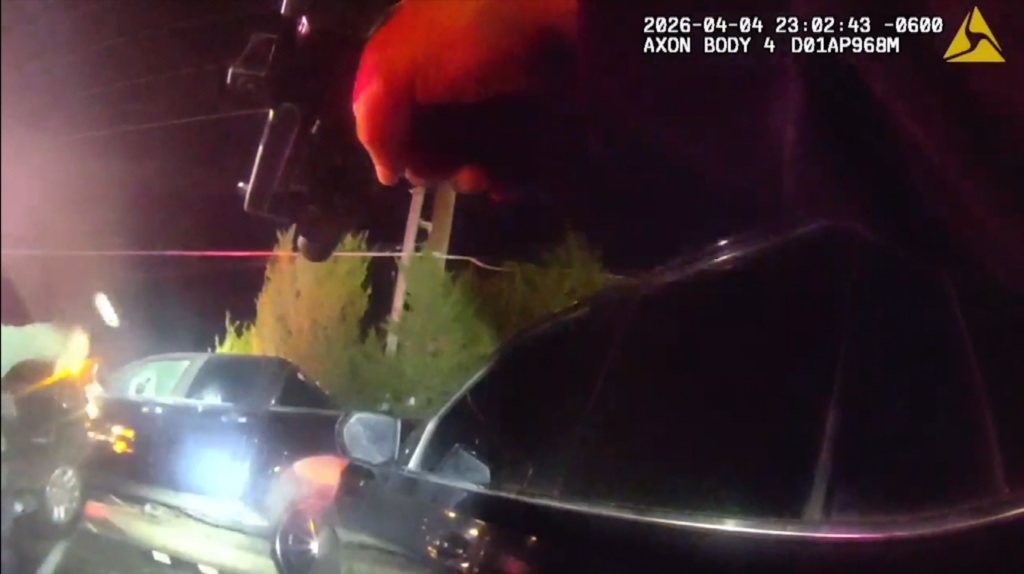
The deadly shooting of a man by Colorado Springs police officers at a McDonald’s was ruled justified by the 4th Judicial District Attorney’s Office on Monday, the office announced in a news release. The ruling determined officers Daniel White, Mitchell...
Federal judge holds off on dismissing formerly bankrupt medical contractor from Jeffco jail death lawsuit
Michael Karlik
michael.karlik@coloradopolitics.com
Updated 2 days ago
A federal judge declined on Monday to dismiss the formerly bankrupt medical contractor from a lawsuit over a detainee’s death in Jefferson County jail, but indicated she would do so if the plaintiffs’ attorneys go through the process to ensure...
Castle Rock caregiver sentenced after stealing more than $110,000 in jewelry from family
Nicholas Fogleman
nicholas.fogleman@denvergazette.com
Updated 2 days ago
A judge sentenced a Castle Rock caregiver to 90 days in jail after she pleaded guilty to stealing more than $110,000 worth of jewelry from the family of a disabled son under her care. Elsa Montejo-Fuentes, 32, had worked for...
PREV
PREVIOUS

Federal judge narrowly blocks new Colorado abortion law
A federal judge on Saturday issued a narrow order blocking enforcement of a newly-enacted Colorado law that cracks down on treatments to purportedly reverse medication-induced abortions. On April 14, Gov. Jared Polis signed Senate Bill 190 as part of a package of measures bolstering reproductive rights in the state. SB 190 subjects licensed medical providers […]

Colorado House OKs increasing minimum age to criminally charge kids after heated debate
The Colorado House approved a bill on Monday to stop charging children under 13 with most crimes, advancing it to the Senate for consideration. Currently, the minimum age for criminal prosecution in Colorado is 10. House Bill 1249 would raise the age to 13, except when a child is suspected of committing homicide. This would remove children aged […]