

Q&A with Mischa Smith | El Paso County Democratic chair on party ‘moving that needle forward’

Mischa Smith, the newly elected chair of the El Paso County Democratic Party, brings plenty of campaign experience to the position in a county whose electorate hasn’t been voting for Republicans in the same dominant numbers as it did for decades.
The 32-year-old, who grew up in the Security/Widefield area south of Colorado Springs, got her start in politics as a “super volunteer” for Barack Obama’s campaign in 2008, when she says she knocked on more than 1,000 doors. Smith was an intern on the 2012 Obama campaign and then worked as an organizer for Hillary Clinton in 2016. In 2018, she traveled the country as part of Democratic presidential candidate Pete Buttigieg’s advance team.
Smith returned to Colorado in 2020 to work on Democratic U.S. Senate nominee John Hickenlooper’s campaign as deputy political director, and after he took office, she worked as the senator’s state scheduler and as outreach manager for his El Paso County office.
After Smith ran for the open House District 17 seat last year – she lost the primary to Regina English, who went on to win election in November – she says she decided to run for county party leadership and was elected to a two-year term as chair.
Our interview with Smith has been lightly edited for length and clarity.
Colorado Politics: How did you decide to run for party chair?
Mischa Smith: I ran for office and I had a really rough situation as far as finding support in the party – not just because I was in a primary, but I felt like I had never experienced such ageism or sexism or racism, as I had from our own party than when I ran. I talked a lot about that with John (Mikos, the previous El Paso County Democratic chair), and he said, if you want to see these changes, that has to come from you getting involved. So, after much reluctance on my part, I decided I needed to be the change I wanted to see, and so I decided to run.
CP: What kind of changes do you feel the party needs to make?
Smith: We have to be better for fundraising so that we can fight for the seats that we want. We will never get the resources that people in Denver get, so we have to make some of those ourselves. We have to bring in younger people. I think the statistics show when younger people vote, our folks traditionally win. And so getting those younger people involved in voting is really important to us, as well as kind of making voting sexy again, and also making registering for your party sexy again.
CS: It’s a trend that Coloradans aren’t affiliating with either major party nearly to the extent that they used to. How do you change that, and why does that matter whether people are registered as a Democrat if they vote for Democrats?
Smith: I can’t speak for statewide, but I can speak for Colorado Springs. In Colorado Springs, people are weaponizing the fact that the unaffiliated don’t vote enough with you to matter. That’s not true. Statistically, we are about even, with the unaffiliates going either way in our elections. Obviously, that differs in different places in the county. But when you’re looking at voter registration, unaffiliateds that vote with us are half and half, and in younger voters, I think it’s 18 to 35, we are doing just as well as the Republicans are for registrations. So, I think that matters, because when it comes time to drawing lines, when it comes time to redistricting, when it comes to these issues, they’re looking at the voter registration for how they should draw these lines, and to be fair and equitable, you can’t tell that from an unaffiliated voter.
CS: So, what do you say to a young person who has registered unaffiliated to urge them to register as a Democrat?
Smith: I think there’s a lot of miseducation – as somebody who grew up in El Paso County, I think a lot of people are just voting how their parents vote and not realizing, maybe that’s not what I am. So I like to ask them values questions. ‘Do you believe in a woman’s right to choose? Do you believe that climate change is a real and dangerous, threat?’ Then we might have more in common than you think.
A lot of young people are just not pleased with what they’re seeing from either party, so I use those opportunities to say, ‘What are we not doing? How can we speak more to you, how can we be better allies?’
CS: What do they say?
Smith: I hear from a lot of young people who want us to be more progressive and want a lot more ‘walking the talk.’ A lot of them want to feel like we’re not talking at them, like we’re not making decisions for a generation that we’re not a part of.
CS: How have things changed in El Paso County since you worked on the first Obama campaign there in 2008? (Republican gubernatorial nominee) Heidi Ganahl got just barely over 50% of the vote there last year – in a county where statewide Republicans used to be able to count on getting over 60% every election.
Smith: You can feel it, I think we’re on the cusp of something really exciting. In 2008, I remember knocking on doors and people were, like, terrified to tell us they were Democrats. Now, there’s a lot more out there who are proud. I do feel like we are on the cusp of a big change. If you’re following the numbers, in 10 years, everything should be winnable. You’re also seeing the Republicans’ last stand, right? They don’t want to lose El Paso County, and I think that they know what’s coming.
CS: Do you think the changes are more due to demographics, that El Paso County is beginning to look more like a metro area suburban county like Jefferson County or Arapahoe county, which used to be Republican strongholds but are now fairly solidly Democratic counties? Or is it that folks who’ve been there a long time are more open to voting for Democrats?
Smith: I’m essentially a native, right? And I love that my county has so many Never-Trumpers – I respect so many of the Republicans that I know here for being Never-Trumpers and for learning from the 2016 debacle, as I will call it. So, I think it’s both. Yes, we are benefiting from demographics, but also folks here are taking a stand against hate, taking a stand against this sickness. We did that in a big way in 2020, when we shifted the most, from Trump to Biden. That means that our county is changing inside and outside.
CS: What do you think the Democrats need to do in the next two years in El Paso County to demonstrate that those recent performances haven’t been flukes?
Smith: We are measuring our success in a lot of different ways. We do believe that there is not one but two county commission districts that we are deserving of after redistricting. They have to at least be fair fights, but we think we can take them if we break that stronghold. That’ll be the first time in more than 50 years. I think we’re going to be more competitive in county races. I don’t know that CD 5 is winnable just yet. I think we’re getting more and more competitive, but for some reason, Doug Lamborn always seems to slip under the radar because he’s not bad enough. It’s a work in progress. But we’re really excited by candidates that are excited about that race, and we’ll see how we can keep pushing that needle forward.
CS: We saw some surprises in the mayoral race, with with Yemi Mobolade, the unaffiliated candidate, coming out ahead of Wayne Williams and Sallie Clarke, the two Republicans battling it out for a spot in the runoff. Is he a candidate the Democrats will be supporting in the next month?
Smith: I’m not going to speak for everybody, I know a lot of Dems would’ve preferred a Dem, Yemi spoke to our folks, he wanted our votes. Yemi had conversations with us and was willing to find a middle ground where we could collaborate. And I think the difference between a Yemi and a Sallie or a Wayne is that Yemi has made the first step to work with us, Wayne showed up at one or two of our events, and I’ll give him credit for that. I believe Sally did as well before I was chair, but Yemi is actually reaching out to our folks and wants our support.
CS: Will the party be involved in the runoff?
Smith: That’s to be determined. We’re going to have conversations as a party to see where you want to be, but I know a lot of people in the party, myself included, will be involved in that race.
CS: The Republicans in El Paso County have certainly had a lot of drama in the last couple of years. Does that make it easier for you to do your job, or does national-level partisanship swamp that?
Smith: I think there’s a lot of miseducation. There’s a lot of people that still think the Republicans have their values. I think part of our job that’s becoming easier is to show that we truly are the big-tent party, and to say, ‘There is a space for you here if your party looks unrecognizable now.’ The disarray in the Republican Party, especially in El Paso County, has gone under the radar a bit, right, because they’re putting up stronger candidates in some races. So, I can’t say that it’s all the party, but I can say that part of my job in this next two years is to show people if they don’t recognize their party, we want them to consider joining ours.


Democratic candidate in Colorado’s 4th CD urges long-term water planning
Marianne Goodland
marianne.goodland@coloradopolitics.com
Updated 7 hours ago
The Democrat hoping to become the next representative of Colorado’s 4th Congressional District on Thursday made her case on the final day of Colorado Water Congress in Steamboat Springs. Eileen Laubacher, who spent 34 years in the U.S. Navy and...

Democratic gubernatorial candidate Phil Weiser promises to appoint rural outreach director, water adviser
Marianne Goodland
marianne.goodland@coloradopolitics.com
Updated 2 days ago
Democratic gubernatorial candidate and current Attorney General Phil Weiser told the Colorado Water Congress Thursday he intends to appoint a rural outreach director and a water policy adviser should he win the election in November. Weiser’s speech at the Steamboat...
Attorney general candidates present priorities at Colorado Water Congress
Marianne Goodland
marianne.goodland@coloradopolitics.com
Updated 1 day ago
The two major-party candidates for attorney general — Republican Michael Allen, the district attorney for Teller and El Paso counties, and Democratic Secretary of State Jena Griswold — on Thursday outlined their priorities at the Colorado Water Congress. Griswold attended...

Denver named finalist for 2028 Democratic Convention site
Thelma Grimes
thelma.grimes@coloradopolitics.com
Updated 2 days ago
The Mile High City competes with Boston and Philadelphia The list of cities being considered to host the 2028 Democratic National Convention has narrowed even further, with Denver making the cut as one of the final three, along with Boston...
GOP gubernatorial candidate Victor Marx pushes aggressive water-storage expansion at Colorado Water Congress
Marianne Goodland
marianne.goodland@coloradopolitics.com
Updated 3 days ago
Victor Marx, the Republican nominee for governor, took the spotlight Wednesday during the opening day of the Colorado Water Congress, laying out how he says the state should approach its water future. Marx told the standing-room-only audience in Steamboat Springs...
U.S. Rep. Lauren Boebert stresses storage, forest health and Upper Basin rights at Colorado Water Congress
Marianne Goodland
marianne.goodland@coloradopolitics.com
Updated 3 days ago
Republican U.S. Rep. Lauren Boebert used her brief Wednesday appearance at Colorado Water Congress to tout her record on delivering water projects for the state and her district. Boebert, who is running for her second term representing the 4th Congressional...
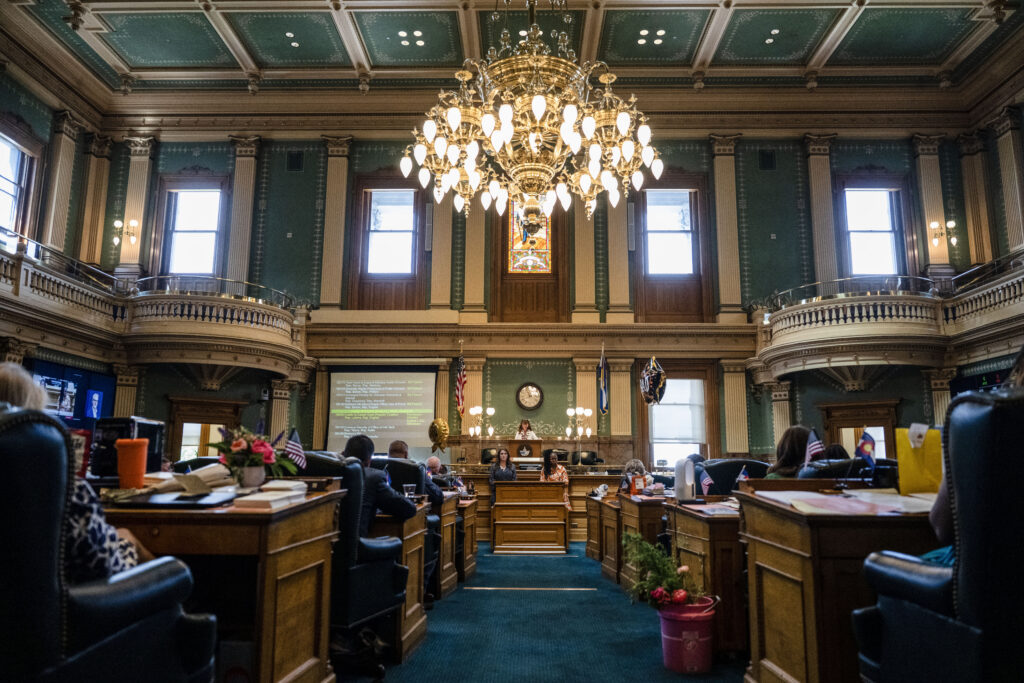
Colorado House Democrats’ caucus finances under scrutiny as ethics case against leader advances
Marianne Goodland
marianne.goodland@coloradopolitics.com
Updated 8 hours ago
Democratic lawmakers told a legislative ethics panel that a leader’s management of caucus finances left them with unanswered questions, disputed reimbursements and a breakdown in communication that ultimately triggered a formal complaint. The House Ethics Committee is examining a complaint...
Colorado lieutenant governor candidate Markert says early discipline and key mentors set his course
Marianne Goodland
marianne.goodland@coloradopolitics.com
Updated 6 days ago
Editor’s note: This is the first installment in a three-part series examining Colorado’s candidates for lieutenant governor. In this piece, Colorado Politics speaks with George Markert, the Republican running mate to gubernatorial candidate Victor Marx. Marx is competing against Democrat...
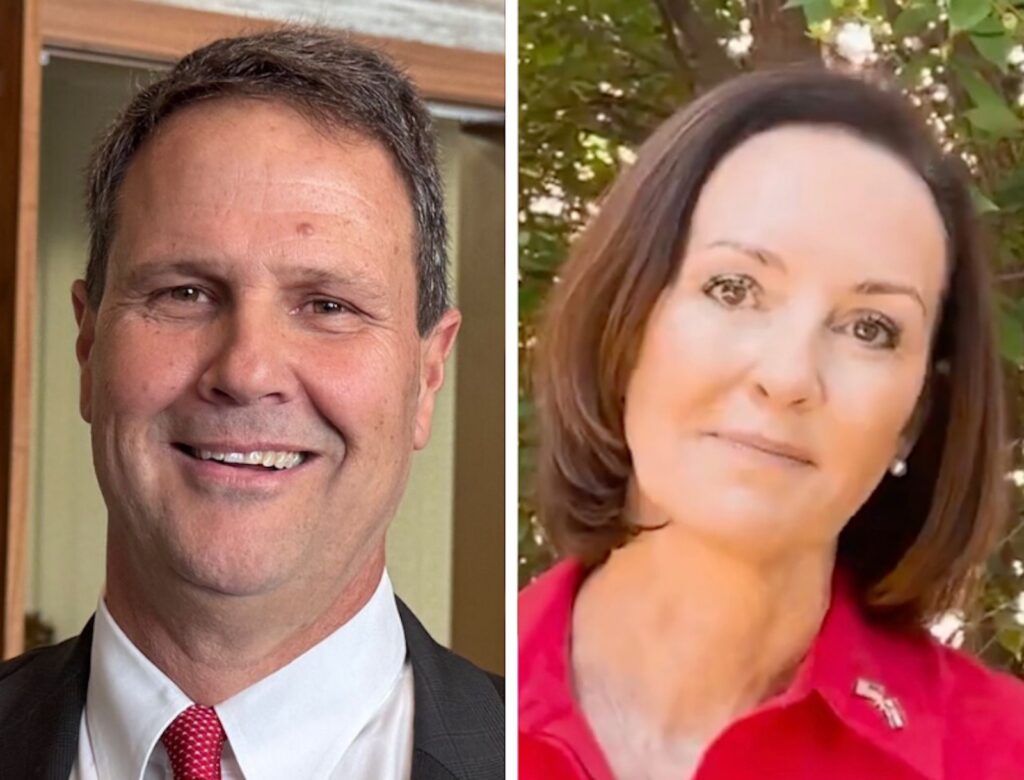
Jeff Crank, Jessica Killin set to face off in 2 debates in Colorado’s 5th Congressional District
Ernest Luning
ernest.luning@coloradopolitics.com
Updated 1 week ago
Republican U.S. Rep. Jeff Crank and Jessica Killin, his Democratic challenger, have agreed to debate twice in the weeks leading up to the general election in Colorado’s 5th Congressional District, their campaigns have said. Crank is seeking a second term...
CSI study reviews impacts of Colorado’s mandatory sex‑trafficking sentencing measure
Marissa Ventrelli
marissa.ventrelli@coloradopolitics.com
Updated 6 days ago
A new report by the think-tank Common Sense Institute examines what could happen if Colorado voters approve Initiative No. 108, which establishes mandatory life sentences for offenders convicted of sexual trafficking of a minor. The measure is backed by Protect...
PREV
PREVIOUS

In Colorado Springs school district divided over pronouns, staff conduct policy will look different than expected
In February, the Colorado Springs School District 11 board proposed staff should be prohibited from asking students their preferred pronouns, a divisive concept that for more than a month has dominated the public’s attention. Board Vice President Jason Jorgenson, who introduced the discussion, said pronouns serve no educational value and can make cisgender students – […]

Colorado's judicial performance review misses key test of judges' legal knowledge
Hundreds of thousands of Colorado voters biennially are asked to decide whether district court judges where they live should remain on the bench. But the state’s 22 judicial district performance commissions that evaluate those judges – and whose reviews voters frequently rely on to make that decision – are missing a key piece of information: Whether the […]