

Disability advocates in Colorado push for their own to seek elected office
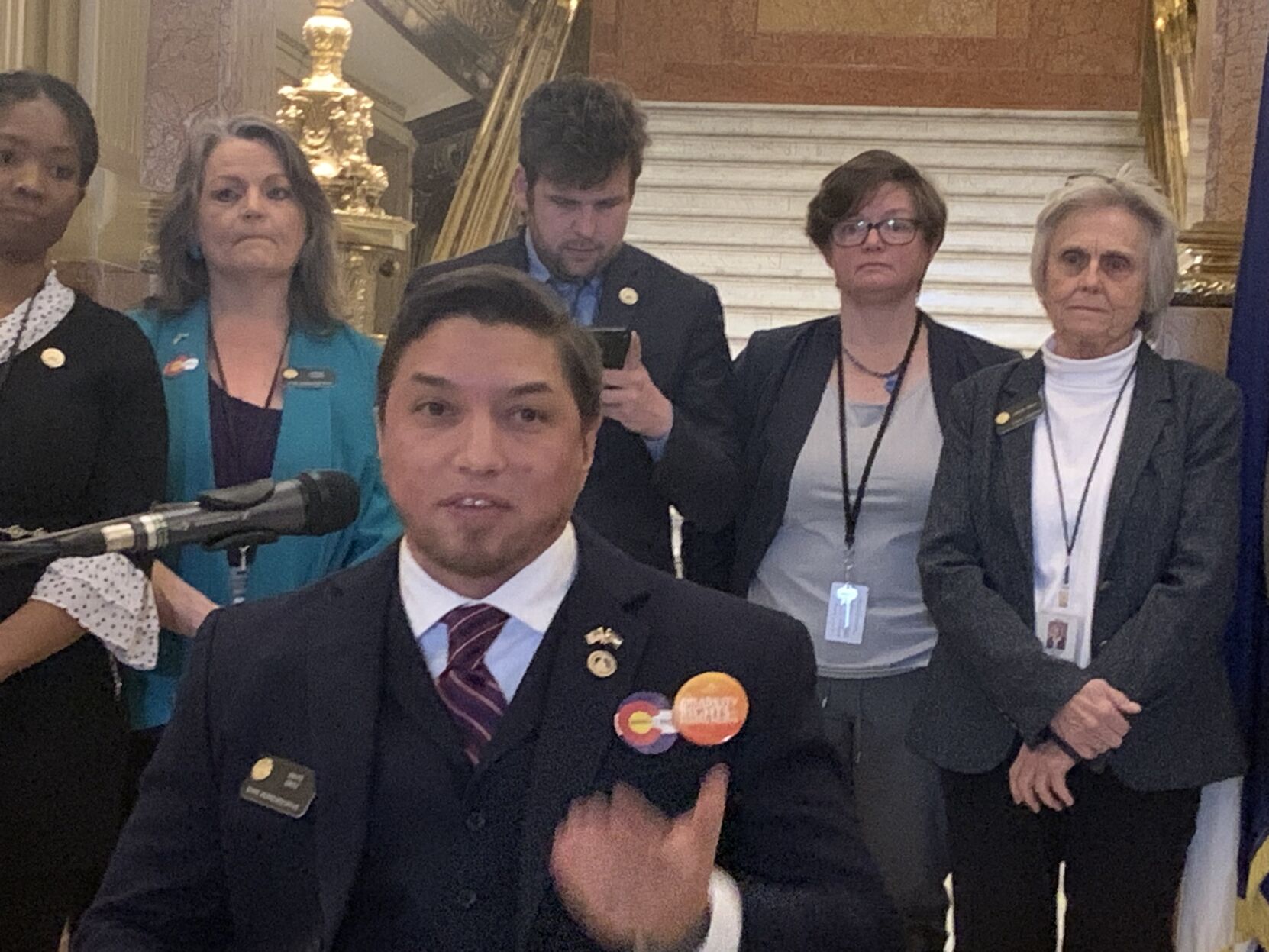
The recent Disability Rights Advocacy Day at the state Capitol took on a new look for 2023 – one of their own is championing their cause from within.
State Rep. David Ortiz, D-Centennial, is the first member of the Colorado General Assembly to use a wheelchair, and during the advocacy day, he wasn’t alone at the Capitol. About 120 advocates for people with disabilities, representing 11 different groups, came together to push for legislation on access to housing, the outdoors and public buildings, including at the state Capitol.
Ortiz was joined that day by Denver City councilmember Chris Hinds, the first city council member to use a wheelchair, and both advocated for individuals with disabilities to make the leap to elected office.
Access is a basic civil right, Ortiz said, adding that, for far too long, those with disabilities have been overlooked and many say they are “invisible” to the able-bodied. Ortiz knows the story from both sides: he lived as an “able-bodied” individual for his first 30 years, and then he was paralyzed in a helicopter crash in Afghanistan that put him into a wheelchair.
Although he sacrificed much to defend his country, he said, he found himself barred from fully participating in the freedoms he fought for, such as access to housing or employment.
“We deserve and have earned the right to be more than a charity case for society,” he said.
Much of the the state Capitol remains inaccessible to people with disabilities. Ortiz noted he applied to be an intern in 2015, but the lack of accessibility made that impossible, he said.
When he was elected to the House, there were renovations to ensure he could get into the chamber, and later, an elevator was added so that he could chair what’s called the committee of the whole, when the entire chamber debates on a measure.
But Ortiz said the Capitol remains far from being fully accessible.
The Senate has yet to make any changes to accommodate people in wheelchairs, and the House still has a long way to go, Ortiz said, adding he is relegated to only about one-quarter of the chamber. If he wants to talk to another lawmaker who’s on the other side of the chamber, he has to ask someone to find that lawmaker.
“A critical part of this job is being able to build relationships and talk to your peers and negotiate. I can’t do that. That hinders my basic ability to do this job,” he said.
There’s even been instances when a lawmaker will step down a couple of steps, and there are four sets of stairs leading out of the House into back rooms, just to avoid talking to him, said Ortiz. (He wouldn’t identify those colleagues).
In an emergency, getting out of the building is also complicated, he explained. Once, he had to plan a special evacuation route with state troopers, but that shouldn’t be the case, he said.
Committee rooms aren’t accessible either, most notably the Old Supreme Court Chambers or the Old State Library. So far, the temporary solution has been a makeshift ramp that is steeper than what’s allowed by the American with Disabilities Act. It’s also not particularly stable.
“They’re doing the best they can, but they have a long way to go,” he said.
There’s other issues, as well. For those who are visually impaired, there are apps for smartphones that can tell someone where they are in a building, but the state Capitol isn’t one of them, Ortiz said.
Access continues to be a problem in transportation, housing, behavioral health services and many other areas outside of the state Capitol, according to advocates.
Even enjoying the outdoors is a difficulty. Ortiz pointed to chairlifts that prioritize comfort over access for adaptive athletes, trailhead entrances too narrow for adaptive sports equipment or lack of access to adaptive sports limbs.
“We’re being isolated, excluded and left behind,” he said during the advocacy day.

marianne.goodland@coloradopolitics.com
“We see how powerful it is to have people from our community in elected office” at the city, state and local level, said Julie Reiskin of the Colorado Cross-Disability Coalition.
Reiskin said she’s spent much of her life begging people in her community to get involved. What doesn’t work is for “people without disabilities making decisions about our lives,” she said.
Denver City Council member Chris Hinds said when he was inaugurated in 2019, city council chambers and council restrooms were not accessible. But it took someone in a wheelchair to get elected to effect that change, he said.

marianne.goodland@coloradopolitics.com
Hinds pointed to other successes. When he was elected, it was legal in Denver to pay someone with a physical disability 15% less than Denver’s minimum wage.
“We got rid of that at the city level,” he said.
In 2021, that was eliminated statewide.
“We need more elected officials in office who have disabilities so that we’re at the table” at the beginning of the process, not at the end, he added. “Our democracy is stronger when it is representative of all the people.”
At a recent debate, Hinds couldn’t maneuver his wheelchair onto the stage because the venue didn’t have a ramp for him, forcing him to crawl onto stage in front of the debate crowd of several dozen people. The event itself had to be delayed during the process.
On Tuesday afternoon, the House Judiciary Committee will hear House Bill 1032, which will allow those with disabilities access to the courts in lieu of pursuing claims with the Colorado Civil Rights Commission. The bill allows a person with a disability to sue in civil court, regardless of whether they have filed with the commission. In addition, a person with a disability can obtain damages for emotional distress and attorneys’ fees.
Ortiz sponsored Senate Bill 36, which reduces the amount of paperwork a veteran with a disability would have to complete in order to obtain the state’s property tax exemption. The bill cleared the Senate on a unanimous vote and is awaiting its first House hearing.
House Bill 1136, meanwhile, deals with outdoor recreation. It requires health insurance companies to cover the cost of a prosthetic limb if the person is under the age of 26 and a physician determines it is necessary to allow the person to participate in recreational activities. The bill has been assigned to the House Health & Insurance Committee but has not yet had its first hearing, and with the session more than halfway done, that could be a sign that it may not move forward.
marianne.goodland@coloradopolitics.com

Registered voters on the eve of the 2026 primaries | Cronin & Loevy
Tom Cronin Bob Loevy
tom-cronin-bob-loevy@coloradopolitics.com
Updated 2 days ago
The Colorado Secretary of State’s Office has published the latest voter registration figures for the state and its counties as of June. Colorado ranks among the highest states for independent, or unaffiliated, voters. Only Alaska and Massachusetts have more. New Hampshire, New Jersey, Maine and Oregon also rank highly. So here...
A decade after Standing Rock protests, Dakota Access oil pipeline segment gets OK | OUT WEST ROUNDUP
The Associated Press
the-associated-press@coloradopolitics.com
Updated 5 days ago
NORTH DAKOTA Pipeline segment OK’d BISMARCK — Federal officials on May 21 gave final approval for the Dakota Access oil pipeline to continue operating its contentious Missouri River crossing, an outcome that comes nearly a decade after boisterous protests against...
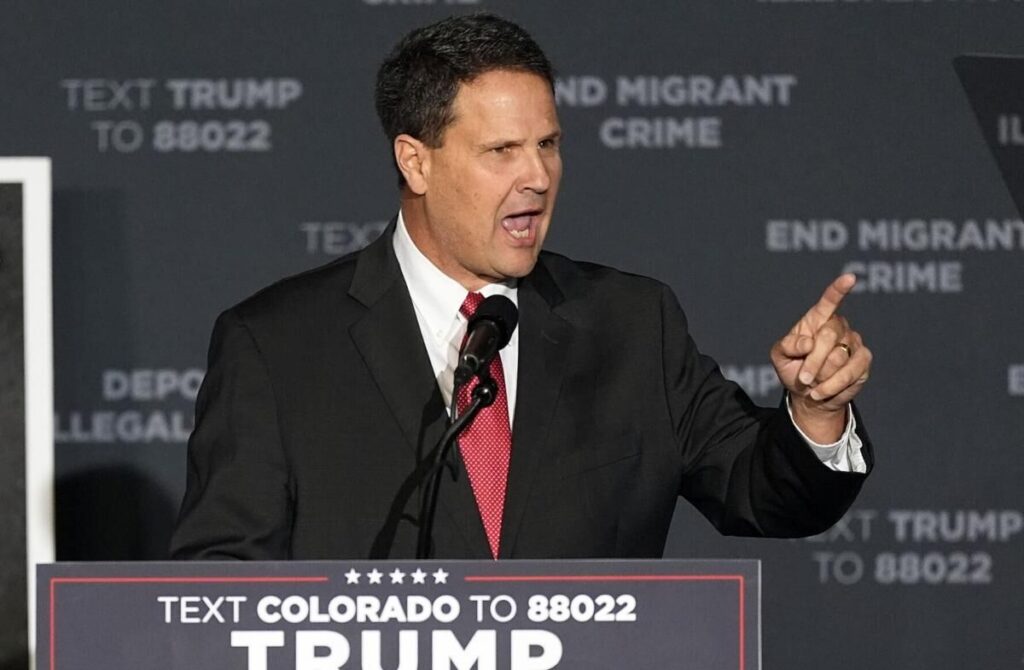
Rep. Jeff Crank thinks Democrats are too focused on Trump, not enough on Colorado Springs | Vince Bzdek
Vince Bzdek
vince.bzdek@gazette.com
Updated 12 hours ago
For U.S. Rep. Jeff Crank, who’s unopposed in the Republican primary for the 5th Congressional District but the main target of both candidates in the lively Democratic primary, the big question in the midterms is not who will stand up...

Colorado Politics Calendar June 22-28
Rachael Wright, Special to Colorado Politics
rachael.wright@coloradopolitics.com
Updated 5 days ago
CoPo’s weekly political calendar will help you find political and public-policy events throughout Colorado. It includes candidate and issue campaign events, public policy meetings, court hearings, state and local party conventions, assemblies, debates, rallies, parades, speaking engagements, traveling dignitary appearances,...
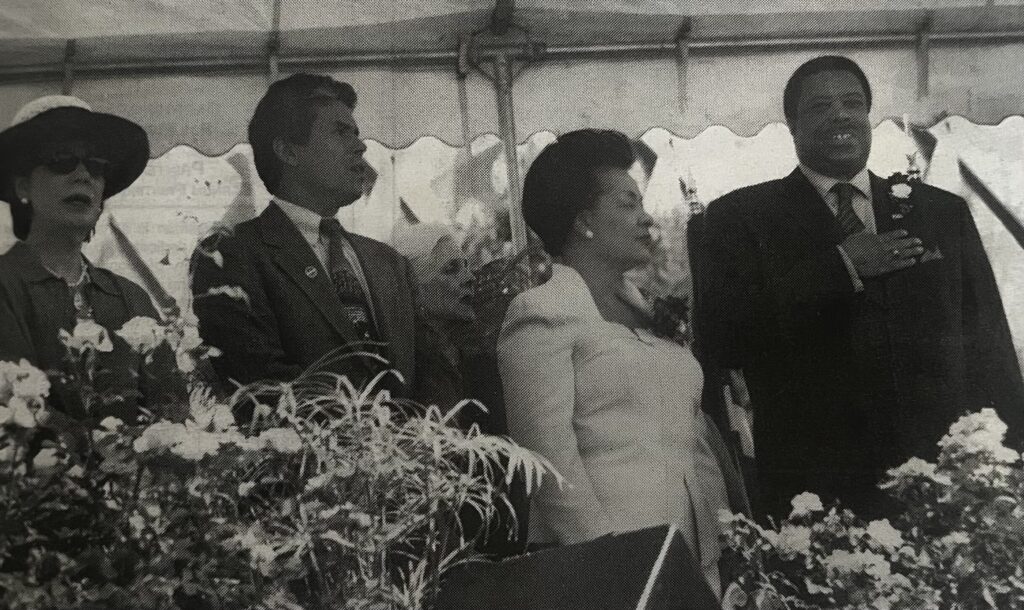
Vice president attends Denver event to support energy freedom; more news from the past | A LOOK BACK
Rachael Wright, Special to Colorado Politics
rachael.wright@coloradopolitics.com
Updated 5 days ago
Forty-Five Years Ago This Week: Vice President George H.W. Bush flew to Denver to address the annual meeting of the American Association of Petroleum Landmen, where he assured the audience that the Reagan administration’s strong belief was that the private...
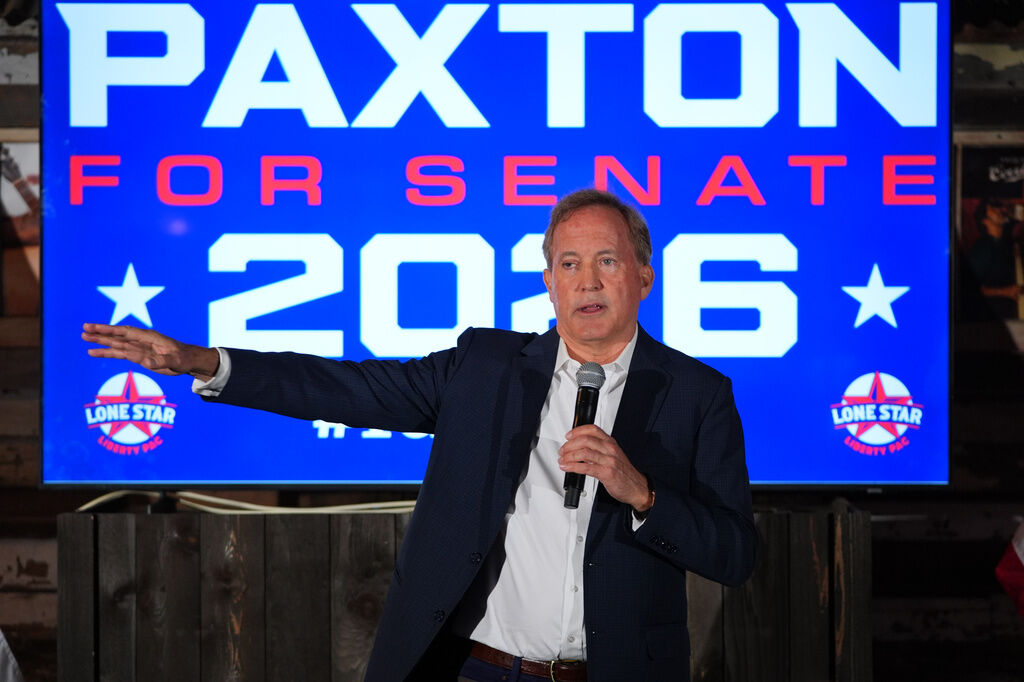
Does character matter anymore? | SONDERMANN
By Eric Sondermann
by-eric-sondermann@coloradopolitics.com
Updated 5 days ago
The last few weeks have been illuminating in the manner of a headlamp pointing the way to some deep, dark, murky netherworld. Graham Platner, a hero to the populist set on the Democratic side, became his party’s Senate nominee in...
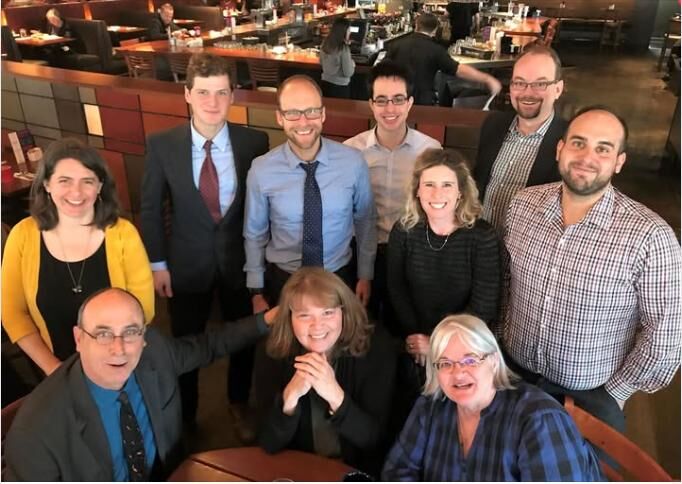
A special edition of Capitol M: In remembrance of the outrageous Lynn Bartels
Marianne Goodland
marianne.goodland@coloradopolitics.com
Updated 3 days ago
I had Lynn Bartels envy. For almost longer than I can remember. There, I said it. And it’s true. Lynn died Friday, age 69, after a short battle with glioblastoma. I was just heartsick when that news of her diagnosis...

Bernie Sanders endorses DeGette challenger Melat Kiros in Colorado’s 1st CD Democratic primary
Ernest Luning
ernest.luning@coloradopolitics.com
Updated 3 days ago
U.S. Sen. Bernie Sanders on Friday endorsed congressional candidate Melat Kiros, one of two Democrats challenging 15-term U.S. Rep. Diana DeGette in Colorado’s June primary. Sanders, a Vermont independent who caucuses with the Democrats, called the 29-year-old Kiros “exactly the...
Trump’s 10th Circuit nominee recuses from cases against federal government without explanation
Michael Karlik
michael.karlik@coloradopolitics.com
Updated 15 hours ago
President Donald Trump’s nominee to fill a vacancy on the Denver-based federal appeals court recused himself without a clear explanation from nine cases against the executive branch while he was undergoing vetting by the White House this spring. U.S. District...

Trump’s low approval unchanged as Iran war perceptions continue to plague him
Rena Rowe, Washington Examiner
rena.rowe.washington.examiner@gazetteedit.wpenginepowered.com
Updated 3 days ago
A new poll shows most Americans disapprove of President Donald Trump’s handling of Iran, with views on the issue closely mirroring his overall job approval rating. Just 37% of U.S. adults approve of the way Trump is handling his presidency,...
PREV
PREVIOUS

Colorado Springs City Council approves open space deal
The Colorado Springs City Council approved a deal that will add more than 1,000 acres to an open space on the city’s eastern edge, an area that has seen increased urban development over the last several years. Colorado Springs will spend $7.5 million in revenues generated from the city’s dedicated 0.1% Trails, Open Space and […]

Pat Schroeder remembered by Coloradans, national leaders as an inspiration, trailblazer
Tributes and remembrances poured in for Pat Schroeder, the first woman to represent Colorado in Congress, as friends and political figures from across the spectrum recalled the barriers she broke, the lives she inspired and the smiles she left. Known as much for her sharp wit and memorable phrases as for the legislation she championed, […]