

Judge dismisses man’s lawsuit against Walmart for erroneous shoplifting arrest
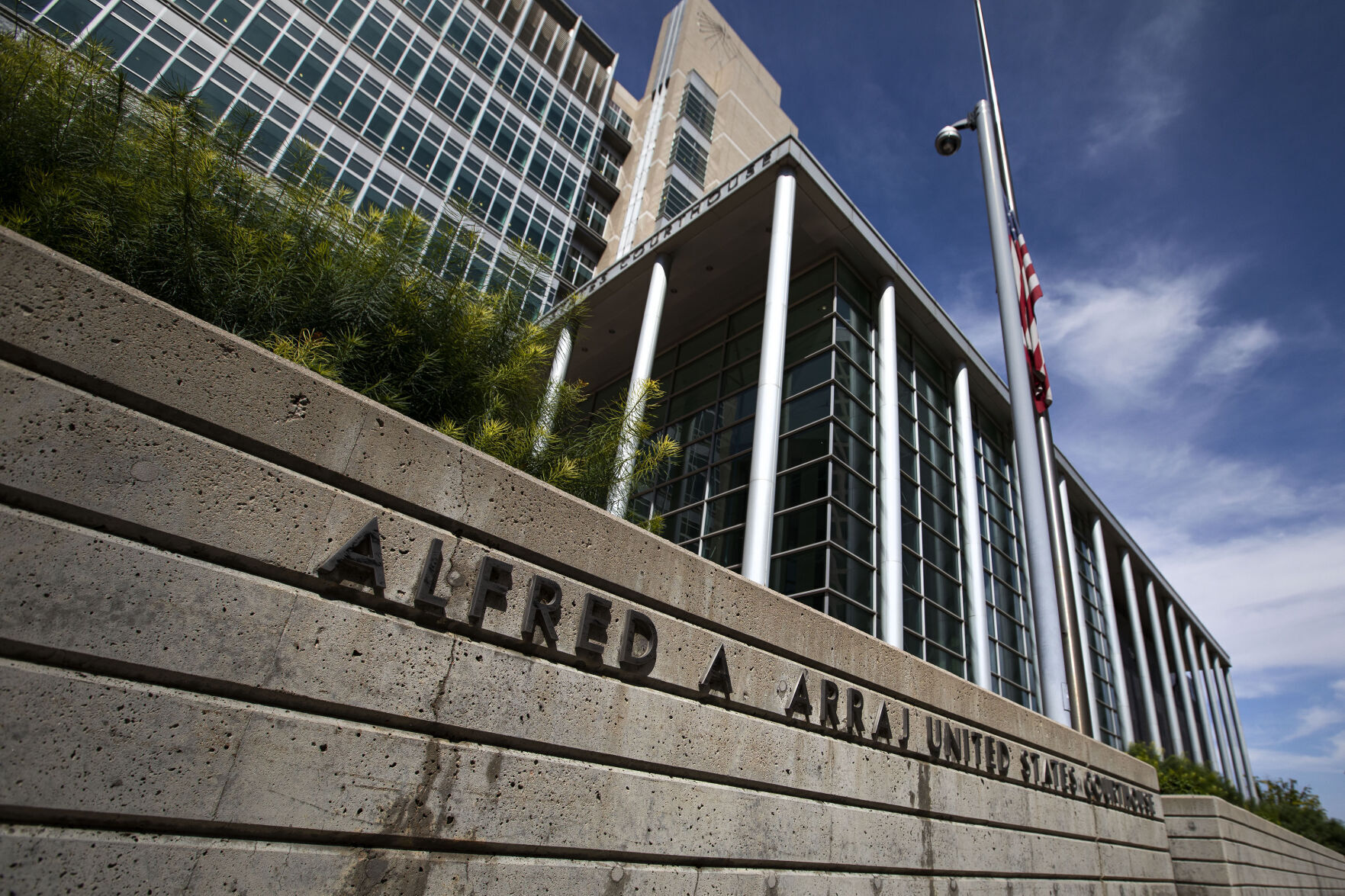
Even though prosecutors ended up dismissing the shoplifting-related charges against an elderly Asian man, he failed to show that Walmart should be liable for its role in his erroneous arrest, a federal judge ruled last month.
Meng Uoy Chang asserted a Walmart store in Timnath had violated his rights after employees identified Chang as a shoplifter – who also appeared to be Asian and elderly – caught on surveillance footage. Chang argued Walmart’s actions amounted to discrimination under state and federal civil rights law, as well as false arrest.
But on Feb. 17, U.S. Magistrate Judge Scott. T Varholak granted Walmart’s motion to dismiss. Chang had not shown all of the elements required for his various federal claims. For example, there were no allegations that Walmart participated with state authorities in Chang’s wrongful arrest aside from helping to identify the shoplifter.
“Plaintiff has not pled any facts, beyond the furnishing of information, to suggest that Defendant engaged in a joint action with state actor,” Varholak wrote.
According to the lawsuit, Chang went to the Timnath Walmart in December 2018 to return a set of work gloves he had previously purchased. The store accepted the return. Shortly afterward, a police officer reportedly stopped Chang, handcuffed him and asked him to sign documents Chang did not understand. Chang later discovered employees of the Walmart had reported him as a thief.
Chang allegedly did not return to the Timnath Walmart after the encounter, but the store reported another theft to police in February 2019. Security cameras captured a person, who appeared to be Asian, walking out with merchandise. A Walmart employee subsequently identified Chang in a photo lineup as the culprit.
In August 2019, police in Wyoming arrested Chang on a warrant for one felony and two misdemeanor charges related to the theft. Six months later, the district attorney’s office for Larimer County dismissed the charges because it could not prove Chang was the person in the surveillance footage.
“Plaintiff was not treated as people of other races would have been treated by Walmart, and there is no factual or legal excuse to justify how he was suspected and falsely accused by the Defendant as a thief, other than his race,” wrote Chang’s attorney, Yun Wang, who added that Chang lost his job due to the arrest and is “regularly tormented” by the experience.
Chang alleged Walmart was liable for false arrest, breach of contract, and discrimination in places of public accommodation, among other claims. Walmart moved to dismiss the lawsuit, arguing Chang had filed his complaint beyond the statute of limitations and Walmart had not prevented Chang from accessing the store. Therefore, he had not been excluded from a place of public accommodation.
“Walmart merely cooperated in the criminal investigation by local authorities,” wrote the company’s attorneys.
Chang countered that he had filed his lawsuit within the legal deadline and that Walmart’s actions violated federal law by interfering with his “right to make and enforce contracts.” In Chang’s view, Walmart reported him to police after he returned his items to the store, which was not a natural consequence of the “contract” between Walmart and its customers. The initial report was allegedly a launching pad for the later, race-based arrest.
“Plaintiff was not white, he is Asian, and he was picked by Walmart to be the protagonist of a falsely conjured police report just because the security footage shows a blurry image of a Asian-looking person,” Wang wrote.
Varholak agreed Chang’s false arrest and imprisonment claim could not survive under federal law because Chang had not alleged Walmart worked jointly with police to violate his rights. However, Varholak suggested Chang’s allegations may fit better under state law, and permitted Chang to refile them.
For Chang’s claim that Walmart discriminated against him in a way that interfered with his right to make and enforce contracts, Varholak noted Walmart had not inhibited Chang from purchasing or returning his items. Nor had the store inflicted “pains and punishments” on Chang, even if the company made a racially-motivated police report.
Finally, because Chang did not file the required notice with the Colorado Civil Rights Division, Varholak was unable to consider Chang’s claim that Walmart discriminated against him in a place of public accommodation.
Varholak declined to consider Chang’s remaining claims under state law. He gave Chang 21 days to file an amended lawsuit to address the problems the magistrate judge identified in the allegations.
The case is Chang v. Walmart, Inc.

10th Circuit rebuffs government, rules against shift to mandatory immigration detention
Michael Karlik
michael.karlik@coloradopolitics.com
Updated 11 hours ago
The Denver-based federal appeals court ruled on Tuesday against the government’s broad assertion of authority to keep people in immigration custody without the opportunity to demonstrate their suitability for release on bond. Although the regional appeals courts have reached different...

Appeals court revives tenants’ lawsuit over landlords’ illegal fee demands
Michael Karlik
michael.karlik@coloradopolitics.com
Updated 7 hours ago
Colorado’s second-highest court revived a proposed class-action lawsuit against landlords and other entities last month, concluding that state law did not permit the practice of demanding that tenants pay attorney fees in certain eviction proceedings. In 2021, lawmakers enacted a...
Appeals court reverses Jeffco assault convictions due to omitted jury instruction
Michael Karlik
michael.karlik@coloradopolitics.com
Updated 7 hours ago
Colorado’s second-highest court agreed last month that a Jefferson County defendant’s assault convictions could not stand because his jury should have been allowed to consider whether he used force against a bar patron to defend his girlfriend from inappropriate touching....
Colorado Supreme Court tosses man’s lawsuit over daughter’s traffic death
Michael Karlik
michael.karlik@coloradopolitics.com
Updated 7 hours ago
The Colorado Supreme Court applied a confusing matrix of conditions and deadlines in state law to conclude on Monday that a man waited too long to sue after his daughter was rendered unconscious and later died from a vehicle accident....
U.S. Supreme Court upholds state laws banning transgender girls and women from school athletic teams
Nico Brambila
nico.brambila@denvergazette.com
Updated 11 hours ago
WASHINGTON • The U.S. Supreme Court on Tuesday upheld state laws barring transgender girls and women from playing on school athletic teams. The court’s conservative majority ruled that state bans in Idaho and West Virginia don’t violate the U.S. Constitution...
Colorado Supreme Court upholds child abuse convictions despite faulty jury instruction
Michael Karlik
michael.karlik@coloradopolitics.com
Updated 2 days ago
The Colorado Supreme Court decided on Monday that a San Miguel County jury properly convicted a defendant of child abuse resulting in death, even though the instructions potentially allowed jurors to avoid finding that the child abuse resulted in death....
Colorado justices say group that spent $4M on ballot initiatives does not have to disclose donors
Michael Karlik
michael.karlik@coloradopolitics.com
Updated 2 days ago
The Colorado Supreme Court ruled on Monday that an organization that spent $4 million to advocate on ballot initiatives in the 2020 election is not required to disclose its donors and spending. The Supreme Court acknowledged that multiple factors suggested...
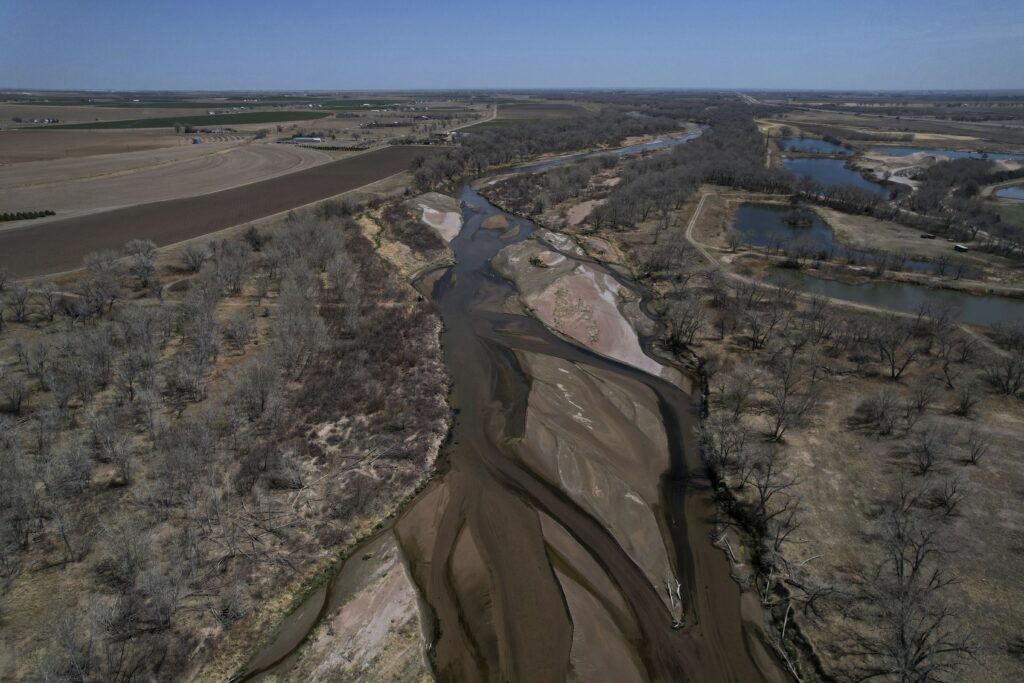
Colorado–Nebraska water clash heads to US Supreme Court as canal fight intensifies
Marianne Goodland
marianne.goodland@coloradopolitics.com
Updated 2 days ago
The U.S. Supreme Court on Monday agreed to hear Nebraska’s lawsuit against Colorado over the Perkins County canal, a move that advances a legal dispute likely to take years to resolve. The proposed Perkins County canal would run through land...
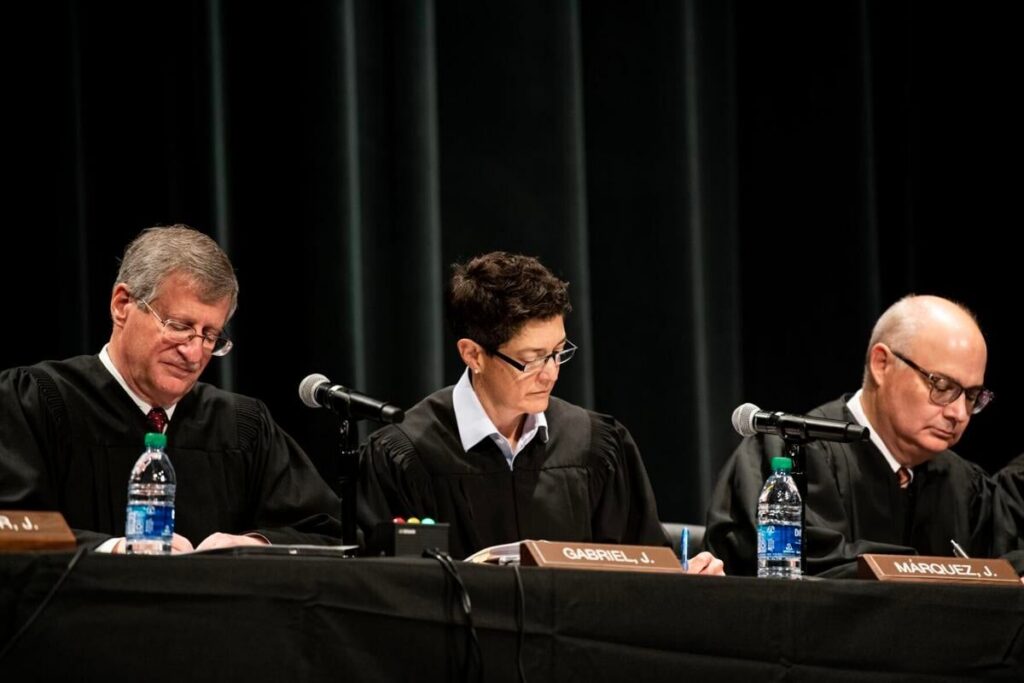
Colorado Supreme Court: Redistricting plans for 2028 election cannot proceed under state constitution
Michael Karlik
michael.karlik@coloradopolitics.com
Updated 1 day ago
The Colorado Supreme Court blocked all attempts at redrawing congressional district boundaries for the 2028 election from reaching the ballot on Monday, concluding each of the proposed ballot measures violated the constitutional single-subject requirement. The court considered five distinct but...

Bennet, Hickenlooper to vote against Trump’s 10th Circuit nominee from Colorado
Michael Karlik
michael.karlik@coloradopolitics.com
Updated 4 days ago
Colorado’s two Democratic senators will not vote to confirm President Donald Trump’s nominee to a vacancy on the Denver-based federal appeals court. Trump has selected U.S. District Court Chief Judge Daniel D. Domenico, who he appointed as a federal trial...
PREV
PREVIOUS

Colorado gas prices see largest year-over-year increase in the U.S.
Feeling the pain at the pump? Colorado gas prices have risen more year-over-year than any state in the country. That’s according to a new nationwide fuel price analysis by Zutobi. The report said Colorado gas prices rose 16.07% from 2022 to 2023. Hawaii saw the second-highest increase (12.06%) and Ohio was third (11.28%). At the […]
Frontrunners are starting to appear in crowded Denver Mayor's race
The Denver Gazette, in partnership with 9 News and Metropolitan State University conducted a poll including 820 Denver adults regarding the municipal election. Amongst those polled, favorites in the crowded mayoral field emerged, as well as key issues voters voted were, “one of the very most important for Denver to address in the next few […]