

Colorado’s justices to review whether lawyers may abandon clients’ claims
Can attorneys representing defendants who are challenging their criminal convictions discard certain claims without their clients’ informed consent?
The Colorado Supreme Court announced on Monday it will review the question after the state’s Court of Appeals last year decided a Larimer County judge was wrong to assume a defendant’s lawyer had abandoned some of her client’s arguments, with no evidence the defendant intended for that to happen.
At least three of the Supreme Court’s seven members must consent to hear a case on appeal.
A jury convicted Anthony Robert Smith of multiple child sex assault offenses in 2013. Five years later, Smith filed his own motion asking for postconviction relief, alleging new evidence, prosecutorial misconduct and constitutionally ineffective levels of assistance from his trial lawyer. The court appointed an attorney for Smith, who then filed a supplemental motion focusing specifically on three ineffective assistance claims.
District Court Judge Gregory M. Lammons denied Smith’s request for postconviction relief, only addressing the three claims in the supplemental motion. Because Smith’s lawyer did not have a duty to pursue meritless claims and she had not referenced many of Smith’s initial contentions, Lammons believed Smith had waived his opportunity for a judge’s review of the remaining allegations.
On appeal, a three-judge panel of the Court of Appeals decided that Smith’s attorney was not obligated to re-raise her client’s original issues when he was self-represented, or “pro se.” As long as Smith had not intended to relinquish his claims, Lammons should have considered them.
Nothing, wrote Judge Rebecca R. Freyre, “shows that counsel considered Smith’s pro se claims to be meritless or that she sought (or received) Smith’s informed consent to waive any claims.”
Both parties appealed to the Supreme Court. Smith’s lawyer argued the Court of Appeals neglected to address an allegedly-problematic episode in which Smith’s original trial judge personally delivered lunch to deliberating jurors without the parties’ knowledge. The government, meanwhile, alleged the notion of “informed consent” reversed the traditional roles of lawyer and client during post-conviction proceedings.
“By requiring ‘informed consent’ from Defendant to waive claims, Defendant, not counsel, is now ‘captain of the ship,'” wrote Matthew S. Holman of the Colorado Attorney General’s Office.
The Supreme Court elected to review the government’s issues and rejected Smith’s petition. The case is People v. Smith.
The justices also narrowly turned down a second appeal implicating the child welfare system.
A Mesa County father, identified as D.W., challenged a finding of child neglect as well as a judge’s directive that he complete the same type of evaluation and treatment given to those convicted of sex offenses. Although D.W.’s neglect case involved allegations of sexual assault, the proceedings were not criminal.
A Court of Appeals panel decided last summer that the trial judge was not wrong to require D.W. to participate in behavioral treatment, but she was wrong to order the specific treatment given to defendants with criminal convictions.
The trial judge then reissued D.W.’s treatment plan with modifications. D.W. appealed a second time.
But the Court of Appeals now wondered whether it had the ability to hear D.W.’s new appeal. His treatment plan was known as a dispositional order. Colorado law deems dispositional orders to be non-final judgments that are appealable when paired with an adjudicatory order – meaning the decision that a child is neglected.
This time, D.W. did not have an adjudicatory order to pair with his appeal of the treatment plan. He argued that his second trip to the appellate court should be viewed as a “continuation of the appeal,” but the court dismissed the case anyway.
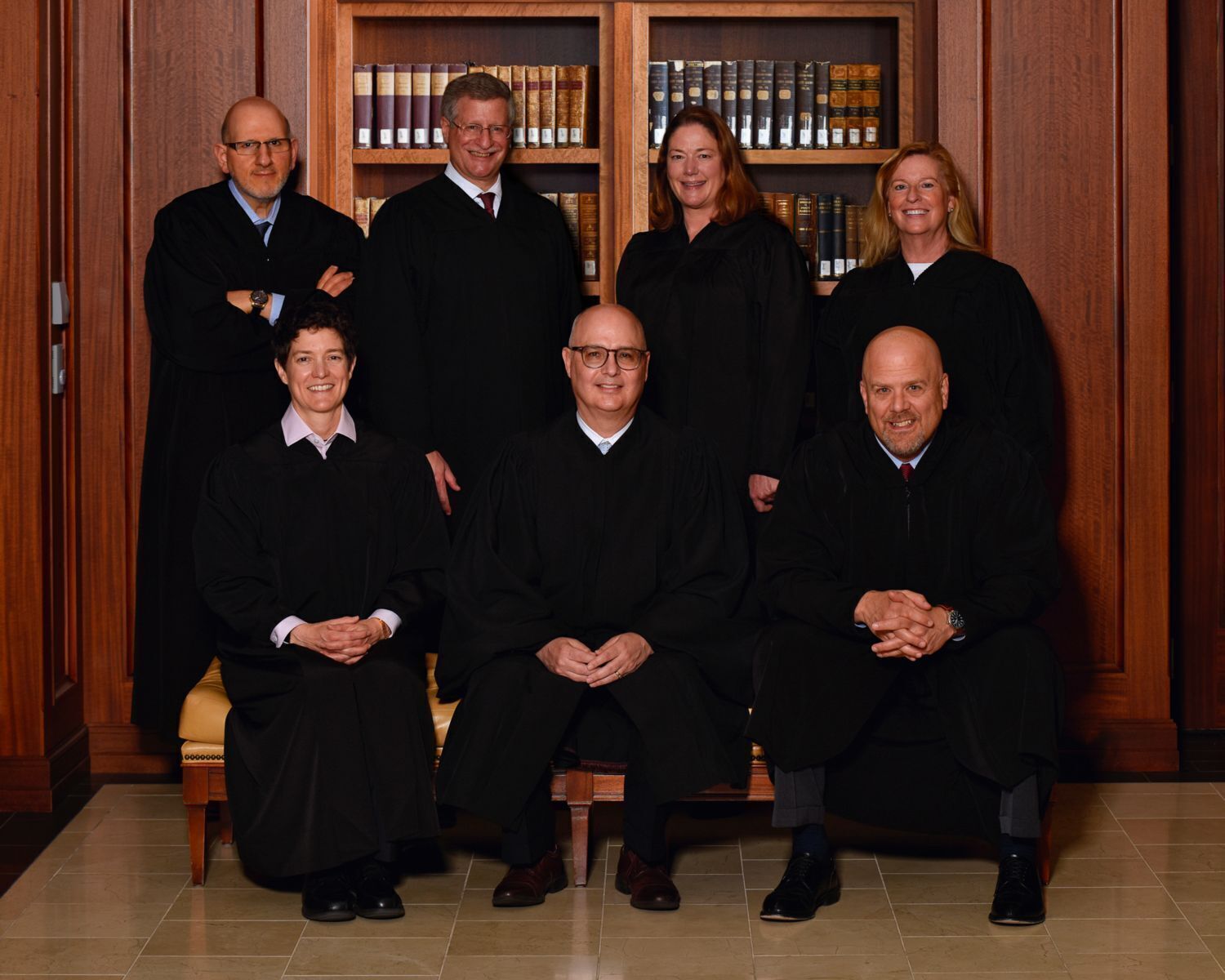
On appeal to the Supreme Court, Chief Justice Brian D. Boatright and Justice Richard L. Gabriel indicated they would have heard D.W.’s case to decide whether dismissal is the right outcome when an appellate court orders a judge to change only her treatment plan and a party appeals the plan by itself.
The case is D.W. v. People.


Trump’s 10th Circuit nominee recuses from cases against federal government without explanation
Michael Karlik
michael.karlik@coloradopolitics.com
Updated 19 hours ago
President Donald Trump’s nominee to fill a vacancy on the Denver-based federal appeals court recused himself without a clear explanation from nine cases against the executive branch while he was undergoing vetting by the White House this spring. U.S. District...
Adams County murder conviction reversed due to faulty jury instruction
Michael Karlik
michael.karlik@coloradopolitics.com
Updated 23 hours ago
Colorado’s second-highest court overturned an Adams County defendant’s murder conviction last month because the instruction provided to the jury about a trespasser’s right to use self-defense did not accurately reflect Colorado law. A person is justified in using force to...
Colorado court upholds murder conviction despite jury disobeying instructions
Michael Karlik
michael.karlik@coloradopolitics.com
Updated 2 days ago
Colorado’s second-highest court upheld an Arapahoe County defendant’s murder conviction last month, even though jurors found he was not the one who shot the victim and the evidence suggested he was not present for the shooting. A three-judge Court of...
Divided appeals court reverses conviction after judge declined to define ‘bludgeon’
Michael Karlik
michael.karlik@coloradopolitics.com
Updated 2 days ago
Colorado’s second-highest court reversed a Jefferson County defendant’s felony menacing conviction on Thursday, concluding that the trial judge’s failure to define “bludgeon” for jurors may have affected the outcome. A three-judge Court of Appeals panel divided in unusual ways in...
10th Circuit dismisses Tina Peters’ challenge to confinement as moot
Michael Karlik
michael.karlik@coloradopolitics.com
Updated 2 days ago
The Denver-based federal appeals court granted the state’s unopposed request on Wednesday to dismiss former Mesa County clerk Tina Peters’ challenge to her confinement as moot. Although Peters received a commutation of her prison sentence last month from Gov. Jared...

Federal judge declines to recuse from death penalty case after Supermax visit
Michael Karlik
michael.karlik@coloradopolitics.com
Updated 2 days ago
A federal judge declined to recuse herself last month from a death penalty case arising out of Colorado’s “Supermax” prison, finding that her tour of the facility earlier this year did not bias her decision-making. U.S. District Court Judge Charlotte...
Appeals court clarifies offense of impersonating a peace officer
Michael Karlik
michael.karlik@coloradopolitics.com
Updated 3 days ago
Colorado’s second-highest court clarified this month that a person commits the offense of impersonating a peace officer if they engage in “any conduct” while pretending to be law enforcement. In a case out of El Paso County, Richard James Coulier...
Colorado Supreme Court reverses 2 Chaffee County judges for imposing fee on habeas petitioner
Michael Karlik
michael.karlik@coloradopolitics.com
Updated 4 days ago
The Colorado Supreme Court rejected two separate appeals earlier this month from an incarcerated defendant seeking immediate release from prison, but concluded that two Chaffee County judges incorrectly required him to prepay filing fees for his cases. David J. Gottorff...
Weld County judge wrongly denied bail to murder defendant in gap between law change
Michael Karlik
michael.karlik@coloradopolitics.com
Updated 4 days ago
Colorado’s second-highest court ruled this month that a Weld County judge was wrong to deny bail to a murder defendant in the window between the state Supreme Court’s recognition of the right to bail and the voters’ subsequent overruling of...
Defendants acquitted by insanity are eligible for records-sealing, appeals court says
Michael Karlik
michael.karlik@coloradopolitics.com
Updated 3 days ago
Colorado’s second-highest court clarified last month that defendants who are found not guilty by reason of insanity are eligible to have their criminal records sealed from public view. Judges must seal criminal records if, among other things, a defendant is...
PREV
PREVIOUS

Denver Public Schools sees bump in new Spanish-speaking students
More than 350 new Spanish-speaking students enrolled in Denver Public Schools within the first weeks after an influx of immigrants from South and Central American arrived in the Mile High City, school district data shows. The Denver Gazette requested, under the Colorado Open Records Act, the number of newly enrolled Spanish-speaking students from Nov. 5, […]

House Democrats target crisis pregnancy centers, set to introduce abortion-rights package
A package of bills intended to bolster Colorado’s abortion-rights laws are expected within the next two weeks, including a proposal that targets “crisis pregnancy centers.” Sen. Julie Gonzales, D-Denver, who spoke about the package on Tuesday, said the first measure deals with what she calls deceptive trade practices by anti-abortion clinics that she described as […]