

Mount Blue Sky: Colorado board votes unanimously to rename Mount Evans
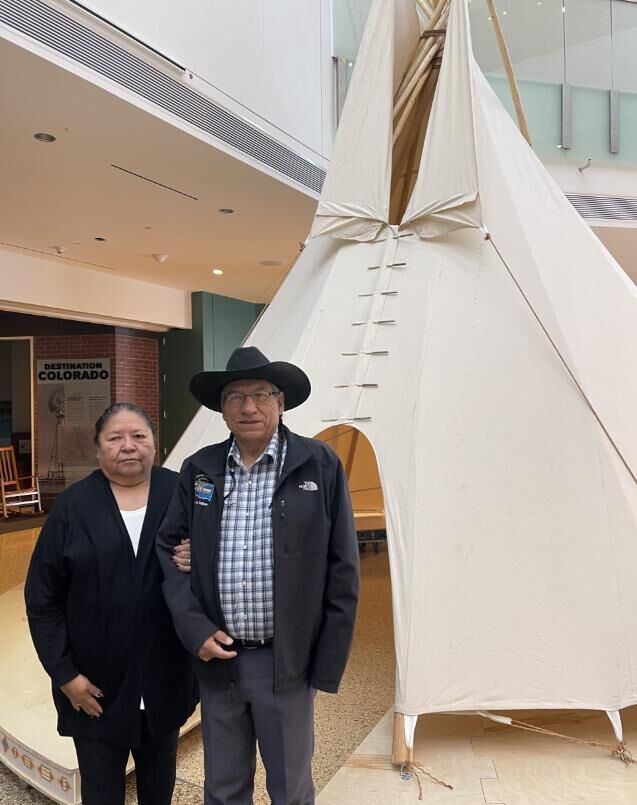
The Colorado Geographic Naming Advisory board took its most significant vote Thursday in its three-year history – a unanimous decision to recommend the renaming of Mount Evans, the most prominent fourteener overlooking Denver, to Mount Blue Sky.
The renaming comes just a few days before the 158th anniversary of the Sand Creek Massacre. An exhibit sharing the accounts of the Cheyenne and Arapaho members who survived – The Sand Creek Massacre: The Betrayal that Changed Cheyenne and Arapaho People Forever – opens Saturday at History Colorado.
The board’s recommendation now goes to Gov. Jared Polis, who will decide whether to approve the name change, and then to the federal U.S. Board on Geographic Names, which will make the final decision.
On Nov. 29, 1864, more than 600 Colorado militia troops, led by Col. John Chivington, attacked a village of Cheyenne and Arapaho women, children and elders on the banks of Sand Creek in Kiowa County. More than 230 tribal members were slaughtered, and in the days that followed, Colorado soldiers paraded some of the remains through the streets of Denver.
The Cheyenne and Arapaho tribes were camped at Sand Creek under a white flag of peace from a treaty forged just two months earlier with Colorado Gov. John Evans and Chivington, known as the Camp Weld Council.
Native American tribes, particularly those tied to the Sand Creek Massacre, have advocated for a name change for some time.
The mountain, previously known as Mount Rosalie or Mount Rosa, was renamed in 1895 after Evans, Colorado’s second territorial governor from 1863-1865 by an act of the Colorado General Assembly. Evans had charged Colorado troops with eliminating all Native American activity in eastern Colorado. An investigation of the massacre resulted in an August 1, 1865 demand for Evan’s resignation from U.S. President Andrew Johnson.
Six names have been under consideration for Mount Evans:
- Mount Cheyenne Arapaho, submitted to the federal naming board in July 2018, although the proponent later withdrew it in favor of Mount Blue Sky;
- Mount Blue Sky, recognizing the “Blue Sky” people, as the Arapaho are known, submitted in Nov. 2020;
- Mount Soule, to recognize Capt. Silas Soule, the whistleblower who brought the Sand Creek Massacre to the attention of Washington, submitted in March 2019;
- Mount Rosalie, the mountain’s original name, named after Rosalie Osborne Ludlow, later the wife of renowned Colorado painter Alfred Bierstadt, also submitted in March 2019;
- Mount Evans, to recognize Evans’ daughter, Anne, a Denver philanthropist, submitted in April, 2021; and
- Mount Sisty, a submission from August 2022 to recognize Wilson Edward Sisty, the founder of the Colorado Department of Wildlife and Fish (now the Colorado Department of Natural Resources).
Fred Mosqueda, a Southern Arapaho who has been fighting to erase the Evans name from Colorado’s highest peak, said Thursday’s vote came as a surprise.
“I crossed my fingers and I told my wife, ‘She’s going to call for a vote,'” Mosqueda told The Denver Gazette. “And they voted yes!”
Mosqueda is a direct descendant of Sand Creek survivors. His great-grandfather, Mixed Hair, was only 4 years old when his 6-year-old sister, Jabene, grabbed his hand as U.S. cavalry soldiers murdered their parents.
The fact that John Evans has been heralded as a hero since the 1860s has confounded the Southern Arapaho and Cheyenne.
“Evans was in a place where he could have, as the Territorial Governor and the Indian Agent for the Cheyenne Arapaho tribes, given us a reservation here in Colorado. Instead, he took the genocide route,” Mosqueda said Friday.
“The renaming was a long hard battle. But this is going to be a healing process for everybody. This is not just for one tribe or one people or the Cheyenne or Arapaho, it is for every living thing.”
But the name is not the first choice by all the tribes tied to Sand Creek. Otto Braided Hair, a tribal representative for the Northern Cheyenne, had previously advocated for Mount Cheyenne-Arapaho. However, he was not present at Thursday night’s meeting, which was held on Zoom and drew more than 75 people.
“Mount Cheyenne-Arapaho is a name that respects both tribes that called the Front Range of the Rocky Mountains home,” Braided Hair said through a spokesman Friday. “While we understand that Blue Sky is a name often associated with the Arapaho people, traditional Cheyenne people use this name in sacred ceremonies that cannot be shared with the outside world.”
“The name Mount Cheyenne-Arapaho honors our ancestors and reminds the world we are still here,” he added. “We want to remember and respect those ancestors – Cheyenne and Arapaho – who were killed at Sand Creek.”
Clear Creek commissioners signed off on the Mount Blue Sky name in March, 2022.
This story is in progress and will be updated.

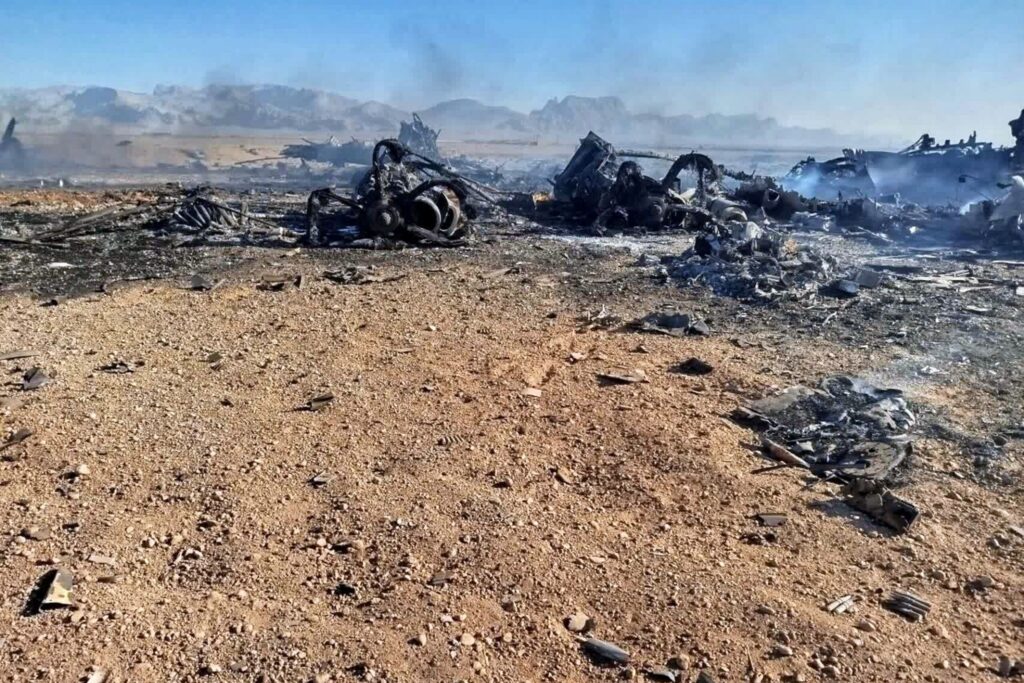
US service member missing after Iran shot down fighter jet has been rescued, US officials say
Associated Press
associated-press@coloradopolitics.com
Updated 15 hours ago
JERUSALEM — President Donald Trump announced early Sunday that the U.S. had rescued an aviator nearly two days after he was shot down over Iran. The extraction came after a frantic search in what appears to be a remote, mountainous region of...

Low and slow meets forever: US postage stamps honor lowrider car culture | OUT WEST ROUNDUP
The Associated Press
the-associated-press@coloradopolitics.com
Updated 5 days ago
NEW MEXICO Stamps honor lowrider culture ALBUQUERQUE — From Mexican American and Chicano barrios in the American Southwest to the halls of the Smithsonian on the National Mall and even the streets of Japan, lowrider culture has become part of...

Colorado Politics Calendar Apr. 6-12
Rachael Wright, Special to Colorado Politics
rachael.wright@coloradopolitics.com
Updated 5 days ago
CoPo’s weekly political calendar will help you find political and public-policy events throughout Colorado. It includes candidate and issue campaign events, public policy meetings, court hearings, state and local party conventions, assemblies, debates, rallies, parades, speaking engagements, traveling dignitary appearances,...

Democrats rebounding without learning necessary lessons | SONDERMANN
Eric Sondermann
eric-sondermann@coloradopolitics.com
Updated 2 days ago
“When we fight, we win!” That, reportedly, was the chant heard over and over again at the Colorado Democratic Assembly a week ago. It suggests that pugilism has been the piece missing from the Democratic toolkit. Perhaps it was just...
An April Fool’s Day to remember | Capitol M | Week of April 4, 2026
Marianne Goodland
marianne.goodland@coloradopolitics.com
Updated 3 days ago
The lighter side of the Capitol, and if light were weight, the Capitol would have lifted off better than the Artemis II rocket on April Fool’s Day. There was a plethora of Fools at the Capitol for April Fool’s Day...
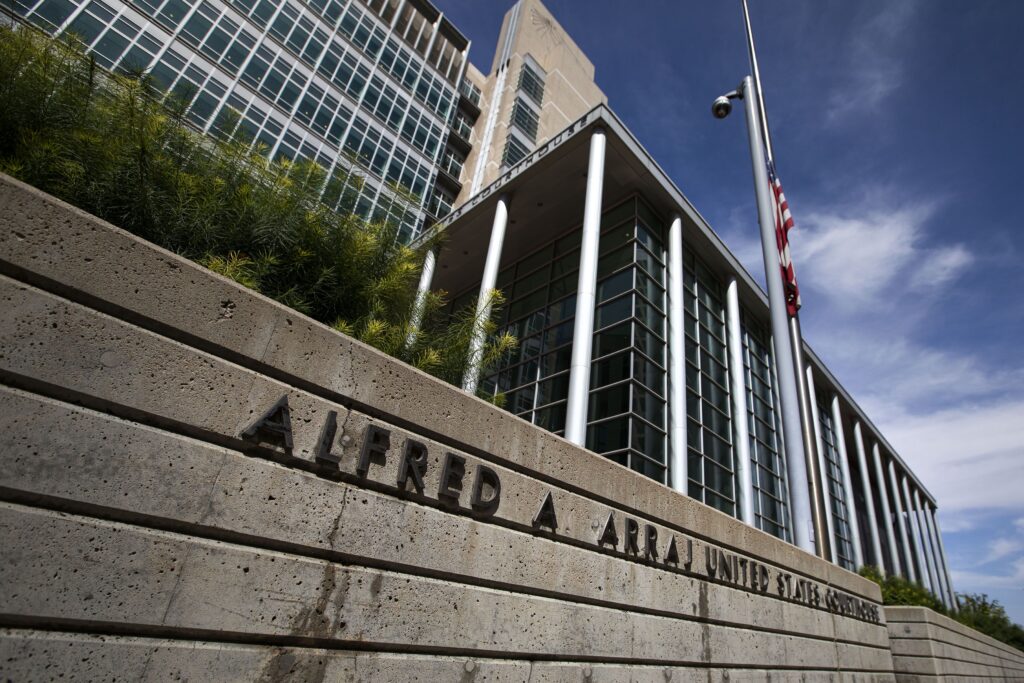
Federal judge sides with Mesa County school district in ex-student’s First Amendment claims
Michael Karlik
michael.karlik@coloradopolitics.com
Updated 2 days ago
A federal judge concluded last week that Mesa County Valley School District 51 and three of its administrators did not violate the First Amendment rights of a former student when they imposed minor discipline in response to disruptive behavior. In...

Colorado Supreme Court intervenes in 4 ongoing cases
Michael Karlik
michael.karlik@coloradopolitics.com
Updated 2 days ago
The Colorado Supreme Court recently moved to intervene in four ongoing cases, including two criminal prosecutions, a civil lawsuit, and a child welfare proceeding. At least four of the court’s seven members must agree to hear a case outside of...
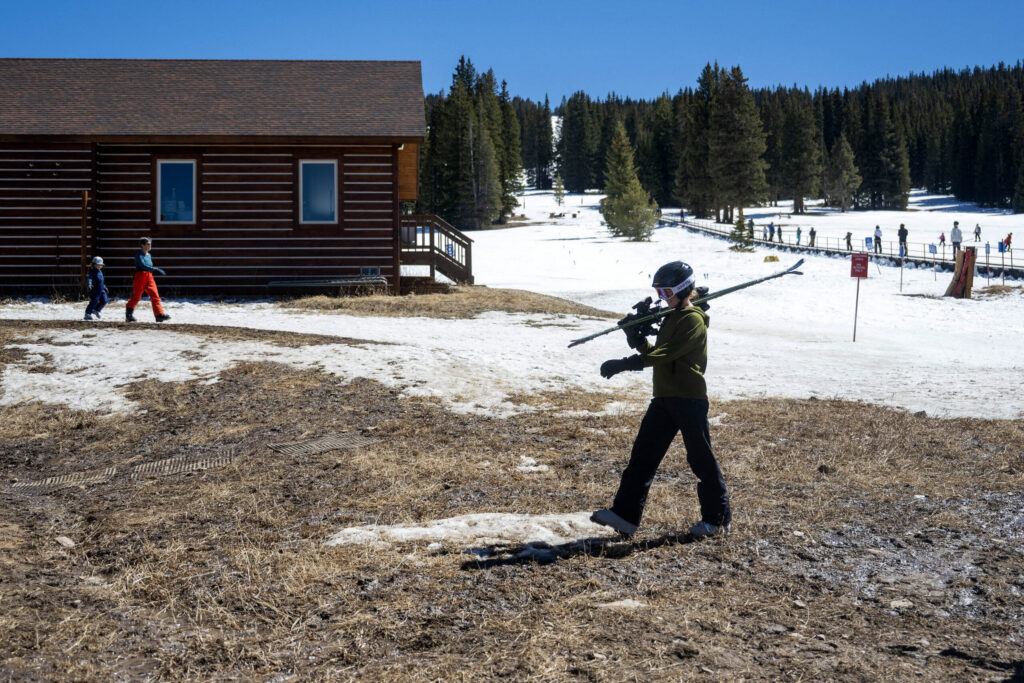
Colorado ski resorts announce early closures amid historic snowpack lows, high temperatures
Kyla Pearce
kyla.pearce@gazette.com
Updated 2 days ago
Vail Resorts is the latest area to announce season closure Wednesday As Colorado’s historically low snowpack year comes to a close and spring conditions take over the mountains, the state’s major ski resorts are announcing closing dates — some of...

Kentucky Gov. Andy Beshear set to headline Colorado Democrats’ annual fundraising dinner
Ernest Luning
ernest.luning@coloradopolitics.com
Updated 2 days ago
Kentucky Gov. Andy Beshear, one of the Democrats’ top 2028 presidential prospects, is scheduled to deliver the keynote address at the Colorado Democratic Party’s annual fundraising dinner in June in Denver, the party said Friday. Serving his second term as...
Gov. Polis names new leaders for Colorado health agencies in wake of Medicaid turmoil
Marianne Goodland
marianne.goodland@coloradopolitics.com
Updated 2 days ago
Gov. Jared Polis, on Thursday, announced he was appointing Gretchen Hammer to serve as acting executive director of the Colorado Department of Health Care Policy and Financing, and deputy executive director Stephanie Beasley to become the next commissioner of the...
PREV
PREVIOUS

'Once-in-a-lifetime experience': Supreme Court, students engage at Colorado Springs school
It took social studies teacher Ty Allen several years to bring the Colorado Supreme Court to his high school in Colorado Springs, but Allen’s efforts paid off on Thursday when the state’s seven justices appeared before an auditorium of Pine Creek High School students and staff. “I’ve been reaching out to them every couple of […]

Recount likely as Lauren Boebert declares victory over Democrat Adam Frisch in Colorado's 3rd CD
The race between U.S. Rep. Lauren Boebert and her Democratic challenger Adam Frisch appeared to be headed to a recount Thursday after the Republican’s lead narrowed through the day as most counties in Colorado’s largely rural 3rd Congressional District posted final, unofficial vote totals. Although a recount looked to be a certainty – delaying official […]