

Is it time for both parties to bail on Colorado’s political nominating system? | Miller Hudson
Cracks are beginning to appear in Colorado’s political nominating system. Recently, Mario Nicolais, a formerly Republican-leaning pundit, and Doug Friednash, former Democratic legislator, have opined regarding the imminent demise of the caucus/assembly framework which controls partisan candidate selection. There has always been a legal detour around this process whereby candidates petition directly onto the ballot. This route, however, has been almost exclusively used by aspirants or incumbents unsure of their ability to command established, fractional thresholds for inclusion in primary contests. The chances for success as a truly independent candidate are slim. Yet, once unaffiliated voters exceeded 50% of the Colorado electorate, legitimate complaints arose questioning whether the two-party system continues to make any sense.
A majority in either the Democratic or Republican party constitutes little more than 15% of the statewide electorate. In other words, a mere one-sixth of registered voters can and do select the candidates presented to all voters. It is actually worse than this since an even tinier fraction of partisans are the activists who attend party caucuses and then run to serve as delegates at county and statewide assemblies where they are the electors who pass judgment on prospective nominees. The decision to open our primary elections to unaffiliated voters was expected to attract more moderate candidates. Whether this change has acted as an effective check on the right/left valence of nominees appears doubtful. The fact Colorado’s two incumbent U.S. senators, with more than 40 years of combined experience in public office, chose to bypass the caucus and assembly process should be alarming for Democrats.
Republicans discovered far sooner than Democrats allowing the most extreme activists in their party to exercise control over its nominating process was a prescription for disaster. It has been more than a decade since a Colorado Republican has won a statewide election. Rather than reform their rules, the party has indulged in intramural squabbles that further splinter their effectiveness amongst quarreling factions. Having been gifted a seemingly unchallengeable majority, Democrats are tempted by similar policy excesses. Both parties have been bleeding members fleeing from partisan affiliation in favor of “independent” status. It is hard to avoid the conclusion something is flawed in the system. Both Democrats and Republicans love our state but see a democracy failing to deliver the quality of life they wish for — affordable, equitable, fair and compassionate.
If our politics is broken, how do we go about fixing it without sliding into a fractious, partisan battle? Obviously, the unaffiliated majority deserve at least half the seats at the table. Opposition to this thesis just might unite our two parties. Nonetheless, all stakeholders deserve to be heard. Unfortunately, there are as many theories for repair as there are political voices. Some want to tinker with election rules, seeing salvation in ranked-choice voting and jungle primaries. Then there are the public campaign funding advocates. Others plump for third parties although there is little evidence this would work without moving to a parliamentary democracy. With the largest constitution among the 50 states, a constitutional convention to rewrite all the rules has some appeal but that would be no quick fix. Canadians Peter Macleod and Richard Johnson argue in their book, “Democracy’s Second Act” in favor of citizens’ councils and randomly selected legislative assemblies — returning decision making to the local level. Thrashing such alternatives out will be neither easy, nor swift.
Our neighbors to the south have had nearly two decades of an organization, New Mexico First, that holds two-day seminars with regular citizens to examine issues before its legislature. Saturday is a tutorial with expert briefings on the subject before it: budgets, health care, prisons and childcare These sessions lead to specific recommendations forwarded to the legislators. Prioritizing childcare led to New Mexico becoming the first state to offer universal, affordable childcare centers. Restructuring Colorado politics will require a similar effort. Neither Democrats alone nor a partnership with Republicans is the proper sponsor. Our universities could make expert advice available to the search for a more responsive democracy. The private sector could help fund the costs of convening and staffing these discussions.
The legislature could assist by formally authorizing and recognizing such an effort. Too often this kind of initiative can become a “forced march to a predetermined conclusion” which undermines public faith in the neutrality of the convenors. All the more reason to place administration in the hands of a professional staff. The status quo is becoming increasingly unacceptable.
When I attended my first Colorado caucus in 1974, it was held in the home of Joe Vinnola and attended by residents of my precinct. For the next six years, four of us would hoist our one wheelchair-bound voter into the living room where the caucus would be held. By the 1980s, caucuses were being moved into accessible public buildings, usually schools in the case of Denver. This worked fairly well and offered the opportunity to confer and gossip with attendees from nearby neighborhoods in a legislative district.
This year, Arapahoe County conducted its caucuses inside a Zoom network. Since I was traveling, the system refused to allow me to enter my meeting. Others faced denial for unknown and apparently unknowable reasons. The vote counting software reportedly failed for many precincts. At the Democratic Assembly in Pueblo last weekend, registration lines wound around the block at Memorial Hall. A beautiful, century-old edifice it lacked sufficient bathrooms and hallways were congested with long lines throughout the day waiting for a toilet. Ballot tallies ran late as well. Participation was more an ordeal than a pep rally. Republicans will also meet in Pueblo next weekend under the shadow of a departing party chair who is being defenestrated by her critics. I used to joke Republicans were my adversaries. It was other Democrats who were my political enemies.
In 1972, I’ve been told, Democrats supporting George McGovern overturned Mike Pompnio, a North Denver Democrat, who was as close to an urban “boss” as the city has ever seen. He delivered the Colorado delegation to John Kennedy in 1960, making it the only western state that failed to endorse LBJ. When Interstate 70 was routed through north Denver, an exit was placed at Pecos Street and 46th Avenue where Pomponio operated his DX gas station. More than 200 homes were plowed under the interstate as part of this political favor. The positive message in this tale is even a caucus machine can be ousted — but it demands a heavy lift. As political parties have lost their clout, participation has withered as well. Caucus attendance is often so slight they can’t fill their allotted delegate slots at their county convention.
In an age of social networks, a doom scroller knows more about local politics than his or her precinct organizer. Though this year’s Pueblo meetings may well be the last, there remains reason for hope. Colorado’s shift to all-mail balloting was a bipartisan initiative. With both parties sinking, it’s time to share the bail buckets.
Miller Hudson is a public affairs consultant and a former Colorado legislator.


Colorado districts prepare for school year amid mental health cuts. But will less cellphone distractions help?
Marissa Ventrelli
marissa.ventrelli@coloradopolitics.com
Updated 20 hours ago
The signs of a new school year are everywhere — buses in the shop, teachers unpacking boxes, families ticking through supply lists — but behind the familiar rituals, Colorado districts are preparing for a year defined less by routine than...
Surprise candidate Shimon Blau cleared to face off against Melat Kiros in November
Ernest Luning
ernest.luning@coloradopolitics.com
Updated 11 hours ago
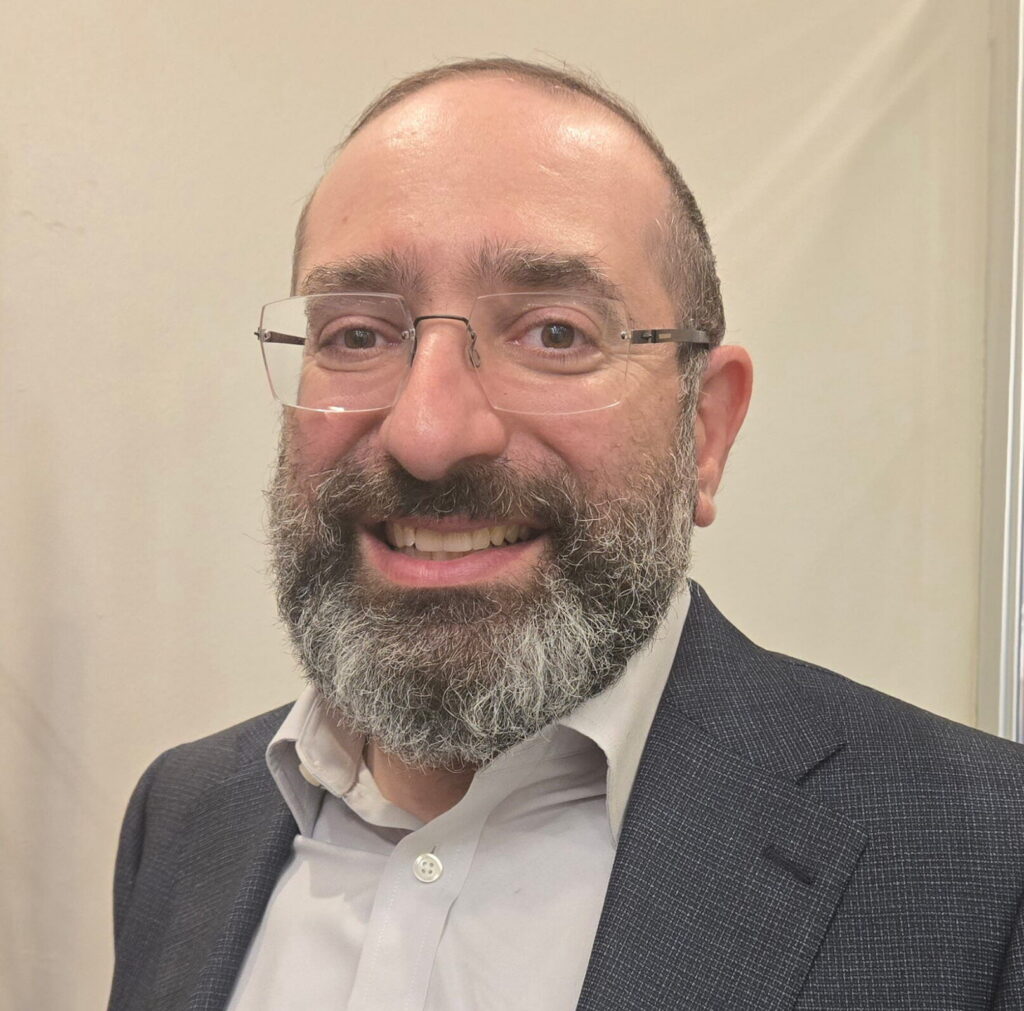
Unaffiliated congressional candidate Shimon Blau, a Denver doctor, has qualified by petition for the general election in Colorado’s 1st District, where Democrat Melat Kiros defeated 15-term U.S. Rep. Diana DeGette in last month’s primary, the Colorado Secretary of State’s Office...
UNC opens College of Osteopathic Medicine
Marissa Ventrelli
marissa.ventrelli@coloradopolitics.com
Updated 13 hours ago
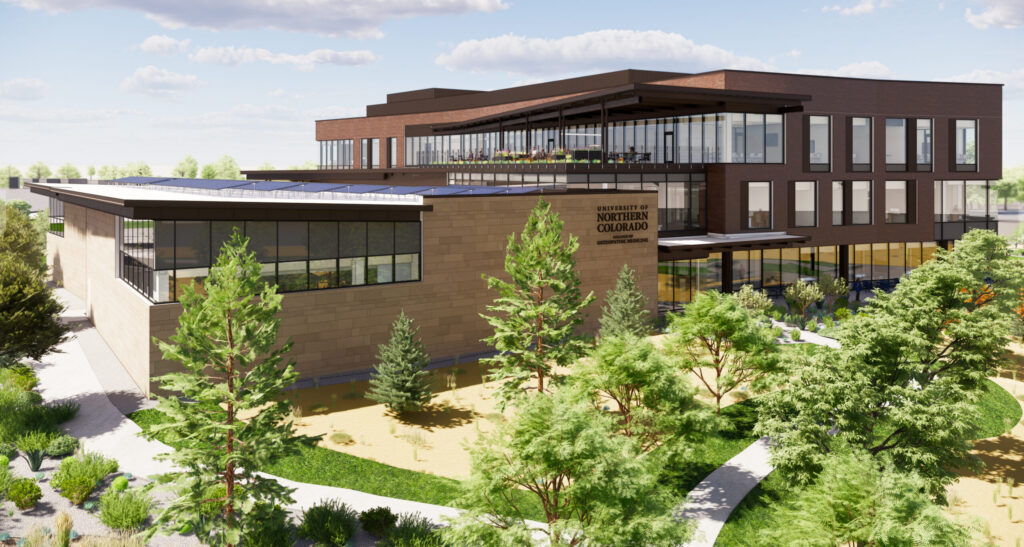
The University of Northern Colorado held a grand opening for its new College of Osteopathic Medicine on Friday, with Gov. Jared Polis in attendance to celebrate the culmination of a two-year, $127.5 million project. The project was funded through legislation...

Victor Marx, GOP candidate for governor, faces 100-plus campaign finance complaints
Marianne Goodland
marianne.goodland@coloradopolitics.com
Updated 12 hours ago
Victor Marx’s gubernatorial campaign has been hit with more than 140 campaign finance complaints, although most have been consolidated by the state’s election office because they follow similar alleged violations. Marx faces Attorney General Phil Weiser, who won the Democratic...

Primary voters rejected big money in politics | Paula Noonan
Paula Noonan
paula-noonan@coloradopolitics.com
Updated 7 hours ago
While we’re in an election campaign lull between now and Labor Day, we have time to consider the impact of $102 million in campaign contributions in the primary. In the general election, more money will fill candidate campaign coffers, and...
DOJ sues Colorado to overturn in‑state tuition for students living in the country illegally
Marianne Goodland
marianne.goodland@coloradopolitics.com
Updated 14 hours ago
The U.S. Department of Justice has sued Colorado to dismantle a decade‑old law that grants in‑state tuition to students living illegally in the United States, setting up a high‑stakes clash over immigration policy. In 2013, after more than six tries...
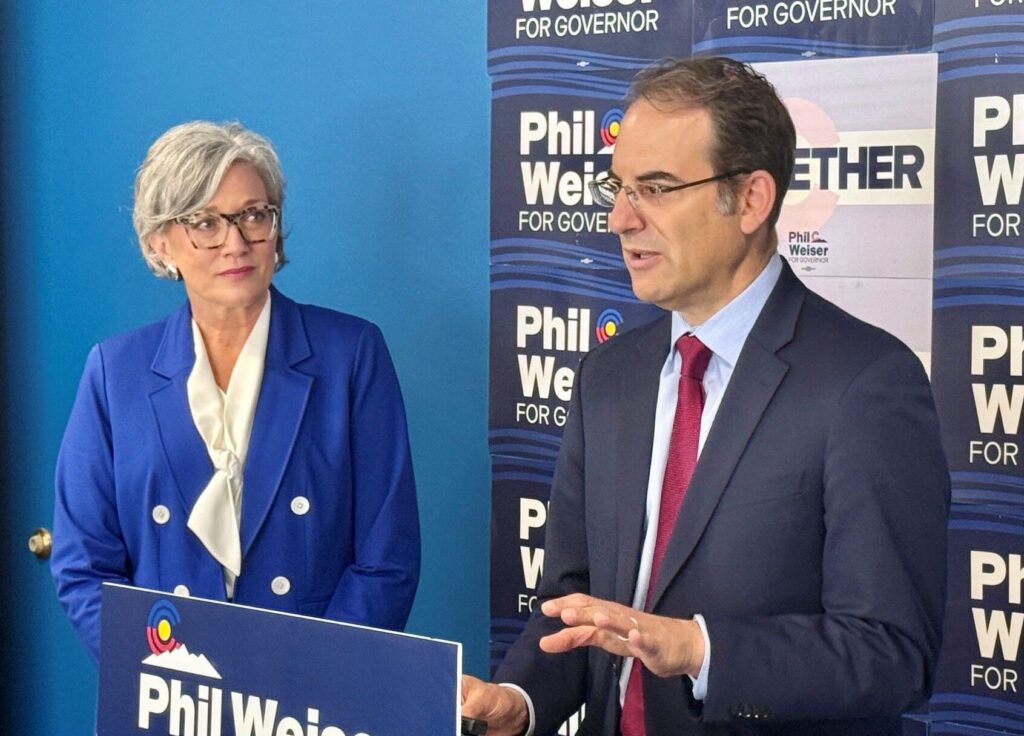
Jefferson County to fill commissioner vacancy after Dahlkemper tapped for lieutenant governor
Matt Kyle
matt.kyle@denvergazette.com
Updated 2 days ago
Democratic gubernatorial nominee Phil Weiser on Wednesday announced that Jefferson County Commissioner Lesley Dahlkemper would be his lieutenant governor, meaning she would be leaving her commissioner seat open should he win the race in November. However, Dahlkemper’s term was already...

New wolf pack confirmed in Eagle County, marking 4th Colorado pack with pups this year
Marissa Ventrelli
marissa.ventrelli@coloradopolitics.com
Updated 2 days ago
A new gray wolf pack has formed in Eagle County, Colorado Parks and Wildlife announced on Wednesday. Known as the Piney Ridge Pack, it is the fourth pack of gray wolves in the state to have produced pups this year....
Colorado’s primary proved in this political climate money doesn’t buy electoral happiness | Paula Noonan
Paula Noonan
paula-noonan@coloradopolitics.com
Updated 2 days ago
To catch you up, campaign committees from this 2026 election cycle already collected and shoveled out a lot of cash: $102.64 million. That’s contributions in all forms — dollars, in kind, loans, etc. — from December 2024 to now. Total...
Colorado housing laws take effect, expanding tools for affordable and workforce housing
Marissa Ventrelli
marissa.ventrelli@coloradopolitics.com
Updated 3 days ago
New housing laws taking effect on Aug. 12 in Colorado aim to boost affordability, improve homelessness response and ensure safer water systems for mobile‑home communities. The first bill, Senate Bill 001, allows municipalities to sell county- or town-owned property to...
PREV
PREVIOUS

Recognizing the value of generational work | Rachel Gabel
The Lesser Prairie Chicken habitat in southeastern Colorado is a swath of prairie that begins in Cheyenne and far-southeastern Lincoln counties and moves south and east into Kiowa, Prowers and Baca counties. This is cattle country where the short grass is nutrient dense, and a little bit of rain makes the prairie explode. A little […]

Threats inside and out loom for Colorado’s Republicans | Dick Wadhams
Colorado Republicans made strides in 2024 despite an insidious state chairman who tried to defeat successful Republican candidates. Newly elected U.S. Reps. Gabe Evans, Jeff Hurd and Jeff Crank fought off unethical opposition from their own state party chairman, making the Colorado congressional delegation a 4-4 partisan split. Strong state legislative leadership resulted in the […]