

Despite parents, child leaving state, Supreme Court rules Colorado kept jurisdiction in welfare case
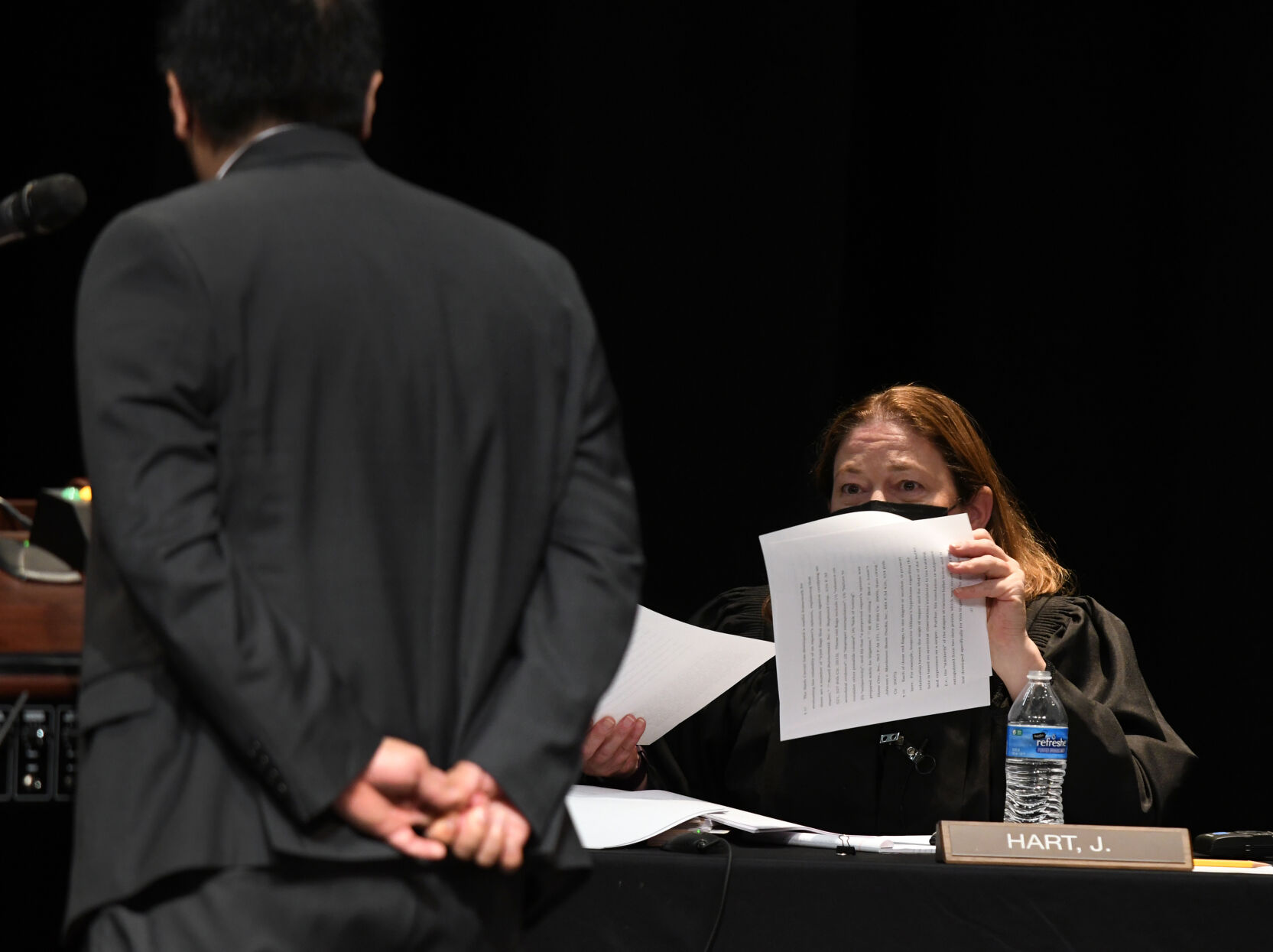
Even though the parents and the child at the center of a welfare case had all left Colorado at the time of the decision, the state Supreme Court on Monday agreed that an El Paso County judge retained the ability to terminate the parents’ legal rights over their daughter.
The justices concluded that based on the specific facts of the case – most notably, the fact that no other state had attempted to claim jurisdiction over the child, E.W. – Colorado’s initial ability to hear the case extended even after everyone had departed for Montana.
“The parents argue that, if a Montana court were to assert jurisdiction over E.W. today, Montana would be the child’s home state for purposes of that proceeding,” wrote Justice Melissa Hart in the Nov. 7 opinion. But that was “beside the point. No proceeding has been commenced in a Montana court, and there is no suggestion that Montana is seeking to assert jurisdiction.”
The legal question implicated the Uniform Child-Custody Jurisdiction and Enforcement Act, which all states but Massachusetts have adopted. The purpose of the law was to clarify which state has jurisdiction in a custody case and prevent children from being shuttled between states in response to competing court orders.
El Paso County became involved with E.W.’s family after a domestic violence incident in September 2018, when E.W. was less than one year old. A caseworker later returned to find the parents intoxicated and E.W. with methamphetamine in her system.
A judge deemed E.W. neglected and placed her in foster care. E.W.’s father requested she be sent to Montana, where family or friends could care for her. El Paso County located a suitable placement and the judge signed off on the arrangement.
Eventually, the father and mother also moved to Montana. While there, they continued to struggle with their treatment plans, which led the El Paso County judge to terminate their parental rights in July 2020.
The parents appealed the decision, arguing the judge lost jurisdiction over E.W. after the parties had left the state. The Court of Appeals last year conceded that the UCCJEA terminates Colorado’s jurisdiction when a child and their parents no longer have a “significant connection” to or reside in the state.
However, the purpose of the UCCJEA was to prevent jurisdictional disputes between states handling custody matters, the appeals court explained. Here, no other state was attempting to wrest control of E.W.’s case away from Colorado.
“In other words, this was not a case where the Colorado court and the Montana court were trying to simultaneously exercise jurisdiction with regard to the child,” wrote Judge Craig R. Welling.
The Supreme Court agreed the El Paso County judge was not required to give up jurisdiction over E.W.’s welfare case without another state seeking to step in.
“The notion that the Colorado court, having initially obtained jurisdiction under the UCCJEA, would simply lose that jurisdiction when no other state claimed jurisdiction, is untenable,” Hart elaborated. “It would leave the child, now adjudicated dependent and neglected, subject to no court’s jurisdiction.”
Hart added that another legal framework, the Interstate Compact on the Placement of Children, also supported that conclusion.
The case is People in the Interest of E.W.


Judge grants partial injunction to GEO in fight against state health inspection law
Kyla Pearce
kyla.pearce@gazette.com
Updated 19 minutes ago
A judge ruled Thursday that The GEO Group does not have to follow parts of a new state law requiring more frequent health and safety inspections at the Immigration and Customs Enforcement Processing Center in Aurora. Under the order of...

Parker man faces 20 years to life for serial sexual assaults
Nicholas Fogleman
nicholas.fogleman@denvergazette.com
Updated 59 minutes ago
A 25-year-old Parker man who sexually assaulted three women in 2025 pleaded guilty Wednesday and will serve 20 years to life in prison. Javier Rodriguez-Andrade pleaded guilty to charges stemming from three sexual assaults involving women ages 19 to 24. ...
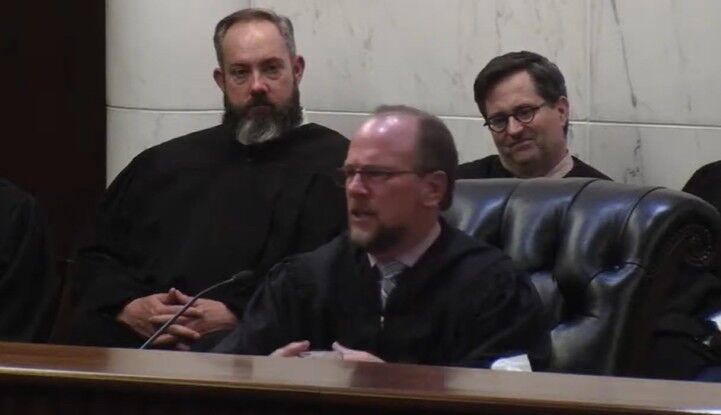
Divided appeals court upholds warrantless DNA collection in Colorado cold case, cautions of government overreach
Michael Karlik
michael.karlik@coloradopolitics.com
Updated 4 hours ago
Colorado’s second-highest court upheld the warrantless collection of a suspect’s DNA from a discarded soda can as constitutional on Thursday, while warning about potential abuse of DNA privacy in the absence of further guardrails. By 2-1, a three-judge Court of...
Man charged in Northglenn homicide of wife
Matt Kyle
matt.kyle@denvergazette.com
Updated 54 minutes ago
A man has been formally charged with murder and burglary relating to a homicide last week in Northglenn. Alexei Munive-Rodriguez, 48, was arrested Sunday after he was at large following the homicide, which occurred Friday. Police were dispatched around 10:30...
10th Circuit grants immunity to officers for fatal Manitou Springs shooting
Michael Karlik
michael.karlik@coloradopolitics.com
Updated 3 hours ago
The Denver-based federal appeals court ruled on Wednesday that responding officers from Manitou Springs and El Paso County cannot be held constitutionally liable for shooting and killing a man after a 20-minute standoff. Wilford Deweese allegedly pulled out a gun...
10th Circuit rejects invitation for full-court review of tax-avoidance case
Michael Karlik
michael.karlik@coloradopolitics.com
Updated 20 hours ago
The Denver-based federal appeals court declined to reconsider the standards for holding entities liable for their tax-avoidance schemes, with a majority of judges voting against full-court review on Monday. In April, a three-judge panel of the U.S. Court of Appeals...
Colorado judge blasts state forensics lab in dismissing child sex case
Jenny Deam
jenny.deam@gazette.com
Updated 21 hours ago
In a potentially widely consequential action, a Weld County district judge dismissed a child sexual assault case, citing the ongoing scandal at the Colorado Bureau of Investigation’s forensic lab that “has left a dark mark on the history of Colorado...
10th Circuit sympathetic to Colorado consumer protection law governing interest rates
Michael Karlik
michael.karlik@coloradopolitics.com
Updated 2 days ago
Members of the Denver-based federal appeals court appeared sympathetic on Tuesday to Colorado’s assertion that it can lawfully require certain out-of-state banks to abide by the state’s own ceilings on interest rates when they lend to consumers in Colorado. The...
Colorado justices to decide insurance companies’ obligation to disclose relevant policies
Michael Karlik
michael.karlik@coloradopolitics.com
Updated 1 day ago
The Colorado Supreme Court announced on Monday that it will decide whether an insurance company violated state law by withholding an at-fault driver’s policy for nearly a year when there was no dispute that the policy was not in effect...

Judicial performance evaluations released, Montezuma County judge disciplined | COURT CRAWL
Michael Karlik
michael.karlik@coloradopolitics.com
Updated 3 days ago
Welcome to Court Crawl, Colorado Politics’ roundup of news from the third branch of government. Colorado’s citizen-led judicial performance commissions released their voter narratives for the judges standing for retention in November, plus a disciplinary panel imposed consequences on a...
PREV
PREVIOUS
Divided state Supreme Court says judges cannot review discipline of judicial workers
In an extraordinary decision pitting one part of the state’s judicial branch against another part, the Colorado Supreme Court decided on Monday, by 4-3, that trial judges are not permitted to hear disciplinary appeals involving judicial employees – an option afforded to other government workers. The majority of justices believed the court system’s personnel rules made […]

Colorado Election updates | Associated Press calls races for Colorado incumbents, Pettersen retains CD7 for Dems
Coloradans – and Americans across the country – today will decide the fate of campaigns, notably the races for U.S. Senate and governor, and decide which party controls the government’s legislative branches. Today’s elections will define the next policy agenda in Washington, D.C., as well as at the Colorado state Capitol. Follow Colorado Politics, The Denver Gazette and […]