

Swift action needed in Colorado’s water stewardship: Panel
Water experts agree: Without swift, collaborative and regionalized action, the cost of a failure to address water loss in our state will be “stunning.”
A discussion hosted by The Common Sense Institute Wednesday centered on the future of water usage in Colorado and featured key findings in a new report.
Kristin Strohm, the President and CEO of the Common Sense Institute (CSI), along with Terry J. Stevinson fellows Jennifer Gimbel and Eric Kuhn, discussed the findings the report that contains an overview of water challenges in Colorado, recommendations for state agency, legislative, regional and local actions, and an analysis of economic dynamics for water future.
The CSI panelists were joined by City of Aurora Mayor Mike Coffman, Colorado Business Roundtable President Debbie Brown, and Sherman and Howard Water and Natural Resources practice leader James Eklund.
Healthy watersheds are critical to Colorado, the report states. It is “one of the foundations of Colorado’s unique mix of economic drivers: outdoor recreation, agriculture, high-tech industries, and thriving cities.”
“There’s no greater challenge for our state than water,” Strohm said in the panel.
According to the report, Colorado’s population is growing significantly. By 2050, the report says, Colorado’s population is expected to grow from 5.7 million to 7.5 million people. This growth puts additional pressure on water, an already limited resource.
The economic cost of water supply is significant, the report states. Reliable water service to homes impacts housing affordability, which affects the state’s ability to retain its skilled workforce. By 2050, water loss could cost up to 600,000 jobs and reduce state and local tax revenue by up to $6 billion, Strohm said.
“The price tag around inaction is stunning,” Brown said.
The report’s solution to water scarcity centers around regionalization and collaborative action, the idea that across-the-board changes are imperative to water conservation. Modernizing the water system, the report states, requires action from federal, state and local governments, businesses and private citizens.
Municipalities currently get water for growing populations using “buy-and-dry” approaches, in which water rights are bought from agricultural operations and cause agricultural loss, and non-renewable or slow-recharge groundwater supply, according to the report. Climate change also puts pressure on water supply, the report states, with a hotter and drier climate leading to supply-reducing factors such as drought, decreased snowpack and wildfires that damage watersheds.
Colorado is a headwater state, meaning its rivers flow to neighboring states. Interstate water compacts and U.S. Supreme Court decrees require Colorado to share this water with these states and Mexico. Panelist generally agreed the state’s water use needed to be part of the discussion, although Colorado has an advantage.
“It’s better to be upstream with a shovel than downstream with a lawyer and that’s where we are in Colorado,” Eklund said.
Many Colorado communities are pursuing their own independent water systems, according to the report. The City of Aurora and Sterling Ranch in Douglas County have demand management measures like removing non-functional turf and limiting blue grass in new developments.
However, the report says, the lack of statewide and regional standards may push developers to areas without these restrictions. Kuhn said there need to be Front Range-wide standards to ensure that this isn’t happening.
Coffman said Aurora is taking a leadership role in water conservation, reducing its outside irrigation in half, looking at its golf courses, parks and other green spaces to find ways to cut water use and changing landscape designs to be more water-efficient.
“We have put forward our own conservation policies and we hope the rest of the state picks them up,” Coffman said.
Brown noted that taking efforts to reduce water use can also be looked at as a competitive advantage, while Strohm said Colorado also needs to budget more for the state’s water plan.
The panelists discussed additional ways to reduce water usage. Coffman said increasing the price of water for people with high usage would incentivize them to conserve. Gimble said agriculture needs to invest in new technology, while James said there need to be measurable objectives in the water conversation.
“Because of Colorado’s significant population growth, climate change, and obligations to other states, Colorado will have to adapt to increased competition for water,” the report states. “Although water laws present some structural barriers, collaborative actions can lead to needed adaptations for the 21st century.”


U.S. Senate OKs funding bill to avoid government shutdown
Wire Services
wire-services@coloradopolitics.com
Updated 1 hour ago
Hemp provision became point of contention WASHINGTON • The U.S. Senate in an overnight vote Saturday approved a short-term measure to fund federal agencies into early December and avoid a government shutdown during the middle of campaign season. The late-summer...

The relevance of Watergate more than a half-century later | SONDERMANN
By Eric Sondermann
by-eric-sondermann@coloradopolitics.com
Updated 3 days ago
It was the scandal for which all other scandals are now named. In June 1972, a small group of Cuban burglars with high-level connections broke into the headquarters of the Democratic National Committee. Those headquarters were located in the Watergate...

Wirth downplays Social Security disaster talk | A LOOK BACK
Rachael Wright, Special to Colorado Politics
rachael.wright@coloradopolitics.com
Updated 2 days ago
Forty-five years ago this week: “As time goes on,” said Democratic U.S. Rep. Tim Wirth, of the 2nd Congressional District, “we are finding that the safety net, which was proposed earlier this year, has some very large holes in it,”...

Colorado Politics Calendar Aug. 10-16
Rachael Wright, Special to Colorado Politics
rachael.wright@coloradopolitics.com
Updated 2 days ago
CoPo’s weekly political calendar will help you find political and public-policy events throughout Colorado. It includes candidate and issue campaign events, public policy meetings, court hearings, state and local party conventions, assemblies, debates, rallies, parades, speaking engagements, traveling dignitary appearances,...

Democratic group aims Spanish-language TV ad at Gabe Evans in Colorado’s battleground 8th CD
Ernest Luning
ernest.luning@coloradopolitics.com
Updated 15 hours ago
A national group tied to House Democratic leadership launched a six-figure Spanish-language TV ad in Colorado this week targeting Republican U.S. Rep. Gabe Evans and the GOP’s signature budget legislation. The 30-second spot is part of $15 million in new...

Colorado School of Mines lands major share in Trump’s $100M mining-education plan
Thelma Grimes
thelma.grimes@coloradopolitics.com
Updated 17 hours ago
President Donald Trump on Friday named the Colorado School of Mines among roughly a dozen institutions that will share in a $100 million commitment “to train the next generation of American miners.” Paul Johnson, the university’s president, said he is...
Local party leaders, incoming judge among members of judicial performance commission that violated law
Michael Karlik
michael.karlik@coloradopolitics.com
Updated 17 hours ago
A local Democratic leader and 2024 presidential elector. A legislative aide and leader in the Young Republicans. An incoming county court judge freshly appointed by the governor. They are among the eight members of the northeastern Colorado judicial performance commission...

Judge dismisses lawsuit seeking records from Colorado Democratic group
Marianne Goodland
marianne.goodland@coloradopolitics.com
Updated 17 hours ago
A lawsuit seeking to obtain records from Democratic lawmakers affiliated with a caucus has been thrown out by a Denver District Court judge. On July 17, Judge Ericka Englert dismissed the April lawsuit filed by progressive activist Derrick Blanton, who...
DOJ official decries ‘nonsense’ in Jeffco schools at fundraising gala
Matt Kyle
matt.kyle@denvergazette.com
Updated 1 hour ago
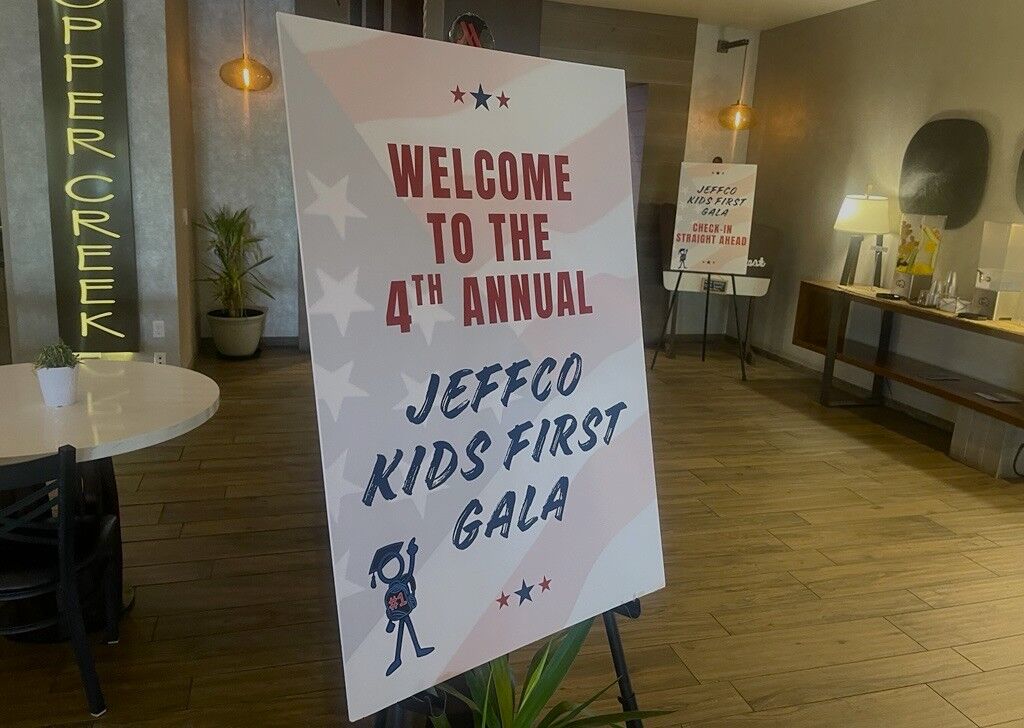
Amid a legal battle between Jeffco Public Schools and the federal government, a Department of Justice official spoke at a fundraising gala and decried “crazy stuff” and “nonsense” in the school district. The gala was for Jeffco Kids First, an...

Colorado Springs mother Deborah Nicholls’ murder conviction overturned
Nick Smith
nick-smith@coloradopolitics.com
Updated 2 days ago
A Colorado Springs mother convicted in 2008 of murdering her three children in a house fire might get a new trial after a judge ruled that prosecutors withheld key evidence that could have impacted the jury’s verdict. Deborah Nicholls, whose...
PREV
PREVIOUS

Colorado voters return over 860,000 ballots, hit 22.6% turnout
Coloradans have so far returned 862,637 ballots as the state enters the final days before the election, according to Wednesday’s data from the Secretary of State’s Office. Just over 22.6% of Colorado’s 3.8 million active registered voters have voted with only six days left until Election Day on Nov. 8. That means nearly 120,000 ballots were […]

Colorado Springs councilwoman announces intent to serve through cancer treatment
Colorado Springs City Councilwoman Stephannie Fortune announced Wednesday she has been diagnosed with leukemia and while she intends to finish her term, she will not seek reelection in April. “Cancer is never an easy word to reconcile with and this time is no exception,” Fortune, a breast-cancer survivor, said in a news release. 2 Colorado […]