

Challengers to Colorado’s large capacity magazine ban withdraw request for injunction

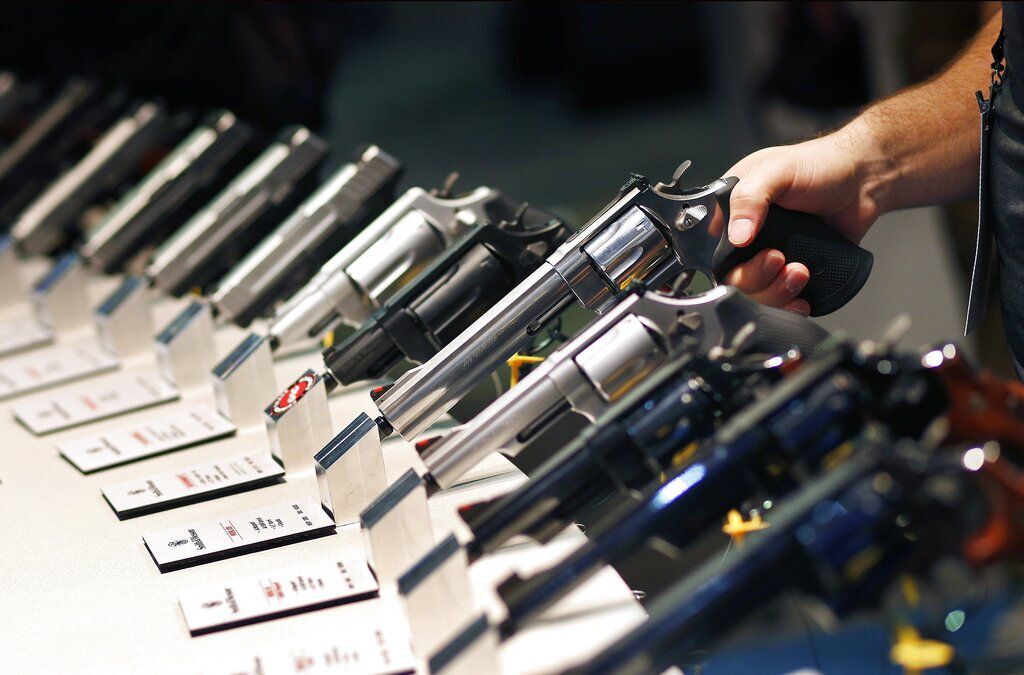
The plaintiffs challenging the constitutionality of Colorado’s decade-old ban on large capacity gun magazines have withdrawn their request for a judge to issue a preliminary injunction blocking the law.
Last week, the National Foundation for Gun Rights and two Colorado residents abandoned their attempt to obtain near-term relief from the magazine ban, which the state legislature enacted in the wake of the 2012 Aurora movie theater massacre. Barry K. Arrington, the attorney for the plaintiffs, wrote on Oct. 20 that he would instead “focus on developing a more detailed factual and legal record in the context of Plaintiffs’ request for permanent injunctive relief.”
As a result, U.S. District Court Judge Nina Y. Wang, who is overseeing the case, vacated a preliminary injunction hearing scheduled for November.
The lawsuit is one of a handful filed in Colorado’s federal trial court soon after the conservative-majority U.S. Supreme Court this year made it easier to strike down gun safety laws under the Second Amendment. In New York State Rifle & Pistol Association, Inc. v. Bruen, the court ruled that such regulations are acceptable only when they are “consistent with this Nation’s historical tradition of firearm regulation.”
Because of Bruen, judges have temporarily blocked enforcement of local bans on “assault weapons” and large capacity magazines enacted in Boulder County. That litigation is ongoing.
While the statewide ban on large capacity magazines will remain in force, the Colorado Attorney General’s Office has provided a preview of its arguments in defense of the law’s constitutionality. The government’s primary argument relies upon the premise that large capacity magazines are not “arms” that fall under the Second Amendment’s protections.
Instead, they are “accessories.”
“Although LCMs can be used with certain firearms, LCMs cannot, by themselves, be used offensively or – more importantly for Second Amendment purposes – defensively. They are accessories, not arms,” wrote the attorney general’s office in a brief filed one week before the plaintiffs withdrew their preliminary injunction request.
The government argued that the ban on large capacity magazines – meaning those capable of accepting more than 15 rounds of ammunition – is not technically a regulation on firearms. Instead, it limits access to the “accessories of war” that have been used in mass murders in Aurora, Newtown, Las Vegas, Parkland, Boulder, Uvalde and elsewhere.
“And the evidence will show that the LCM Ban, on the one hand, imposes no burden on the right of armed self-defense and, on the other, reduces mass shooting fatalities by giving potential casualties the chance to flee, hide, or fight for their lives when the shooter pauses to reload,” the attorney general’s office added.
The government outlined further justifications for upholding the law, including its beliefs that a ban on large capacity gun magazines is consistent with the country’s historical tradition of firearm regulation, that large capacity magazines are rarely used in self-defense, and that the plaintiffs do not have standing to sue.
The case is Gates et al. v. Polis.


Parole, appeals deadlines and restitution: Colorado justices accept cases
Michael Karlik
michael.karlik@coloradopolitics.com
Updated 19 hours ago
The Colorado Supreme Court announced on Monday that it will determine how a defendant’s parole-eligibility date should be calculated in instances where a new trial results in a sentence being imposed retroactively to the date of the original, since-overturned sentence....
Federal judge rejects DOJ bid to force Colorado to hand over voter information
Marissa Ventrelli
marissa.ventrelli@coloradopolitics.com
Updated 23 hours ago
A U.S. district court judge has dismissed a lawsuit filed by the U.S. Department of Justice against Colorado Secretary of State Jena Griswold for refusing to provide the agency with personal voter information. Last December, the DOJ’s Civil Rights Division asked...
3 Colorado judges receive unfavorable retention recommendation as one performance commission violates rules
Michael Karlik
michael.karlik@coloradopolitics.com
Updated 1 day ago
Of the 123 Colorado judges standing for retention on the November ballot, citizen-led performance commissions found that three did not meet the required performance standards. However, in an unprecedented move, the commission charged with evaluating Supreme Court and Court of...

10th Circuit weighs Gross Reservoir expansion, judge’s ‘punishment’ of Denver Water
Michael Karlik
michael.karlik@coloradopolitics.com
Updated 2 days ago
Members of the Denver-based federal appeals court considered on Friday whether they could intervene in an ongoing infrastructure project to enlarge a Boulder County dam after a trial judge deemed the underlying permit unlawful nearly two years ago. Denver Water...
10th Circuit upholds federal prohibition on juvenile handgun possession
Michael Karlik
michael.karlik@coloradopolitics.com
Updated 22 hours ago
The Denver-based federal appeals court concluded on Monday that Congress acted within its constitutional powers to make it a crime for juveniles to possess handguns in most instances. The decision from the U.S. Court of Appeals for the 10th Circuit...

Senate advances judicial nominee, Montezuma County judge agrees to discipline | COURT CRAWL
Michael Karlik
michael.karlik@coloradopolitics.com
Updated 2 days ago
Welcome to Court Crawl, Colorado Politics’ roundup of news from the third branch of government. A U.S. Senate committee advanced a judicial nominee from Colorado, plus a Montezuma County judge agreed to receive discipline for his misconduct that stops short...
Judge denies Calderon injunction case against Denver, Johnston
Deborah Grigsby
deborah.smith@denvergazette.com
Updated 2 days ago
A U.S. District Court judge has denied a preliminary injunction in the case of Jessica Calderon, the Denver city employee who won a temporary restraining order preventing the City and County of Denver from terminating her amid the 2025 citywide...
10th Circuit partially revives lawsuit over 2020 Denver protest injuries
Michael Karlik
michael.karlik@coloradopolitics.com
Updated 3 days ago
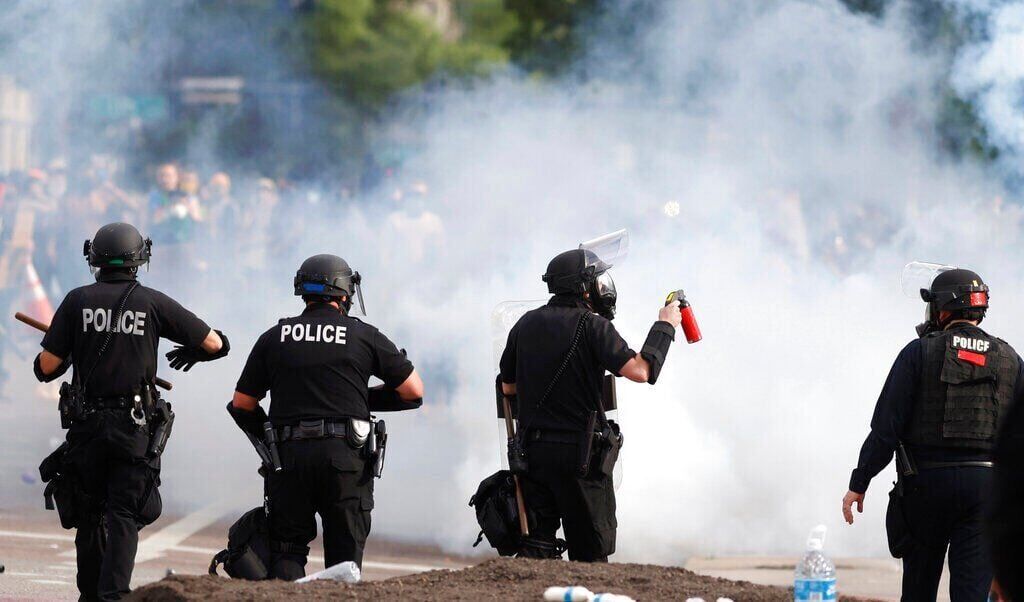
The Colorado-based federal appeals court revived a man’s claims against Denver on Friday after concluding a trial judge resolved the case in the city’s favor without analyzing two of the three instances of alleged excessive force and other constitutional violations....
Federal judges find Colorado immigration judge violated several orders
Michael Karlik
michael.karlik@coloradopolitics.com
Updated 4 days ago
Multiple federal judges in Colorado have freed people from immigration custody after determining that one immigration judge violated their directives for properly conducting bond hearings. For nearly a year, Colorado’s U.S. District Court has faced a flood of habeas corpus petitions...

Misconduct complaints from ex-Colorado judicial discipline director dismissed against federal judges
Michael Karlik
michael.karlik@coloradopolitics.com
Updated 6 days ago
The administrative body for the Denver-based federal appeals court upheld a finding last week that misconduct complaints against Colorado’s chief federal trial judge and the chief appeals judge warranted dismissal and appeared to be a “litigation tactic” by the complaining...
PREV
PREVIOUS

ELECTION 2022 | Democrat Michael Bennet, Republican Joe O'Dea square off Colorado US Senate race
Republican Joe O’Dea wants Colorado voters to render a verdict on President Joe Biden and the Democrats’ control of the Senate in November, while the Democratic incumbent he’s challenging, U.S. Sen. Michael Bennet, frames his bid for reelection as a choice between the two parties’ policies and priorities. With just over a week until ballots […]

Advocates, opponents clash during town hall on Colorado’s alcohol ballot measures
Business owners, lawmakers and activists clashed Thursday during a town hall that delved into three ballot measures seeking to expand the sale and delivery of alcohol. The town hall – hosted by Colorado Politics, The Denver Gazette and The Colorado Springs Gazette – brought together advocates and opponents of Propositions 126, 125 and 124. Respectively, the […]