

SLOAN | Coloradan energy myopia
It’s interesting seeing the juxtaposition of approaches to energy policy around the world, especially between those places where electricity and mobility are taken for granted – which seems to breed a certain ideological resentment of its abundance – and those where that abundance is now existentially threatened.
Take California, for instance. The sheer volume of lunacy emanating from that place is enough that the state is swiftly becoming a caricature of itself, to where it’s almost unsportsmanlike to keep picking on it. The Golden State has been struggling mightily to keep the lights on all summer, the result of previous policies that have strained the grid to the point that Californians are perpetually living on the edge of a blackout. So what does California Gov. Gavin Newsom do? Roll back some of the ludicrous mandates that created the problem?
No, last week the good governor doubled down on the insanity, signing some 40 executive orders to exacerbate the problem. Those included ones to raise the state’s renewable electricity mandate to 90% by 2035 and 100% by 2045. There were also orders to reduce greenhouse-gas emissions to 85% below 1990 levels and to achieve so-called “Carbon-neutrality”, both also by 2045.
“We’re not only doubling down”, he declared, “we’re just getting started.”
Well, this ought to turn out splendidly.
Or consider closer to home, here in Colorado. Earlier this week officials reported to the Air Quality Control Commission that the state was quite far behind on its chimerical greenhouse-gas reduction goals for 2025 and 2030, prompting the AQCC’s Elise Jones to evoke the same “double down” language. Naturally, every Luddite group in the state chimed in. They didn’t suggest that perhaps the statutory goals perhaps need to be a little more in line with physics and reality – oh, golly, no. Instead, they clamored on about how the regulatory screws need to be tightened on Colorado businesses and consumers, who clearly aren’t being charged enough for gas and electricity. They came up with gems like calling for the state to advance the timeline to shut down coal plants while simultaneously refusing to allow electric companies to build new natural gas fired plants to fill the hole in generation left by the coal plants they dismantle. There was no suggestion (at least not any serious one) about how to fill that gap. After all, light comes on magically when you flip the switch… just get the magic from a different place. Simple.
Now contrast this approach to what is happening today in much of Europe, which is facing an impending energy crisis heading into the brutal winter season. For years, places like Germany approached the energy question not much differently than California and Colorado do today: they banned fracking, banned coal, banned nuclear and adopted chimerical carbon goals. They could get away with this because they had access to as much Russian natural gas as they could buy.
But now, as part of the fallout of Russia’s war on Ukraine, those taps are being turned off. Energy policy is no longer an academic matter. It’s the prospect of millions being without heat and power at Christmas. France is okay: they’ve relied on nuclear power for years. A couple countries like Iceland and Norway are geographically blessed with large-scale hydropower. What about the rest?
Well, Britain’s new Prime Minister Liz Truss is already taking steps to reverse the UK’s myopic fracking ban, so they can have access to their own ample supply of oil and gas from the North Sea. But Germany provides the clearest examples of what happens when reality slaps you awake.
Earlier this month, Germany’s government announced it will keep two of its three remaining nuclear reactors running, which were scheduled to be shut down by the end of this year. It’s not really much of a step, but significant for a coalition government which includes the Green Party, whose roots are in the 1970s anti-nuclear movement.
Perhaps even more telling is the fact that Germany has been returning coal-fired power plants to full service, one after another, for the past several weeks.
It is unfortunate that it takes an impending crisis to snap political leaders out of their ideologically-induced delirium and nudge them toward realistic and workable policies. One can hope that it will not take a similar existential threat for Colorado and California to actually become serious about energy policy, but then one can hope for a lot of things.
Kelly Sloan is a political and public affairs consultant and a recovering journalist based in Denver.

Keeping Colorado’s kids’ trust online | PODIUM
Colorado Politics
colorado-politics@coloradopolitics.com
Updated 16 hours ago
By Stuart Jenkins Almost every day, the kids and teens we serve across Colorado are introduced to new generative artificial intelligence and other emerging technology, including conversational AI systems designed to simulate human conversation. These tools are no longer a...
Marx’s ‘through line’ predates Trump, connects to Maes | FEEDBACK
Colorado Politics
colorado-politics@coloradopolitics.com
Updated 16 hours ago
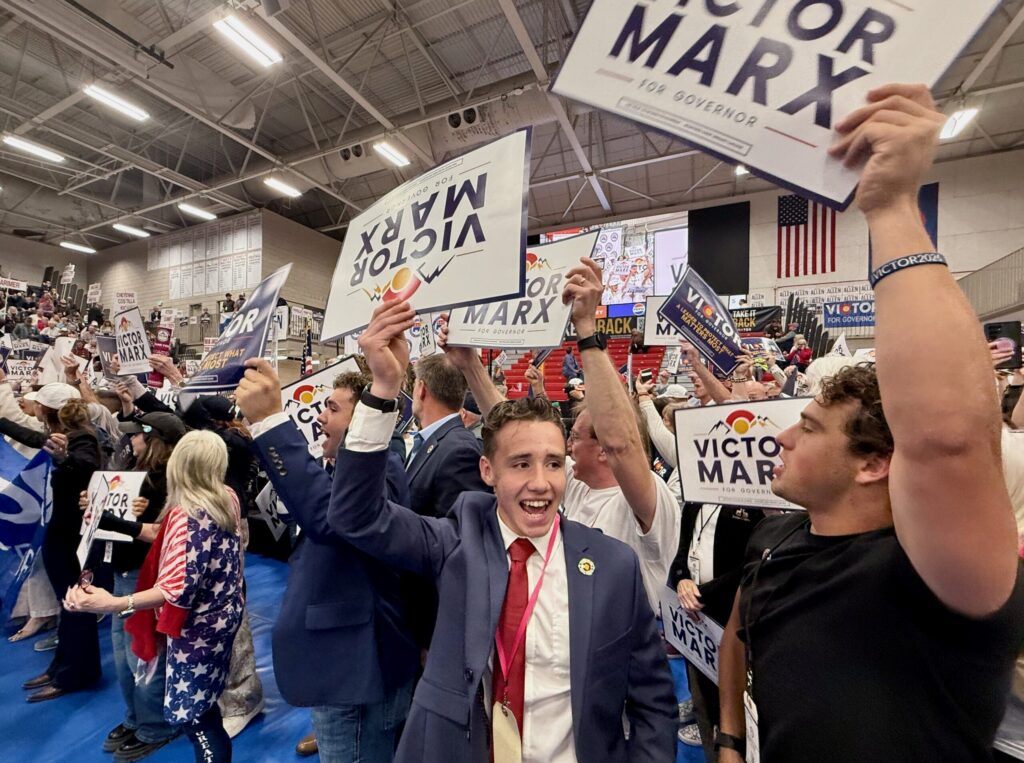
Eric Sondermann is of course correct Victor Marx is an unserious, unelectable, embarrassing Republican nominee for governor of Colorado. But I respectfully submit that the “through line,” as Mr. Sondermann describes it, is not from Trump to Marx, despite their...

Cedric Pride’s blueprint for opportunity through the trades | The OpEdge Podcast
Tony Olivero
tony.olivero@gazette.com
Updated 1 day ago
Cedric Pride, CEO of the nonprofit Pride Initiative in Denver, joins The OpEdge with a blueprint for workforce development, skilled trades, and economic opportunity. Pride tells host and investigative columnist Jimmy Sengenberger why he believes the trades offer a path...
Colorado’s No. 1 education ranking should raise our ambition | GUEST COLUMN
Colorado Politics
colorado-politics@coloradopolitics.com
Updated 1 day ago
By Scott Laband Colorado has earned the right to celebrate its new No. 1 ranking in education from U.S. News & World Report. Gov. Jared Polis called it “one of the proudest moments” of his time in office and shared the...

Colorado’s No. 1 education ranking reflects the power of school choice | GUEST COLUMN
Colorado Politics
colorado-politics@coloradopolitics.com
Updated 2 days ago
By Peter Mason Colorado is now the No. 1 state in the nation for education, according to the 2026 U.S. News & World Report Best States rankings. That is a distinction worth celebrating. It is also a distinction worth understanding....
Courageous Colorado bucks Trump’s federal stupidity | Miller Hudson
Miller Hudson
miller-hudson@coloradopolitics.com
Updated 2 days ago
There are several theories regarding the rhythm of American politics. The most frequently cited is the pendulum hypothesis — positing that episodes of liberal dominance are then interrupted by spans of conservative control. Since Ronald Reagan’s presidential election in 1980,...

A historic moment during another major drought | Rachel Gabel
Rachel Gabel
rachel-gabel@coloradopolitics.com
Updated 5 days ago
Gustav Sumnick emigrated from Germany, traveled to Oklahoma and decided rather than be a Sooner, he wanted to be a farmer. He moved north to Nebraska and married an Irish immigrant farmer’s daughter. They farmed near Fremont, Nebraska, where the...

Colorado can’t forget the lessons of COVID | Jon Caldara
Jon Caldara
jon-caldara@coloradopolitics.com
Updated 2 days ago
We are finally getting a clearer picture of what happened during COVID. Not because the people who locked us up, masked our faces and forced unproven chemicals into our bodies have suddenly become transparent, but because Anthony Fauci’s COVID-era diary...
Historic preservation supporters organize to oppose Trump changes | Bob Loevy
Tom Cronin
tom-cronin@coloradopolitics.com
Updated 5 days ago
Historic preservation organizations in Colorado Springs, the remainder of Colorado and across the nation are organizing to resist a recent effort to relax and weaken historic preservation laws in the United States. In Washington, D.C., the Advisory Council on Historic...

The primary political reform and precondition for all others | SONDERMANN
Eric Sondermann
eric-sondermann@coloradopolitics.com
Updated 1 week ago
In its current state, the American political system has no end of ailments. Far too many factors accelerate polarization and work against moderation and narrowing the differences. Media, and the way so many citizens limit themselves to agreeable, reinforcing sources,...
PREV
PREVIOUS
NOONAN | Competition for new Colorado congressional district
Paula Noonan Colorado’s new Congressional District 8 is a marvel of even division where the redistricting committee stuck Democratic-leaning Adams County to GOP-leaning Weld County with a dab of Larimer County mixed in. Looking at active voter registrations from August, Adams County has about 130,000 more voters in the district than Weld County. Adams has […]

Polis taketh away tax credits — and giveth to others
Ben Murrey On Monday, Independence Institute, where I serve as the director of the Fiscal Policy Center, published my latest report, which reveals that Gov. Jared Polis broke an important campaign pledge to reduce special-interest tax benefits. In fact, the report demonstrates that he increased such benefits by $640 million over 10 years. In a […]