

When theft is not burglary: Appeals court says Denver judge erred in convicting juvenile
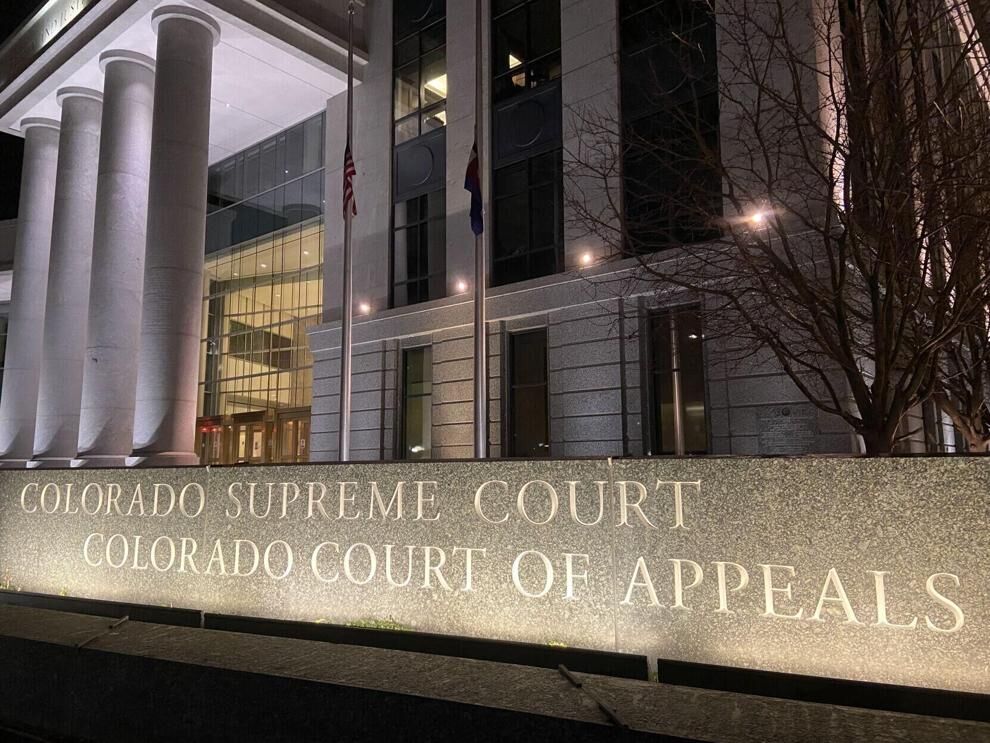
A Denver judge convicted a juvenile of burglary despite insufficient evidence of that crime, the state’s Court of Appeals concluded last month.
Under Colorado law, the felony offense of burglary requires a person to commit unlawful entry. A three-judge appellate panel believed the prosecution had not proven beyond a reasonable doubt that a juvenile defendant, identified as J.S-C., used deception or other means to gain unlawful entry into the victim’s home-based business.
In doing so, the court drew a distinction between burglary and the misdemeanor crime of theft.
“Suppose, for example, that a person enters a clothing store with intent to steal a shirt,” wrote Judge Timothy J. Schutz in the panel’s June 16 opinion. “If the person thereafter steals the shirt, the person could effectively be tried for the crime of theft. But the fact that the person entered the store with the intent to commit a theft does not necessarily render the theft a burglary.”
The criminal case involved an online fashion accessory business the victim’s daughter operated out of a high-rise condominium in Denver. The victim occasionally would help her daughter by taking merchandise down to customers or allowing them to view products in the condo’s entryway.
The victim’s daughter informed her mother that two people, one of whom was a repeat customer, would come by on Oct. 10, 2019. The mother should let the buyer, allegedly known as “Froylan,” into the condo.
J.S-C. and a companion knocked on the condo door and the victim allowed them inside. The two began to look at the merchandise, at one point asking the victim if there were any sunglasses available. When the victim turned her back, the couple grabbed cash and merchandise and ran. The victim gave chase, and a bystander caught J.S-C. in the lobby. Authorities never located or identified her companion.
J.S-C. stood trial for burglary. There was little information about the interaction between the victim and J.S-C. and her companion, and no testimony about who “Froylan” was. Although the prosecution alleged J.S-C. used a ruse to gain unlawful entry to the condo, the defense claimed the evidence pointed to J.S-C. being invited.
Then-Juvenile Court Judge Donna J. Schmalberger decided J.S-C. had committed burglary, ruling the defendant had entered under false pretenses because the victim let in J.S-C. and her companion “thinking they were someone other than (who) they were.” Schmalberger sentenced J.S-C. to one year in juvenile detention.
The Court of Appeals panel reviewing J.S-C.’s case honed in on whether the evidence supported Schmalberger’s finding that J.S-C. had committed unlawful entry — the key element of burglary under dispute.
“My client was invited in to view merchandise and she went in to view merchandise,” public defender Mark Evans said. He added there was no evidence J.S-C. gained access to the condo through deception.
“If I’m expecting Bob to show up at my door and I hear a knock on the door, and I open the door and I let this person in and it happens to be Jim, that’s not Jim’s fault. Jim didn’t do anything deceptive there,” Evans said during oral arguments.
The government insisted it was fair to infer that J.S-C. pretended to be a customer to gain illicit access to the condo. Assistant Attorney General Danny Rheiner pointed out the condo was in a 30-floor high-rise, was not open to the public, and customers could only gain access by representing they were patronizing the home-based business.
Judge Craig R. Welling responded it was plausible J.S-C. had legitimately set up the appointment to see the merchandise, but knew the condo presented a “soft target” having been a prior customer. Therefore, although she would have had the intent to rob, she would not have entered unlawfully.
“Do we agree that if I go into a store intending to rob it and not pay for anything that I have not unlawfully entered?” he asked. “I have certainly entered with ill intent. But it is not an unlawful entry that can give rise to a burglary charge, is it?”
Rheiner responded that stealing from stores like Target or Walmart would not have amounted to burglary.
“You don’t need to pretend to be someone else to get into a Target or a Walmart,” he said.
“What evidence do we have that she was pretending to be somebody else?” Schutz quizzed.
Rheiner said it was a reasonable inference J.S-C. was being deceptive, even if there was no direct evidence. Judge Jerry N. Jones indicated he was skeptical of that line of thinking.
“Most shoplifters, I’m gonna guess here, enter a place of business intending to shoplift,” he said. “But it sounds like from your argument, that’s a ruse. They’re not really a customer. They’re gonna steal something. So you’re saying every shoplifting is a burglary.”
The panel ultimately sided with J.-S.C. in finding the victim allowed her to enter the condo for the purpose of patronizing her daughter’s accessory business, and, therefore, no unlawful entry occurred. Even if J.S-C. employed a ruse, Schutz wrote in the panel’s opinion, there was too little information to prove deception beyond a reasonable doubt.
The Court of Appeals concluded the prohibition against double jeopardy precluded prosecutors from retrying J.S-C., and the only question was whether to direct the juvenile court to enter a conviction for theft instead of burglary. The panel decided theft was not a lesser offense of burglary, so J.S-C.’s conviction would be overturned outright and the case dismissed.
The case is People in the Interest of J.S-C.

Federal judge green-lights civil trial against ex-Fort Collins DUI officer
Michael Karlik
michael.karlik@coloradopolitics.com
Updated 17 hours ago
A federal judge ruled on Thursday that Fort Collins’ former “DUI officer” will face a civil trial for allegedly investigating a motorist for impaired driving without any reasonable suspicion to do so. In recent years, several people arrested by Officer...

Colorado Supreme Court suspends Mesa County judge pending misconduct investigation
Michael Karlik
michael.karlik@coloradopolitics.com
Updated 21 hours ago
The Colorado Supreme Court suspended Mesa County Court Judge Michael J. Grattan on Thursday amid a misconduct investigation. The court’s Sept. 10 order gave Grattan 21 days to explain why his paid suspension should not continue through the end of...
Colorado Supreme Court changes course, dismisses case about special district bonds
Michael Karlik
michael.karlik@coloradopolitics.com
Updated 16 hours ago
The Colorado Supreme Court declined on Friday to decide a dispute between a large-scale Commerce City development and the various districts financing it, after initially showing interest in the ongoing case. Colorado has roughly 2,800 special districts, which are local...
10th Circuit tosses GEO Group’s pretrial appeal in human trafficking lawsuit
Michael Karlik
michael.karlik@coloradopolitics.com
Updated 1 day ago
The Denver-based federal appeals court dismissed an attempt by The GEO Group on Wednesday to appeal a trial judge’s non-existent decision two months before the company is scheduled to face a civil trial over alleged trafficking violations at the Aurora...
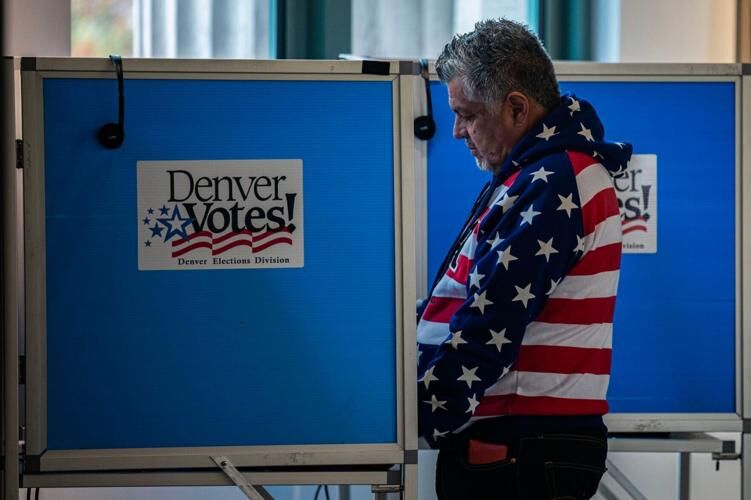
Denver sues Trump to block armed ICE agents from polling sites
Deborah Grigsby
deborah.smith@denvergazette.com
Updated 2 days ago
The city of Denver, along with several groups, sued the Trump administration Thursday, seeking to block U.S. Immigration and Customs Enforcement officers who are armed from polling sites during the upcoming midterm elections. In fact, there are no official orders...

Federal judge takes no action against ICE in Colorado after hearing about mistakes, not ‘blatant violations’
Michael Karlik
michael.karlik@coloradopolitics.com
Updated 14 hours ago
A federal judge declined to take action against U.S. Immigration and Customs Enforcement on Thursday after hearing that a pattern of alleged lawbreaking amounted to mistakes and a misunderstanding of the government’s position in court. For nearly a year, Colorado’s...

Colorado doctors, dentists challenge state law on gender‑transition services in new federal lawsuit
Marissa Ventrelli
marissa.ventrelli@coloradopolitics.com
Updated 11 hours ago
A group of Christian doctors and dentists has filed a federal lawsuit challenging a Colorado law they say requires them to provide gender‑transition services that conflict with their religious and ethical beliefs. The lawsuit, filed by the Christian Medical and...
Federal judge directs plaintiff to revise complaint alleging Denver officers’ constitutional violations
Michael Karlik
michael.karlik@coloradopolitics.com
Updated 16 hours ago
A federal judge directed a plaintiff to revise his allegations on Wednesday to more precisely state what two Denver officers and the city itself allegedly did to violate his constitutional rights by facilitating his prosecution for murder until prosecutors dropped...

Lawsuit challenges Douglas County commissioners’ ballot actions
Nicholas Fogleman
nicholas.fogleman@denvergazette.com
Updated 2 days ago
A new lawsuit against Douglas County commissioners seeks to invalidate the board’s intervention in efforts to expand the commission from three members to five and restore the original ballot language approved by more than 20,000 petition signers. The suit marks...
Federal judge explores new sanctions against ex-Colorado judicial discipline director
Michael Karlik
michael.karlik@coloradopolitics.com
Updated 2 days ago
A federal judge on Wednesday directed Colorado’s former judicial discipline director, for the third time this year, to explain why she should not sanction him for his latest conduct in his litigation against the state’s judiciary. Christopher S.P. Gregory, who served...
PREV
PREVIOUS

Appeals court reinstates inmate's lawsuit over DOC's name-change policy
Colorado’s second-highest court has reinstated a lawsuit against the state’s Department of Corrections over its regulation on inmates’ name changes, siding with a man who is representing himself from prison. The department’s policy requires inmates to use their “commitment name,” meaning their name upon entering prison. While inmates may legally change their names and use […]

Judge will extend order blocking Superior's gun regulations while parties prepare arguments
A federal judge will extend his temporary restraining order that prevents certain new gun safety regulations in the town of Superior from taking effect, while the parties to the legal challenge prepare to make arguments on recently-issued precedent from the U.S. Supreme Court. U.S. District Court Judge Raymond P. Moore agreed on July 22 to […]