

Durango judge wrong to find smoke detectors would not have made difference in fire, appeals court says

Colorado’s second-highest court has reversed the decision of a La Plata County judge who believed there was no proof two children would have avoided being burned in a house fire if there had been working smoke detectors.
A three-judge panel for the Court of Appeals agreed District Court Judge William L. Herringer was mistaken to think the plaintiffs had failed to demonstrate how an absence of functional alarms was the cause of their injuries. Instead, the panel determined the existing information in the case suggested smoke alarms would have made a difference.
Consequently, a jury would need to decide the issue. In addition, the question of the property owner’s credibility would also go before jurors, given conflicting evidence about what she knew about the condition of her building, the appellate court said.
Anthony Martinez filed a lawsuit on behalf of his sons, Rivers Picasso Martinez and Ira Picasso Martinez, after a fire broke out at the family’s Durango rental unit in the early morning hours of June 14, 2017. The children’s mother, Grisela Picasso, awoke to heat and smoke in the bedroom, where she and her children were sleeping. She reportedly pushed her sons out of the window and onto the ground seconds before flames engulfed the bedroom.
Picasso said she had not heard any noise from the smoke alarm outside the bedroom.
Martinez’s lawsuit described his children’s injuries to include burns on their upper bodies or faces, bruises, pulmonary issues, post-traumatic stress disorder, vocal chord injuries and other ailments. Another resident of the residential complex, 24-year-old Kevin Abeyta, died after trying to rescue the family.
The lawsuit asserted claims under the Colorado Premises Liability Act, naming as defendants CAST, LLC and Caroni Adams, Inc., the companies that owned and managed the rental property, as well as Carolyn Caroni Adams, the owner of unit 2123 where Martinez’s family lived. The unit, Martinez alleged, did not have the required number of operating smoke detectors, and the only existing detector was not working at the time of the blaze.
“There was a significant amount of evidence that Ms. Adams was not being truthful in her testimony, claiming she had no knowledge there were an inadequate number of smoke alarms in the unit in the proper location and they were not working,” Heather Hanneman, an attorney for the plaintiffs, told the Court of Appeals.
In February of last year, Herringer weighed whether to grant the defendants summary judgment, which allows a judge to resolve a case using the law if there are no key facts in dispute. To find Adams and the corporate defendants liable under the Colorado Premises Liability Act, the plaintiffs would need to show the defendants failed to use reasonable care in response to a danger on the property that they knew existed. Also, the failure to exercise that care was a cause of the injuries.
As for Adams’ knowledge of the hazard, Herringer decided it was clear a jury could find her denials lacked credibility, given her lengthy career as a property manager and her understanding of fire codes. But the judge felt the plaintiffs had not shown the lack of working smoke alarms was responsible for the children’s injuries.
“The court does not know, from either the experts or any lay witnesses, the point of origin of the fire or the course the fire took through the apartment, which are critical facts in determining when smoke alarms may have been triggered and what means of egress would have been available to the minor plaintiffs if the smoke alarms had been set off,” he wrote.
Although the plaintiffs had submitted the opinion of an expert witness, who asserted smoke alarms would have increased the likelihood that the occupants of unit 2123 would have escaped, Herringer dismissed that testimony for neglecting to show “how much or how little” benefit smoke alarms would have provided.
Both parties turned to the Court of Appeals challenging parts of Herringer’s order. The plaintiffs claimed Herringer had seemingly wanted them to prove with “absolute certainty” that the lack of smoke alarms was a cause of the children’s burns and other injuries, when the facts should allow a jury to be the final decision-maker.
“Plaintiffs failed to present any evidence that landowners had actual knowledge of a dangerous condition on the property,” countered lawyers for the defendants, writing that the children’s aunt had actually taken down the one smoke detector in unit 2123.
The defendants challenged Herringer’s indication that Adams had actual knowledge of a hazard posed by the lack of smoke alarms, and instead claimed the fire itself was what caused the injuries.
“It seems to me that if you’re arguing the fire caused the injury and not the lack of smoke alarms,” said Judge Matthew D. Grove to the defense lawyers, “there’s no reason the landlord should be required to take any safety measures, right? As long as the landlord doesn’t start the fire, it seems that you would say that the landlord can’t be liable under any circumstances.”
“I would not go that far, your honor,” responded attorney Casey A. Quillen.
The panel reinstated the lawsuit after finding Herringer could not have drawn, as the only logical conclusion, that missing smoke alarms were not a cause of the injuries. Judge David H. Yun, who authored the June 9 opinion, specifically refenced the opinion of the plaintiffs’ expert witness, which Herringer had cast aside. The expert had offered data suggesting the absence of working smoke alarms in homes does lead to significantly higher deaths.
“Ms. Picasso’s statements in her affidavit and the expert’s opinion were sufficient to create a genuine issue of material fact as to whether functioning smoke alarms would have awakened Ms. Picasso in time for her to escape safely with the children,” Yun wrote.
The panel also found Herringer correctly decided a jury would need to weigh Adams’ credibility in deciding whether she had actual knowledge of a hazard. The appellate judges declined to address the other issue in the case, involving which version of the fire code should apply to the civil claims. The panel could not tell what, if anything, Herringer had decided on the subject.
The case is Martinez v. CAST, LLC. et al.



Judge grants partial injunction to GEO in fight against state health inspection law
Kyla Pearce
kyla.pearce@gazette.com
Updated 8 hours ago
A judge ruled Thursday that The GEO Group does not have to follow parts of a new state law requiring more frequent health and safety inspections at the U.S. Immigration and Customs Enforcement processing center in Aurora. Under the order...

Parker man faces 20 years to life for serial sexual assaults
Nicholas Fogleman
nicholas.fogleman@denvergazette.com
Updated 11 hours ago
A 25-year-old Parker man who sexually assaulted three women in 2025 pleaded guilty Wednesday and will serve 20 years to life in prison. Javier Rodriguez-Andrade pleaded guilty to charges stemming from three sexual assaults involving women ages 19 to 24. ...
Divided appeals court upholds warrantless DNA collection in Colorado cold case, cautions of government overreach
Michael Karlik
michael.karlik@coloradopolitics.com
Updated 9 hours ago
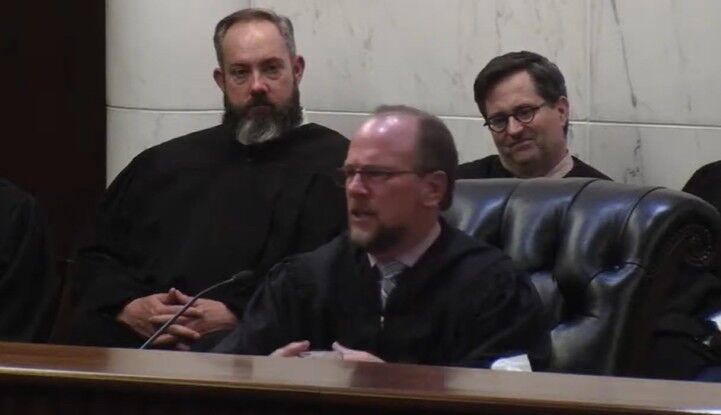
Colorado’s second-highest court upheld the warrantless collection of a suspect’s DNA from a discarded soda can as constitutional on Thursday, while warning about potential abuse of DNA privacy in the absence of further guardrails. By 2-1, a three-judge Court of...

Man charged in Northglenn homicide of wife
Matt Kyle
matt.kyle@denvergazette.com
Updated 11 hours ago
A man has been formally charged with murder and burglary relating to a homicide last week in Northglenn. Alexei Munive-Rodriguez, 48, was arrested Sunday after he was at large following the homicide, which occurred Friday. Police were dispatched around 10:30...

10th Circuit grants immunity to officers for fatal Manitou Springs shooting
Michael Karlik
michael.karlik@coloradopolitics.com
Updated 13 hours ago
The Denver-based federal appeals court ruled on Wednesday that responding officers from Manitou Springs and El Paso County cannot be held constitutionally liable for shooting and killing a man after a 20-minute standoff. Wilford Deweese allegedly pulled out a gun...
10th Circuit rejects invitation for full-court review of tax-avoidance case
Michael Karlik
michael.karlik@coloradopolitics.com
Updated 1 day ago
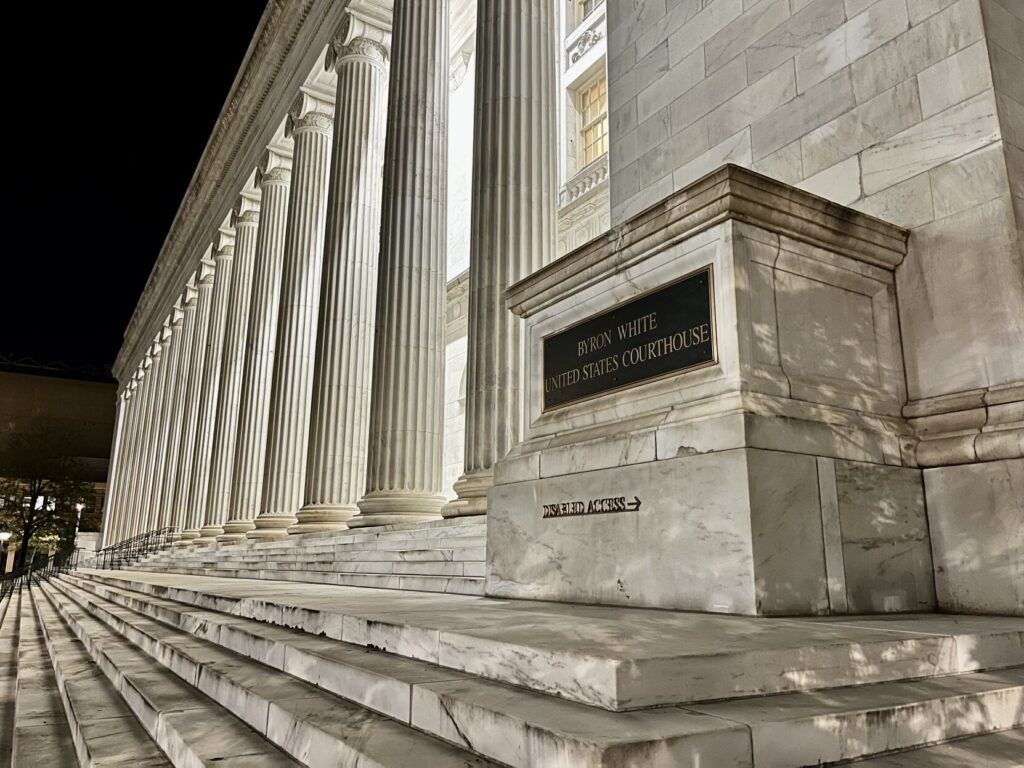
The Denver-based federal appeals court declined to reconsider the standards for holding entities liable for their tax-avoidance schemes, with a majority of judges voting against full-court review on Monday. In April, a three-judge panel of the U.S. Court of Appeals...

Colorado judge blasts state forensics lab in dismissing child sex case
Jenny Deam
jenny.deam@gazette.com
Updated 1 day ago
In a potentially widely consequential action, a Weld County district judge dismissed a child sexual assault case, citing the ongoing scandal at the Colorado Bureau of Investigation’s forensic lab that “has left a dark mark on the history of Colorado...
10th Circuit sympathetic to Colorado consumer protection law governing interest rates
Michael Karlik
michael.karlik@coloradopolitics.com
Updated 2 days ago
Members of the Denver-based federal appeals court appeared sympathetic on Tuesday to Colorado’s assertion that it can lawfully require certain out-of-state banks to abide by the state’s own ceilings on interest rates when they lend to consumers in Colorado. The...

Colorado justices to decide insurance companies’ obligation to disclose relevant policies
Michael Karlik
michael.karlik@coloradopolitics.com
Updated 2 days ago
The Colorado Supreme Court announced on Monday that it will decide whether an insurance company violated state law by withholding an at-fault driver’s policy for nearly a year when there was no dispute that the policy was not in effect...

Judicial performance evaluations released, Montezuma County judge disciplined | COURT CRAWL
Michael Karlik
michael.karlik@coloradopolitics.com
Updated 3 days ago
Welcome to Court Crawl, Colorado Politics’ roundup of news from the third branch of government. Colorado’s citizen-led judicial performance commissions released their voter narratives for the judges standing for retention in November, plus a disciplinary panel imposed consequences on a...
PREV
PREVIOUS

Colorado tries luring Australian green energy company
Colorado’s Economic Development Commission on Thursday approved almost $9.4 million in incentives to try to lure four companies to the state, including an Australian “green energy” company. The companies could create nearly 1,100 local jobs, officials said. The biggest package would go to a company that the state is calling “Project Chamomile,” which it described as […]

'Something's got to give': Aurora proposal for mandatory sentences for car thefts takes first step
With a new proposal requiring at least 60 days in jail for car theft, Aurora is poised to pass what could be the toughest response to the crime in the state by adopting an ordinance that imposes mandatory minimum sentences. At-large Councilmember Dustin Zvonek presented his proposal Thursday to City Council’s safety committee, which he […]