

Q&A with Sen. Jerry Sonnenberg | At the end of 16 years of public service
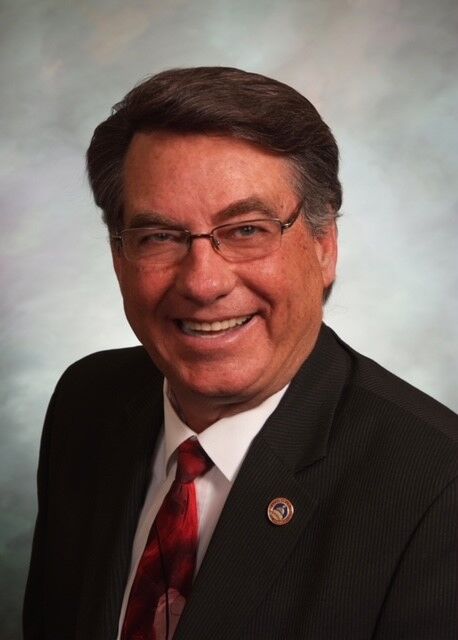
State Sen. Jerry Sonnenberg, R-Sterling, is the only one of 100 lawmakers in the 2022 session who has served for a full 16 years: four consecutive two-year terms in the House followed by two consecutive four-year terms in the Senate.
First elected in 2006 to the House and in 2014 to the Senate, his district covers 11 counties in the northern half of the Eastern Plains.
FAST FACTS
Age: 64
Background: Colorado native, grew up in Sterling, graduated from Sterling High School; owns Sonnenberg Farms and Sonnenberg & Sons Cattle.
Family: Wife, Vonnie, is a school teacher in Sterling; four adult children and nine grandchildren. He told Capitol M last year that at one point his oldest daughter was the only one of his children who was bringing new lives into the world. Sonnenberg joked that he reminded his other children that his will divides up his estate based on the number of grandchildren, and all of a sudden, he’s got nine!
Who’s your favorite rock band? Back in my younger days, Three Dog Night. Strictly a country guy now. If I get in the pickup after the boys have driven it, it drives me nuts what they put on the radio.
Why a John Deere instead of a Case? Interestingly enough, when my grandfather was farming, he farmed for a John Deere dealer. That’s how we got started. Sonnenberg sat next to Rep. Rod Pelton, R-Cheyenne Wells for the State of the State in January, and Pelton made sure that his Case model combine was right in Sonnenberg’s line of vision. “The worst part about it, is that I don’t know who will carry on the John Deere tradition. I’m worried about the tractor dynamics in the state legislature!” he said.
(There’s a joke behind all of this – a long-running competition among the farmers who represented northeastern Colorado at the legislature, which appeared to have started with then-Rep. Cory Gardner of Yuma, who ran a Case IH dealership and who served in the House from 2005 to 2011. Folks are either a Case or a John Deere. Sonnenberg has had a green John Deere model tractor on his desk for his entire 16 years.)
Something about you most people don’t know? Most people do not know that I play the piano. I played keyboards for a gospel quartet for 11 years. We even had a CD. Another is that in 1978, I umpired spring training in St. Petersburg, Florida for a number of college and pro teams, including the Phillies and White Sox. It was my attempt to get into pro baseball as an umpire. I went to a five-week school, and they assigned us to do spring training before the major league umpires did spring training. I was 19.
What’s next? Running for Logan County Commissioner
Colorado Politics: When you first ran for office back in 2006, what did you have in your mind about what you wanted to be as a lawmaker?
Sonnenberg: I wanted to come up here and fix things. I looked at it as like the farm, like a business. There are so many inefficiencies and things that we can do to solve problems. I thought, shoot, I come up here, lend them the rural voice, fix problems.
The very first thing I remember – we had passed minimum wage back in 2006 on the ballot and I had a simple question. There was talk that the feds made minimum wage -and I think ours back then was seven bucks or something like that – increased for inflation. And so I asked the question to a few in my caucus: What if the feds set their minimum wage at eight? Do we ratchet up then the inflation from eight? Or do we go to eight until the inflation?
Why I ran the amendment [to the enacting bill]: The people in Colorado actually thought that we voted to start at seven and ratchet up. So, if the feds put it up, whatever time it took to get up [to seven], I ran that amendment to an enacting piece of legislation and the majority leader at that time [Rep. Alice Madden) got up to the well as soon as I was done. That was the first time I’d gone to the well, so I was rather nervous, but tried to explain it. She [says], “That’s a typical freshman amendment.”
And so I thought, okay, well, if you have a problem with the country or back home, and you have a problem on the farm, you go sit down, talk to ’em. So I went over and said, “Do you understand the issue here?” And she says, “We don’t care.” I said, “Well, what, but there’s a genuine potential issue, don’t you think?” [She replied], “No, we don’t care.” And I said, “Well, who’s we? She said, “Everybody on this side, over here with me, don’t care what you think.”
We’ve had a great relationship after that, but I took my tail between my legs and I went and sat down and I thought, ‘Oh God, this is not going to work out the way I had thought it would work out.’
And then you start working on problems and things that came up that you needed to fix, and this was a whole different ball game.
That was my first experience 16 years ago. In order to be successful at anything, it’s always about relationships, right? And it’s always about integrity. As soon as someone can’t trust you, you lose that relationship. Of course, you’re not going to be able to count on a vote. You’re not going to be able to have a conversation that’s of any value. And so those were key for me to start to do from the beginning.
It’s like a speech I gave [recently] to the collegiate farm bureau folks. I said, “Can anybody here remember a bill I ran a year ago? Anybody in the last 15 years?”
I went up there with one thing. I went up there with my integrity. The truth is in 10 years from now, the only thing I’ll be remembered for “was he an honest guy? Was he fair? Did he have integrity?” Because they’re not going to look back and give a hoot about the bills I sponsored.
CP: That said, where do you think that you have had the most impact?
Sonnenberg: I would like to believe that I have had the greatest impact in the ag sector with my experience. The dirt underneath my fingernails brings a unique perspective that not many people have from that industry.
It’s just like healthcare. People rely on [Sen. Jim] Smallwood because they understand he knows about healthcare and insurance.
It’s taken some years, but I would like to believe that both sides of the aisle come to me for that expertise or that experience on how [a bill] would affect agriculture and rural Colorado. So I think that’s probably where I’ve had the biggest impact. That’s quite honestly where I wanted to make sure I had the biggest impact. People drove me to run for this office because they felt like they needed an ag voice.
I don’t know if you remember, but when [Sen. Greg] Brophy and I were in here, we were the only two farmers at one time there. He was a farmer in the Senate and I was a farmer in the House and there was nobody else that actually knew watched seeds pop up out of the ground.
CP: You’re known as very conservative, particularly on the issues of taxes and fees. You’ve run lots of bills on that and you’ve even run ballot measures on it. Yet you were also the sponsor of the 2017 bill on sustainability of rural Colorado bill, which survived court challenges. How does that square with what you’ve done over the years?
Sonnenberg: I would like to say that I represented my district. My district is very conservative. When you have a very conservative district, they expect you to vote conservative, but then they also have small rural hospitals. You talk about SB 17-267, the Joint Budget Committee was going to do to them by withholding money so they didn’t have to write TABOR checks to taxpayers. That was wrong and it would’ve closed hospitals. I won’t say which hospitals, but I know one hospital had told the board of directors to have a three-year exit plan
When you start taking hospitals away from Burlington, Hugo, which were the only two on I-70 between Aurora and Kansas, or if you’d close Haxton, Holyoke, Julesburg, if you have chest pains, you have to drive 60 minutes to the nearest hospital.
So yes, I hoped to represent my district. And along with that, put in highway funding, Medicaid reform, those type of conservative principles in that bill as well for the sustainability so that we were on somewhat of a good playing field.
There have been others. This year, I’ve done a lot with mental health, which many people don’t consider that government’s role. But from my perspective in rural Colorado, where we have more suicides per capita than anywhere else in the state, that’s a huge issue.
Mental health is not always a conservative issue and not thought of as government’s role, but we need help. And I’m tired of seeing kids take their own life because we don’t have the resources.
I would like to say that I represent my district and if my district means more school funding, which typically isn’t a Republican issue, but I would argue it’s probably more of a Republican issue. With one fourth of all the school districts in your district, that’s a huge priority. That’s why we included additional school funding in 267.
CP: Who have you worked well with over the years or seen eye to eye with more than you maybe would’ve expected?
Sonnenberg: Rep. Wes McKinley (D-Walsh) was always a good one to work with. It was kind of funny because when Rep. Frank McNulty was Speaker of the House and I was chair of ag committee, it was 33-32 and of course every committee was one difference.
Ag was a 7-6 committee, but it was probably an 8-5 because McKinley, on oil and gas and those types of issues, sided with us. So, when we needed to get something done, it was actually funny because McNulty said “I got more faith in Sonnenberg killing bills in ag committee than I do in state affairs so he would send bills to die to ag committee.”
I’ve worked well with Rep. Dylan Roberts (D-Eagle) over in the House. I worked well with Sen. Kerry Donovan (D-Vail). We butt heads at times.
I would say the last couple of years her being chair of ag has been helpful. We’ve been able to accomplish some things together. [After the 2018 election] she had nothing to lose and I had nothing to lose.
I had the best time with Speaker Terrance Carroll, and the speaker before him, Andrew Romanoff. He and I got along good. We didn’t too much together, but the reason we got along good is because we probably both had the warped sense of humor. He’d had that dry sense of humor and pop off a joke and I’d be the only one laughing.
So, he and I had that unique relationship that we could always talk. We didn’t always agree, but when I needed help, he would at least answer the question and didn’t shut me out.
CP: tell me about your relationships with the governors over years.
Sonnenberg: I spent four years with Gov. Bill Ritter, who had a different agenda. I wasn’t thrilled with his green energy agenda, although today I can meet Ritter on the street and sit down and have a conversation.
Hickenlooper was different. Part of that was because he had an incredible staff and I’ll call out Alan Salazar, probably one of the greatest chief of staffs that I’ve ever dealt with.
He said, “Hey, I think you and the governor would have a lot in common. Would you have a beer with him?” Absolutely, I said, I love to have a beer with him, sit down and talk, build this relationship. Maybe we can work on some stuff. So, he brought two lawn chairs and a 12 pack of beer and we sat for two and a half, three hours on the patio outside the House chamber, looking out over the place, just talking, getting to know each other. I learned about his history, where he was from. He learned about me. He listened, and it started this fantastic relationship and we could always talk.
If I needed to talk to Hickenlooper, boom, I was in his office. He was happy to talk. We didn’t always agree. But you had a relationship where he actually would listen. Four years later after he got elected, he put Republicans in cabinet positions, Don Brown in agriculture and Bob Randall at DNR. Hickenlooper surrounded himself with people who could give him advice.
I think that’s one of the things that made him a good governor
I loved my working relationship with him. If he told me something, I could count on it. Even if you disagree, if he said, Jerry, if that bill gets to me, I’ll veto it. Here’s what happens and he’d outline it. And Alan would help outline, it as well.
The Democrat I worked best with during this entire time was probably Hickenlooper. He was truly a pleasure to hang out with until he got a different chief of staff a couple years later, then he lost control.
Then there was 267. I stuck my neck out. His chief of staff at that time [Pat Meyer] asked where would you like to have a signing? I said somewhere in my district. Hugo was as good a place as any. And he went south out of my district [to Fowler, in southeastern Colorado, arranged by Kurt Morrison, his legislative liaison at the time.] I thought that that was rude.
I was angry after that. I could not go out in my district and say, “Hey, this helped save hospitals.” I gave them time to schedule it and they scheduled it at a time when I couldn’t be there, so I wasn’t able to go. That was frustrating, but that wasn’t Hickenlooper’s fault although it stops with him. He trusted Kurt for whatever reason and Kurt decided to stick it to me. So, that was frustrating. But I had a very good relationship with Hickenlooper. I can still have a conversation with him.
But he’s changed. When you become a U.S. Senator, you change. I look at what has happened to him. At one point, I thought, maybe I’d like to go to DC. If that’s what happens to a person that goes to DC, I’m not sure I want to do it.
CP: What about Gov. Jared Polis?
S: This governor has never been honest with me. I don’t have a relationship with him because I can’t trust him from my perspective. He has no integrity.
I went into his office, we had a conversation, and I thought it was a very good conversation. We talked about some of the things that I was interested in.
He said, “Your tax cut has merit. And I campaigned on that and I think I can help you with that.” And then we talked about all-day kindergarten. I said, “You’re gonna find this hard to believe from a Republican, a conservative, but I support full day kindergarten.” Out in my neck of the woods, many people have to drive 20, 30 minutes to town every day to pick up a kid because of half day kindergarten. They will choose not to do it because they can’t afford it or don’t have the time to do it.
Those are the kids that typically who need full day kindergarten. So, I’m a huge supporter. Polis said, “Wonderful. I want you to carry that bill in the Senate with the Democrat.” I don’t remember if he told me who the Democrat was at that time or not. I think it was Sen. Jeff Bridges. I was asked if I would carry it with Bridges, and I said I’d be honored to.
Then when the bill was introduced it was Bridges and Sen. Rhonda Fields.
When it came to the tax bill, it died in the first committee.
How do you trust a guy that won’t even have the conversation and say, “We decided not to put you on the bill?”
To this day, I don’t know why I wasn’t added to that. I was excited to be able to be helpful for my district on that bill. So, that started off [with] there’s no trust here. There’s no integrity. I can’t trust what he says. Why have the conversation? Since that time, I’m trying to think if we have had one policy conversation that was substantial.
Two years ago, they finally sent a lobbyist who says, “Hey, what’s the deal with you and the governor?” I can’t trust what he says. He has no idea about agriculture and no desire to learn about agriculture. He’s proven that. He makes things that hurt our industry, says things that doesn’t help. It just hurts our industry.
I have pretty good relationships with [then-Senate President] Leroy Garcia, and [Sens.] Dominic Moreno and Steve Fenberg are excellent leaders and good to work with.
One of the most brilliant people I worked with and that I tried to learn from was Rep. Paul Weissman [former House Majority Leader). He was one of the most political minds. You watch him. You learn from him how he crafted COW amendments. He was such a brilliant mind.
I remember him telling me one time, Sonnenberg, “You just pitted the teachers’ unions against my environmental groups.” I learned a lot from him, had a lot of respect for him.
One of the guys I learned the most from, my first minority leader for four years, [was] Rep. Mike May, who taught me so much. He was one of those guys that says, “Look, I really need you. I’m not going to tell you how to vote, but I really need you to be a ‘yes’ on this for whatever reason.” I’d say, Mike, I can’t be a yes, my district would shoot me.
He always followed up with if you don’t vote your district, they will find somebody that will, and that always stuck with me and you vote your district.
CP: How did you run the farm while being at the legislature?
Sonnenberg: Practice. That was a challenge at the beginning. But more than that, for me, I promised my family that I would never let this get in the way of being there. When there was a school event, I would do everything in my power to be at that school events. I only had the two boys left [in school]. So, the boys, when they had a baseball game, I try and make the baseball game, I tried to make the FFA events, all of those events that they were involved. Whatever it was, family still had to be the priority.
It’s actually rather easy because if you’re in the minority, your vote really doesn’t matter. A bill dies in state affairs on a 3-1 vote, or passes on a 3-1 instead of 3-2. If you’re in the majority, you have the ability to lay it over for action.
Although I hate remote, I’ve taken advantage of it by being able to go home and still vote. There are times if we have a short day on the floor, done by 10, I’m home by noon, and I’m on the back of a horse or in the tractor or welding or working at the farm that afternoon, rather than sitting up here, doing stuff on my computer. I can still read the bills I need to read when I’m up here in the evening or whatever. So, I enjoy going home.
When I first started, my boys weren’t really old enough to run the farm, so I hired to get a lot of work done. I had to hire to get my corn planted, to get most of the spring work done. I usually paid out, two thirds to three fourths of my salary just to get my spring work done.
This wasn’t very profitable, not that it’s a great paying job to begin with. You do it for the public service. I was actually glad that it paid enough that I could hire someone to do some of that work for me. Now my boys do it, although it probably cost me more in the long run because the boys still need my help on management stuff.
The Senate [during their tribute to Sonnenberg] made fun of me because I’m sitting here while we’re on a lengthy bill. I was buying cattle. Someone came by and took a picture [of his laptop] and I said, “It’s not a scandal. I do this on a regular basis on Wednesdays. This is how I run my business. When I have an opportunity to buy cattle online, I can do it online.”
He asked, “So did you buy any cattle?” I said, “I bought a semi load.” How much is that?” he asked.
“I bought a mix load. I brought some grass cattle as well as some bread cows. It’d be close to $50,000.”
He said, “You spent 50,000 dollars on the internet?” I said, “Yeah, now you understand how I have a hard time telling my wife to quit buying crap on Amazon and then I spend $50,000 on a Wednesday buying cattle.”

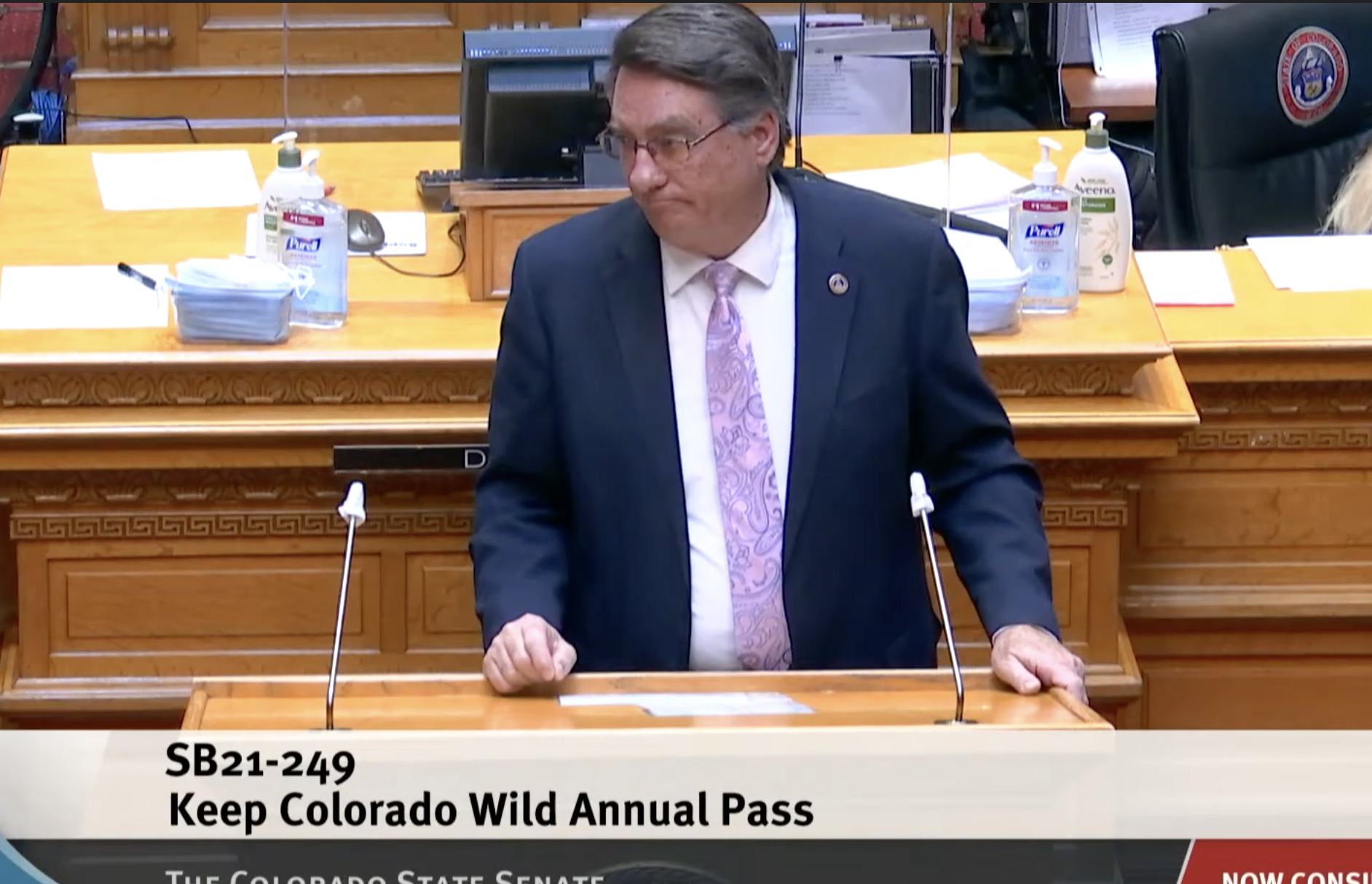


Judge grants partial injunction to GEO in fight against state health inspection law
Kyla Pearce
kyla.pearce@gazette.com
Updated 20 minutes ago
A judge ruled Thursday that The GEO Group does not have to follow parts of a new state law requiring more frequent health and safety inspections at the Immigration and Customs Enforcement Processing Center in Aurora. Under the order of...

Parker man faces 20 years to life for serial sexual assaults
Nicholas Fogleman
nicholas.fogleman@denvergazette.com
Updated 59 minutes ago
A 25-year-old Parker man who sexually assaulted three women in 2025 pleaded guilty Wednesday and will serve 20 years to life in prison. Javier Rodriguez-Andrade pleaded guilty to charges stemming from three sexual assaults involving women ages 19 to 24. ...
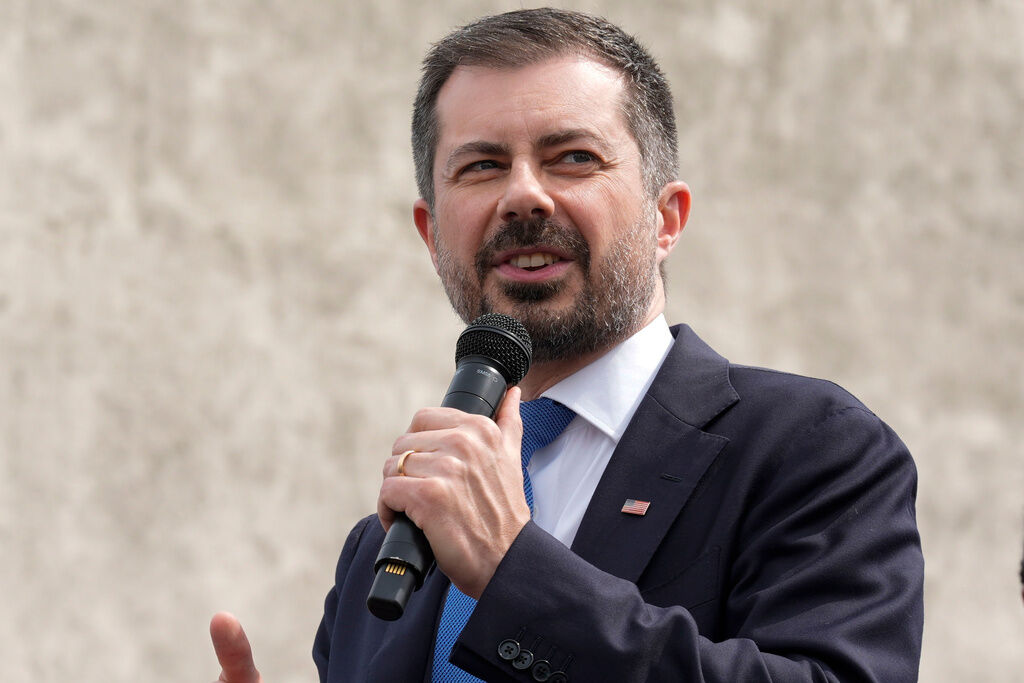
Buttigieg performs best among Democrats against Rubio or Vance in possible 2028 contest: Poll
David Zimmermann
david-zimmermann@coloradopolitics.com
Updated 3 hours ago
Former Transportation Secretary Pete Buttigieg appears to be the Democratic Party’s best chance at winning the presidency against Secretary of State Marco Rubio or Vice President JD Vance in 2028, according to a poll released on Thursday. In hypothetical matchups...
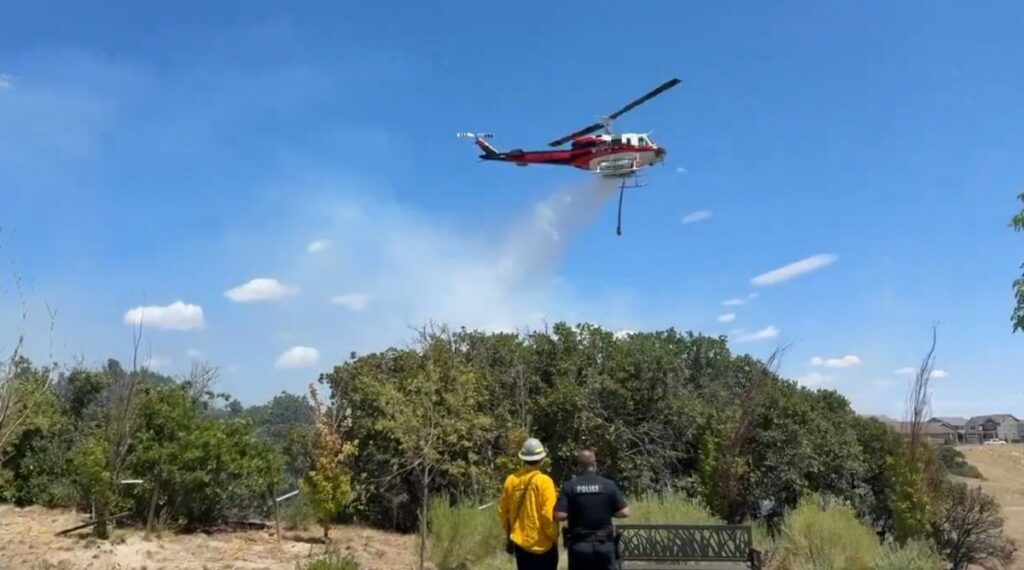
Douglas County moves to Stage 1 fire restrictions following recent rain
Nicholas Fogleman
nicholas.fogleman@denvergazette.com
Updated 56 minutes ago
Douglas County has downgraded its fire restrictions from Stage 2 to Stage 1 on Thursday following recent rainfall and moderate fire conditions, according to the Douglas County Sheriff’s Office. The change applies to unincorporated Douglas County, as well as the...
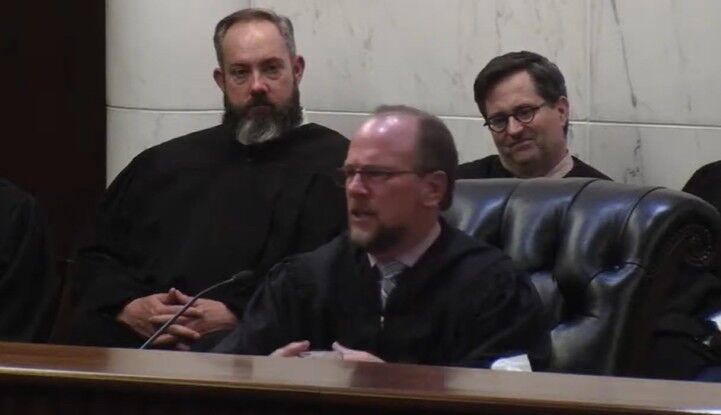
Divided appeals court upholds warrantless DNA collection in Colorado cold case, cautions of government overreach
Michael Karlik
michael.karlik@coloradopolitics.com
Updated 4 hours ago
Colorado’s second-highest court upheld the warrantless collection of a suspect’s DNA from a discarded soda can as constitutional on Thursday, while warning about potential abuse of DNA privacy in the absence of further guardrails. By 2-1, a three-judge Court of...
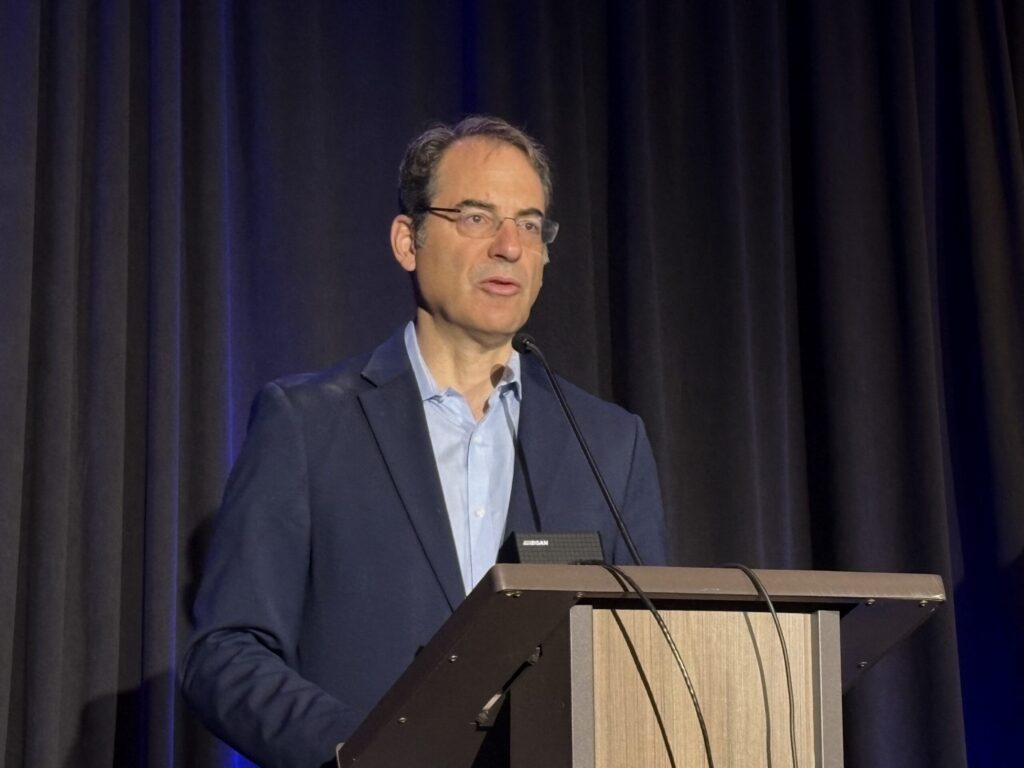
Democratic gubernatorial candidate Phil Weiser promises to appoint a rural outreach director and a water adviser
Marianne Goodland
marianne.goodland@coloradopolitics.com
Updated 1 hour ago
Democratic gubernatorial candidate and current Attorney General Phil Weiser told the Colorado Water Congress Thursday he intends to appoint a rural outreach director and a water policy adviser should he win the election in November. The news was well-received by...
Man charged in Northglenn homicide of wife
Matt Kyle
matt.kyle@denvergazette.com
Updated 54 minutes ago
A man has been formally charged with murder and burglary relating to a homicide last week in Northglenn. Alexei Munive-Rodriguez, 48, was arrested Sunday after he was at large following the homicide, which occurred Friday. Police were dispatched around 10:30...

Attorney General candidates present priorities at Colorado Water Congress
Marianne Goodland
marianne.goodland@coloradopolitics.com
Updated 40 minutes ago
The two major-party candidates for attorney general — Republican Michael Allen, the district attorney for Teller and El Paso counties and Democratic Secretary of State Jena Griswold — appeared at the Colorado Water Congress on Thursday to outline their water...

US aircraft carrier arrives in Middle East, relieving long-deployed USS Lincoln
The Associated Press
the-associated-press@coloradopolitics.com
Updated 4 hours ago
WASHINGTON (AP) — The Asia-based USS George Washington aircraft carrier is now operating in the Middle East, the U.S. military said Thursday, relieving a long-deployed carrier following reports of mental health challenges and supply shortages aboard while it was supporting...

Denver named finalist for 2028 Democratic Convention site
Thelma Grimes
thelma.grimes@coloradopolitics.com
Updated 6 minutes ago
The Mile High City is competing with Boston and Philadelphia The list of cities being considered to host the 2028 Democratic National Convention has narrowed even further, with Denver making the cut as one of the final three along with...
PREV
PREVIOUS

Colorado's student assessment scores dropped in 2021, but experts say they might not tell the entire story
Statewide assessment scores for Colorado’s elementary and middle school students dropped in 2021 compared to scores recorded before the COVID-19 pandemic. At the same time, the number of students who took the test plummeted across the state compared to previous years, according to data compiled by the Colorado Department of Education. Reading scores for third, […]

2022 COLORADO PRIMARY ELECTION GUIDE | State Senate
Support local journalism: As a public service, we have decided to put the 2022 Colorado Primary Election Guide in front of our paywall so you can access it for free. Would you support our work by subscribing to Colorado Politics? Your subscription allows us to pursue time-consuming projects, such as this voter guide, as well as other issues […]