

Appeals court tosses Denver sex abuse convictions for improper reference to porn searches
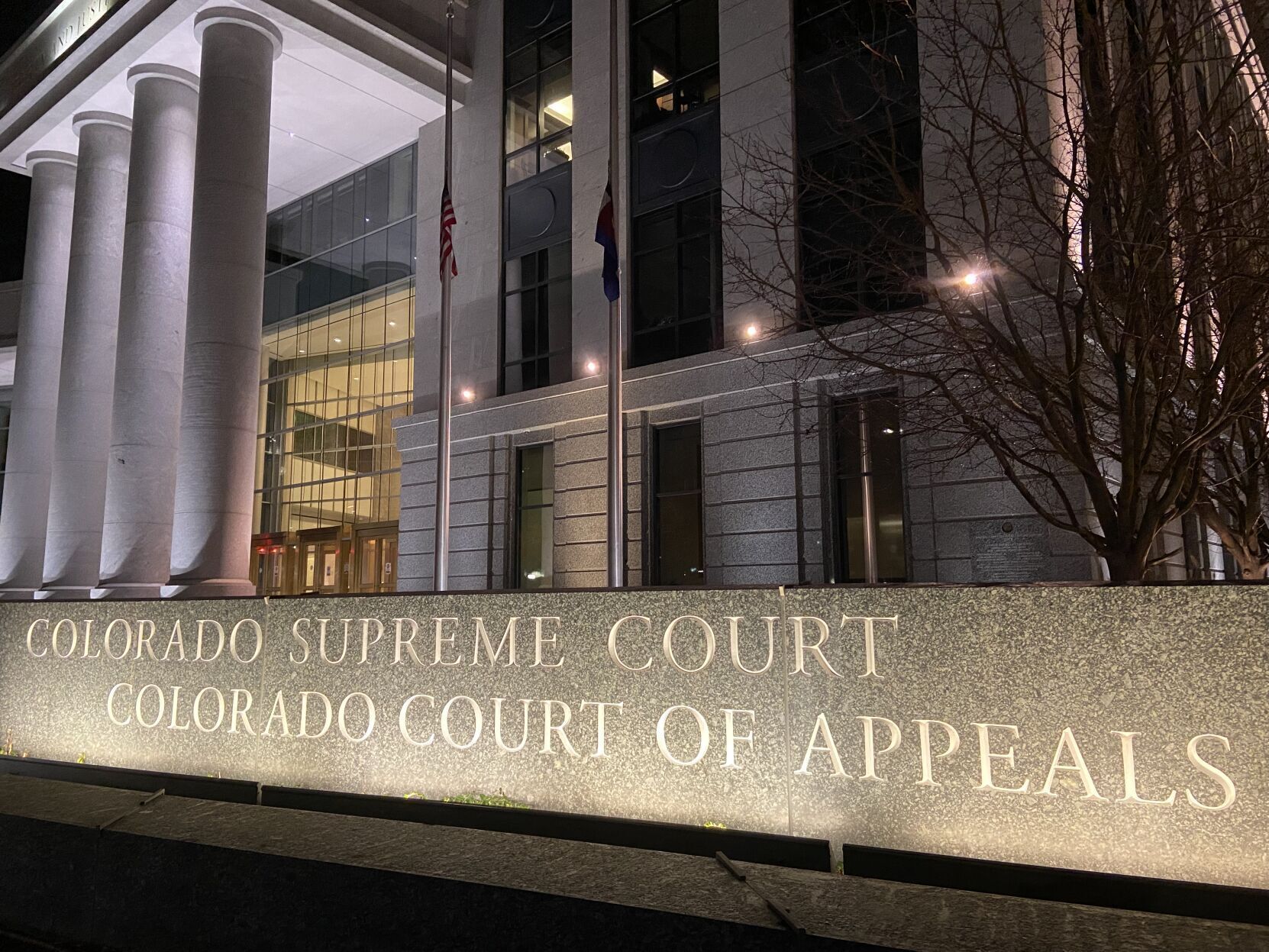
The state’s second-highest court has reversed a man’s convictions for sexually assaulting a child after determining it was improper for prosecutors to rely on Juan Hernandez-Ramirez’s Internet searches for pornography after allegedly abusing the victim.
A three-judge panel for the Court of Appeals relied on a Colorado Supreme Court decision from earlier this year jettisoning a longstanding but vague legal doctrine that allowed for, in the high court’s words, “all sorts of misdeeds and character evidence – no matter how attenuated in time, place, or manner.”
Because of the “he said, she said” nature of the case, the panel concluded that Hernandez-Ramirez’s unrelated Internet searches could have led the jury to infer that the allegations against him were true because of his bad character.
Jurors found Hernandez-Ramirez guilty on two counts of sexual assault on a child for allegedly molesting a girl in July 2017. Approximately one month beforehand, Hernandez-Ramirez was allegedly sitting with the victim in a car as he watched lewd videos. He reportedly told the victim to “go into an application” on the phone and search for “porno que hacen los niños” or child porn.
Denver prosecutors subsequently introduced evidence at trial of over 100 Internet searches Hernandez-Ramirez conducted in October 2017 for pornography. They argued the searches were “part and parcel” to the criminal charges because they showed Hernandez-Ramirez’s “plan and preparation” to commit child sex offenses.
The defense maintained the searches were irrelevant because they happened after the alleged abuse.
Under Colorado’s rules of evidence, information about other crimes or acts is not allowable at trial if it is meant to illustrate a person’s bad character. If the evidence is intended to show a person’s motive or preparation for the crime, however, it may be admissible.
In February, while Hernandez-Ramirez’s case was on appeal, the state Supreme Court decided in Rojas v. People to discard the “res gestae” doctrine, which allowed trial courts to admit evidence of other acts at trial. Calling the doctrine vague and “harmful,” Justice William W. Hood III wrote in the court’s majority opinion that judges should now apply the rules of evidence by looking at whether certain information is intrinsic or extrinsic to the charges.
With that direction, the appellate panel concluded that not only were Hernandez-Ramirez’s October 2017 pornography searches extrinsic to the sex assault charges, but they were so unlike the alleged searches he made the victim perform in the car that their purpose was to lead the jury to consider his bad character.
“And the admitted searches went far beyond the types of searches that Hernandez-Ramirez allegedly told the victim to conduct,” wrote Judge David J. Richman in the May 19 opinion, in that they were so graphic as to “shock the conscience of the average juror.”
Ultimately what led the appellate panel to reverse Hernandez-Ramirez’s convictions was the prosecution’s heavy reliance on the October searches at trial, telling jurors at closing arguments to “look very carefully” at the obscene search terms.
“This direction necessarily rested on an inference that Hernandez-Ramirez acted in conformity with his bad character: because he searched for pornography in October, he must have been viewing pornography in the car, thereby grooming the victim for further sexual interaction,” Richman wrote.
The case is People v. Hernandez-Ramirez.



10th Circuit partially revives lawsuit over 2020 Denver protest injuries
Michael Karlik
michael.karlik@coloradopolitics.com
Updated 16 hours ago
The Colorado-based federal appeals court revived a man’s claims against Denver on Friday after concluding a trial judge resolved the case in the city’s favor without analyzing two of the three instances of alleged excessive force and other constitutional violations....
Federal judges find Colorado immigration judge violated several orders
Michael Karlik
michael.karlik@coloradopolitics.com
Updated 17 hours ago
Multiple federal judges in Colorado have freed people from immigration custody after determining that one immigration judge violated their directives for properly conducting bond hearings. For nearly a year, Colorado’s U.S. District Court has faced a flood of “habeas corpus” petitions...

Misconduct complaints from ex-Colorado judicial discipline director dismissed against federal judges
Michael Karlik
michael.karlik@coloradopolitics.com
Updated 2 days ago
The administrative body for the Denver-based federal appeals court upheld a finding last week that misconduct complaints against Colorado’s chief federal trial judge and the chief appeals judge warranted dismissal and appeared to be a “litigation tactic” by the complaining...

First-ever Red Rocks naturalization ceremony draws most diverse group of new citizens
Michael Karlik
michael.karlik@coloradopolitics.com
Updated 18 hours ago
Colorado’s federal trial court held its first-ever naturalization ceremony for nearly 300 new citizens on Thursday at Red Rocks Park and Amphitheatre. “We’re doing it to commemorate the 250th anniversary of the Declaration of Independence and the United States. Red...
Jeffco taxpayers could be on the hook for a possible child sex assault settlement
Matt Kyle
matt.kyle@denvergazette.com
Updated 22 hours ago
Taxpayers may end up on the hook for a child sexual assault settlement, possibly worth up to $15 million, after Jeffco Public Schools failed to notify its insurance company in a timely manner about the case. The incident stems from...
10th Circuit finds no fair housing violation by Littleton landlord for worker’s alleged rape of tenant
Michael Karlik
michael.karlik@coloradopolitics.com
Updated 16 hours ago
The Denver-based federal appeals court concluded on Monday that Littleton’s housing authority could not be held liable for a maintenance worker’s alleged rape of a tenant, as the worker’s employment did not provide any special access to the victim. A...

Jeffco Public Schools sues Trump administration to protect funding after alleged transgender policies violation
Matt Kyle
matt.kyle@denvergazette.com
Updated 2 days ago
In the wake of several threats by the Trump administration to revoke federal funding, Jeffco Public Schools filed a lawsuit against the Department of Education seeking to protect that badly needed money. Jeffco has been under investigation by the DOE’s...

Denver detox center did not violate man’s rights with 10-hour hold, 10th Circuit says
Michael Karlik
michael.karlik@coloradopolitics.com
Updated 4 days ago
The Colorado-based federal appeals court concluded on Tuesday that Denver’s detoxification facility did not violate a man’s rights by holding him against his will for 10 hours until his blood alcohol content was projected to reach zero. Unusually, Brian Garrett’s...

Federal judge clarifies ex-GOP treasurer candidate’s burden to prove defamation claims
Michael Karlik
michael.karlik@coloradopolitics.com
Updated 4 days ago
A federal judge clarified last week that businessman and former Republican statewide candidate Brian Watson will need to surmount a higher hurdle in proving his claim that a party guest’s alleged description of him as a “criminal” amounted to defamation....
Colorado board permits state to appeal injunction against arthritis drug price cap
Marissa Ventrelli
marissa.ventrelli@coloradopolitics.com
Updated 4 days ago
A Colorado board voted Friday to allow the Attorney General’s Office to fight an injunction against a price cap on a drug that treats arthritis. A U.S. district court judge had granted the company Amgen a preliminary injunction, temporarily blocking...
PREV
PREVIOUS

Pfizer to refund more than $100K to hundreds of Coloradans
The Colorado Attorney General’s Office announced Friday that 1,500 Coloradans will receive refunds from Pfizer after the company failed to honor coupons for certain medications. Pfizer has agreed to pay Colorado $107,174.82 in a settlement that also included Arizona, Vermont and Kansas. Officials said Pfizer offered co-payment coupons between 2014 and 2018 that were intended […]

Polis tours state, signs dozens of bills on affordable housing, health care, public safety
Gov. Jared Polis signed dozens of bills into law throughout the week, including numerous measures on affordable housing, health care and public safety in Colorado. The governor has been visiting parts of the state in the last few days, part a bill signing tour that seeks to highlight the legislature’s recently-concluded work. Affordable housing […]