

Colorado’s U.S. attorney, top public defender discuss priorities, including fentanyl, in joint appearance
The top federal prosecutor and public defender in Colorado appeared together in downtown Denver on Thursday for a discussion that touched on criminal justice priorities like the fentanyl crisis, as well as the Biden administration’s judicial nominees and their efforts to diversity their offices.
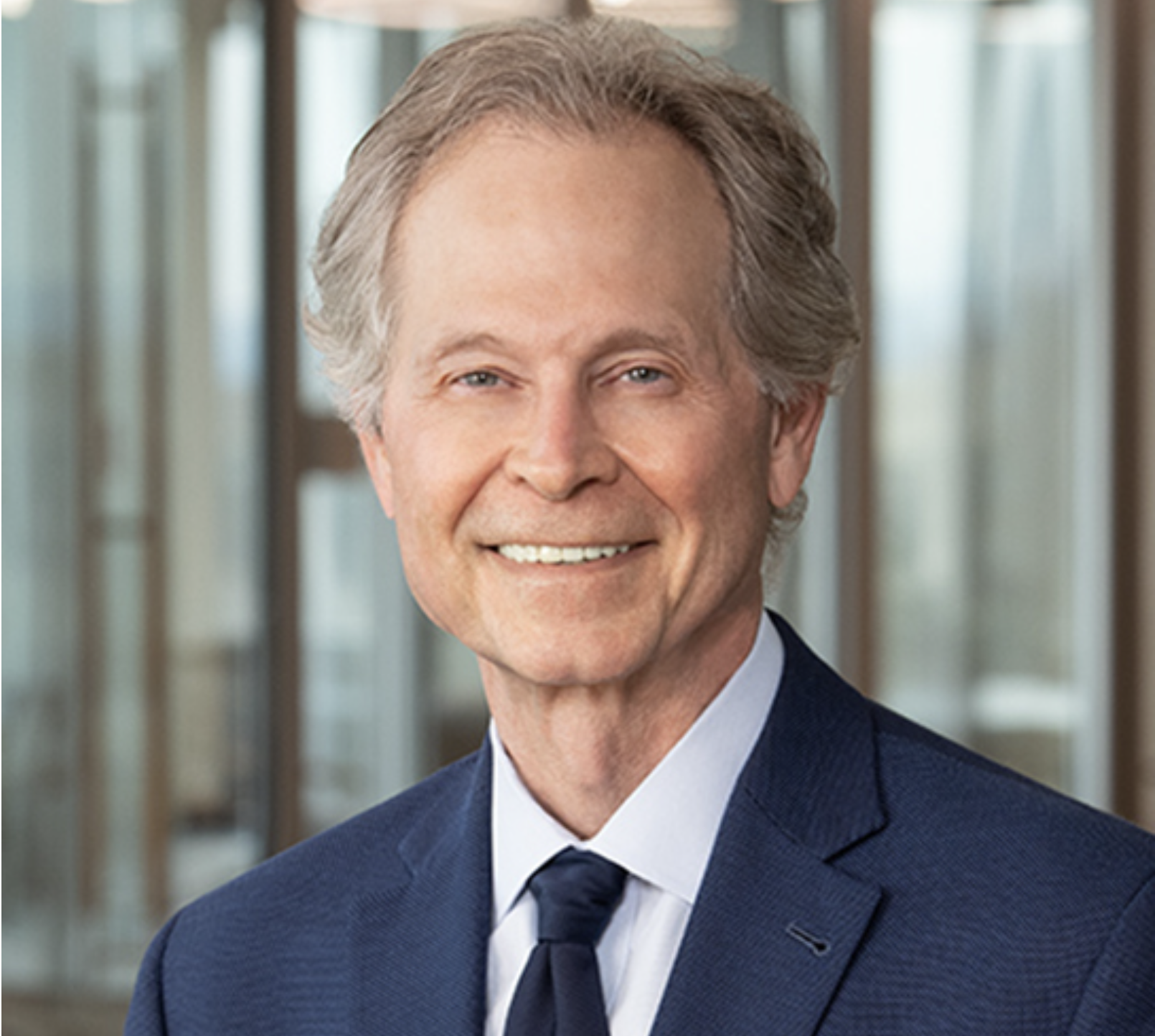
Although U.S. Attorney Cole Finegan and Federal Public Defender Virginia Grady are within a year of each other in age, their careers have differed markedly. Grady began at the public defender’s office in 1990 and has served as its leader since 2013. Finegan, by contrast, is in his fifth month at the U.S. Attorney’s Office for Colorado, following a career that took him from Washington, D.C. to the administration of then-Denver Mayor John Hickenlooper and eventually to private practice.
Fiengan said fentanyl, cybercrime and the recovery of property obtained through fraud would be his priorities. While his office has more of an agenda-setting role by nature of the cases they pursue, Finegan clarified that prosecutors also have to be responsive to changing circumstances.
“When I was contemplating this position and thinking about some of the issues we would be dealing with, at the time I did not grasp what was happening with fentanyl in the country in the rise of that drug and how much time it can consume,” he said.
Finegan, who took office in December following his U.S. Senate confirmation, also said firearms-related offenses are of particular concern.
“The first week I came home and my wife and I were talking and she said, ‘What’s the most amazing thing you’ve learned?’ I said there are more guns in this country than I ever thought possible. That’s not a political statement,” he added. “It’s just astonishing the number of guns we have.”
Grady explained that her office is, by design, largely reactive to the decisions of others in the criminal justice system. She said that although the volume of cases for federal public defenders is not as high as their state counterparts, the complexity of cases makes for time-consuming work, coupled with the fact that incarcerated defendants are spread out across multiple states.
“Our lawyers are on the road or in a plane all the time,” said Grady, whose office covers Colorado and Wyoming. Finegan interjected that he also has far fewer staff than the state attorney general, despite the confluence of federal agencies, federal prisons and public lands in Colorado contributing to high caseloads.
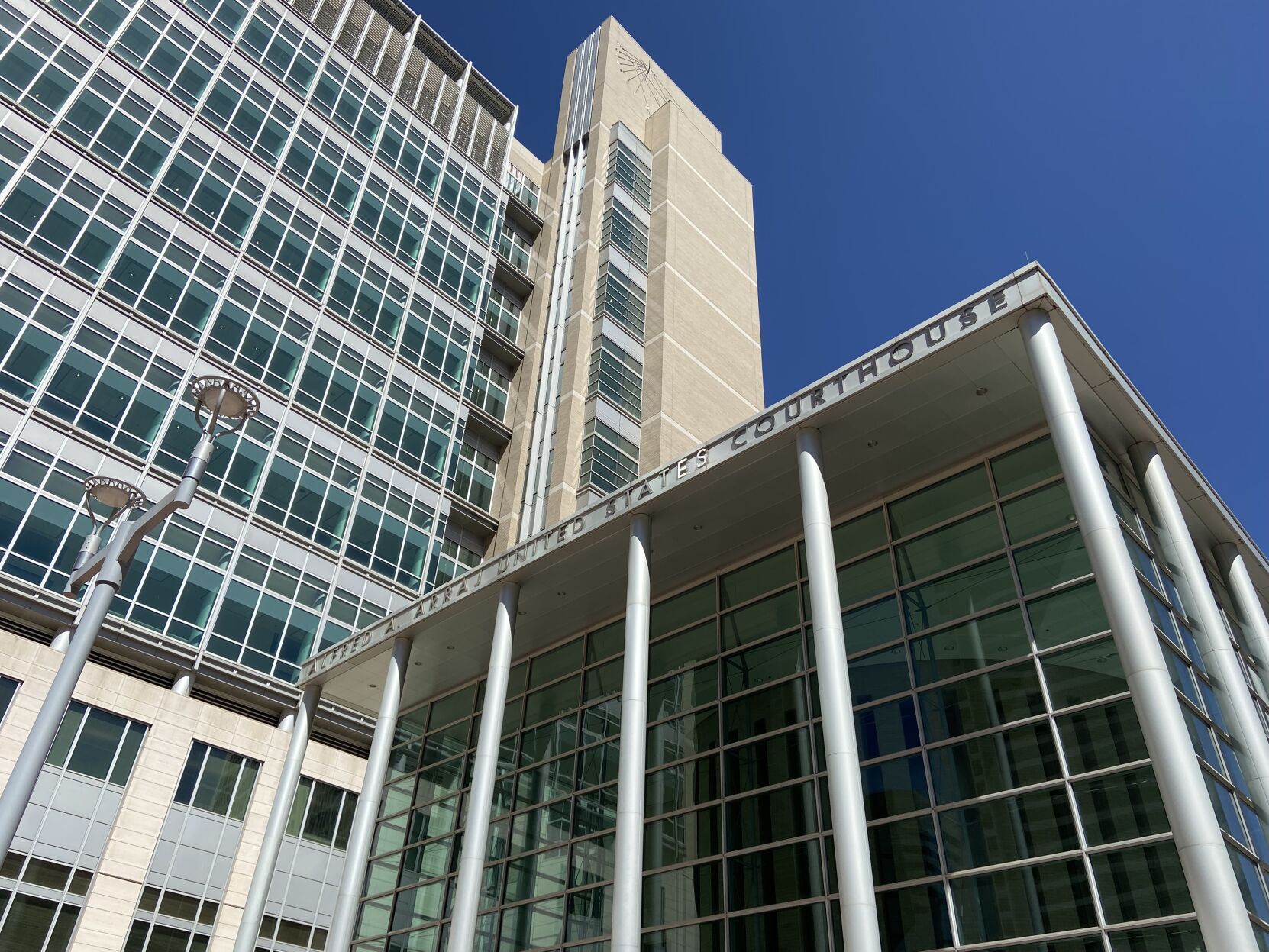
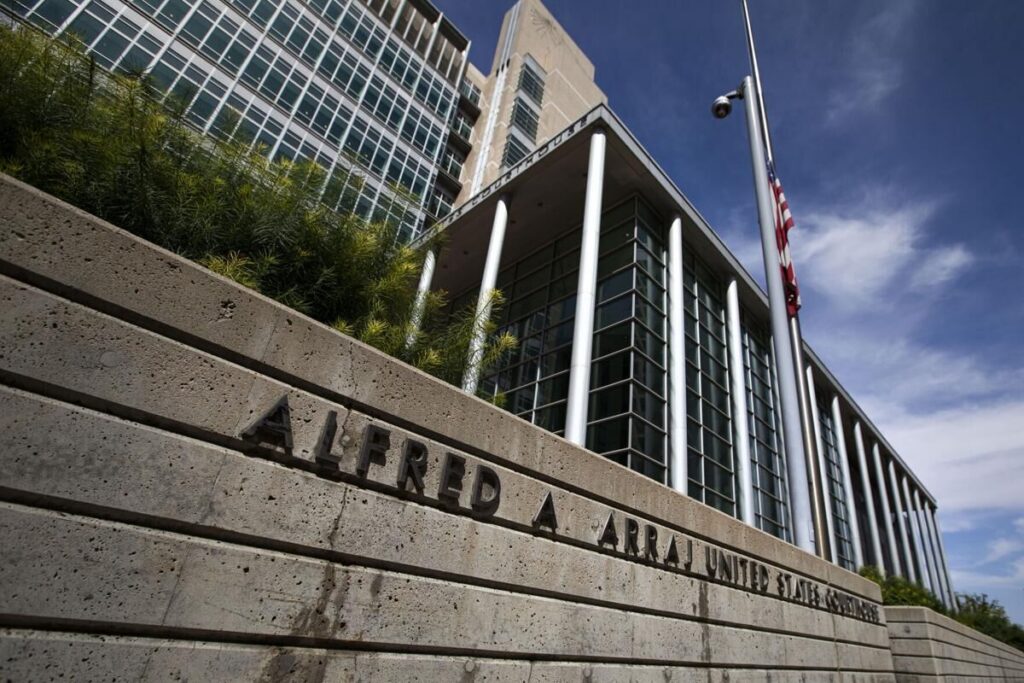
The discussion between Finegan and Grady took place at the Alfred A. Arraj U.S. Courthouse. The Faculty of Federal Advocates, a membership organization for lawyers who practice in Colorado’s federal courts, sponsored the event.
Grady spoke approvingly of the Biden administration’s pattern of appointing public defenders to federal judgeships as part of a deliberate strategy to boost the number of judges from historically underrepresented demographic groups.
“What does that mean to us and to me? It means not just recognition, it means validation,” Grady said. “An acknowledgment of the value of the work that we do.”
She said it has been an “eye-opening experience” listening to senators direct critical comments toward recent judicial nominees with public defender experience during their confirmation hearings. U.S. Sen. Ted Cruz, R-Texas, in one instance told an appellate court nominee that “you don’t feel sympathy for the victims. You don’t stand with the victims. You spent your life trying to save that murderer.”
Judge Veronica S. Rossman, a former public defender in Colorado whom Grady personally recommended for a seat on the Denver-based U.S. Court of Appeals for the 10th Circuit, also faced disapproval of her work seeking release for some defendants during the COVID-19 pandemic.
“It is really critical in every respect that a federal judge, particularly at the district court but also at the courts of appeals, are able to see as clearly as possible a litigant before them,” Grady said. “If you’ve watched any of the Senate Judiciary Committee hearings, not just of federal public defenders but also for those from other underrepresented groups, the degree to which people with extraordinary power don’t get it is alarming.”

Reuters reports that as of this week, President Joe Biden has nominated 27 former or current public defenders to judgeships.
Finegan reiterated his respect for the public defender system and recalled what U.S. Attorney General Merrick Garland told him when they met: “Do the right thing.”
At one of the first discussions with his office upon being sworn in, “we talked about not only all the things we needed to do and what we needed to accomplish, but also that we needed to be mindful that with our power comes great responsibility,” Finegan said. “When someone is indicted or someone is charged, that person’s life is never gonna be the same no matter what the outcome is of the trial.”
Finegan and Grady also talked briefly about diversity efforts within their offices. Finegan said he intended to look at bringing diversity into management ranks and to the U.S. Attorney’s Office overall. Grady said that a majority of attorneys in her office are women, in a dramatic change from when she first started as a public defender, and that there has also been an increase in ethnic, language and LGBTQ diversity.


‘Understand people for who they are’: 2 federal judges talk about compassion in courtroom
Michael Karlik
michael.karlik@coloradopolitics.com
Updated 2 hours ago
Before taking the bench in 2022, U.S. District Court Judge Charlotte N. Sweeney was an employment discrimination attorney. While the cases could be emotionally charged, they were different from the criminal proceedings she is now handling. “It wasn’t necessarily affecting...
Denver murder conviction reversed for incomplete self-defense instruction
Michael Karlik
michael.karlik@coloradopolitics.com
Updated 19 hours ago
Colorado’s second-highest court reversed a defendant’s murder conviction last week because a Denver judge gave an incomplete instruction to the jury about the man’s right to self-defense. Donald R. Gonzales and Gary McLaughlin met up in a Capitol Hill parking...
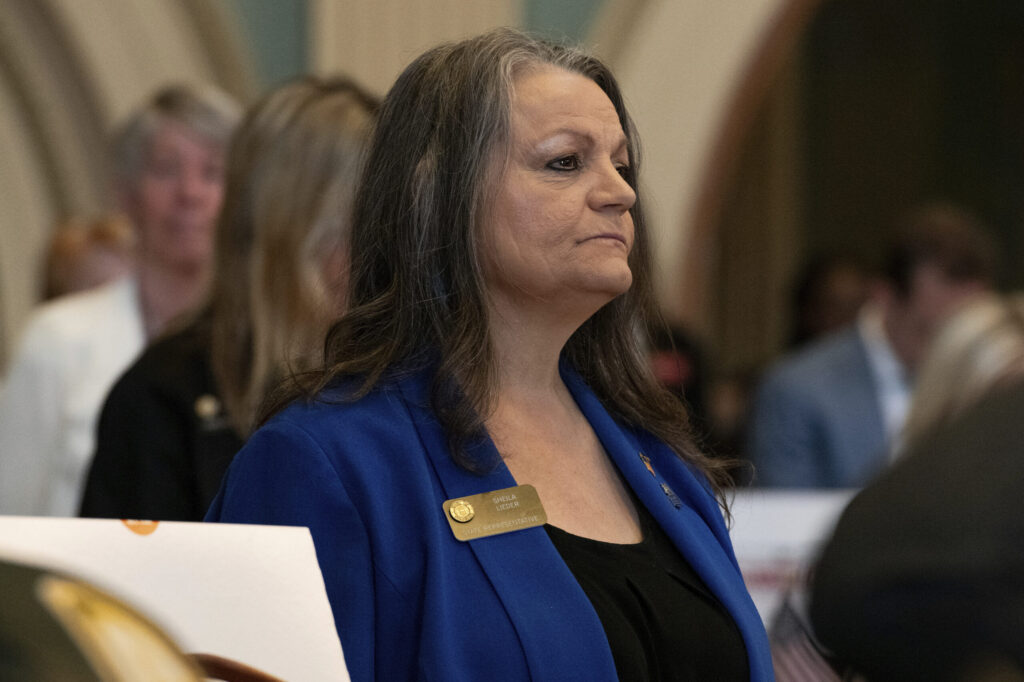
Colorado lawmaker, House leaders named in workplace-retaliation lawsuit
Marianne Goodland
marianne.goodland@coloradopolitics.com
Updated 22 hours ago
A former legislative aide has filed a lawsuit alleging she was mistreated, illegally directed to perform campaign work and harmed by a House leadership structure she charged was fragmented, politicized and ineffective at protecting employees. The lawsuit, filed by Jennifer...
Federal judge hears arguments about Colorado’s 3-day gun purchase waiting period
Michael Karlik
michael.karlik@coloradopolitics.com
Updated 1 day ago
A federal judge heard arguments on Monday about the constitutionality of a 2023 Colorado law that generally imposes a three-day waiting period on firearm purchases after the initiation of a background check. The test that the U.S. Supreme Court created...
Colorado Supreme Court intervenes in Weld County prosecution dismissed due to Missy Woods misconduct
Michael Karlik
michael.karlik@coloradopolitics.com
Updated 19 hours ago
The Colorado Supreme Court ordered a Weld County trial judge last week to respond to the district attorney’s claim that he improperly dismissed a criminal case because of “outrageous” conduct by the Colorado Bureau of Investigation. Daniel Lee Eatinger stood...
Schoolchildren’s presence at child sex-related trial did not harm Arapahoe County defendant, appeals court says
Michael Karlik
michael.karlik@coloradopolitics.com
Updated 4 days ago
Colorado’s second-highest court decided on Thursday that the presence of a group of schoolchildren on the first day of a child sexual exploitation trial did not violate an Arapahoe County defendant’s constitutional right to a fair trial. Prosecutors charged Jerry...
Appeals court cites week-old Colorado law to reinstate child neglect case at child, father’s request
Michael Karlik
michael.karlik@coloradopolitics.com
Updated 4 days ago
Colorado’s second-highest court invoked a new state law for the first time on Thursday and reinstated a child neglect case that both the child and her father wished to reopen. House Bill 1227 took effect on Aug. 12, reversing a...
Colorado Supreme Court names William Hood as next chief justice
Michael Karlik
michael.karlik@coloradopolitics.com
Updated 5 days ago
The Colorado Supreme Court has selected Justice William W. Hood III to be the next chief justice, the judicial branch announced on Friday. Hood will succeed Chief Justice Monica M. Márquez, who took over the role in July 2024. “I...
Family of slain Lakewood teacher releases statement as murder suspect makes first court appearance
Matt Kyle
matt.kyle@denvergazette.com
Updated 2 days ago
Patrick Theodore Barnett, the Lakewood man accused of killing his wife, a Jeffco Public Schools art teacher, made his first court appearance Friday morning as his wife’s family looked on. The status conference hearing was held before District Court Judge...
Appeals court upholds Park County trophy hunting conviction
Michael Karlik
michael.karlik@coloradopolitics.com
Updated 5 days ago
Colorado’s second-highest court clarified on Thursday that a defendant may stand convicted under the state’s trophy hunting laws if he abandons a bear carcass but returns later to remove the meat. Under Colorado law, it is a felony to detach...
PREV
PREVIOUS

WATCH: COLORADO POLITICKING | Judge rules Dave Williams can't appear on primary ballot with anti-Biden nickname
This week on Colorado Politicking, reporters Ernest Luning and Marianne Goodland discuss as judge in Denver ruling Republican congressional candidate and state lawmaker Dave Williams can’t include a phrase meant to express contempt for President Joe Biden along with his name on primary ballots. Read previous coverage on our stories here: Read previous coverage on our […]

Senate is poised to tackle collective bargaining bill that applies only to counties
Collective bargaining for county workers, one of the biggest bills introduced in the last two weeks of the session that won party-line approvals in committees, is now ready for the full Senate’s consideration. Lawmakers from both sides of the aisle expect an intense debate on Senate Bill 230, which would allow county workers to form […]