

State Supreme Court averts ‘immediate negative impacts’ to government agencies, reverses appeals court

After a coalition of state government departments warned the Colorado Supreme Court that there could be dire consequences to public health and safety if it let a lower court’s ruling stand, the justices agreed that governmental agencies do not have a mere 35 days to request judicial enforcement of their regulatory orders.
The ruling on Monday found the state’s Court of Appeals misunderstood the deadline written into state law when it decided last year that the Arapahoe County Department of Human Services could not attempt to recover more than $79,000 in public benefits overpayments because it had waited too long. The appellate court believed that the department had only 35 days to ask a judge to enforce its order seeking repayment.
Because Arapahoe County issued the order in 2008 and sought court enforcement more than 10 years later against the people who allegedly defrauded the government, the effect of the appellate decision was to terminate the judicial effort to pursue repayment.
Upon further review, the Supreme Court determined that the 35-day window did not, in fact, apply to government agencies that wanted to enforce their orders, but rather to people who wanted to contest the orders in the first place.
In drafting the law, Justice Carlos A. Samour Jr. wrote for the court, lawmakers “clearly distinguished between judicial review of an agency action, which an adversely affected or aggrieved person may request, and judicial enforcement of an agency’s final order, which the agency that issued the order may request.”
The reversal of the Court of Appeals’ decision came as a relief to governmental agencies whose portfolios ranged from agriculture to natural resources to transportation. Fifteen state departments and the administrator of the Uniform Consumer Credit Code wrote to the justices in alarm, claiming the appellate court had effectively nullified their ability to enforce regulatory orders through the courts.
The governmental entities’ concern boiled down to the reality that many types of regulatory orders take longer to comply with than 35 days. The Colorado Department of Labor and Employment, for example, might order an employer to provide unpaid wages to an employee over the course of several months. The Colorado Medical Board could order a doctor to practice under monitoring for one year. The Mined Land Reclamation Board may order cleanup of an abandoned mine within 10 years.
“In all of these examples, compliance with the order cannot be confirmed until the end of the compliance period and thus the agency cannot seek judicial enforcement of its order within 35 days,” wrote Senior Assistant Attorney General Keenan Lorenz, representing the governmental departments. “Similarly, under the precedent set here, persons subject to a final agency order could comply with the order for 35 days and then fall out of compliance on day 36 with no recourse for the agency.”
The appeal before the court stemmed from a discovery by Arapahoe County’s human services department that Monica Velarde and Michael Moore received nearly $96,000 in overpayments for food and medical benefits. The government alleged that Velarde misrepresented her income and obtained the aid fraudulently between 2002 and 2004.
In February 2008, the department notified Velarde and Moore of the overpayments and began to recover the money though the couple’s tax refunds and by reducing future food assistance. A decade later, only the $79,591.17 in Medicaid overpayments remained, and the government filed a civil complaint in January 2019 to enforce its agency order and collect on the debt, plus interest.
However, District Court Judge Elizabeth Beebe Volz dismissed the government’s complaint after determining she had no jurisdiction over the dispute. In her reading of the law, Volz believed the human services department was bound by the deadline for people who are negatively affected by an agency’s action. People in that category “may commence an action for judicial review in the district court within thirty-five days after such agency action becomes effective,” the law reads.
A three-judge panel for the Court of Appeals agreed with that interpretation last year. Arapahoe County needed to bring its request for judicial enforcement in 2008, and had waited a decade too long initiate the process, the panel decided.
Velarde and Moore did not respond to the government’s appeal, and they participated minimally in the district court case.
Turning to the Supreme Court, Arapahoe County argued that the appellate panel mistook the 35-day window for judicial review as also applying to judicial enforcement, which are two different processes. As a result, the county continued, anyone who stops complying with the human services department’s repayment orders after 35 days will effectively receive debt forgiveness.
“With respect to the specific situation arising in this case, the Opinion, if not corrected, will radically hamstring County Departments’ ability to recover overpaid public assistance benefits,” argued Assistant County Attorney Annette M. Powell. “The Opinion will have immediate negative impacts on the recovery of millions of tax dollars of overpaid public assistance and welfare fraud by significantly impeding the collection of overpayments owed to county departments of human services.”
Once again, Velarde and Moore did not participate in the appeal.
The Supreme Court sided with the county in holding that the appellate panel wrongly applied the 35-day deadline to Arapahoe County’s attempt to recover the benefit overpayments. Samour, in the court’s opinion, nodded to the concerns of the governmental departments by acknowledging the justices were mindful of the “significant impact and wide-ranging ramifications” of the Court of Appeals’ interpretation.
Samour agreed the Court of Appeals logic could foster “gamesmanship” by forcing government agencies to file enforcement cases within 35 days in all instances, or else lose their ability to ever enforce their directives. He referenced the example raised by the attorney general’s office in which the Colorado Medical Board orders a doctor to undergo one year of professional monitoring. Even though the monitoring would have barely begun, the board would have reason to go to court almost immediately if they were under a 35-day deadline.
“Otherwise, it would risk being forever barred from seeking judicial enforcement of its order,” Samour wrote. “Such an approach would stifle and undermine agencies’ and respondents’ attempts to resolve compliance issues on their own. And it would substantially increase judicial enforcement litigation.”
The court ordered the reinstatement of the county’s civil complaint. The case is Arapahoe County Department of Human Services v. Velarde et al.



10th Circuit weighs Gross Reservoir expansion, judge’s ‘punishment’ of Denver Water
Michael Karlik
michael.karlik@coloradopolitics.com
Updated 4 hours ago
Members of the Denver-based federal appeals court considered on Friday whether they could intervene in an ongoing infrastructure project to enlarge a Boulder County dam after a trial judge deemed the underlying permit unlawful nearly two years ago. Denver Water...

10th Circuit upholds federal prohibition on juvenile handgun possession
Michael Karlik
michael.karlik@coloradopolitics.com
Updated 8 hours ago
The Denver-based federal appeals court concluded on Monday that Congress acted within its constitutional powers to make it a crime for juveniles to possess handguns in most instances. The decision from the U.S. Court of Appeals for the 10th Circuit...

Senate advances judicial nominee, Montezuma County judge agrees to discipline | COURT CRAWL
Michael Karlik
michael.karlik@coloradopolitics.com
Updated 12 hours ago
Welcome to Court Crawl, Colorado Politics’ roundup of news from the third branch of government. A U.S. Senate committee advanced a judicial nominee from Colorado, plus a Montezuma County judge agreed to receive discipline for his misconduct that stops short...
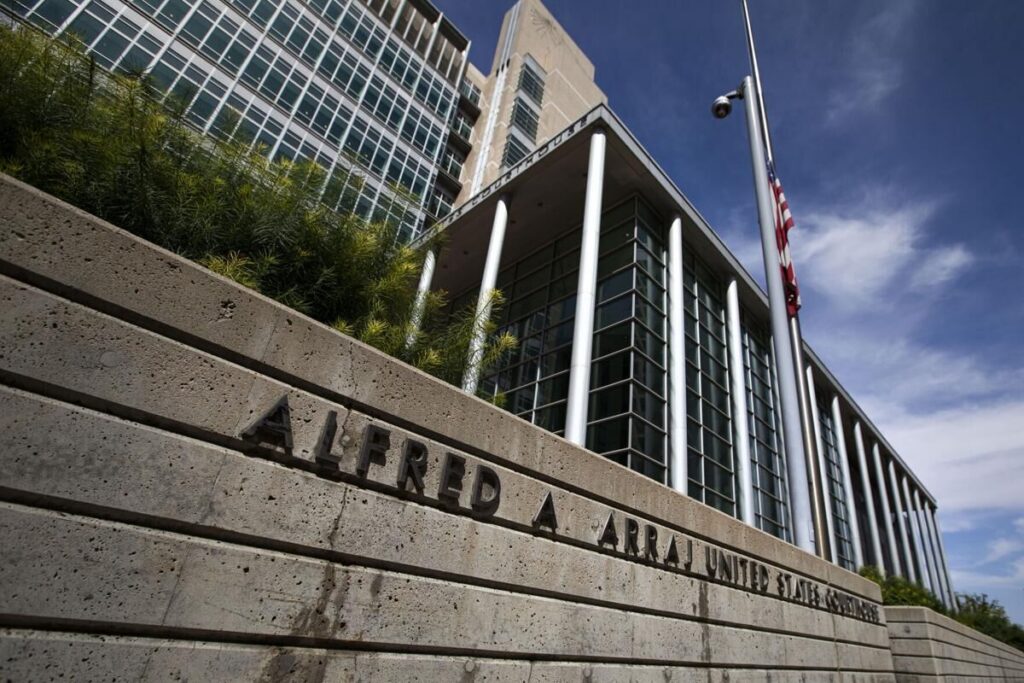
Judge denies Calderon injunction case against Denver, Johnston
Deborah Grigsby
deborah.smith@denvergazette.com
Updated 15 hours ago
A U.S. District Court judge has denied a preliminary injunction in the case of Jessica Calderon, the Denver city employee who won a temporary restraining order preventing the City and County of Denver from terminating her amid the 2025 citywide...

10th Circuit partially revives lawsuit over 2020 Denver protest injuries
Michael Karlik
michael.karlik@coloradopolitics.com
Updated 1 day ago
The Colorado-based federal appeals court revived a man’s claims against Denver on Friday after concluding a trial judge resolved the case in the city’s favor without analyzing two of the three instances of alleged excessive force and other constitutional violations....
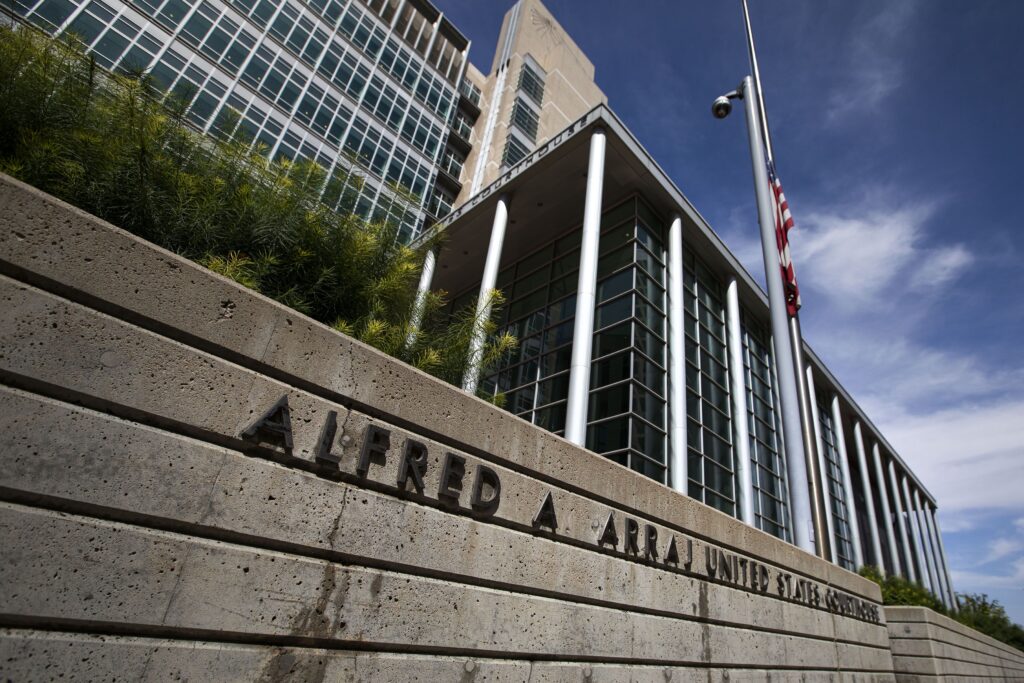
Federal judges find Colorado immigration judge violated several orders
Michael Karlik
michael.karlik@coloradopolitics.com
Updated 2 days ago
Multiple federal judges in Colorado have freed people from immigration custody after determining that one immigration judge violated their directives for properly conducting bond hearings. For nearly a year, Colorado’s U.S. District Court has faced a flood of habeas corpus petitions...

Misconduct complaints from ex-Colorado judicial discipline director dismissed against federal judges
Michael Karlik
michael.karlik@coloradopolitics.com
Updated 4 days ago
The administrative body for the Denver-based federal appeals court upheld a finding last week that misconduct complaints against Colorado’s chief federal trial judge and the chief appeals judge warranted dismissal and appeared to be a “litigation tactic” by the complaining...

First-ever Red Rocks naturalization ceremony draws most diverse group of new citizens
Michael Karlik
michael.karlik@coloradopolitics.com
Updated 2 days ago
Colorado’s federal trial court held its first-ever naturalization ceremony for nearly 300 new citizens on Thursday at Red Rocks Park and Amphitheatre. “We’re doing it to commemorate the 250th anniversary of the Declaration of Independence and the United States. Red...

Jeffco taxpayers could be on the hook for a possible child sex assault settlement
Matt Kyle
matt.kyle@denvergazette.com
Updated 4 days ago
Taxpayers may end up on the hook for a child sexual assault settlement, possibly worth up to $15 million, after Jeffco Public Schools failed to notify its insurance company in a timely manner about the case. The incident stems from...
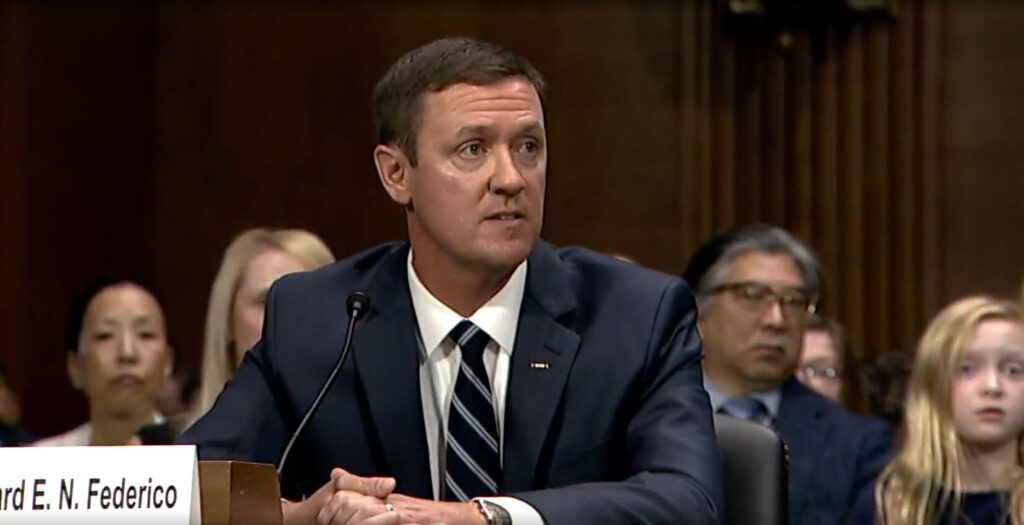
10th Circuit finds no fair housing violation by Littleton landlord for worker’s alleged rape of tenant
Michael Karlik
michael.karlik@coloradopolitics.com
Updated 12 hours ago
The Denver-based federal appeals court concluded on Monday that Littleton’s housing authority could not be held liable for a maintenance worker’s alleged rape of a tenant, as the worker’s employment did not provide any special access to the victim. A...
PREV
PREVIOUS

Advocates diametrically disagree on imprisonment's role in response to fentanyl crisis
Fighting through tears, Jessica Chavez recounted before a panel of Colorado lawmakers how her daughter, Yesenia, fatally overdosed in July after taking a fentanyl pill she thought was Percocet. Before her death, Yesi, as her friends called her, had texted her family’s pastor, Chavez told lawmakers. The 21-year-old told him that she wanted “to do […]
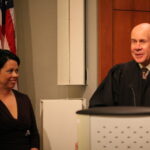
Jurors hear from victim of alleged corporate conspiracy in ongoing DaVita trial
After a week of calling corporate executives to testify and airing communications between the enablers of an alleged white-collar conspiracy, the government’s attorneys on Tuesday closed their case by letting the jury hear from one victim of the scheme. Elliot Holder, a self-described mid-level employee of kidney care company DaVita, Inc., recounted his experience interviewing […]