

COVER STORY | Contrition: Amid conflicts of interest, judges in Colorado correct course

Last September, The Wall Street Journal revealed that across the country, at least 131 federal judges had violated the law since 2010 by handling cases in which they or their family held an undisclosed financial stake in one of the parties to the litigation.
Some judges had a conflict in a single case. Others faced substantially more, such as the chief trial judge in the Eastern District of Texas, who handled 138 cases despite his and his wife’s financial conflicts. The revelations even made their way into the year-end report on the federal judiciary from U.S. Supreme Court Chief Justice John G. Roberts Jr.
“New judges are schooled on the ethical duties they assume as part of their initial judicial training curriculum. A small number apparently did not take sufficient note and are now learning the lesson,” Roberts wrote critically of the individual judges identified in the reporting.
The WSJ’s bombshell discovery prompted a bipartisan group of lawmakers to push for federal legislation to require judges to report stock trades over $1,000 within 45 days and speed up financial disclosures online. The proposal has already passed the U.S. Senate.
In Colorado, two federal judges failed to recuse themselves despite having financial conflicts: U.S. District Court Senior Judge R. Brooke Jackson acknowledged he or his wife held stock in corporations that were parties to 36 civil cases he handled. Senior Judge Lewis T. Babcock also had one identified conflict.

Since the news broke, Colorado’s federal district court has moved to address the revelations rapidly. Parties who wanted another judge to review the decisions in their cases, for example, received a second opinion. Others chose to let their cases stand as-is.
Jackson, for his part, has been contrite, acknowledging he was in the wrong. He told Colorado Politics he has since created a conflicts list, reviewed all of his cases since taking the bench in 2011 and identified a handful of other cases on his own that were affected by his ethical lapse.
“I have been told that five parties asked that another judge review their files,” he wrote in a February email. “I have no other knowledge of what has occurred with respect to those cases. I believe I have done everything I can to address the situation.”
Gabe Roth, executive director of the judicial reform group Fix The Court, believes there is value to not throwing out cases wholesale in which a judge simply forgot about their investments, but rather in allowing parties to reopen their lawsuits for review by a new set of eyes. He complimented Jackson for the judge’s acknowledgement of his rule-breaking.

“I know that that may not be of any comfort to the parties in the 36 cases,” Roth said, “but I think it’s worth pointing out that, regrettably, such contrition has not been a uniform response to the Journal investigation, as many judges have dug their heels in or said they see ‘nothing wrong’ with their non-recusals.”
Jackson is a Barack Obama appointee who was previously a state trial judge in the First Judicial District of Jefferson and Gilpin counties. At the time of his federal nomination, he served as the chief judge of the judicial district.
Although Jackson last year took a form of semi-retirement known as senior status, he has maintained a brisk schedule. Currently, he is presiding over a three-week criminal trial of Fortune 500 company DaVita, Inc. and its former leader, Kent Thiry, in a first-of-its-kind prosecution. Immediately before that, he oversaw another high-profile trial over Denver’s police response to the 2020 racial justice protests.
The Wall Street Journal published its conflict-of-interest reporting two days before Jackson’s scheduled transition to senior status.
Jackson wrote a detailed memo to the WSJ, which he later provided to Colorado Politics, explaining how he had neglected to recuse himself from handling at least three dozen civil lawsuits despite having a financial investment in one of the parties. He explained that his wife, Liz, handled their financial accounts and she did not know a list of conflicts was necessary.
Jackson, for his part, maintained a “disinterest in the financial stuff,” even though the law governing judicial recusals requires judges to attempt to stay informed about the financial interests of their household.
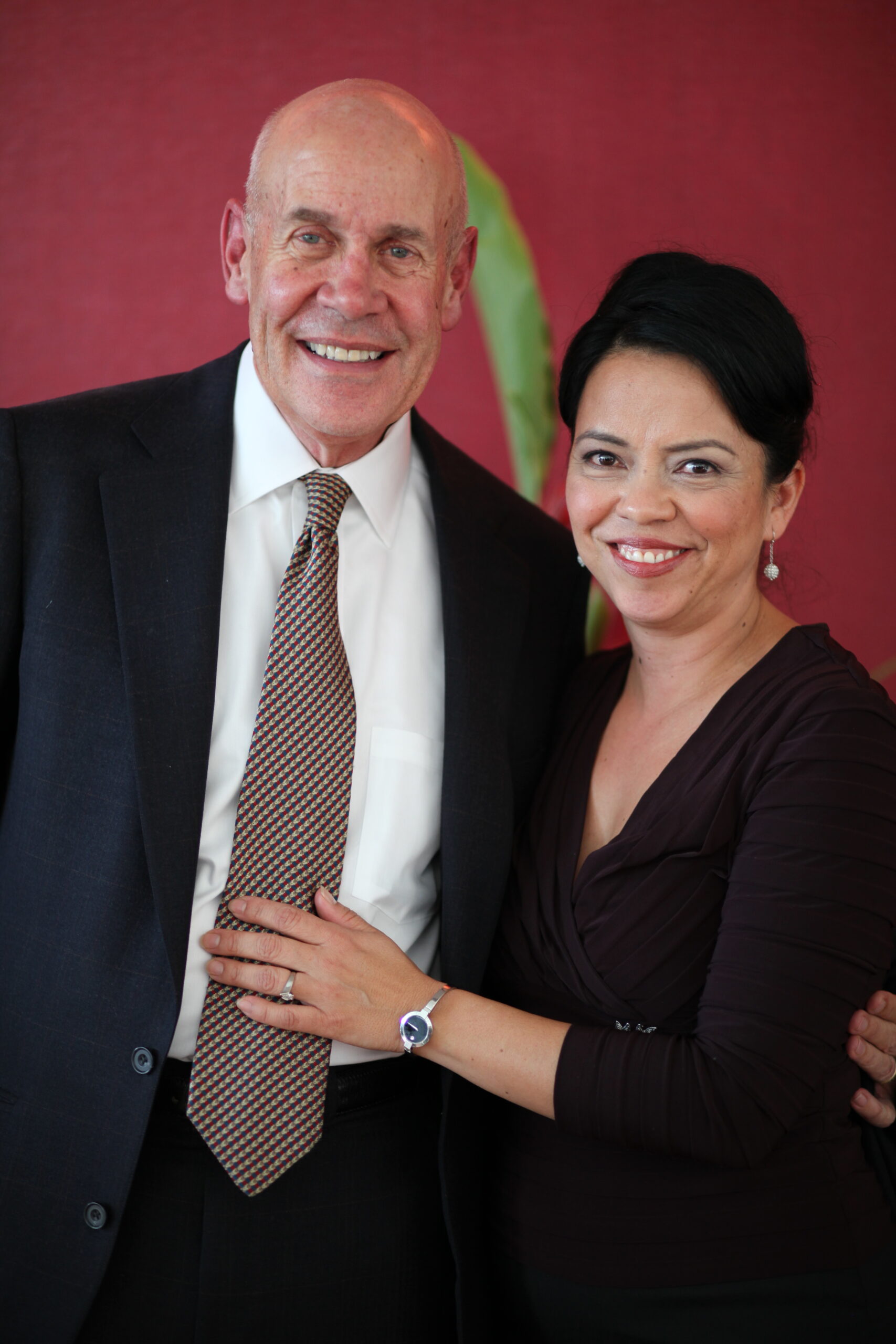
“I hope (I) convinced you that my mistakes were unintended, and that they did not in any instance result in any prejudice to any party,” Jackson wrote in the memo. “In most of the cases I never rendered any substantive ruling, and in those where I did … my rulings were made without knowledge of my or my wife’s stock ownership and were fair rulings based on the law.”
In November, the clerk of the district court sent letters to the parties in each of the 36 cases, plus others where conflicts were identified.
“Judge Jackson informed me that it has been brought to his attention that while he presided over the case he or his spouse owned stock in Wells Fargo. The ownership of stock neither affected nor impacted his decisions in this case. However, this stock ownership would have required recusal under the Code of Conduct for United States Judges,” wrote Clerk Jeffrey P. Colwell in one such letter, inviting the litigants to respond.
As of late March, the most common response was no response.
In 27 cases, some of which concluded nearly a decade ago, Colwell’s letter was the latest and final entry on the docket. In five instances, the letters were returned as undeliverable.
In many circumstances, the cases were resolved or transferred to another jurisdiction before any substantive involvement by Jackson. For example, there were eight similar lawsuits initiated against pharmaceutical corporation Pfizer and assigned to Jackson. The judge and Liz Jackson owned a “small amount” of Pfizer stock around that time, he said, but the cases received transfers to a different federal court within weeks of their filing.
Of the remaining cases, one, involving a patent infringement claim, did not have a letter sent to the litigants. Apple was an early defendant in the litigation at a time when the Jacksons held company stock. The plaintiff and Apple settled their claims in 2018, and Jackson resolved the remaining issues with defendant DISH Network last July. The case is now in front of the U.S. Court of Appeals for the Federal Circuit.
Liz Jackson also owned a small amount of Honeywell International stock when Judge Jackson was assigned a product liability case, stemming from a 2013 vehicle accident that fatally injured four of the eight occupants. Honeywell was one of several defendants, and the plaintiffs agreed to dismiss the company from the lawsuit after Honeywell asserted it had no role in the manufacture, design or testing of the seat belt systems.
“In this matter, as in every other contact we have had with Judge Jackson, Judge Jackson was in all ways fair and impartial,” attorneys for the plaintiffs wrote on Nov. 19, 2021 in response to the clerk’s letter. “It is indicative of Judge Jackson’s integrity that he directed that the parties be notified. There was no prejudice to any party, and we would not have asked for recusal if we had known this information previously.”
In five remaining cases, the court received notice that the plaintiffs requested or were exploring the possibility of a review. Here is where those cases stand:
Mayotte v. U.S. Bank et al.
Mary M. Mayotte took out nearly a half-million-dollar home loan for a mortgage in 2006. A year later, she sought to modify the terms of the loan. A customer service representative for Wells Fargo, her loan servicer, allegedly told Mayotte she had to miss three payments to qualify for a modification.
She did so, but that triggered foreclosure proceedings. After years in state court, a judge gave the bank possession of the home. Mayotte filed suit in federal court, alleging negligence against Wells Fargo and U.S. Bank, as well as violations of the Colorado Consumer Protection Act.
Calling it a “series of unfortunate events,” Jackson sided with the corporate defendants in September 2019, and the U.S. Court of Appeals for the 10th Circuit upheld that decision. The judge and Liz Jackson at the time held Wells Fargo stock among their investments.
After the clerk’s letter last year, Mayotte’s attorney withdrew, citing his other work and the fact that he had “not anticipated this communication.” He asked for an extension on behalf of Mayotte so she could find another attorney. Wells Fargo in response said no review was necessary given the age of the case, the 10th Circuit’s agreement with Jackson’s decision and a lack of any indication of bias.
On Jan. 4, U.S. District Court Senior Judge John L. Kane, a Jimmy Carter appointee assigned to review Jackson’s cases, granted Mayotte more time and indicated she was now responsible for filing any future motions. He gave Mayotte until Feb. 4 to respond. The deadline passed with no further communication from her.
Mayotte told Colorado Politics she was unhappy with Jackson’s behavior during the litigation and intended to seek legal counsel in light of his financial conflicts.
“I am not interested in having a judge who’s one of his cronies review him because we all know where that’s gonna go,” she said.
Johns Manville Corporation et al. v. Knauf Insulation, LLC et al.
Manufacturing company Johns Manville Corporation sued Knauf Insulation for unjust enrichment after a Johns Manville employee went to work for Knauf, allegedly bringing trade secrets with him for the manufacture of fiberglass insulation components. A jury sided with Knauf, finding the formula at issue was not a trade secret.
Johns Manville appealed to the 10th Circuit, challenging Jackson’s decision to admit an email, without full context, saying Knauf was “free to practice” the disputed formula. The appeals court decided there was some merit to the company’s argument, but ultimately deferred to Jackson’s handling of the issue.
Jackson subsequently learned that he owned “a bond of Berkshire Hathaway,” which in turn owns Johns Manville.
In their response to the clerk’s letter, lawyers for Johns Manville indicated the possibility the corporation would ask for a review of the case. They requested further information about the bond, inquiring when Jackson first came to own it and how the financial conflict came to Jackson’s attention.
On Dec. 30, Kane, the reviewing judge, responded that Johns Manville had two options: ask to vacate Jackson’s decision in the case or tell him the matter was closed.
“The requested information is irrelevant to my determination of whether the ownership of any interest, however minute, may have influenced the previous Judge’s decision,” Kane wrote curtly.
Johns Manville responded that it would not seek further review.
Obduskey v. Wells Fargo et al.
Wells Fargo initiated foreclosure proceedings against Dennis Obduskey after he missed several mortgage payments over a four-year span and defaulted on the loan. The company hired the other defendant in the lawsuit, the McCarthy Holthus law firm, for the foreclosure, which sent Obduskey a letter stating it “MAY BE CONSIDERED A DEBT COLLECTOR ATTEMPTING TO COLLECT A DEBT.” Wells Fargo also left door hangers on Obduskey’s home relating to his mortgage.
Obduskey sued, claiming Wells Fargo and McCarthy Holthus violated the Fair Debt Collection Practices Act, which prohibits certain abusive behaviors from debt collectors. Jackson dismissed the lawsuit, ruling that the defendants did not fit the description of debt collectors. The 10th Circuit agreed in January 2018, and the Supreme Court affirmed that decision one year later.
After learning that Liz Jackson’s investment account had shares of Wells Fargo stock, Obduskey responded on Nov. 29, saying his lawyer no longer represented him and he would need until Christmas to determine his next steps.
“Clearly this is an unusual situation,” Obduskey added.
Wells Fargo wrote back, saying its attorney, as well, had moved on. The company argued that no action should be taken, and Jackson had no obligation to recuse himself if he was unaware of his financial conflict.
“While the claims against Wells Fargo were not directly on appeal to the Supreme Court, the fact that the Supreme Court affirmed Judge Jackson’s reasoning as to McCarthy where he interpreted the same statute to answer the question of whether Wells Fargo was acting as a debt collector provides an extra buttress to the presumption that Judge Jackson reached his decision fairly,” lawyers for Wells Fargo wrote.
The case was reassigned to Kane, but there have been no further filings.
Murray v. Ocwen Loan Servicing, LLC et al.
Albert Michael Murray filed suit in May 2016 to prevent foreclosure on his home after defaulting on his mortgage. He asserted numerous claims against Ocwen Loan Servicing and Wells Fargo, including a conspiracy to violate his civil rights, mortgage fraud and fraud on the court.
Jackson dismissed the lawsuit, and the 10th Circuit decided that Murray had filed his notice of appeal beyond the deadline.
Then came the clerk’s letter notifying Murray of Jackson’s stock ownership.
“While it is impossible to know what Judge Jackson might have been thinking, or if the ownership of stock influenced – even resided in the back of his mind – his decision,” Murray wrote on Dec. 9, “the attitude and tone of Judge Jackson’s opinion evidences its own prejudice.” (Jackson had derided a written statement Murray submitted from a Florida businessman as “bizarre.”)
Murray asserted that Jackson had displayed bias toward Wells Fargo and asked that the case be reopened.
Kane issued a seven-page order upholding the dismissal. Noting that Jackson should have recused himself without taking action on the lawsuit, Kane said he reviewed the case anew without deferring to Jackson’s prior findings.
“Upon completion of an independent and comprehensive review of the orders and rulings in this case, I find that the undisclosed ownership of Wells Fargo stock by Judge Jackson or his wife could not have had any influence on the outcome of this case,” Kane concluded in January.
Baker v. Wells Fargo Bank et al.
Brandon Baker sued Blue Credit Union and Wells Fargo, alleging they had discriminated against him based on his religion. Baker identified himself as a “Rastafari/Native American minister/practitioner leader and financial officer of greenfaith Ministry.” His claim stemmed from the credit union’s cancellation of his accounts, purportedly due to his involvement with cannabis.
U.S. Magistrate Judge Nina Y. Wang reviewed the lawsuit first and recommended dismissal, believing Baker had not asserted his claims pursuant to the correct federal law. Jackson adopted Wang’s recommendation for the credit union after neither party objected. Baker’s allegations against Wells Fargo had gone to arbitration.
Baker, in response to the clerk’s letter informing him of Jackson’s conflict, wrote back at length, although few of his complaints pertained to the judge himself.
Kane, upon reviewing the case, called Jackson’s conclusions “unassailable.” He also found Wang’s recommendation to be well-reasoned, and “I cannot conceive of any judge rejecting or modifying it.”
The other conflicted judge: Comcast of Colorado v. O’Connor et al.
Babcock, the other judge with an undisclosed financial conflict, handled a case originally filed in state court. Comcast needed to access the Lafayette property of Andrew J. O’Connor and Mary E. Henry, and the company reportedly had the right to do so. O’Connor and Henry blocked Comcast’s efforts, prompting the company to file a lawsuit against them.
A Boulder County District Court judge granted a temporary restraining order to Comcast to prevent the defendants’ interference with the fiber network project. The defendants transferred the case to federal court, but Comcast sought to return it to the state level.
Babcock sided with Comcast in January 2019. The 10th Circuit upheld the decision on appeal.
Following the publication of the WSJ’s report, O’Connor and Henry quickly moved to reopen the case in federal court.
Babcock, a 1988 appointee of Ronald Reagan, “broke the law and he was corrupt because he owned between $15,001.00 and $50,000.00 of Comcast stock and refused to recuse himself from presiding over the case,” the defendants wrote.
They also called for Babcock’s criminal prosecution, while claiming Comcast’s lawyers knew about Babcock’s financial conflict and were “equally corrupt.”
Four days after the defendants’ motion, U.S. District Court Judge Christine M. Arguello declined to reopen the case, saying Babcock had a “good-faith basis” for his decision.
The defendants responded by attempting to disqualify Arguello from the case. O’Connor and Henry wrote that Arguello, the first Hispanic federal trial judge in Colorado, was nominated “because of affirmative action” and it was impossible for her to be unbiased because of the “corruption inherent” in the district court.
Arguello, a George W. Bush appointee, denied that request, as well, saying that “contrary to defendants’ unsupported assertions, this court has no personal bias or prejudice against any of the parties in this case.”
Comcast and the defendants entered into a settlement agreement in July 2021 for the state court case. After Babcock’s conflict came to light, O’Connor and Henry attempted in Boulder County District Court to get out of the agreement. They also renewed their tactic of trying to get the judge removed from their case.
The chief judge notified O’Connor and Henry that all judges in Boulder County had recused themselves from the case, and would not take any further action.

10th Circuit dismisses woman’s lawsuit following 10-year attempt to undo restraining order
Michael Karlik
michael.karlik@coloradopolitics.com
Updated 2 days ago
The Denver-based federal appeals court rejected a woman’s challenge on Friday to a restraining order imposed on her more than a decade ago, finding that she cannot credibly claim she will be prosecuted for violating the restraining order through her...
10th Circuit dismisses woman’s lawsuit following 10-year attempt to undo restraining order
Michael Karlik
michael.karlik@coloradopolitics.com
Updated 2 days ago
The Denver-based federal appeals court rejected a woman’s challenge on Friday to a restraining order imposed on her more than a decade ago, finding that she cannot credibly claim she will be prosecuted for violating the restraining order through her...
Colorado equal pay law does not require plaintiffs to allege gender-based retaliation, appeals court finds
Michael Karlik
michael.karlik@coloradopolitics.com
Updated 1 day ago
The 2019 Colorado law aimed at rooting out pay discrimination on the basis of sex does not require a plaintiff to allege their employer retaliated against them for sex- or gender-related reasons, the state’s second-highest court decided on Thursday. Lawmakers...
Hudson faces lawsuit over ICE detention facility
Nicole C. Brambila
nicole-c-brambila@coloradopolitics.com
Updated 2 days ago
A nonprofit organization filed a lawsuit against the Town of Hudson Wednesday, challenging plans to reopen a former federal prison in the town as a U.S. Immigration and Customs Enforcement detention facility. Together Colorado, along with Janet E. Carlson, filed...
Senate committee advances Trump’s 10th Circuit nominee, as Domenico responds to questions about delays
Michael Karlik
michael.karlik@coloradopolitics.com
Updated 2 days ago
The U.S. Senate Judiciary Committee advanced President Donald Trump’s nominee to the Denver-based federal appeals court on Thursday by a party-line vote of 12-10. U.S. District Court Judge Daniel D. Domenico, who was Trump’s first-term appointee to Colorado’s federal trial...
Colorado justices to hear embryonic donation dispute
Michael Karlik
michael.karlik@coloradopolitics.com
Updated 3 days ago
The Colorado Supreme Court announced on Monday that it will decide whether lower court judges properly applied its framework for adjudicating disputes over the fate of pre-embryos, in which one person wants to use them to become a parent and...

Isolation, emotion, persona: Colorado judicial programming prepares people for life on the bench
Michael Karlik
michael.karlik@coloradopolitics.com
Updated 3 days ago
As a trial judge and now as a member of the Colorado Supreme Court, Justice Carlos A. Samour Jr. has heard the view that being a judge is isolating. “In neither court have I felt isolated. I’ve always interacted a...

Federal judge dismisses Colorado county sheriff’s challenge to law limiting immigration cooperation
Michael Karlik
michael.karlik@coloradopolitics.com
Updated 1 day ago
A federal judge dismissed a challenge from Mesa County Sheriff’s Office leaders last week to a Colorado law limiting public employees’ cooperation with immigration authorities, concluding that the plaintiffs did not allege they engage in any conduct that the law...
10th Circuit raises bar for fraud victims to sue debt collectors over inaccurate information
Michael Karlik
michael.karlik@coloradopolitics.com
Updated 24 hours ago
The Denver-based federal appeals court wiped away a jury’s $500,000 award to a fraud victim on Monday and made it more difficult for consumers to hold companies liable for disseminating inaccurate credit information. The Fair Credit Reporting Act regulates credit...
Montezuma County judge’s censure, suspension approved by discipline panel
Michael Karlik
michael.karlik@coloradopolitics.com
Updated 4 days ago
A three-member disciplinary panel accepted, on Monday, an agreement between a Montezuma County judge and the Colorado Commission on Judicial Discipline that specifies he will receive a censure, a suspension, and additional education for his admitted instances of misconduct. Under...
PREV
PREVIOUS

Capitol M: grilling edition | Week of April 9, 2022
The lighter side of the state Capitol, usually. Steve Fenberg of Boulder had big shoes to fill after taking the reins as Senate president, but none bigger than how he matches up at the grill with his predecessor. That became the issue on April 6 when the state Senate took up the Long Appropriations Bill, […]

Colorado legislators question DMV's targeting of historic military vehicles
When Dick Olmstead bought a used 1997 AM General Hummer in 2002, he never thought the Colorado Department of Revenue Division of Motor Vehicles (DMV) would send him a letter cancelling his vehicle title and telling him he could no longer drive it on the public highways. But it happened. And not just to him. […]