

‘Tell-your-boss’ mandate at center of witness testimony in DaVita trial
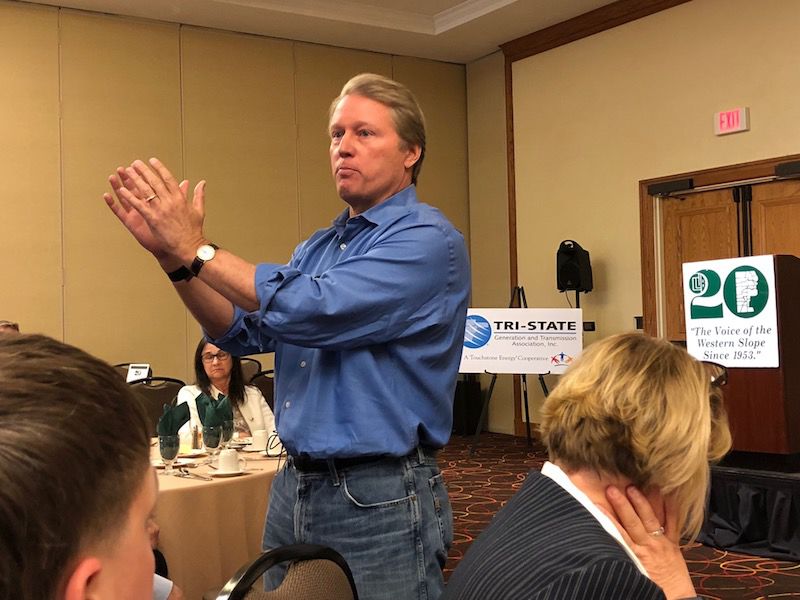
Jurors learned that Kent Thiry, the former leader of DaVita, Inc., was the person who devised the unusual – and illegal, prosecutors say – requirement that DaVita’s senior employees tell their superiors that they were thinking of leaving before they could even be considered for positions at a competitor company.
The “tell-your-boss” feature, as parties in the courtroom nicknamed it, is key to the U.S. Justice Department’s argument that Thiry and DaVita intended to restrict the movement of executive-level employees between companies. Such a restriction, known legally as “allocating the market,” could be a criminal violation of a century-old antitrust law if the jury agrees with the government’s case.
For the third day in a downtown Denver courtroom, jurors heard about the first of three conspiracy counts the Justice Department’s Antitrust Division has alleged against the defendants. In 2012, Thiry made an agreement with his counterpart at Surgical Care Affiliates that the two companies would not solicit each other’s high-level employees.
Andrew Hayek, the chief executive officer of SCA at the time, testified that he agreed to those terms feeling that it would cut off future business opportunities for his company if he was “on the wrong side” of DaVita and Thiry.
“I think what upset him was losing senior executives, and especially so when someone like me did it, who had worked there and had knowledge and relationships and an unfair advantage. It felt like stabbing him in the back,” Hayek said.
Hayek, while maintaining his business relationship with Thiry, nonetheless was on the receiving end of Thiry’s hostility when he left DaVita in 2008 to lead SCA. Hayek told Thiry about his plans to leave after he had a job offer in place, he said, because he questioned “how Mr. Thiry would respond.” Thiry apparently responded by approaching one of the people who had recruited Hayek to SCA.
“Mr. Thiry had requested that the offer be either pulled or frozen,” Hayek recalled.
Jurors learned that normally, non-solicitation agreements stipulate that executives leaving a company cannot recruit their former colleagues right away to their business. There is a time-bound component to that prohibition. Although Hayek had such an agreement leaving DaVita, he was under the impression that, because DaVita and SCA did not provide the same services, they were not competitors for clients.
They were competitors, however, for healthcare executives. In that vein, Hayek testified that his unique agreement with Thiry – referred to alternately as a “gentlemen’s agreement” or “no-poach agreement” – was intended to reduce the movement of employees.
“Who proposed that part about requiring a supervisor notification?” asked Justice Department attorney Megan S. Lewis.
“Mr. Thiry,” Hayek responded. He acknowledged that if a DaVita executive wanted to be considered for a position at SCA, Hayek felt obligated to turn them away unless the candidate informed his or her DaVita supervisor.
One of Hayek’s early hires as CEO, Michael Rucker to be SCA’s chief operating officer, also testified about his experience moving from DaVita to SCA. He recalled the non-solicitation agreement with DaVita being discussed openly at SCA after 2012. In one instance, a DaVita executive, Jung Lee, applied on his own initiative to an SCA position.
“There was some question as to how we were going to proceed,” Rucker said. “I wanted to clarify how we would apply the gentlemen’s agreement in this specific situation.”
In an email Rucker read to the jury, he wrote that he spoke with Hayek and “we landed on a more strict interpretation (of the agreement). I suggest that I call (Lee) to let him know if he wants us to formally consider him he would need to go to his one-up/supervisor to let him know he is actively looking to leave and exploring alternatives so that they could attempt to retain him.”
“Ok,” responded the human resources head. “I think we can safely say this ain’t happening.”
On cross-examination, Rucker acknowledged that there was recruitment happening between DaVita and SCA post-2012 even with the non-solicitation agreement in place.
In the morning, jurors heard the defense’s cross-examination of Bridget “Bridie” Fanning, who oversaw SCA’s high-level recruitment from late 2014 through mid-2016. Fanning testified on Tuesday that she had never before seen the “tell-your-boss” provision in a non-solicitation agreement and that it made her “uncomfortable.”
Defense attorney Tom Melsheimer suggested that the non-solicitation agreement could have actually enhanced competition for DaVita and SCA – not in recruiting employees, but rather in retaining them. The companies could have offered executives better pay or incentives to stay once they informed their boss they were under consideration elsewhere.
Fanning disputed that characterization, saying it could jeopardize an employee’s current job if they were forced to disclose to their superiors that they were in the early stages of applying for another position.
“If you’re gonna go and tell your employer you’re looking, you’re either resigning or you’re playing a game,” she said. “I think it’s a dangerous game. But people do play the game if they’re highly valued.”
“You have to have a certain amount of confidence to go to your boss and negotiate on behalf of yourself, right?” Melsheimer countered.
“You have to have confidence in your employer,” Fanning corrected him. “Some CEOs will say, ‘OK, off you go then.’ … That’s why I say the game’s dangerous, right? You’re putting a lot of trust in what the employer’s gonna do with that information.”
Melsheimer also asked why, in the tens of thousands of emails Fanning had turned over to federal authorities, she had never pushed back on the non-solicitation agreement. Fanning said that would have been a topic for a face-to-face conversation with Hayek.
Jurors submitted the most questions to Fanning of any witness to date. She clarified how no-poach agreements operate generally, the parameters under which SCA could hire DaVita employees and whether all DaVita subsidiaries were covered under the gentlemen’s agreement.
“My understanding was the agreement was total. Anything that Kent Thiry was responsible for,” she said.
Fanning, Hayek and Rucker each acknowledged that the government had agreed not to criminally prosecute them. The United States government is currently pursing a similar case against SCA in the Northern District of Texas for its non-solicitation agreement with DaVita and one with another company. The same prosecutors from the Antitrust Division are handling the cases in both Texas and Colorado.
If convicted of all three counts of violating the Sherman Antitrust Act, Thiry could be sentenced to up to 10 years in prison per count.
The trial will continue on Thursday with the defense’s cross-examination of Hayek.
The case is United States v. DaVita, Inc. et al.


Judge grants partial injunction to GEO in fight against state health inspection law
Kyla Pearce
kyla.pearce@gazette.com
Updated 2 hours ago
A judge ruled Thursday that The GEO Group does not have to follow parts of a new state law requiring more frequent health and safety inspections at the U.S. Immigration and Customs Enforcement processing center in Aurora. Under the order...

Parker man faces 20 years to life for serial sexual assaults
Nicholas Fogleman
nicholas.fogleman@denvergazette.com
Updated 4 hours ago
A 25-year-old Parker man who sexually assaulted three women in 2025 pleaded guilty Wednesday and will serve 20 years to life in prison. Javier Rodriguez-Andrade pleaded guilty to charges stemming from three sexual assaults involving women ages 19 to 24. ...
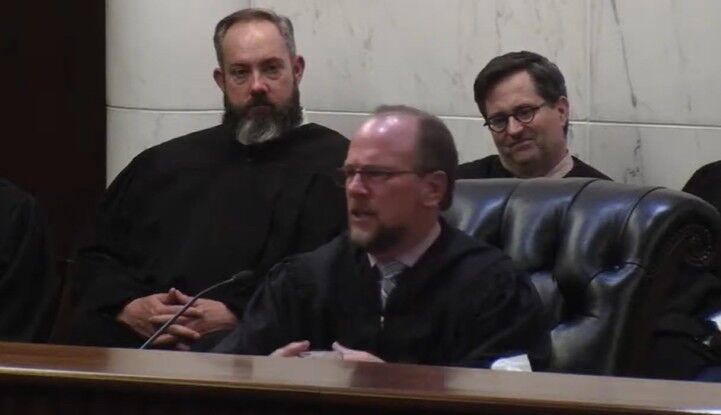
Divided appeals court upholds warrantless DNA collection in Colorado cold case, cautions of government overreach
Michael Karlik
michael.karlik@coloradopolitics.com
Updated 3 hours ago
Colorado’s second-highest court upheld the warrantless collection of a suspect’s DNA from a discarded soda can as constitutional on Thursday, while warning about potential abuse of DNA privacy in the absence of further guardrails. By 2-1, a three-judge Court of...

Man charged in Northglenn homicide of wife
Matt Kyle
matt.kyle@denvergazette.com
Updated 4 hours ago
A man has been formally charged with murder and burglary relating to a homicide last week in Northglenn. Alexei Munive-Rodriguez, 48, was arrested Sunday after he was at large following the homicide, which occurred Friday. Police were dispatched around 10:30...

10th Circuit grants immunity to officers for fatal Manitou Springs shooting
Michael Karlik
michael.karlik@coloradopolitics.com
Updated 6 hours ago
The Denver-based federal appeals court ruled on Wednesday that responding officers from Manitou Springs and El Paso County cannot be held constitutionally liable for shooting and killing a man after a 20-minute standoff. Wilford Deweese allegedly pulled out a gun...
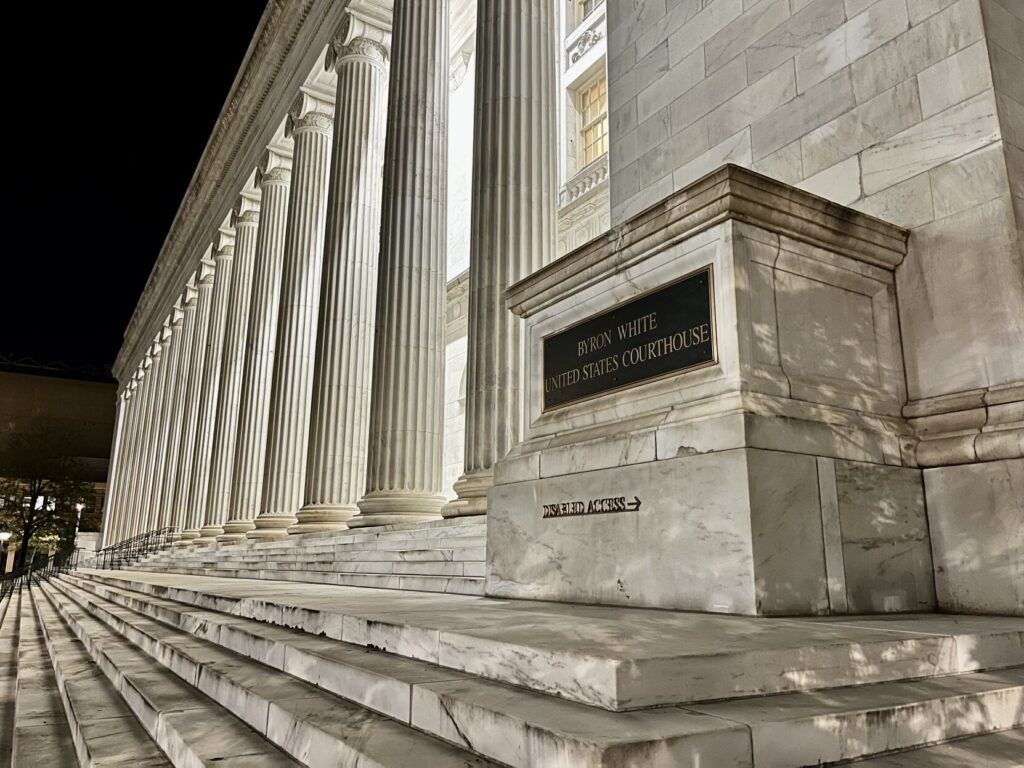
10th Circuit rejects invitation for full-court review of tax-avoidance case
Michael Karlik
michael.karlik@coloradopolitics.com
Updated 24 hours ago
The Denver-based federal appeals court declined to reconsider the standards for holding entities liable for their tax-avoidance schemes, with a majority of judges voting against full-court review on Monday. In April, a three-judge panel of the U.S. Court of Appeals...
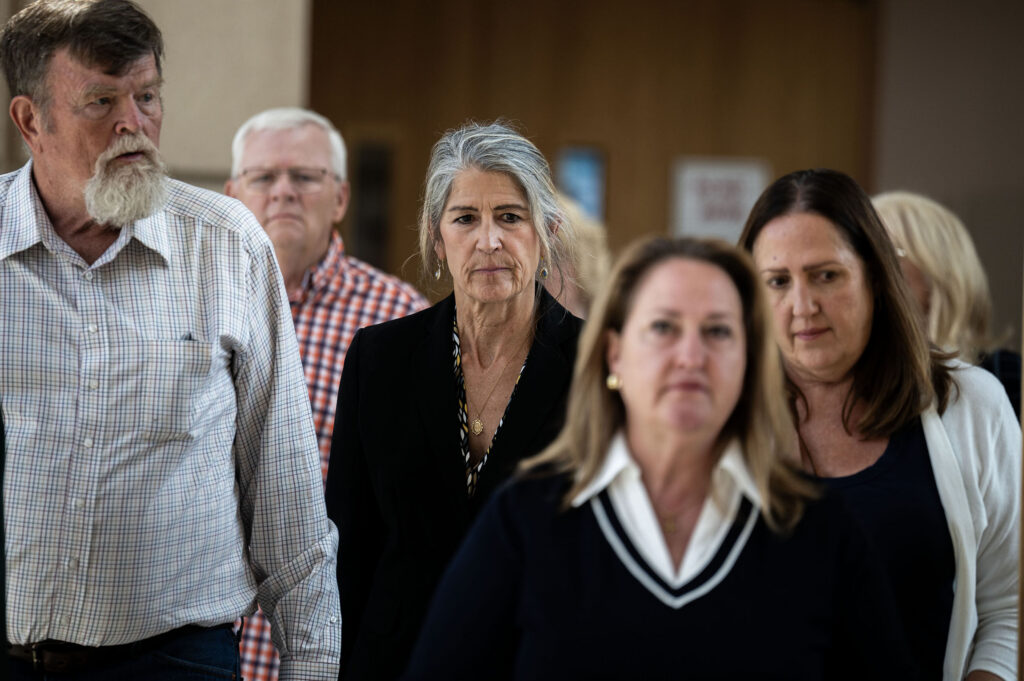
Colorado judge blasts state forensics lab in dismissing child sex case
Jenny Deam
jenny.deam@gazette.com
Updated 1 day ago
In a potentially widely consequential action, a Weld County district judge dismissed a child sexual assault case, citing the ongoing scandal at the Colorado Bureau of Investigation’s forensic lab that “has left a dark mark on the history of Colorado...
10th Circuit sympathetic to Colorado consumer protection law governing interest rates
Michael Karlik
michael.karlik@coloradopolitics.com
Updated 2 days ago
Members of the Denver-based federal appeals court appeared sympathetic on Tuesday to Colorado’s assertion that it can lawfully require certain out-of-state banks to abide by the state’s own ceilings on interest rates when they lend to consumers in Colorado. The...
Colorado justices to decide insurance companies’ obligation to disclose relevant policies
Michael Karlik
michael.karlik@coloradopolitics.com
Updated 1 day ago
The Colorado Supreme Court announced on Monday that it will decide whether an insurance company violated state law by withholding an at-fault driver’s policy for nearly a year when there was no dispute that the policy was not in effect...

Judicial performance evaluations released, Montezuma County judge disciplined | COURT CRAWL
Michael Karlik
michael.karlik@coloradopolitics.com
Updated 3 days ago
Welcome to Court Crawl, Colorado Politics’ roundup of news from the third branch of government. Colorado’s citizen-led judicial performance commissions released their voter narratives for the judges standing for retention in November, plus a disciplinary panel imposed consequences on a...
PREV
PREVIOUS

Colorado to respond to recall efforts for Alamosa district attorney
ALAMOSA ? The Colorado Secretary of State’s Office has until Tuesday to respond to a statement of grounds for a recall of 12th Judicial District Attorney Alonzo Payne, who has been the top law enforcement officer for the San Luis Valley area for 14 months. For weeks, Payne has been the focus of Alamosa City Council […]

Colorado Senate adds roughly $800 million, passes $37.2 billion state spending plan
Colorado senators on Thursday approved a state budget for next year that ballooned to $37.2 billion after they added more than $783 million in new spending. The final vote on House Bill 1329 stood at 22-12, with Joint Budget Committee member Sen. Bob Rankin of Carbondale and Sen. Kevin Priola of Henderson, both Republicans, supporting […]