

Former Denver police academy trainer disputes claims about leadership during 2020 protests

A former Denver police lieutenant backpedaled Wednesday on statements he made to the city’s police watchdog agency about alleged failures of leadership during the 2020 George Floyd protests, criticizing how the Office of the Independent Monitor characterized his opinions in a memo prepared for an investigation into the protests.
Former training academy Lt. John Coppedge took the stand briefly in the ongoing trial over how police handled the demonstrations sparked by George Floyd’s murder in Minneapolis, though he said he was not present at the protests.
Under cross-examination, he said his characterization that officers reacted to what unfolded on the ground “without any sort of leadership” was “within the context of a hypothetical discussion about what I saw on the news.”
The federal case, now in its third week of trial, claims police used excessive force against protesters in 2020 with dangerous and indiscriminate deployment of less-lethal munitions. The Office of the Independent Monitor released a report in the fall of 2020 that described police’s use of chemical agents and kinetic projectile weapons “troubling,” and dozens of memos based on interviews with officers were prepared during the investigation.
The case seeks to hold Denver accountable for failing to train officers properly for responding to the protests.
The Police Department has been criticized for using force against whole crowds rather than isolating individual people who were behaving violently for appropriate force or arrest. The Office of the Independent Monitor’s report found police used force against people who were not being physically aggressive, fired munitions at people’s heads, faces and groins – all prohibited parts of the body – and continued using chemical agents after crowds dispersed.
The department has disciplined few officers for inappropriate force during the protests. Testimony earlier in the trial revealed many internal investigations prompted by complaints about use of force were closed because the individual officers at issue couldn’t be identified.
Denver opens defense in trial over 2020 protests with new DPD commander of special operations
Coppedge disputed the memo’s description of a statement that the Police Department’s leadership had failed to recognize during the protests when officers on the front lines had taken too much abuse, with the suggestion that it heightens the risk of their tempers running short and officers using their weapons in retaliation against protesters.
Coppedge said on cross-examination that had been a hypothetical conversation during his interview rather than specifically about failures during the George Floyd protests.
“I said … if any human being is left standing for 12 hours, multiple days in a row, and subjected to violence, abuse … eventually, over days, their cognition will start to flip and emotions will start to take over.”
Pressed by Arnold & Porter partner Tim Macdonald, Coppedge said he’s not sure training can overcome those wearing effects of mental fatigue.
“Could it help?” Macdonald asked.
“It couldn’t hurt,” Coppedge replied.
Jury hears from former officer Monday in federal trial over Denver’s policing of 2020 protests
Coppedge reiterated that his opinions about training he gave during his interview were based on theoretical settings, and suggested the Office of the Independent Monitor went in search of misconduct during its investigation.
“There’s stuff missing. We had a lengthy conversation about crowd dynamics, and that’s nowhere in there,” he said.
Coppedge was asked a single question by the city’s defense attorneys: Did anyone in the Office of the Independent Monitor check whether his opinions and impressions were captured accurately in the memo of his interview?
“No,” he said.
Coppedge didn’t dispute the memo’s characterization that he had described the Police Department’s response to the George Floyd protests as a “total leadership failure,” but Macdonald didn’t go further on that line of questioning.
The trial is scheduled through the end of this week.


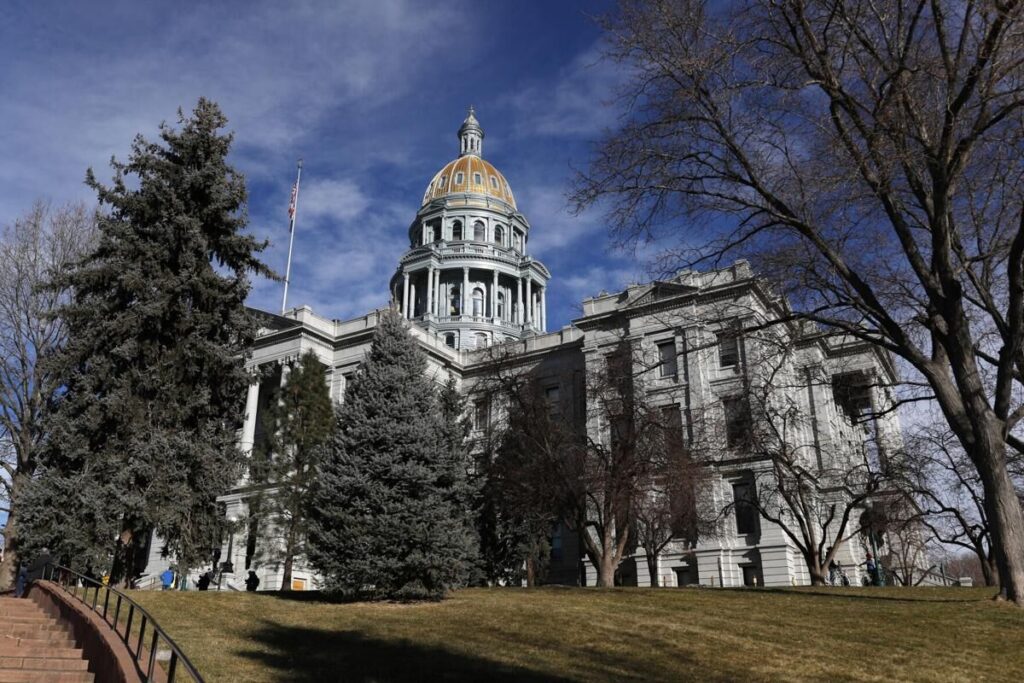
Colorado board permits state to appeal injunction against arthritis drug price cap
Marissa Ventrelli
marissa.ventrelli@coloradopolitics.com
Updated 13 hours ago
A Colorado board voted Friday to allow the Attorney General’s Office to fight an injunction against a price cap on a drug that treats arthritis. A U.S. district court judge had granted the company Amgen a preliminary injunction, temporarily blocking...
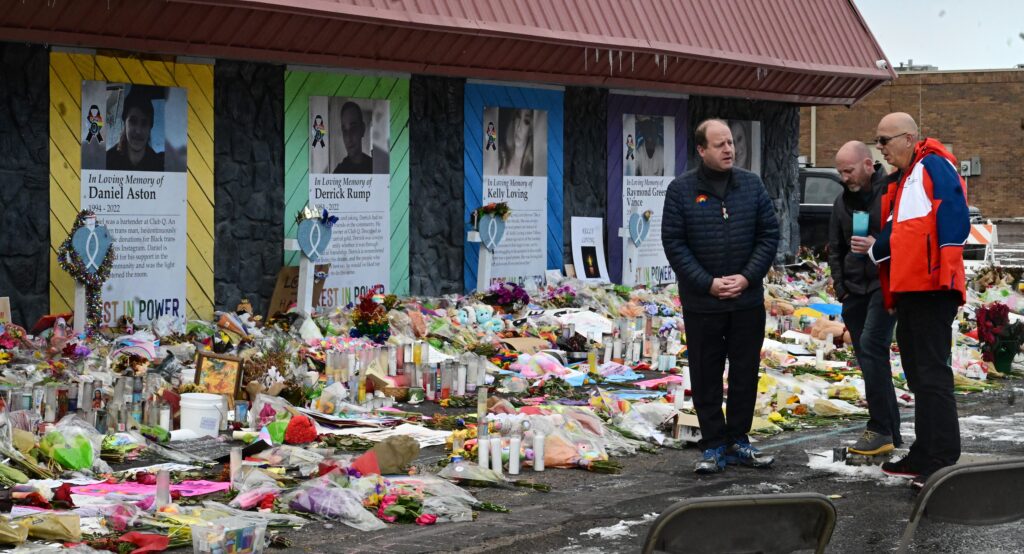
Federal judge rejects constitutional claims, ‘expressions of hatred’ by Club Q defendant
Michael Karlik
michael.karlik@coloradopolitics.com
Updated 13 hours ago
A federal judge rejected a defendant’s claims that he received constitutionally ineffective assistance of counsel while facing federal hate crime and firearms charges for murdering five people at a Colorado Springs LGBTQ nightclub in 2022. Anderson Lee Aldrich is serving...

Divided 10th Circuit upholds Colorado congestion fee on car rentals
Michael Karlik
michael.karlik@coloradopolitics.com
Updated 9 hours ago
The Denver-based federal appeals court concluded on Monday that a 2024 “congestion impact fee” that lawmakers imposed on short-term vehicle rentals did not conflict with a federal prohibition on certain airport-related charges. Beginning in the 1970s, Congress began limiting the...
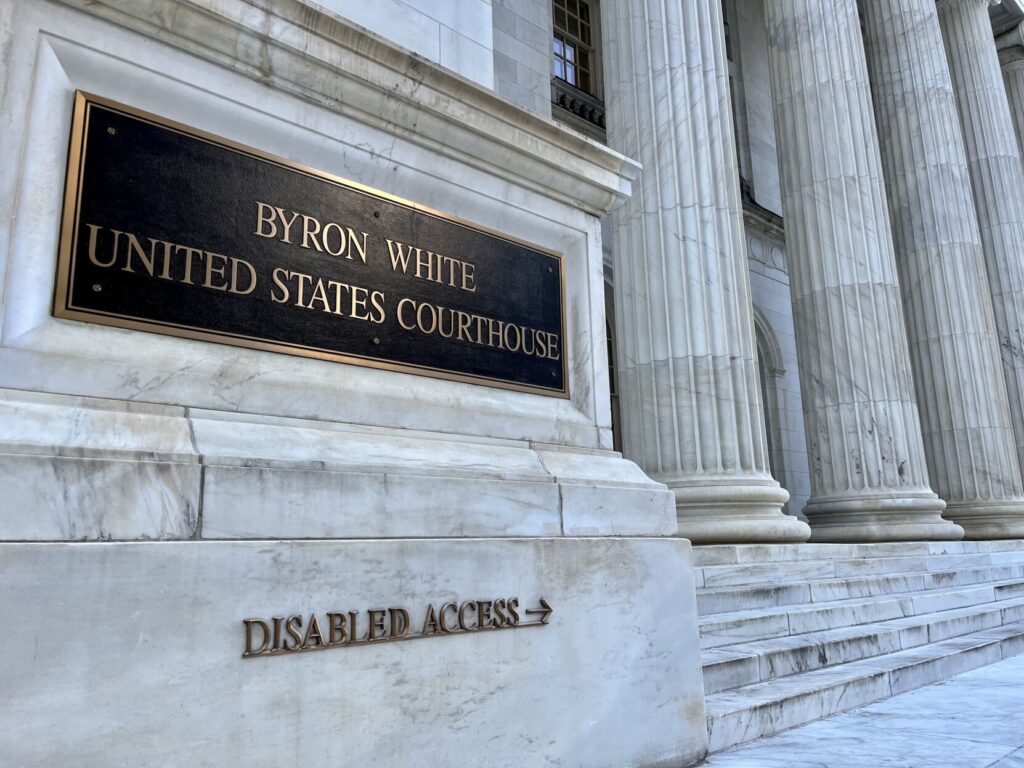
10th Circuit dismisses woman’s lawsuit following 10-year attempt to undo restraining order
Michael Karlik
michael.karlik@coloradopolitics.com
Updated 4 days ago
The Denver-based federal appeals court rejected a woman’s challenge on Friday to a restraining order imposed on her more than a decade ago, finding that she cannot credibly claim she will be prosecuted for violating the restraining order through her...
10th Circuit dismisses woman’s lawsuit following 10-year attempt to undo restraining order
Michael Karlik
michael.karlik@coloradopolitics.com
Updated 4 days ago
The Denver-based federal appeals court rejected a woman’s challenge on Friday to a restraining order imposed on her more than a decade ago, finding that she cannot credibly claim she will be prosecuted for violating the restraining order through her...
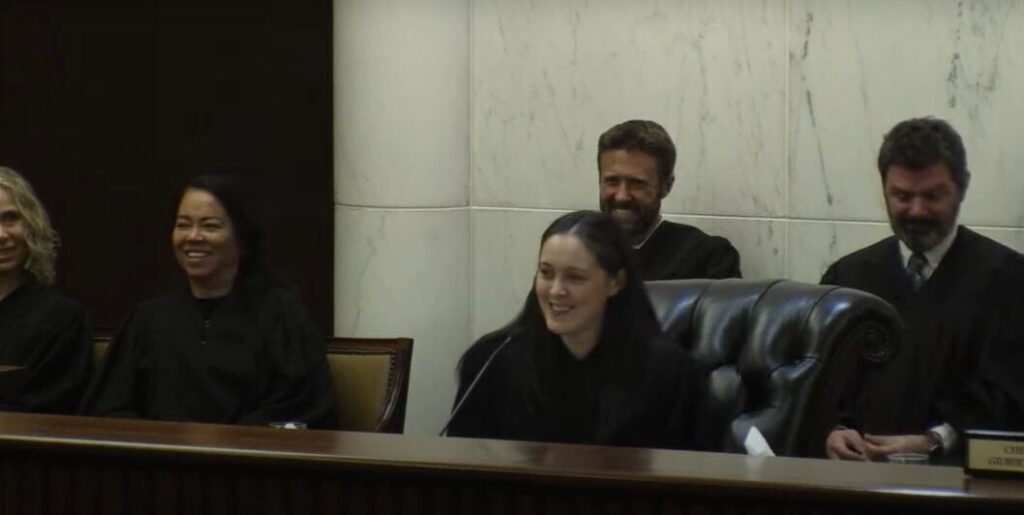
Colorado equal pay law does not require plaintiffs to allege gender-based retaliation, appeals court finds
Michael Karlik
michael.karlik@coloradopolitics.com
Updated 3 days ago
The 2019 Colorado law aimed at rooting out pay discrimination on the basis of sex does not require a plaintiff to allege their employer retaliated against them for sex- or gender-related reasons, the state’s second-highest court decided on Thursday. Lawmakers...
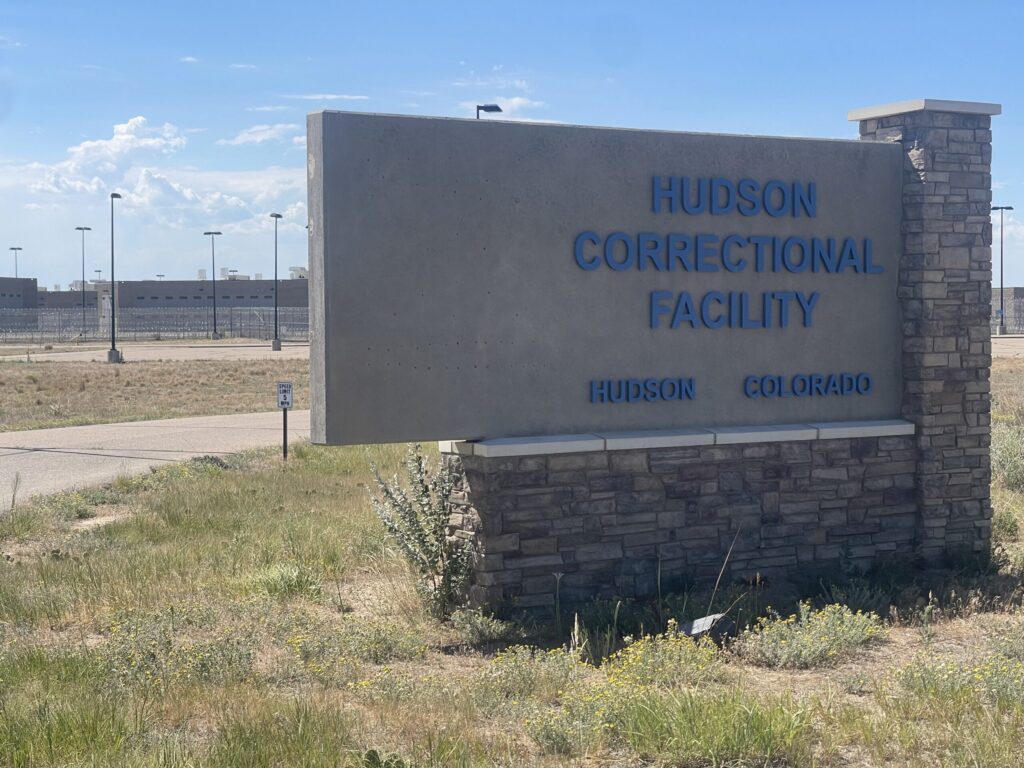
Hudson faces lawsuit over ICE detention facility
Nicole C. Brambila
nicole-c-brambila@coloradopolitics.com
Updated 4 days ago
A nonprofit organization filed a lawsuit against the Town of Hudson Wednesday, challenging plans to reopen a former federal prison in the town as a U.S. Immigration and Customs Enforcement detention facility. Together Colorado, along with Janet E. Carlson, filed...
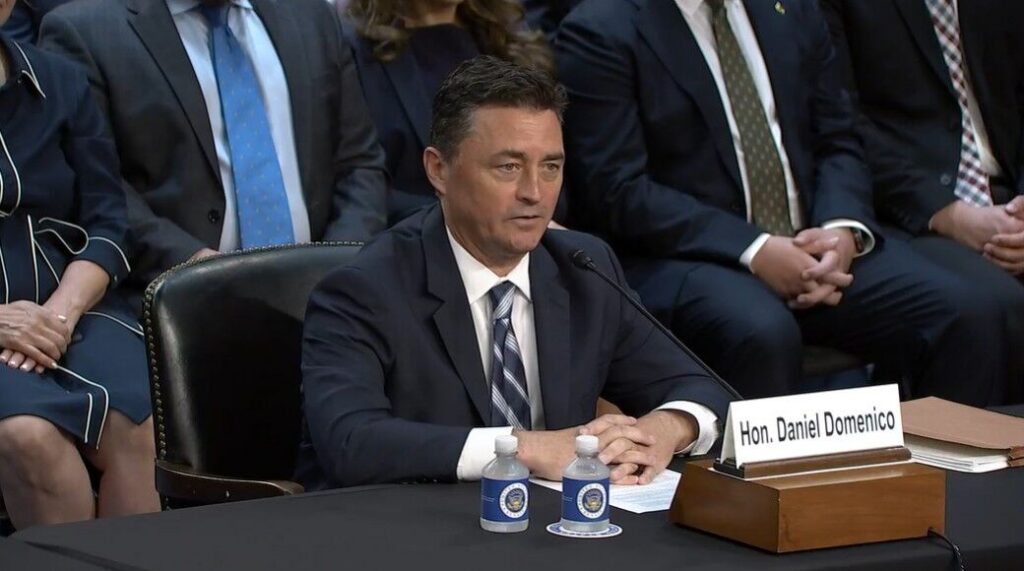
Senate committee advances Trump’s 10th Circuit nominee, as Domenico responds to questions about delays
Michael Karlik
michael.karlik@coloradopolitics.com
Updated 4 days ago
The U.S. Senate Judiciary Committee advanced President Donald Trump’s nominee to the Denver-based federal appeals court on Thursday by a party-line vote of 12-10. U.S. District Court Judge Daniel D. Domenico, who was Trump’s first-term appointee to Colorado’s federal trial...
Colorado justices to hear embryonic donation dispute
Michael Karlik
michael.karlik@coloradopolitics.com
Updated 4 days ago
The Colorado Supreme Court announced on Monday that it will decide whether lower court judges properly applied its framework for adjudicating disputes over the fate of pre-embryos, in which one person wants to use them to become a parent and...
Isolation, emotion, persona: Colorado judicial programming prepares people for life on the bench
Michael Karlik
michael.karlik@coloradopolitics.com
Updated 5 days ago
As a trial judge and now as a member of the Colorado Supreme Court, Justice Carlos A. Samour Jr. has heard the view that being a judge is isolating. “In neither court have I felt isolated. I’ve always interacted a...
PREV
PREVIOUS

Former El Paso County Sheriff's lieutenant takes stand on Day 3 of age discrimination trial
Prosecutors on Wednesday tried to prove a former El Paso County Sheriff’s lieutenant who played a Judy Collins song from his office was misinterpreted as a sly dig against Sheriff Bill Elder and other Sheriff’s Office employees. Timothy Williams testified that when he played Collins’ recording of “Send in the Clowns” from his office on Nov. […]

Colorado Republican Heidi Ganahl launches women's coalition to support gubernatorial run
Republican Heidi Ganahl’s gubernatorial campaign on Wednesday announced the formation of a statewide coalition of women supporting her bid to oust Colorado Gov. Jared Polis, the Democratic incumbent. Dubbed the “Ganahl Gals,” the organization plans to “identify, recruit and empower” women to help Ganahl get elected and already boasts more than 600 members ahead of […]