

Former El Paso County Sheriff’s lieutenant takes stand on Day 3 of age discrimination trial
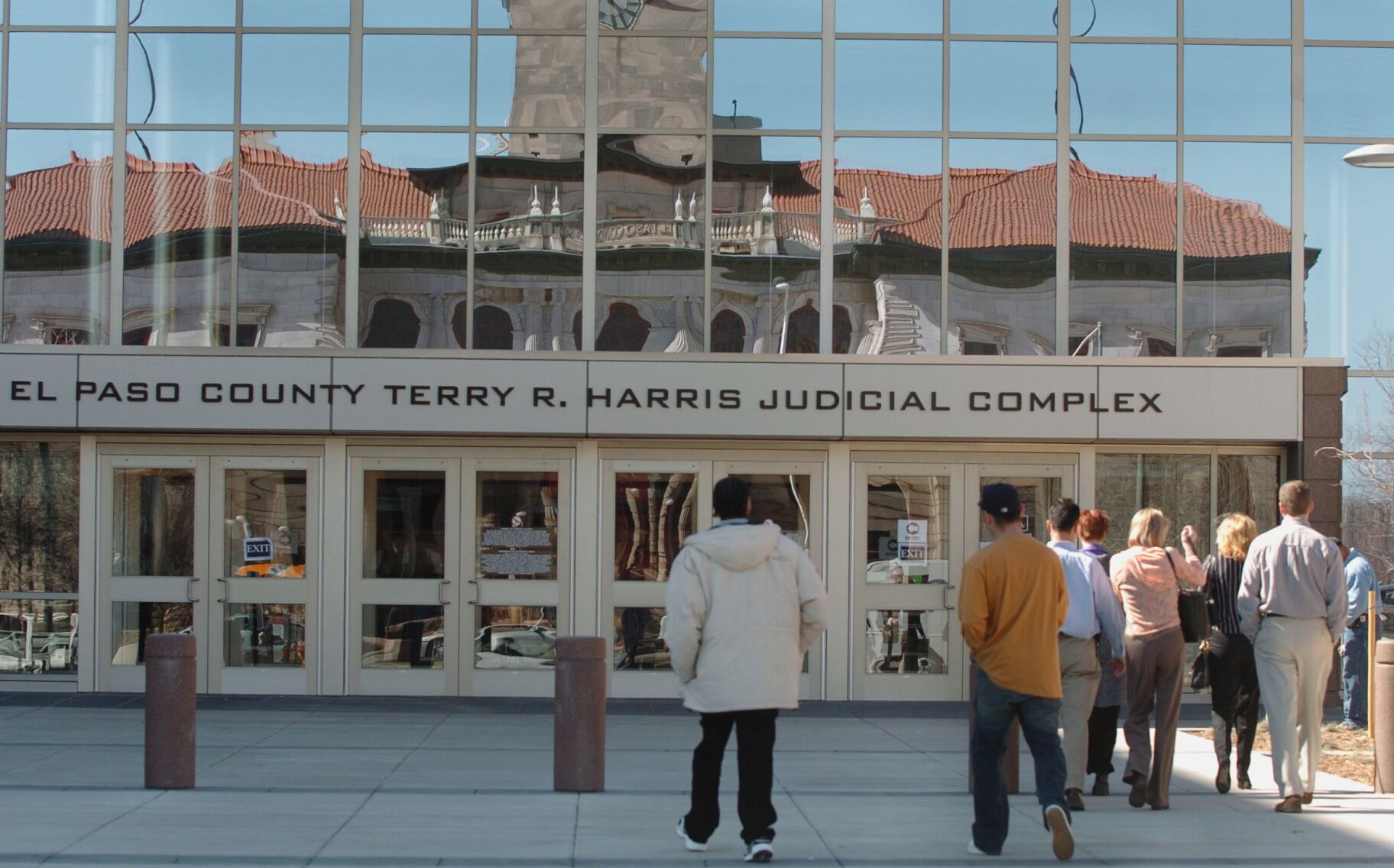
Prosecutors on Wednesday tried to prove a former El Paso County Sheriff’s lieutenant who played a Judy Collins song from his office was misinterpreted as a sly dig against Sheriff Bill Elder and other Sheriff’s Office employees.
Timothy Williams testified that when he played Collins’ recording of “Send in the Clowns” from his office on Nov. 3, 2016, he was paying homage to his late father and it was not intended to criticize Elder or the agency. The incident – which Elder testified this week was his “last straw” in what he said was a pattern of “insubordinate” and “disrespectful” behavior from Williams – occurred just days before the sheriff demoted Williams by two paygrades, from a lieutenant to a senior deputy assigned to floor duty in the jail.
In a lawsuit leveled at Elder and the Sheriff’s Office, Williams claims his demotion happened because of his age and eventual plans to retire. Williams said he resigned immediately to avoid a negative effect on his retirement benefits. At the time, Williams was in his mid-50s and was eligible to retire in August 2022. Elder claims he demoted Williams for defiant behavior.
El Paso County Sheriff Bill Elder disputes accusations of age discrimination in Day 2 of trial
In district court Wednesday, Williams said it was common for him and other Sheriff’s Office employees to play music, and he often listened to music on his lunch hour when other employees were out of the office and would not be disturbed. On Nov. 3, 2016, he was listening to a Judy Collins album, “Judith,” because it was the anniversary of his father’s funeral, he said. Williams and his father both enjoyed her music, he said.
Williams testified it was when the song “Send in the Clowns” began playing that Brian McPike, who had just begun working at the Sheriff’s Office, passed his office on the way to a meeting with the office’s volunteer coordinator at the time, Cathryn Richards.
McPike testified that the music was loud and disruptive enough to interrupt his meeting with Richards, but he did not recall being upset by the song. McPike’s testimony contradicted claims Elder made in court Tuesday that McPike had come up to his office visibly upset after hearing the song, believing it was a derogatory reference to himself and other employees.
Williams, who has trouble hearing that stems from his time in the Army, said he did not wear hearing aids during his tenure at the Sheriff’s Office. Williams said he played the song loud enough “so he could hear it,” but when he noticed McPike walk by, he asked both McPike and Richards if the music was too loud.
Richards testified Wednesday that she told Williams it was not too loud and resumed her conversation with McPike.
Soon after that, Williams said Elder confronted him about the song and asked him, “Are you done? If you’re f—ing done, get out.”
Trial begins in age discrimination case against El Paso County Sheriff Bill Elder
“I did not understand why the song made him upset,” Williams said. “I said it had nothing to do with him, and that it was personal.”
Williams said Elder then accused him of openly criticizing him and how he managed the agency with colleagues and others outside the office, and told Williams to stop. Elder believed Williams had been using the phrase “same circus, different clowns” to criticize his administration, Elder testified this week.
But Williams said that he never used the phrase.
“I know how … rumors fly,” Williams said. “I knew [Elder] was trying to make that connection [between the song and the phrase about clowns]. I did not go into the reasons for my playing the song at that time … because he was upset and there was no talking to him.”
Debbie Stone, a human resources and organizational development expert, testified Wednesday for the defense, saying she believed Williams’ actions were insubordinate. Because Elder believed Williams had been using the phrase “same circus, different clowns,” it seemed “entirely likely” playing the song “could be a passive-aggressive action” that demonstrated the lieutenant’s animosity toward the sheriff, she said.
Retired El Paso County deputy sues sheriff, alleges discrimination and retaliation
“It’s the verbal version of the finger we use to say the same thing,” Stone said.
Williams said he didn’t feel his actions were disrespectful. His attorneys disputed Elder’s claims this week that the sheriff had pulled Williams aside several times to order him to stop openly criticizing the agency; that Elder sent written documentation to Williams ordering him to stop; that he was upset and flagrantly critical of some policy changes Elder wished to make; and that he did not bring his complaints to the appropriate people.
Williams said he was concerned appropriate procedures for disciplinary action were not followed in at least one investigation by the office’s disciplinary action board. Williams was a permanent member of the board and helped create its policy. He said he took his concerns to the county attorney assigned to the Sheriff’s Office, whom he believed was the appropriate person to contact.
Williams further said he was not openly critical of the policies Elder wished to change, but did candidly express to Elder he didn’t think the changes would be well-received by other employees.
Williams seeks back pay, including vacation and sick time that he would have earned through his retirement-eligibility date, in restitution.
The trial resumes Thursday.
By 4-3, state Supreme Court denies governmental immunity in certain discrimination claims



Colorado board permits state to appeal injunction against arthritis drug price cap
Marissa Ventrelli
marissa.ventrelli@coloradopolitics.com
Updated 2 hours ago
A Colorado board voted Friday to allow the Attorney General’s Office to fight an injunction against a price cap on a drug that treats arthritis. A U.S. district court judge had granted the company Amgen a preliminary injunction, temporarily blocking...

Federal judge rejects constitutional claims, ‘expressions of hatred’ by Club Q defendant
Michael Karlik
michael.karlik@coloradopolitics.com
Updated 3 hours ago
A federal judge rejected a defendant’s claims that he received constitutionally ineffective assistance of counsel while facing federal hate crime and firearms charges for murdering five people at a Colorado Springs LGBTQ nightclub in 2022. Anderson Lee Aldrich is serving...

Divided 10th Circuit upholds Colorado congestion fee on car rentals
Michael Karlik
michael.karlik@coloradopolitics.com
Updated 3 hours ago
The Denver-based federal appeals court concluded on Monday that a 2024 “congestion impact fee” that lawmakers imposed on short-term vehicle rentals did not conflict with a federal prohibition on certain airport-related charges. Beginning in the 1970s, Congress began limiting the...
10th Circuit dismisses woman’s lawsuit following 10-year attempt to undo restraining order
Michael Karlik
michael.karlik@coloradopolitics.com
Updated 3 days ago
The Denver-based federal appeals court rejected a woman’s challenge on Friday to a restraining order imposed on her more than a decade ago, finding that she cannot credibly claim she will be prosecuted for violating the restraining order through her...
10th Circuit dismisses woman’s lawsuit following 10-year attempt to undo restraining order
Michael Karlik
michael.karlik@coloradopolitics.com
Updated 3 days ago
The Denver-based federal appeals court rejected a woman’s challenge on Friday to a restraining order imposed on her more than a decade ago, finding that she cannot credibly claim she will be prosecuted for violating the restraining order through her...
Colorado equal pay law does not require plaintiffs to allege gender-based retaliation, appeals court finds
Michael Karlik
michael.karlik@coloradopolitics.com
Updated 2 days ago
The 2019 Colorado law aimed at rooting out pay discrimination on the basis of sex does not require a plaintiff to allege their employer retaliated against them for sex- or gender-related reasons, the state’s second-highest court decided on Thursday. Lawmakers...
Hudson faces lawsuit over ICE detention facility
Nicole C. Brambila
nicole-c-brambila@coloradopolitics.com
Updated 3 days ago
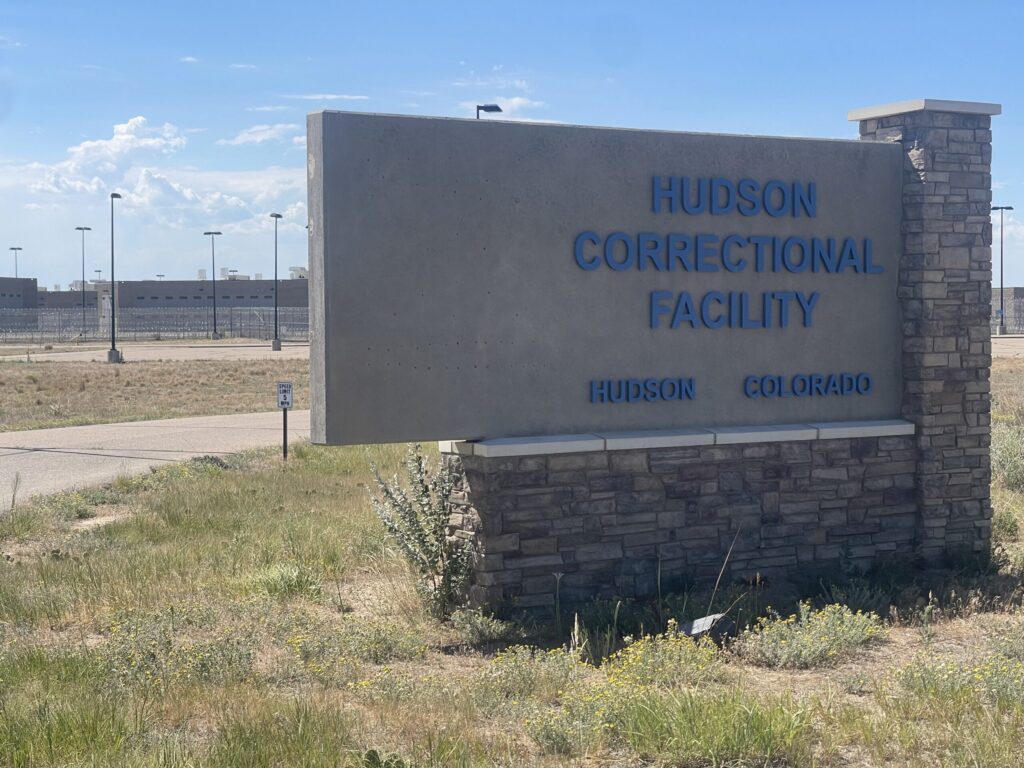
A nonprofit organization filed a lawsuit against the Town of Hudson Wednesday, challenging plans to reopen a former federal prison in the town as a U.S. Immigration and Customs Enforcement detention facility. Together Colorado, along with Janet E. Carlson, filed...
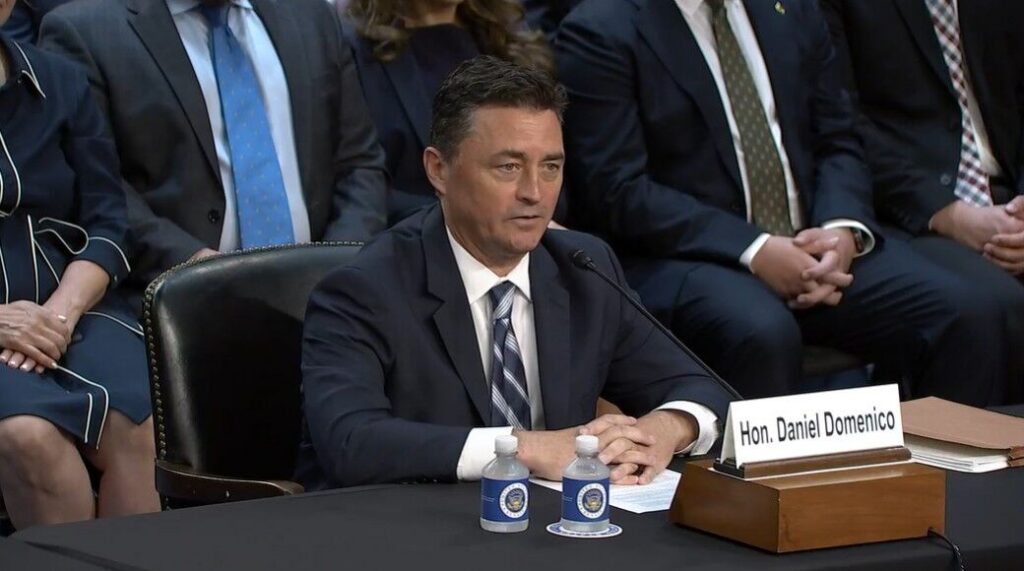
Senate committee advances Trump’s 10th Circuit nominee, as Domenico responds to questions about delays
Michael Karlik
michael.karlik@coloradopolitics.com
Updated 3 days ago
The U.S. Senate Judiciary Committee advanced President Donald Trump’s nominee to the Denver-based federal appeals court on Thursday by a party-line vote of 12-10. U.S. District Court Judge Daniel D. Domenico, who was Trump’s first-term appointee to Colorado’s federal trial...
Colorado justices to hear embryonic donation dispute
Michael Karlik
michael.karlik@coloradopolitics.com
Updated 4 days ago
The Colorado Supreme Court announced on Monday that it will decide whether lower court judges properly applied its framework for adjudicating disputes over the fate of pre-embryos, in which one person wants to use them to become a parent and...

Isolation, emotion, persona: Colorado judicial programming prepares people for life on the bench
Michael Karlik
michael.karlik@coloradopolitics.com
Updated 4 days ago
As a trial judge and now as a member of the Colorado Supreme Court, Justice Carlos A. Samour Jr. has heard the view that being a judge is isolating. “In neither court have I felt isolated. I’ve always interacted a...
PREV
PREVIOUS

Denver, state officials react to losing Outdoor Retailer trade show
Officials from Visit Denver and Colorado’s Office of Outdoor Recreation Industry expressed surprise and, of course, disappointment to Emerald X’s decision to move the Outdoor Retailer show back to Salt Lake City starting in 2023. “We were all pretty surprised,” said Richard Scharf, president and CEO of Visit Denver. “We’ve been working the past two […]

Former Denver police academy trainer disputes claims about leadership during 2020 protests
A former Denver police lieutenant backpedaled Wednesday on statements he made to the city’s police watchdog agency about alleged failures of leadership during the 2020 George Floyd protests, criticizing how the Office of the Independent Monitor characterized his opinions in a memo prepared for an investigation into the protests. Former training academy Lt. John Coppedge […]