

State Supreme Court grants Boulder immunity for defective sidewalk by 4-3 decision
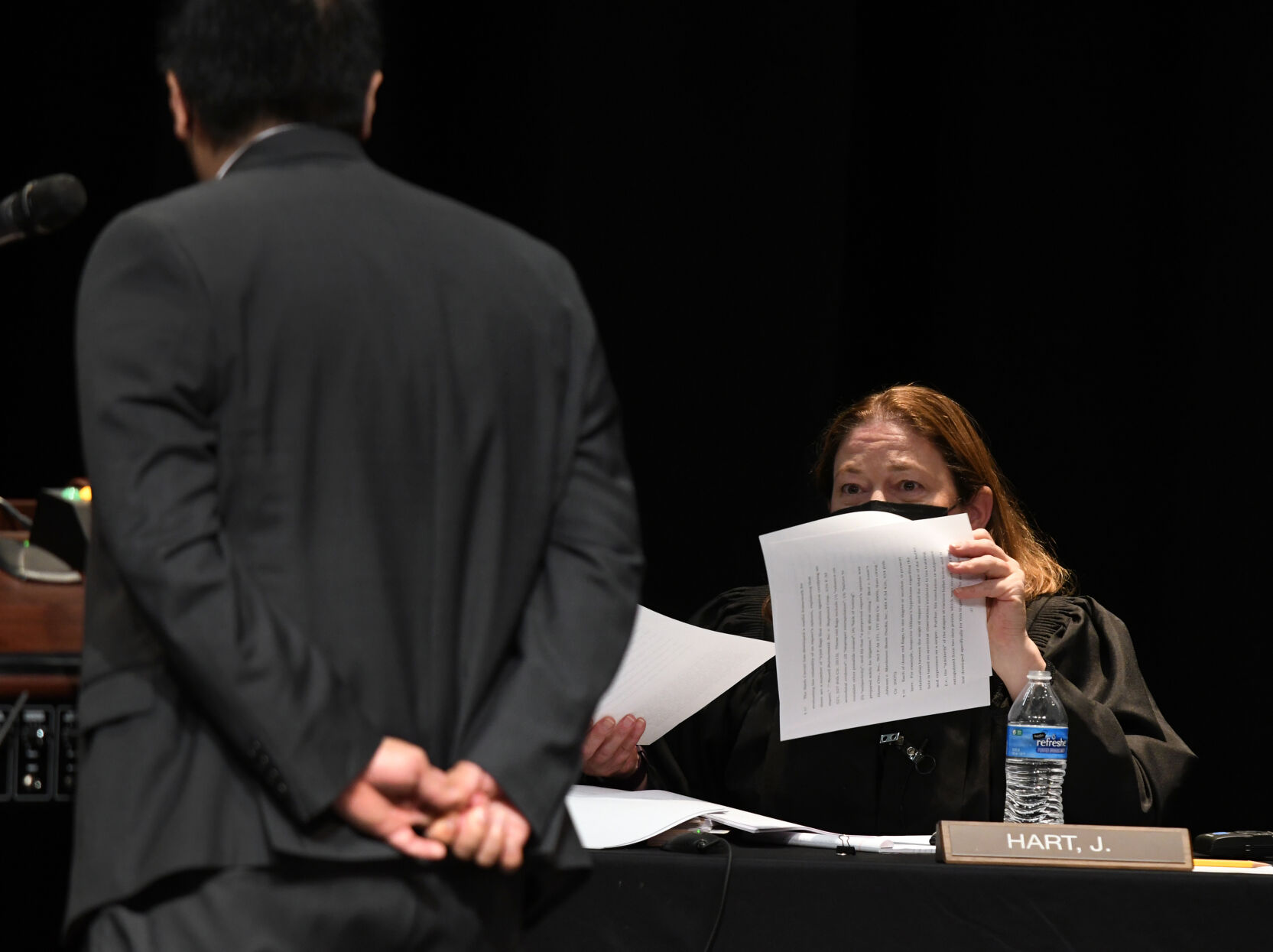
Local governments dodged a potentially massive liability for their defective sidewalks on Tuesday, as the Colorado Supreme Court ruled in a split 4-3 decision that the city of Boulder could not be sued for a misaligned portion of sidewalk that caused a woman to fall and injure herself.
Colorado’s governmental immunity law generally prohibits liability lawsuits against public entities, but there is an exception for dangerous sidewalk conditions that create an unreasonable safety risk. Although Joy Maphis tripped and fell on a gap that was three times larger than the city’s own definition of a hazard, the court’s majority decided the hazard was not beyond reason.
Justice Melissa Hart conceded the court had ruled in favor of immunity partly because such tripping hazards are so common throughout Colorado that municipalities cannot fix them all.
“(L)ocal governments seeking to maintain their sidewalks are constrained not only by budgetary limitations, but also by the availability of contractors who can do the needed repairs,” she wrote for the majority. “We cannot ignore the realities that Colorado’s local governments face in trying to maintain roads and sidewalks.”
The three dissenting members of the court believed that, in this instance, Maphis had proven the sidewalk presented an unreasonable risk that Boulder knew about in advance of her injury. Justice Monica M. Márquez, who authored the dissent, warned that the majority had severely limited the ability for injured people to sue local governments.
Randall J. Paulsen, the attorney for Maphis, said the result of the decision is that people like his client, who has a permanent injury in her elbow, will face an “impossible” hurdle for recovering damages due to poorly-maintained sidewalks.
“It’s a nice idea that municipalities would listen to reason and say, ‘We’re gonna make it crystal clear that we know about a hazardous condition on our sidewalk. We’ll mark it, tape it off, keep our citizens from being permanently disabled.’ That would be a great idea,” he said, “but one that’s no longer necessary because this opinion makes it unnecessary.”
The Colorado Municipal League, which represents 270 of the 272 municipalities in Colorado, as well as the Colorado Intergovernmental Risk Sharing Agency, an insurance pool for municipalities, had backed the city of Boulder in the case. The organizations argued that the burden should lie with pedestrians to avoid the kinds of sidewalk defects that caused Maphis’ injury.
“Precisely because they are so common, the trip-and-fall risks associated with this kind of sidewalk condition cannot be considered ‘beyond reason’ as a matter of law,” they wrote to the Supreme Court. During oral arguments in October, however, some justices were wary of exempting “common” sidewalk hazards from liability.
“Does that not set up a situation where the more prevalent or risky or potentially dangerous situation that exists, the more likely it is that the city will be immune because there’s so many of them?” asked Márquez.
Maphis tripped over an uneven sidewalk in the 1100 block of Pennsylvania Avenue in Boulder in April 2017. The impact caused a shattered right elbow and a broken left elbow, with additional damage to her lip. She underwent two surgeries to regain the range of motion in her arm.
The city’s sidewalk repair program labeled as hazardous any gap in sidewalk slabs that exceeded three-quarters of one inch. The gap on which Maphis tripped was 2.5 inches in size. Moreover, the city had previously identified the problem for repair. Boulder’s city attorney said during oral arguments that there were over 4,000 similar locations in the city where there were sidewalk gaps larger than three-quarters of one inch.
In June 2020, a three-judge panel of the state’s Court of Appeals decided by 2-1 that the Colorado Governmental Immunity Act barred Maphis’ lawsuit against Boulder because the tripping hazard was “neither an unexpected nor unusual danger.” The majority added that, if Boulder could be held liable because it knew about the defect, other cities might choose to end their proactive repair programs in order to deny their knowledge of specific hazards.
Judge David J. Richman disagreed, arguing the governmental immunity law does not shield local governments when they decide a sidewalk is hazardous but delay making the repairs.
“If anything, a municipality that fails to maintain its public ways on a widespread basis should be held liable, not excused from liability,” he wrote.
There was no dispute among the members of the Supreme Court that most of the conditions Maphis had to satisfy under the governmental immunity law were present: Boulder knew about the sidewalk defect, it failed to maintain it, and that failure resulted in her injuries. As to whether the sidewalk deviation amounted to an unreasonable safety risk, the majority believed it did not.
While it is possible that a 2.5-inch deviation would be a dangerous condition in a high-foot-traffic area or outside of an assisted living facility, Hart explained, the residential area where Maphis fell did not reach that threshold.
“Thus, the mere fact that the city was aware of the deviation and had scheduled it for repair because they classified it as a hazard is not enough to qualify it as an ‘unreasonable risk,'” she wrote.
Sarah Huntley, a spokesperson for the city, said Boulder was pleased with the result of the case.
“The decision sensibly recognized that municipalities must have breathing room to prioritize sidewalk repairs without having their repair criteria used against them as an admission that a particular sidewalk condition is unreasonably risky,” she said.
Márquez, writing for herself and Justices Richard L. Gabriel and Carlos A. Samour Jr., believed the majority had created an “unjust result.” The city had not even marked the area around the defect to alert pedestrians, and there was no question that the sidewalk alone had caused Maphis’ injuries.
“A known, physical condition capable of causing the serious injuries sustained here cannot be deemed within the bounds of reason simply because it was located in an area of the city with lighter pedestrian traffic,” Márquez wrote.
She added that a Supreme Court ruling in favor of Maphis would not have meant Boulder was automatically liable for her injuries, only that Maphis could argue her case in court and prove the city was negligent.
The case is Maphis v. City of Boulder.


Local party leaders, incoming judge among members of judicial performance commission that violated law
Michael Karlik
michael.karlik@coloradopolitics.com
Updated 41 minutes ago
A local Democratic leader and 2024 presidential elector. A legislative aide and leader in the Young Republicans. An incoming county court judge freshly appointed by the governor. They are among the eight members of the northeastern Colorado judicial performance commission...

Judge dismisses lawsuit seeking records from Colorado Democratic group
Marianne Goodland
marianne.goodland@coloradopolitics.com
Updated 22 hours ago
A lawsuit seeking to obtain records from Democratic lawmakers affiliated with a caucus has been thrown out by a Denver District Court judge. On July 17, Judge Ericka Englert dismissed the April lawsuit filed by progressive activist Derrick Blanton, who...
Colorado Springs mother Deborah Nicholls’ murder conviction overturned
Nick Smith
nick-smith@coloradopolitics.com
Updated 2 days ago
A Colorado Springs mother convicted in 2008 of murdering her three children in a house fire might get a new trial after a judge ruled that prosecutors withheld key evidence that could have impacted the jury’s verdict. Deborah Nicholls, whose...
Colorado court overturns illegal $7,000 restitution order
Michael Karlik
michael.karlik@coloradopolitics.com
Updated 18 hours ago
Colorado’s second-highest court overturned a Weld County defendant’s obligation to pay more than $7,000 in crime victim restitution on Thursday because a trial judge failed to issue a legally compliant restitution order at the time of sentencing. In Colorado, as...

Appeals court rejects former DougCo commissioner’s legal fee claim
Nicholas Fogleman
nicholas.fogleman@denvergazette.com
Updated 1 day ago
The Colorado Court of Appeals rejected a former Douglas County commissioner’s bid for reimbursement of attorney fees she incurred while responding to multiple investigations into her conduct. The dispute stemmed from a 2019 anonymous letter sent to county officials alleging...
Appeals court orders second look at Denver Water’s immunity for cyclist’s injury
Michael Karlik
michael.karlik@coloradopolitics.com
Updated 2 days ago
Colorado’s second-highest court ordered another look at a bicyclist’s negligence lawsuit against Denver Water on Thursday, concluding that a trial judge needed to evaluate the utility’s potential immunity using the state Supreme Court’s new guidance. Joseph A. “Joey” Scott alleged...
Labels, duration not definitive proof of ‘intimate relationship,’ Colorado court rules in domestic violence case
Michael Karlik
michael.karlik@coloradopolitics.com
Updated 23 hours ago
Colorado’s second-highest court clarified on Thursday that the length of a couple’s relationship and the labels they attach to it are not conclusive evidence of whether it is an “intimate relationship” that can give rise to a domestic violence prosecution....

Colorado AG urges Supreme Court to let Boulder climate lawsuit proceed
Marissa Ventrelli
marissa.ventrelli@coloradopolitics.com
Updated 2 days ago
Colorado Attorney General Phil Weiser has filed a court brief with the U.S. Supreme Court in a lawsuit brought by Boulder city officials seeking to hold oil companies liable for their environmental impact. The case began in 2018, when the...
10th Circuit says landowner cannot sue ex-Routt County judge for statements in decision
Michael Karlik
michael.karlik@coloradopolitics.com
Updated 3 days ago
A Routt County landowner cannot sue a former judge for his allegedly inaccurate statements in a case where the landowner was not a party, the Denver-based federal appeals court decided on Wednesday. Anne Fitzsimmons, who lives in Germany, owns a...
Defendant’s competency in question in El Paso County case involving slain Army police officer
Nick Smith
nick-smith@coloradopolitics.com
Updated 2 days ago
It will be another 60 days before a 4th Judicial District court determines if a man charged in the shooting death of an Army police officer is competent to proceed in his case. Judge Erin Sokol granted a request Wednesday...
PREV
PREVIOUS

Department of Defense information chief to Colorado Springs crowd: Expect more IT outsourcing
Expect the Department of Defense to contract out much more of its information technology operations, the general in charge of department’s IT operations said Tuesday in Colorado Springs. When the Pentagon reviews any of its IT programs, the agency will be looking at whether “there is a commercial offering that is the best value; what […]

U.S. Geological Survey task force releases replacements for 'squaw'-named features
A task force commissioned by Interior Secretary Deb Haaland to come up with replacements for geographic features with the word “squaw” in their names has released its proposed list. Colorado has 28 features, including four that cross state boundaries with Oklahoma and Utah, with “squaw” in the name. Haaland declared the word “squaw” derogatory in […]