

Court rules that Arapahoe prosecutor’s questions to jury were ‘fair game’
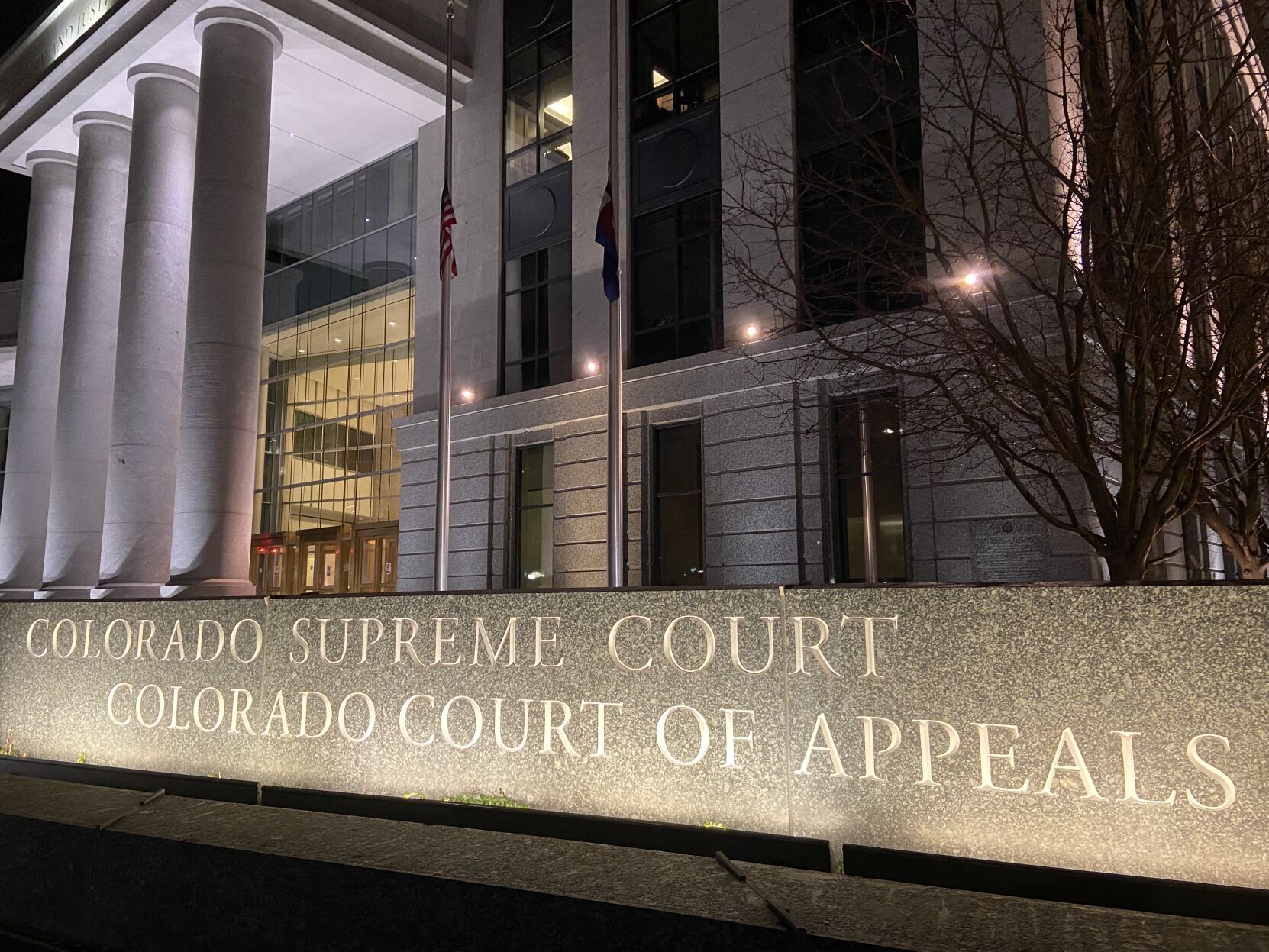
Although the prosecution’s conduct was “close to the line,” a panel of Colorado’s Court of Appeals decided by 2-1 that the government did not improperly place the burden on a defendant to prove his innocence at trial.
The state’s second-highest court considered whether an Arapahoe County prosecutor’s comments to a jury so fundamentally undermined the fairness of Juan Hernandez-Hernandez’s trial that they required reversing his conviction for driving under the influence. The majority of a three-judge panel concluded the prosecutor had not shifted the burden away from the government to prove its case beyond a reasonable doubt.
Hernandez-Hernandez’s jury “was repeatedly instructed on the prosecution’s burden of proof throughout the trial,” wrote Judge Sueanna P. Johnson in the panel’s Feb. 3 opinion. “We must presume the jury understood and followed these instructions.”
The dissent, however, believed the government may have talked the jury into incorrectly thinking it was Hernandez-Hernandez’s responsibility to show he was not, in fact, driving drunk.
The case implicated a specific feature of Colorado’s DUI law: A person who chooses to drive has given his or her consent to blood or breath tests of alcohol levels when an officer has probable cause to believe the driver is under the influence.
Typically, if a person asserts his or her constitutional right not to self-incriminate, the government may not use the refusal to talk as evidence of guilt. The DUI law, in contrast, does permit prosecutors to tell jurors at trial about a person’s refusal to take a test for blood alcohol content.
Police arrested Hernandez-Hernandez after he failed a roadside sobriety test. He refused to take a chemical test, even after learning about the consequences of his refusal. A jury convicted him of the felony and Hernandez-Hernandez received a six-year sentence.
At the 2017 trial, an unnamed prosecutor used a hypothetical example during voir dire – the segment when both parties can question potential jurors. The prosecutor requested jurors to imagine checking out after a shopping trip to Target, but setting off the theft alarm at the door.
The prosecutor asked jurors to picture someone coming up to the shopper “and they just want to see your receipt. Would you show them the receipt, or say, No, I’m going to leave?”
After jurors all indicated they would show their receipt, the prosecutor asked why they would do that. One juror believed a person would not want to show the receipt if “you stole something.”
Another potential juror, in a comment that went directly to the DUI case, volunteered that a defendant’s refusal to take a blood alcohol test would be “a big factor in my decision, like almost overwhelming.”
During closing arguments, the prosecution displayed PowerPoint slides referring to the same Target example.
“Recall jury selection / ‘Why wouldn’t someone show the receipt?’ / ‘You stole’,” read one of the slides.
“Mr. Hernandez checks out of Target, he approaches those security devices, he paid, he walks through them, the buzzer is going off and [the officer] is saying, Let me see your receipt,” the prosecutor said, placing the defendant in the hypothetical example. Hernandez-Hernandez, in refusing the chemical test, the prosecutor concluded, decided not to show the “receipt.”
The defense attorney objected, saying the prosecutor put the burden on Hernandez-Hernandez to “have to take a test, or to have to show the jury something he is not required to.”
In reviewing Hernandez-Hernandez’s appeal, the panel’s majority determined that because the DUI law allows for evidence about a driver’s refusal to take a chemical test, it is “fair game” to question what that refusal means.
Johnson, writing for herself and Judge Craig R. Welling, explained that the prosecutor “did not specifically argue or intend to establish during voir dire or closing argument that Hernandez had the burden of proof. Instead, the Target receipt hypothetical, while inartful, sought to elicit from the jurors how they would evaluate a person’s consciousness of guilt if a person refuses to produce a receipt.”
She added that the line of questioning, “though close to the line,” conformed with the requirement that the government had to prove Hernandez-Hernandez guilty beyond a reasonable doubt, and Hernandez-Hernandez did not have to prove anything.
Judge Terry Fox disagreed, believing the prosecutor had equated Hernandez-Hernandez’s failure to take the chemical test to the shopper’s failure to show their receipts – which jurors initially acknowledged was the behavior of a guilty person. Under that thinking, the obligation was on the defendant to prove his innocence.
Because the prosecution had planted the idea that Hernandez-Hernandez had a responsibility to take a test if he were innocent, Hernandez-Hernandez’s refusal meant “he deprived the jury of the only information that would prove [his innocence] – the test he twice refused,” she wrote.
The appeals panel did, however, send Hernandez-Hernandez’s felony conviction back to the trial court with instructions to lower the conviction to a misdemeanor or allow the prosecutors to retry him. That has been the outcome in DUI cases since the Supreme Court in 2020 interpreted the level of evidence needed to find someone guilty of felony DUI in a way that ran counter to the general practice of the trial courts.
The case is People v. Hernandez-Hernandez.


10th Circuit partially revives lawsuit over 2020 Denver protest injuries
Michael Karlik
michael.karlik@coloradopolitics.com
Updated 5 hours ago
The Colorado-based federal appeals court revived a man’s claims against Denver on Friday after concluding a trial judge resolved the case in the city’s favor without analyzing two of the three instances of alleged excessive force and other constitutional violations....
Federal judges find Colorado immigration judge violated several orders
Michael Karlik
michael.karlik@coloradopolitics.com
Updated 1 day ago
Multiple federal judges in Colorado have freed people from immigration custody after determining that one immigration judge violated their directives for properly conducting bond hearings. For nearly a year, Colorado’s U.S. District Court has faced a flood of habeas corpus petitions...

Misconduct complaints from ex-Colorado judicial discipline director dismissed against federal judges
Michael Karlik
michael.karlik@coloradopolitics.com
Updated 3 days ago
The administrative body for the Denver-based federal appeals court upheld a finding last week that misconduct complaints against Colorado’s chief federal trial judge and the chief appeals judge warranted dismissal and appeared to be a “litigation tactic” by the complaining...

First-ever Red Rocks naturalization ceremony draws most diverse group of new citizens
Michael Karlik
michael.karlik@coloradopolitics.com
Updated 23 hours ago
Colorado’s federal trial court held its first-ever naturalization ceremony for nearly 300 new citizens on Thursday at Red Rocks Park and Amphitheatre. “We’re doing it to commemorate the 250th anniversary of the Declaration of Independence and the United States. Red...
Jeffco taxpayers could be on the hook for a possible child sex assault settlement
Matt Kyle
matt.kyle@denvergazette.com
Updated 2 days ago
Taxpayers may end up on the hook for a child sexual assault settlement, possibly worth up to $15 million, after Jeffco Public Schools failed to notify its insurance company in a timely manner about the case. The incident stems from...
10th Circuit finds no fair housing violation by Littleton landlord for worker’s alleged rape of tenant
Michael Karlik
michael.karlik@coloradopolitics.com
Updated 1 day ago
The Denver-based federal appeals court concluded on Monday that Littleton’s housing authority could not be held liable for a maintenance worker’s alleged rape of a tenant, as the worker’s employment did not provide any special access to the victim. A...

Jeffco Public Schools sues Trump administration to protect funding after alleged transgender policies violation
Matt Kyle
matt.kyle@denvergazette.com
Updated 3 days ago
In the wake of several threats by the Trump administration to revoke federal funding, Jeffco Public Schools filed a lawsuit against the Department of Education seeking to protect that badly needed money. Jeffco has been under investigation by the DOE’s...
Denver detox center did not violate man’s rights with 10-hour hold, 10th Circuit says
Michael Karlik
michael.karlik@coloradopolitics.com
Updated 5 days ago
The Colorado-based federal appeals court concluded on Tuesday that Denver’s detoxification facility did not violate a man’s rights by holding him against his will for 10 hours until his blood alcohol content was projected to reach zero. Unusually, Brian Garrett’s...

Federal judge clarifies ex-GOP treasurer candidate’s burden to prove defamation claims
Michael Karlik
michael.karlik@coloradopolitics.com
Updated 5 days ago
A federal judge clarified last week that businessman and former Republican statewide candidate Brian Watson will need to surmount a higher hurdle in proving his claim that a party guest’s alleged description of him as a “criminal” amounted to defamation....
Colorado board permits state to appeal injunction against arthritis drug price cap
Marissa Ventrelli
marissa.ventrelli@coloradopolitics.com
Updated 5 days ago
A Colorado board voted Friday to allow the Attorney General’s Office to fight an injunction against a price cap on a drug that treats arthritis. A U.S. district court judge had granted the company Amgen a preliminary injunction, temporarily blocking...
PREV
PREVIOUS

Four people under criminal investigation surrounding Colorado judicial scandal
Four former employees of the Colorado Supreme Court Administrator’s Office have been referred to law enforcement for criminal investigation following a yearlong audit into allegations of a contract-for-silence scheme and a whistleblower letter that alleged more widespread fraud, the Supreme Court announced Monday. Auditors concluded there was “at least some evidence of occupational fraud, illegal […]
RAW: Tina Peters arrested in Grand Junction business
Video obtained by 9NEWS shows Grand Junction Police detain Mesa County Clerk Tina Peters. Officers were serving a warrant to seize her iPad.