

CRONIN | Why we write
My friend and frequent co-author, Bob Loevy, explains that he loves to write to call attention to new ideas or to get readers to consider new facts. He recalls his days as a newspaper reporter when he covered a story about a young boy at a Baltimore hospital who was awaiting an emergency heart operation and needed donated blood for multiple blood transfusions.
By coincidence, the little boy had been named for a famous baseball slugger of the era, Ted Williams. Using baseball jargon, the story called on readers to be “long-ball hitters,” to “step up to the plate” and be there by giving blood for their local Ted.
The newspaper story spread the word, and within a day or two, 300 people had lined up to volunteer the needed blood. The young man survived. It showed that writing can be a powerful force for motivating others to take desired actions.
Writers often write because they want to shine a light on injustice, expose hypocrisy, or draw attention to what they think is important. Writing is a way of crystallizing ideas, reporting research results, outlining plans, attempting to improve our communities.
George Washington’s army at Valley Forge benefited from a young immigrant with an agitational mind and a talent for pamphleteering. His name was Thomas Paine, and he wrote Common Sense in early 1776. He explained why “these free and independent states” needed to fight England for their rights.
“These are the times that try men’s souls. The summer soldier and the sunshine patriot will, in this crisis, shirk from the service of his country; but he that stands it now, deserves the love and thanks of man and woman.”
And then Paine shared his rallying cry against tyranny and why Americans had to persevere. His written word went viral, with more than a half-million copies circulating within months. It inspired, mobilized and became one of the most effective weapons in America’s War of Independence.
Jefferson’s Declaration of Independence was written five months later. Their writing mattered. Writing is hard, and scary, and exhilarating. The fear of writing is normal, natural and never fully goes away. Even the most accomplished writers admit the hardest part is getting started. Cranking up is hard to do.
What explains the fear of writing? People worry that everything they might say has already been said, and probably said better. We fear making mistakes or inviting unwelcome criticism.
The angst of an Imposter Syndrome looms over every craft. It is the notion that readers will discover we are pretending to be someone we are not, or that we are writing something we don’t know much about. Yet most things worth doing involve at least some imitating or borrowing.
It takes courage for any one of us to take a pen up and write in the shadow of Shakespeare or Steinbeck, compose in the shadow of Beethoven or Dylan, paint in the shadow of Van Gogh or Picasso. But how unfortunate it would have been had Shakespeare concluded that playwrights before him had written everything that needed to be written.
Beginning to write is like beginning to climb a mountain. It is scary, yet can be fun. Yes, others have already done it faster and more gracefully. Yet we can do it too. One step at a time. You are not an imposter. You are out on your own journey, exploring, playing and being present.
Writers write to celebrate courage, character and prowess. That’s what the storyteller Homer did. A people without storytellers would be confused about who we are, where we came from and what we might become.
That’s why we profit so much from the Old and New Testaments, and from writers like Leo Tolstoy, Victor Hugo, John Steinbeck and Toni Morrison. They help us remember our past and understand our own journeys.
Another reason many writers write is to help us navigate through the complexities of life. We all endure pain, loneliness, fear and hope. We all see both beauty and tragedy around us. Poets, novelists and storytellers let us know we are not alone, and they help us search for better possibilities, and for hope and truth.
Another friend and occasional co-author, Michael Genovese, shares that we write as an obligation to ourselves as well as to our neighbors. “We believe we have something to say… Writing helps us think through and sort out the paradoxes of the human condition. In explaining the world to others, we also seek self-understanding.” By writing we educate ourselves,” he adds, and “clarify our views and come to grips with a messy world.”
Another reason to write is to speak about values and ideas one cares about. There are many cherished yet competing political and economic values such as liberty, equality, efficiency, justice, community and the rule of law.
But reasonable people disagree about how much each of these should be maximized or how best competing values can be reconciled. Reasonable people have always disagreed about these matters, and always will. That’s why we have political parties, elections, judicial systems and politics. And that’s why countless writers write to share their points of view and try to persuade others of their views.
Plato wrote of society’s need for educated, virtuous, hierarchical leadership. Martin Luther King, Jr., wrote and spoke about the need for tolerance, justice and the need to live peacefully with one another. Shakespeare wrote to warn us about the arrogance of power and the temptations of greed, jealousy and flattery. Rachael Carson’s SILENT SPRING (1962) shared her research about the harmful effects of the insecticide DDT. Her writing made a huge difference in farming practices and environmental awareness.
Many writers write because they are storytellers. One of my neighbors is a prize-winning author of young- adult and children’s books. Dian Curtis Regan explains, “There is such joy in having an idea nudge you until you sit down and find the story that’s wanting to be told,” and then eventually see it in book form.
“Writers strive to get to that joyful place” she adds,” where the words are flowing, the metaphors are original, our plot makes us laugh or cry…” and we can take pride in our work.
Another neighbor, John Stith, a prize-winning science-fiction writer, notes his urge to write came from reading terrific books that made him say, “Wow. I wish I could do that – create something that gave other people” the joy, pleasure and happiness that those other authors provided.
Writing is also a form of playfulness. An opportunity to make things up, to invent images, ideas, journeys. It is similar to what encourages people to sing, dance, paint, play guitar. These are some of the ways we express ourselves as human beings and connect with one another. “I am here, and this is where I stand.” And “this is” as John Lennon put it,”what I imagine.”
Writing matters. Yet what matters even more is the power of ideas. Just as leaders define, defend and promote important mutually-shared values, writers help define and clarify critical choices.
Writers write to record the truth of their time and to heighten the possibilities for peace and prosperity, for justice and freedom.
*Adapted from Tom Cronin, Writing as a Performing Art (Abuzz Press, 2022) a short book just published, available from Amazon.com, BarnesandNoble.com and BookLocker.com. Cronin writes regularly about state and national politics. He thanks Tania Cronin and Bob Loevy for edits here.

Sans seniors, what does Colorado’s uninterested early turnout say about our disengaged electorate? | Paula Noonan
Paula Noonan
paula-noonan@coloradopolitics.com
Updated 13 hours ago
This primary election is poorly attended. Evidence is in the numbers. About 10% of active registered voters are deciding this year’s primaries with seven days to go. If that number triples by June 30, only 30% of voters will decide...

Who gets to decide Colorado’s economic future? | GUEST COLUMN
Colorado Politics
colorado-politics@coloradopolitics.com
Updated 13 hours ago
By Sarah Blackhurst Colorado’s prosperity depends on industries that grow our food, build our future and power our homes. But today, these sectors face an invisible threat from 5,000 miles away: the European Union’s Corporate Sustainability Due Diligence Directive (CS3D)....
We have the chance to change Colorado’s cancer outcomes | PODIUM
Colorado Politics
colorado-politics@coloradopolitics.com
Updated 13 hours ago
By Erika Hanson Brown Colorado ranks among the healthiest states in the nation by nearly every measure. Yet even here — amid the Rocky Mountains and our deeply rooted culture of health and activity — cancer casts a long and...
Colorado has a playbook for youth mental health — our next governor must use it | GUEST COLUMN
Colorado Politics
colorado-politics@coloradopolitics.com
Updated 2 days ago
By Karen Ron-Li Liaw From the rural communities on the western slope to the eastern plains, to the major urban regions on the Front Range, Colorado families are navigating an all-too-familiar crisis: kids are struggling, and Colorado’s mental health system...

Pigs engineered to fight alpha-gal syndrome | Rachel Gabel
Rachel Gabel
rachel-gabel@coloradopolitics.com
Updated 3 days ago
If I were an evil genius trying to hamstring animal agriculture, I would create a fly that eats livestock alive and a tick whose bite and spit causes some people to have an allergic reaction to meat. (Insert evil laugh...

Registered voters on the eve of the 2026 primaries | Cronin & Loevy
Tom Cronin Bob Loevy
tom-cronin-bob-loevy@coloradopolitics.com
Updated 5 days ago
The Colorado Secretary of State’s Office has published the latest voter registration figures for the state and its counties as of June. Colorado ranks among the highest states for independent, or unaffiliated, voters. Only Alaska and Massachusetts have more. New Hampshire, New Jersey, Maine and Oregon also rank highly. So here...

A room for Sundance, a reality check for big-government Boulder | Jon Caldara
Jon Caldara
jon-caldara@coloradopolitics.com
Updated 7 days ago
There are few things more satisfying to watch than socialists getting mugged by reality. The Sundance Film Festival is invading my hometown of Boulder early next year. Sundance drew 85,000 attendees last year in Park City, Utah. Boulder’s hotel room...
Rep. Jeff Crank thinks Democrats are too focused on Trump, not enough on Colorado Springs | Vince Bzdek
Vince Bzdek
vince.bzdek@gazette.com
Updated 4 days ago
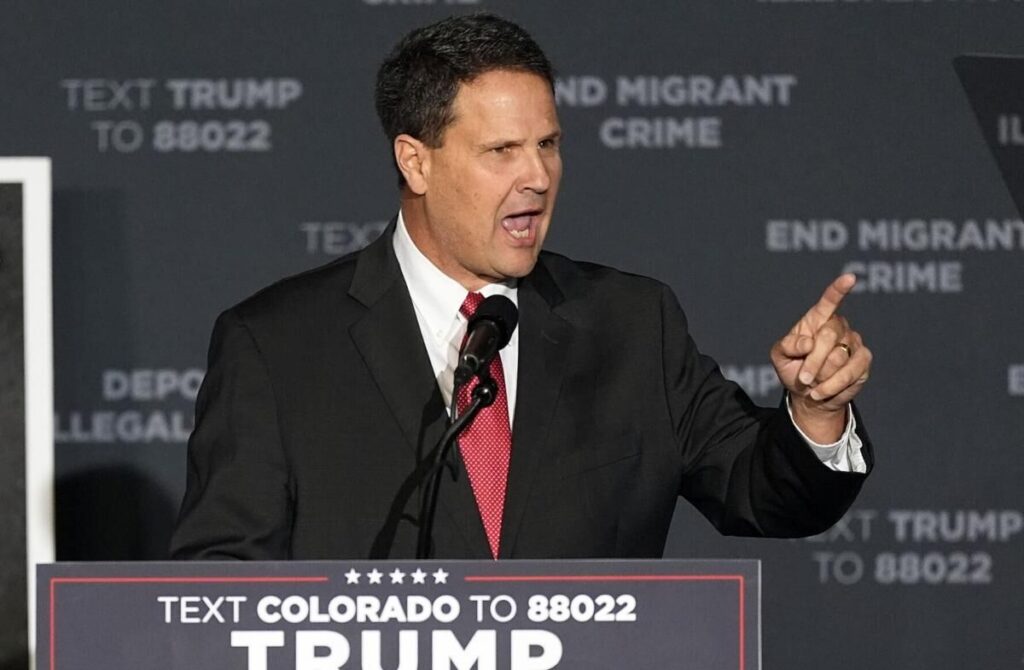
For U.S. Rep. Jeff Crank, who’s unopposed in the Republican primary for the 5th Congressional District but the main target of both candidates in the lively Democratic primary, the big question in the midterms is not who will stand up...
Does character matter anymore? | SONDERMANN
By Eric Sondermann
by-eric-sondermann@coloradopolitics.com
Updated 1 week ago
The last few weeks have been illuminating in the manner of a headlamp pointing the way to some deep, dark, murky netherworld. Graham Platner, a hero to the populist set on the Democratic side, became his party’s Senate nominee in...

Private equity has no place in health care | GUEST COLUMN
Colorado Politics
colorado-politics@coloradopolitics.com
Updated 7 days ago
By Miah Ntepp Of all the financial pressures placed on working people in this country, the skyrocketing costs of health care rank near the top. As families struggle under the cuts to Medicaid made by the Trump administration, they are...
PREV
PREVIOUS
Denver Gazette: A deluge of deaths on Colorado roads
There’s another epidemic that’s claiming Colorado lives in alarming numbers, and this one isn’t being spread by a virus. It’s a plague of traffic fatalities – and anyone who gets in a motor vehicle is at risk. As The Gazette reported this week, authorities said Tuesday that traffic deaths in Colorado have reached “crisis” proportions. […]

Reaffirm TABOR, reject budgetary tricks
Jesse Mallory Angel MerlosANDERSON GONZALEZ PHOTOGRAPHER Colorado taxpayers recently received great news: our economy has rebounded to the point that state tax revenues are significantly higher than projected. That not only ensures ample funding for budget priorities, it also means that under the state constitution, citizens are due a tax rebate. Gov. Jared Polis and […]