

Outdated? Marshall fire area mitigation plans more than a decade old

The wildfire mitigation plan for the area where the Marshall fire ripped across a suburban landscape on Thursday hadn’t been updated since 2010, predating heavy population growth in the area.
The plan, managed by the Rocky Mountain Fire Protection District, includes evacuation routes for the area, the designation of subdivisions in hazardous locations and places where proactive mitigation work should have taken place, all of which were 11 years out of date.
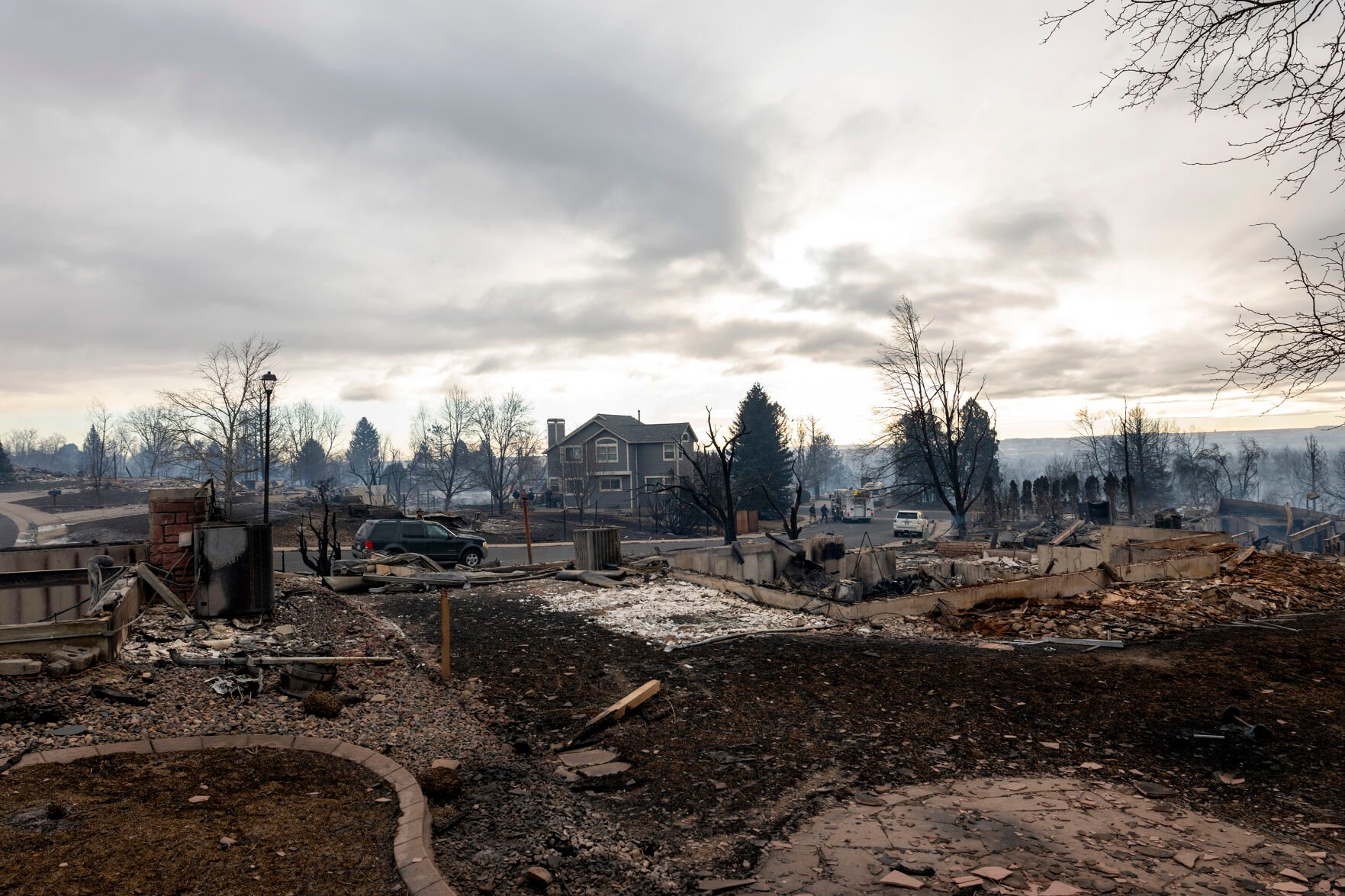
The area where the Marshall fire burns straddles the edge separating some of the most prone-to-burn areas of the state and more urban areas where wildfire risks are lower. And while the wildfire spread from house to house through neighborhoods, leaving thousands of Coloradans to deal with tragic loss, it mostly followed wildfire risk predictions.
To the west, in the Front Range mountains of the Boulder Open Space & Mountain Parks, wildfire risk is considered very high, according to U.S. Forest Service wildfire hazard potential data.
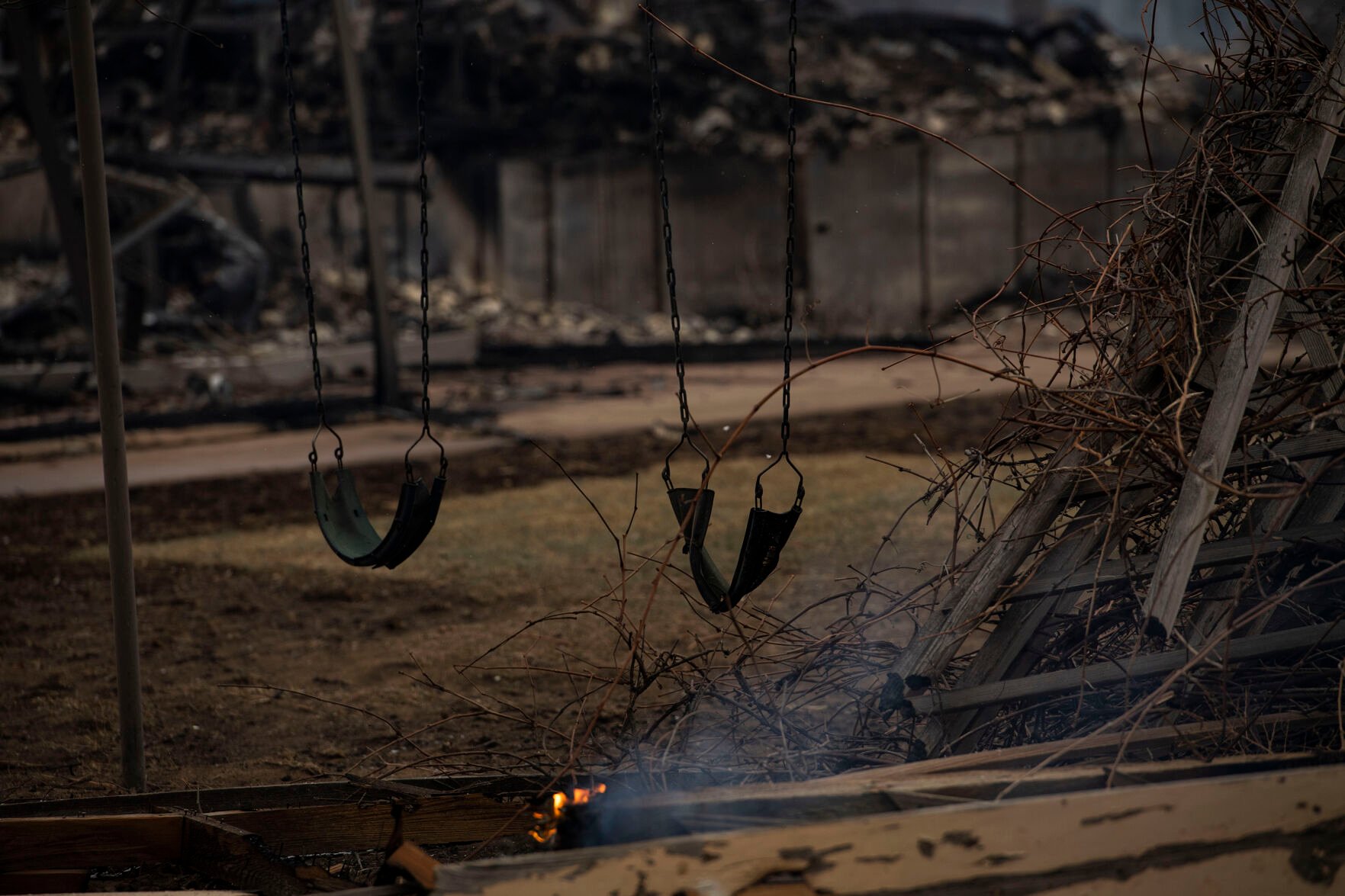
Nearly 1,000 structures confirmed lost in Marshall fire; 3 people missing, feared dead
Northwest of where the fire burned, most of Boulder is largely considered to be “non-burnable,” in terms of wildfire risk. The same is true to the east and northeast of the fire’s scar, in Broomfield and the center of Louisville.
And although three-quarters of the area burned by the Marshall fire is classified by the same data as a “moderate” wildfire risk or less, on the western edge, where the fire began, a combination of powerful winds moving east and “very high” wildfire risk zones combined to devastating effect. About one-sixth of the area burned by the fire was considered “non-burnable” by the federal estimate.
Why the Marshall fire was so devastating
Like much of Colorado’s Front Range, the area saw significant growth in the past 10 years, increasing in population by 17%, according to census data.
What it’s like to evacuate a hospital: As the Marshall fire bore down, so did baby Claire
A Gazette investigation from August 2021 found fewer than one out of every six of the 242 wildfire protection plans in Colorado were updated or created in the last five years. Roughly half of the plans are older than 10 years.
Colorado, unlike some other western states, does not require wildfire mitigation plans to be updated over regular intervals. In Idaho, for example, counties must update their protection plans at least every five years and state officials annually review the plans to determine areas eligible for federal grant funding for mitigation work.






U.S. Senate OKs funding bill to avoid government shutdown
Wire Services
wire-services@coloradopolitics.com
Updated 10 hours ago
Hemp provision became point of contention WASHINGTON • The U.S. Senate in an overnight vote Saturday approved a short-term measure to fund federal agencies into early December and avoid a government shutdown during the middle of campaign season. The late-summer...

The relevance of Watergate more than a half-century later | SONDERMANN
By Eric Sondermann
by-eric-sondermann@coloradopolitics.com
Updated 3 days ago
It was the scandal for which all other scandals are now named. In June 1972, a small group of Cuban burglars with high-level connections broke into the headquarters of the Democratic National Committee. Those headquarters were located in the Watergate...

Wirth downplays Social Security disaster talk | A LOOK BACK
Rachael Wright, Special to Colorado Politics
rachael.wright@coloradopolitics.com
Updated 2 days ago
Forty-five years ago this week: “As time goes on,” said Democratic U.S. Rep. Tim Wirth, of the 2nd Congressional District, “we are finding that the safety net, which was proposed earlier this year, has some very large holes in it,”...

Colorado Politics Calendar Aug. 10-16
Rachael Wright, Special to Colorado Politics
rachael.wright@coloradopolitics.com
Updated 2 days ago
CoPo’s weekly political calendar will help you find political and public-policy events throughout Colorado. It includes candidate and issue campaign events, public policy meetings, court hearings, state and local party conventions, assemblies, debates, rallies, parades, speaking engagements, traveling dignitary appearances,...

Democratic group aims Spanish-language TV ad at Gabe Evans in Colorado’s battleground 8th CD
Ernest Luning
ernest.luning@coloradopolitics.com
Updated 24 hours ago
A national group tied to House Democratic leadership launched a six-figure Spanish-language TV ad in Colorado this week targeting Republican U.S. Rep. Gabe Evans and the GOP’s signature budget legislation. The 30-second spot is part of $15 million in new...

Colorado School of Mines lands major share in Trump’s $100M mining-education plan
Thelma Grimes
thelma.grimes@coloradopolitics.com
Updated 1 day ago
President Donald Trump on Friday named the Colorado School of Mines among roughly a dozen institutions that will share in a $100 million commitment “to train the next generation of American miners.” Paul Johnson, the university’s president, said he is...

Local party leaders, incoming judge among members of judicial performance commission that violated law
Michael Karlik
michael.karlik@coloradopolitics.com
Updated 5 hours ago
A local Democratic leader and 2024 presidential elector. A legislative aide and leader in the Young Republicans. An incoming county court judge freshly appointed by the governor. They are among the eight members of the northeastern Colorado judicial performance commission...
Judge dismisses lawsuit seeking records from Colorado Democratic group
Marianne Goodland
marianne.goodland@coloradopolitics.com
Updated 1 day ago
A lawsuit seeking to obtain records from Democratic lawmakers affiliated with a caucus has been thrown out by a Denver District Court judge. On July 17, Judge Ericka Englert dismissed the April lawsuit filed by progressive activist Derrick Blanton, who...
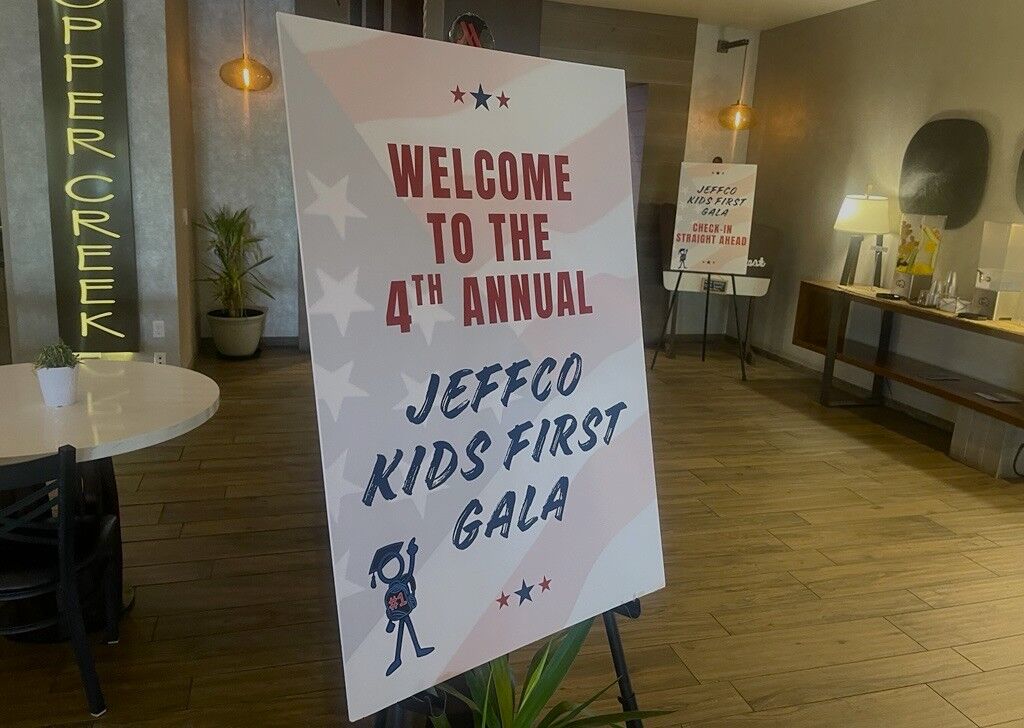
DOJ official decries ‘nonsense’ in Jeffco schools at fundraising gala
Matt Kyle
matt.kyle@denvergazette.com
Updated 10 hours ago
Amid a legal battle between Jeffco Public Schools and the federal government, a Department of Justice official spoke at a fundraising gala and decried “crazy stuff” and “nonsense” in the school district. The gala was for Jeffco Kids First, an...
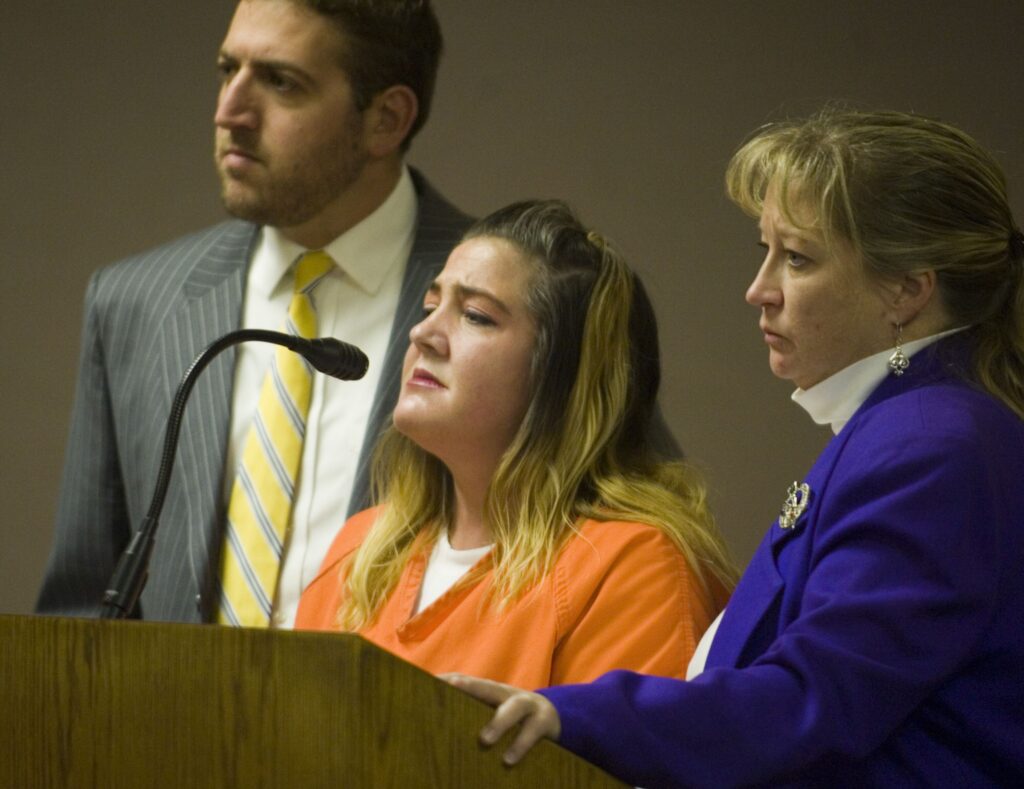
Colorado Springs mother Deborah Nicholls’ murder conviction overturned
Nick Smith
nick-smith@coloradopolitics.com
Updated 2 days ago
A Colorado Springs mother convicted in 2008 of murdering her three children in a house fire might get a new trial after a judge ruled that prosecutors withheld key evidence that could have impacted the jury’s verdict. Deborah Nicholls, whose...
PREV
PREVIOUS

A tale of a dozen horses saved from Boulder wildfires by a rodeo queen
As homes burned around her, Meghan Rickel threw on her rubber boots and her Carhart Boulder Rodeo Queen jacket and got to work, pulling neighborhood horses from their flaming stomping grounds into waiting trailers. With the help of Boulder’s Mounted Search and Rescue Team, she saved 10 horses before she got to the end of […]
Polis urges Biden to visit fire-ravaged Boulder County once rebuilding starts
Gov. Jared Polis urged President Joe Biden to visit areas ravaged by the Marshall fire when the two spoke Friday just before the governor announced that the White House has approved a disaster declaration for Colorado. Federal authorities have quickly authorized disaster assistance for the state and affected residents. The swift action means federal funding […]