

El Paso County inmate died rapidly of COVID, autopsy finds

A 64-year-old man with medical risk factors being held in the El Paso County jail died in the hospital just six days after he issued a request for medical help, citing symptoms consistent with the coronavirus, according to an autopsy.
Wayne Baca was the first incarcerated person to die during an ongoing outbreak in the jail that has so far infected more than 1,300 inmates and 170 staff members. Another coronavirus-related inmate death, which happened about three weeks after Baca died, was previously confirmed by the El Paso County coroner.
Coroner confirms first inmate coronavirus death at El Paso County jail
Baca on Aug. 27 requested medical attention from jail staff, according to the autopsy, saying he was coughing and sleeping a lot. Jail staff tested him for COVID and the result came back positive the next day, the autopsy said. Baca was first moved to the jail’s COVID-19 unit, but then was taken to the hospital by ambulance, according to an El Paso County Sheriff’s Office release. He had “labored breathing” and low blood oxygen, the autopsy said.
Baca, the autopsy said, had pneumonia, respiratory failure, multiple blood clots and a host of other problems when he arrived the hospital. He died five days later, on Sept. 2, when his family decided to withdraw medical care.
Baca was the first jail inmate to officially die of COVID-19, although the coroner’s office earlier this month determined another man being held at the jail – 33-year-old Steven Thorne – died of coronavirus complications on Sept. 25. Thorne’s death was the first to be publicly attributed to the virus.
Baca was not vaccinated against COVID-19, according to the autopsy.
The jail conducts daily health screenings for all staff and residents, according to its website, and sheriff’s office spokeswoman Lt. Deborah Mynatt said in an email that each person held at the jail is tested using a rapid COVID-19 test and undergoes “temp screening.” She added that each incarcerated person is given two N95 masks, but that “many choose not to wear it” and that jail staff can’t force them to do so.
Still, Baca’s rapid decline after he reached out for help raises questions about the jail’s pandemic protocols and if jail staff should have been monitoring his health more closely.
Mynatt referred further questions about “in depth medical details” to Wellpath Care, a Nashville-based provider that’s been responsible for medical care at the jail since January 2020. When asked if Baca’s situation could have been caught before it became so urgent, Wellpath spokeswoman Judy Lilley said the company was “unable to comment on the care provided in this case,” citing privacy laws.
Dr. Michael Roshon, an emergency medicine physician who has played a central role in treating coronavirus patients for Centura Health in Colorado Springs, could not speak about specific coronavirus cases, but he did say the virus can cause rapid declines in patients.
“We’ve had patients that almost expired on their way to the emergency department, so we get them in that state,” Roshon said. “Its such a variable disease so its very difficult knowing who’s going to get sick slow and who’s going to get sick fast.”
Baca had pneumonia caused by COVID and bacterial pneumonia, the autopsy said. The latter “can be quite famous for causing rapid deterioration,” Roshon said, although bacterial infections are rare with COVID.
Respiratory symptoms typically appear seven to 10 days before patients experience the kind of intense downfall Baca had, he said. Difficulty breathing is the main symptom to watch for with those kinds of issues, he said, and it’s important to check oxygen levels.
Every case is different, but the key factor in mitigating some of the variability is getting vaccinated, Roshon said.



A new day? Colorado’s troubled guardianship office pursues ‘cultural reset’
Marianne Goodland
marianne.goodland@coloradopolitics.com
Updated 4 days ago
Colorado’s guardianship program, long criticized for mismanagement and high staff attrition, is undergoing a “cultural reset,” as its new director works to repair partnerships and prepare for a major expansion under recent legislation. Created by lawmakers in 2017, the Office...
Local party leaders, incoming judge among members of judicial performance commission that violated law
Michael Karlik
michael.karlik@coloradopolitics.com
Updated 2 days ago
A local Democratic leader and 2024 presidential elector. A legislative aide and leader in the Young Republicans. An incoming county court judge freshly appointed by the governor. They are among the eight members of the northeastern Colorado judicial performance commission...

Judge dismisses lawsuit seeking records from Colorado Democratic group
Marianne Goodland
marianne.goodland@coloradopolitics.com
Updated 3 days ago
A lawsuit seeking to obtain records from Democratic lawmakers affiliated with a caucus has been thrown out by a Denver District Court judge. On July 17, Judge Ericka Englert dismissed the April lawsuit filed by progressive activist Derrick Blanton, who...
Colorado Springs mother Deborah Nicholls’ murder conviction overturned
Nick Smith
nick-smith@coloradopolitics.com
Updated 3 days ago
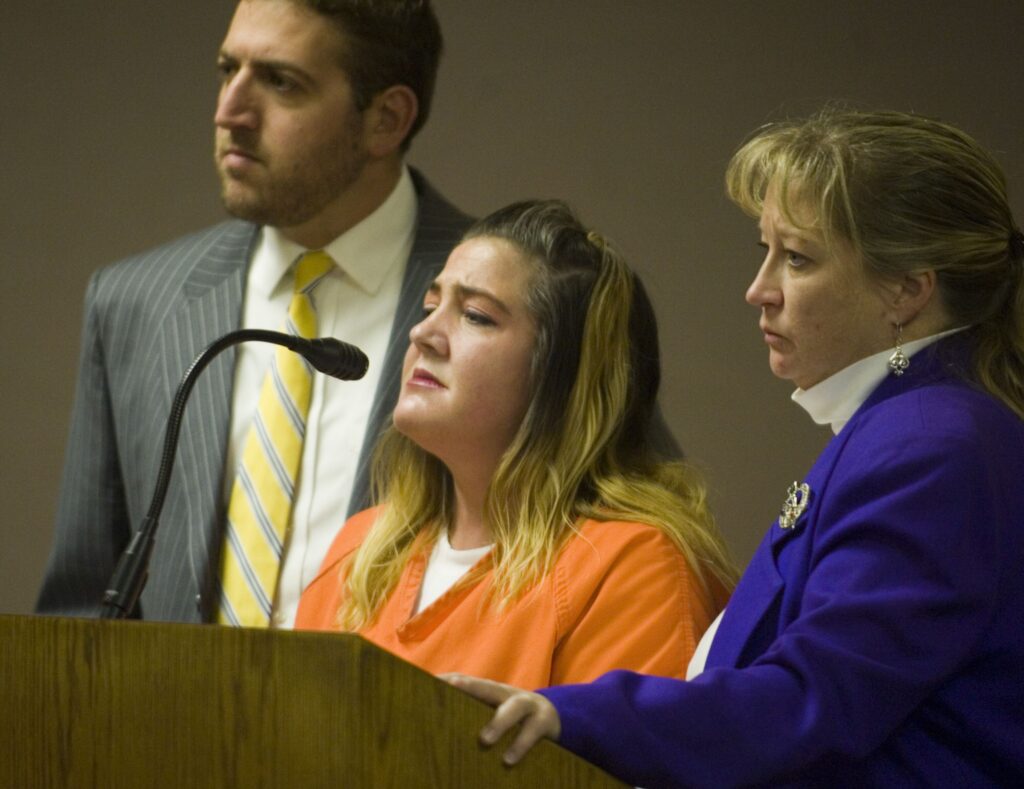
A Colorado Springs mother convicted in 2008 of murdering her three children in a house fire might get a new trial after a judge ruled that prosecutors withheld key evidence that could have impacted the jury’s verdict. Deborah Nicholls, whose...
Colorado court overturns illegal $7,000 restitution order
Michael Karlik
michael.karlik@coloradopolitics.com
Updated 2 days ago
Colorado’s second-highest court overturned a Weld County defendant’s obligation to pay more than $7,000 in crime victim restitution on Thursday because a trial judge failed to issue a legally compliant restitution order at the time of sentencing. In Colorado, as...

Appeals court rejects former DougCo commissioner’s legal fee claim
Nicholas Fogleman
nicholas.fogleman@denvergazette.com
Updated 3 days ago
The Colorado Court of Appeals rejected a former Douglas County commissioner’s bid for reimbursement of attorney fees she incurred while responding to multiple investigations into her conduct. The dispute stemmed from a 2019 anonymous letter sent to county officials alleging...
Appeals court orders second look at Denver Water’s immunity for cyclist’s injury
Michael Karlik
michael.karlik@coloradopolitics.com
Updated 3 days ago
Colorado’s second-highest court ordered another look at a bicyclist’s negligence lawsuit against Denver Water on Thursday, concluding that a trial judge needed to evaluate the utility’s potential immunity using the state Supreme Court’s new guidance. Joseph A. “Joey” Scott alleged...
Labels, duration not definitive proof of ‘intimate relationship,’ Colorado court rules in domestic violence case
Michael Karlik
michael.karlik@coloradopolitics.com
Updated 3 days ago
Colorado’s second-highest court clarified on Thursday that the length of a couple’s relationship and the labels they attach to it are not conclusive evidence of whether it is an “intimate relationship” that can give rise to a domestic violence prosecution....

Colorado AG urges Supreme Court to let Boulder climate lawsuit proceed
Marissa Ventrelli
marissa.ventrelli@coloradopolitics.com
Updated 4 days ago
Colorado Attorney General Phil Weiser has filed a court brief with the U.S. Supreme Court in a lawsuit brought by Boulder city officials seeking to hold oil companies liable for their environmental impact. The case began in 2018, when the...
10th Circuit says landowner cannot sue ex-Routt County judge for statements in decision
Michael Karlik
michael.karlik@coloradopolitics.com
Updated 5 days ago
A Routt County landowner cannot sue a former judge for his allegedly inaccurate statements in a case where the landowner was not a party, the Denver-based federal appeals court decided on Wednesday. Anne Fitzsimmons, who lives in Germany, owns a...
PREV
PREVIOUS

Jane Norton endorses Deborah Flora in Colorado's Republican US Senate primary
Former Colorado Lt. Gov. Jane Norton on Wednesday threw her support behind U.S. Senate candidate Deborah Flora, one of eight Republicans running against Democrat Michael Bennet. “Over the years, I have come to appreciate the courage of Deborah’s convictions,” Norton said in an endorsement video posted by the Flora campaign. “Whether it comes to fighting […]

Calkins family opposes change for Longmont's Union Reservoir
The family a Weld County lake is named after is weighing in against a proposed change that the Colorado Geographic Naming Advisory Board has been wrestling with for the past two months. Originally known as Calkins Lake, seven miles west of I-25 near Longmont, the body of water is more commonly known as Union Reservoir. That’s […]