

Judge greenlights ex-Jeffco Public Schools worker’s retaliation claim for trial

A federal judge has agreed that a former Jefferson County Public Schools employee has credibly alleged that the district schemed to get rid of him after he reported harassment, discrimination and malfeasance.
Casey Robinson and the union representing him sued the school district and several employees in the transportation department, claiming the defendants concocted a restructuring of his division to force him out of a job. Last week, U.S. District Court Senior Judge R. Brooke Jackson declined to side with the school district, saying Robinson’s claims indicated a distinct possibility that Jeffco Public Schools wrongfully terminated him and violated the union contract in doing so.
“Defendants say that Mr. Robinson’s employment ended because he was the odd man out when the transportation department was restructured,” Jackson wrote in a Nov. 16 order. “I find plaintiffs’ claim plausible – the record is replete with evidence that something inappropriate motivated the District’s decision to fire Mr. Robinson.”
In Robinson’s version of events, he had attempted to impose stricter protocols on an unorganized division and alerted supervisors to missing inventory as the district’s policy required. It was this mission and his complaints about discrimination that put a target on his back. According to the school district, however, it could not have retaliated against Robinson because the people responsible for his termination had no knowledge about his prior complaints.
Now, a jury will decide the case.
Robinson began working in the school district’s transportation department in March 2017, managing the inventory of parts for the district’s school buses and other vehicles. He belonged to the Jeffco Education Support Professionals Association, which had a collective bargaining agreement with the district that allowed employees to be terminated for “legitimate reasons.”
Within months of joining the district, Robinson reported missing inventory on two occasions. He also noticed that one shop was “using an exorbitant amount of parts compared to all three of the other shops.” His reports to supervisors allegedly went unanswered.
In February 2018, there was a confrontation between Robinson and a foreman, in which Robinson allegedly screamed at the foreman for not reporting the missing parts. As a result, the foreman reported he did not feel safe communicating with Robinson in person.
Robinson again reported a $2,650 injector pump missing, and suggested the foreman may have been responsible. An investigation concluded the injector pump had been placed on a school bus without being documented and scolded Robinson for his “slanderous” accusation against the foreman.
By mid-2018, the work environment was openly hostile with Robinson, who is Black, claiming racial discrimination and complaining that one of his subordinates was undermining his ability to manage. Another investigation found no violation of district policies and instead reprimanded Robinson for his “unprofessional, aggressive and hostile” conduct.
Around the same time, Greg Jackson, the executive director of transportation and fleet services, brought in a consultant to recommend how to make the 45-worker fleet services division more efficient and resolve workplace conflict. While the parties disputed whether a restructuring of the division was part of the consultant’s mission, the transportation department decided as a result that four positions would be reduced to three.
Robinson’s position was combined with his subordinate’s and both of them interviewed for the newly-created job. But prior to the hiring decision, Robinson had forwarded an email to chief operations officer Steve Bell in which a mechanic mentioned he was quitting his job due to harassment and discrimination from the foreman who Robinson had previously confronted. Robinson added in his email to Bell that he had received similar treatment from the foreman.
A committee chose to hire Robinson’s subordinate for the job, thereby terminating Robinson’s employment with the district in April 2019. Notably, the panel included the foreman, who rated Robinson far lower than his subordinate.
Robinson’s subsequent grievance went to an arbitrator, who found it “very troubling” that the foreman in conflict with Robinson served on his hiring panel. To her, it seemed like “a deliberate choice.”
“In this context it is clear to the Arbitrator that the District has failed to articulate a legitimate basis for its decision to eliminate Robinson’s position and terminate his job,” wrote Kathryn E. Miller of Littleton Alternative Dispute Resolution, Inc. She added that the hiring panel apparently had no consensus for how to evaluate candidates for the new position and that Jeffco Public Schools had no legitimate reason under the collective bargaining agreement to terminate Robinson.
Ultimately, the Jeffco Public Schools Board of Education rejected the arbitrator’s conclusion by a 4-1 vote and maintained that Robinson’s termination had taken place for “legitimate reasons.” It also declined to reinstate Robinson and award him back pay. Robinson then filed a lawsuit in August 2020.
The district defended itself by pointing to the hiring committee and alleged its members could not have retaliated against Robinson because none of them knew about his prior complaints about missing inventory or discrimination.
“The undisputed evidence shows the decisionmaker – the interview committee – had no knowledge that Mr. Robinson reported or opposed discrimination,” lawyers for the district wrote, adding “there is no evidence anyone on the interview committee knew Mr. Robinson had reported missing inventory.”
Robinson countered that the people in charge of the hiring process, and possibly the foreman himself, knew about Robinson’s inventory complaints.
Jackson, the judge, agreed that a jury could find the school district had created a pretext for firing Robinson that had nothing to do with efforts to restructure the department. The new position for which Robinson interviewed was largely the same as his existing job. The difference, the judge explained, was that the district could not easily fire him from that job but they could block him from taking the new one.
“Defendants claim that they were innocently following the recommendation of an outside consultant in restructuring the department,” Jackson wrote. The consultant’s recommendation “did not suggest eliminating Mr. Robinson’s position or restructuring the department….Yet defendants are adamant that the restructure and ultimate firing of Mr. Robinson were done pursuant to the consultant’s recommendation.
“It would be suspicious,” Jackson continued, “if, as plaintiffs’ witnesses allege, defendants hired a consultant to resolve ‘conflicts,’ and that consultant functionally gave them cover to fire Mr. Robinson and thus ‘resolve’ the conflicts of which he was a part. A jury might credit plaintiffs’ witnesses alleging as much.”
Like the arbitrator, the judge found a jury could view the hiring committee as being fundamentally biased against Robinson, with no rationale for selecting his subordinate over him. Jackson allowed Robinson’s claims for breach of contract, wrongful discharge and retaliation to proceed but dismissed Robinson’s claim that Jeffco Public Schools deprived him of due process under the law.
The school district and a lawyer for Robinson did not immediately respond to a request for comment. Following Jackson’s decision, Jeffco Public Schools filed a motion asking the judge to block the arbitrator’s decision from being referenced at trial, saying it “misrepresents material facts and misstates the relevant law.”
Jackson has set a jury trial for Jan. 24, 2022.
The case is Robinson et al. v. Jefferson County School District R-1 et al.


10th Circuit dismisses woman’s lawsuit following 10-year attempt to undo restraining order
Michael Karlik
michael.karlik@coloradopolitics.com
Updated 2 days ago
The Denver-based federal appeals court rejected a woman’s challenge on Friday to a restraining order imposed on her more than a decade ago, finding that she cannot credibly claim she will be prosecuted for violating the restraining order through her...
10th Circuit dismisses woman’s lawsuit following 10-year attempt to undo restraining order
Michael Karlik
michael.karlik@coloradopolitics.com
Updated 2 days ago
The Denver-based federal appeals court rejected a woman’s challenge on Friday to a restraining order imposed on her more than a decade ago, finding that she cannot credibly claim she will be prosecuted for violating the restraining order through her...
Colorado equal pay law does not require plaintiffs to allege gender-based retaliation, appeals court finds
Michael Karlik
michael.karlik@coloradopolitics.com
Updated 1 day ago
The 2019 Colorado law aimed at rooting out pay discrimination on the basis of sex does not require a plaintiff to allege their employer retaliated against them for sex- or gender-related reasons, the state’s second-highest court decided on Thursday. Lawmakers...
Hudson faces lawsuit over ICE detention facility
Nicole C. Brambila
nicole-c-brambila@coloradopolitics.com
Updated 3 days ago
A nonprofit organization filed a lawsuit against the Town of Hudson Wednesday, challenging plans to reopen a former federal prison in the town as a U.S. Immigration and Customs Enforcement detention facility. Together Colorado, along with Janet E. Carlson, filed...
Senate committee advances Trump’s 10th Circuit nominee, as Domenico responds to questions about delays
Michael Karlik
michael.karlik@coloradopolitics.com
Updated 3 days ago
The U.S. Senate Judiciary Committee advanced President Donald Trump’s nominee to the Denver-based federal appeals court on Thursday by a party-line vote of 12-10. U.S. District Court Judge Daniel D. Domenico, who was Trump’s first-term appointee to Colorado’s federal trial...
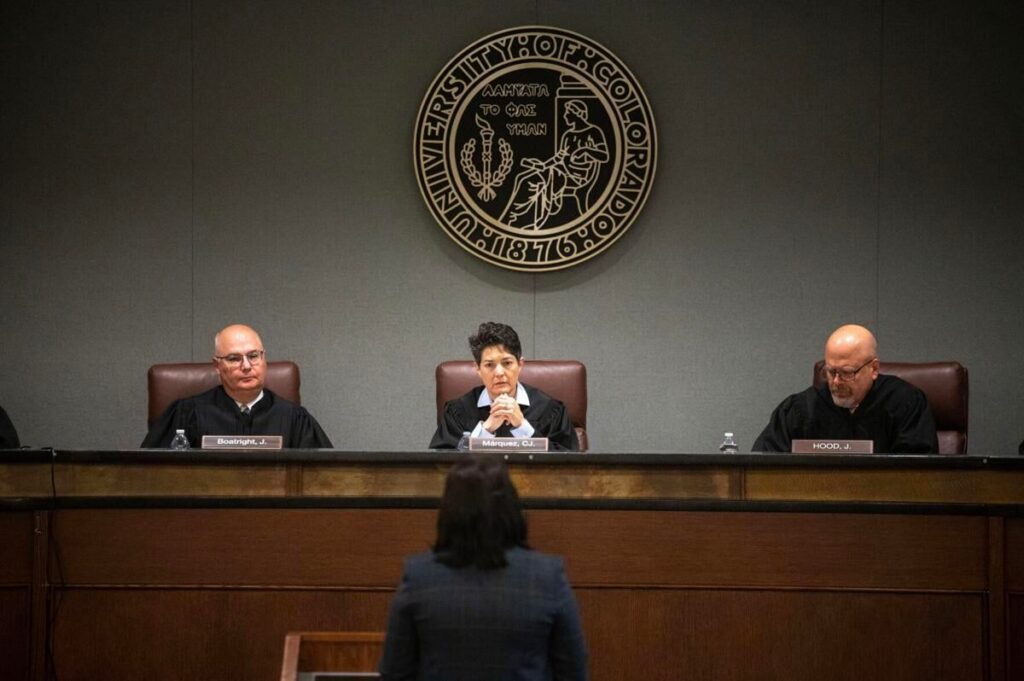
Colorado justices to hear embryonic donation dispute
Michael Karlik
michael.karlik@coloradopolitics.com
Updated 3 days ago
The Colorado Supreme Court announced on Monday that it will decide whether lower court judges properly applied its framework for adjudicating disputes over the fate of pre-embryos, in which one person wants to use them to become a parent and...
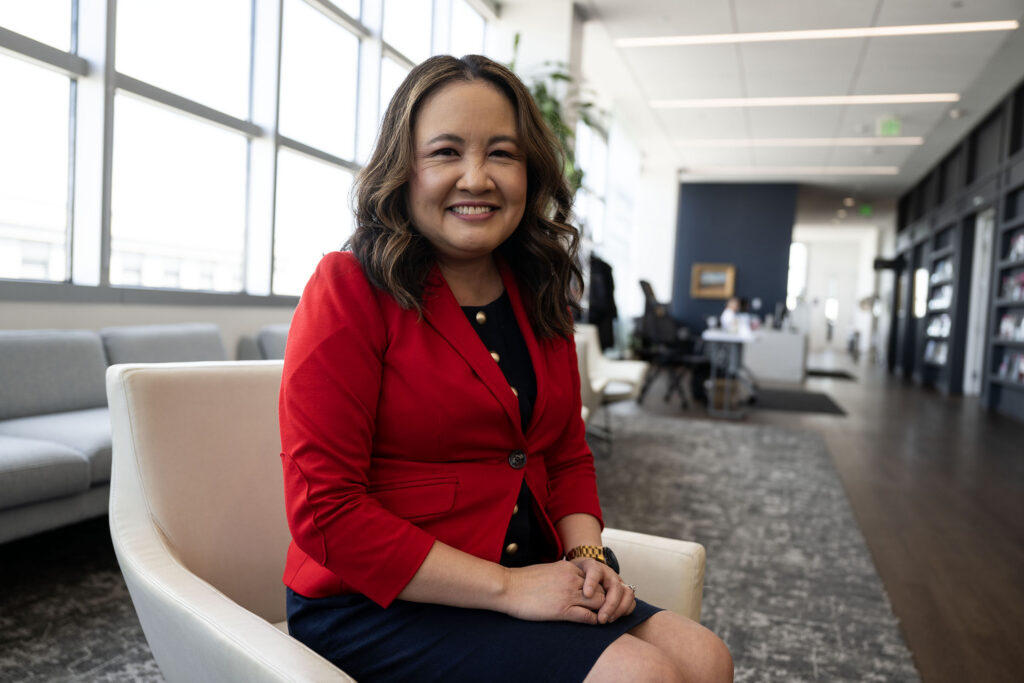
Isolation, emotion, persona: Colorado judicial programming prepares people for life on the bench
Michael Karlik
michael.karlik@coloradopolitics.com
Updated 3 days ago
As a trial judge and now as a member of the Colorado Supreme Court, Justice Carlos A. Samour Jr. has heard the view that being a judge is isolating. “In neither court have I felt isolated. I’ve always interacted a...

Federal judge dismisses Colorado county sheriff’s challenge to law limiting immigration cooperation
Michael Karlik
michael.karlik@coloradopolitics.com
Updated 1 day ago
A federal judge dismissed a challenge from Mesa County Sheriff’s Office leaders last week to a Colorado law limiting public employees’ cooperation with immigration authorities, concluding that the plaintiffs did not allege they engage in any conduct that the law...
10th Circuit raises bar for fraud victims to sue debt collectors over inaccurate information
Michael Karlik
michael.karlik@coloradopolitics.com
Updated 1 day ago
The Denver-based federal appeals court wiped away a jury’s $500,000 award to a fraud victim on Monday and made it more difficult for consumers to hold companies liable for disseminating inaccurate credit information. The Fair Credit Reporting Act regulates credit...
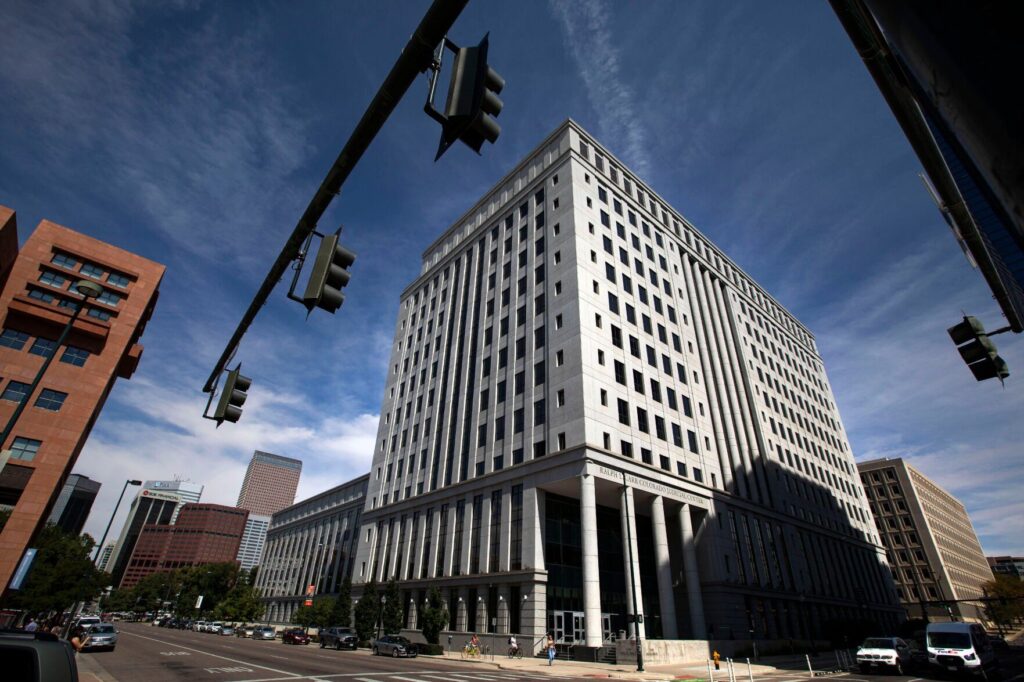
Montezuma County judge’s censure, suspension approved by discipline panel
Michael Karlik
michael.karlik@coloradopolitics.com
Updated 4 days ago
A three-member disciplinary panel accepted, on Monday, an agreement between a Montezuma County judge and the Colorado Commission on Judicial Discipline that specifies he will receive a censure, a suspension, and additional education for his admitted instances of misconduct. Under...
PREV
PREVIOUS

The Gap opens a year ahead of schedule
No one enjoys driving through the Gap, the congested 18-mile stretch of I-25 between Castle Rock and Monument. It’s been a driver’s nightmare for years, including the past three years during construction of new lanes. But let the champagne bottles be uncorked. The $419 million Gap project is opening almost a year ahead of schedule. […]

Colorado's jury selection process: Does 'implicit' bias create injustice?
In 1985, James Batson, still smarting from a failed appeal in the Kentucky Supreme Court bidding to overturn burglary and stolen goods convictions, brought his case to the United States Supreme Court. He alleged that his Sixth and Fourteenth Amendment rights had been violated by a Kentucky prosecutor. During the jury selection process, Batson and […]