

Small businesses won’t escape corporate tax hike


Although several tax increases have been touted by some in Congress as a method to raise funds for infrastructure and make large corporations pay their fair share, such increases would also be felt by Main Street businesses and the hardworking Americans that operate them.
This impact will be compounded if Congress also increases taxes on community banks, small businesses, family farms and individuals. As a package, these tax increases will be devastating to the livelihood of small business at a time when we should be focused on economic recovery.
The disproportionate damage to small businesses done by the pandemic is something that has been observed across the country, as roughly 200,000 additional establishments closed permanently in 2020 – above historic levels. Many small business owners and operators are struggling to meet their bottom lines. If they are burdened with extra tax payments, they may be forced to close or curtail certain operations, which prolongs our economic recovery.
The Independent Bankers of Colorado (IBC) serves as the exclusive voice of Colorado’s community banks. With more than 50 members, we are dedicated to representing the interests of our members and clients and the communities they serve.
Community banks are key pillars of Main Street, reinvesting local dollars to help small businesses grow and families build financial security. Given that many of Colorado’s small businesses use our services to help run their operations, we believe that increasing the corporate tax rate as well as other taxes on community banks, family farms and individuals would unduly harm these small businesses and other Main Street enterprises across the country.
These tax increases would affect small businesses in every segment of the economy, imperiling the progress we have made in our recovery from the pandemic. In the case of the corporate tax increase, a study by the U.S. Chamber of Commerce found that 1.4 million small businesses – employing almost 13 million American workers – would be forced to pay the higher corporate tax rate. This includes the small businesses that are classified as corporations, but make less than $400,000 annually.
The workers and staffers that operate small businesses would not be exempt from feeling a corporate tax increase either. Research by nonpartisan groups like the Tax Policy Center and the Tax Foundation have found that anywhere from 50-100% of corporate tax is passed on to laborers. This is further compounded by analysis from the Joint Committee on Taxation and the Congressional Budget Office, which both concluded that laborers disproportionately bear the burden of corporate tax.
Furthermore, American businesses could be left behind and become less competitive in comparison to foreign counterparts due to increases in the corporate tax rate. The current U.S. combined state and federal tax rate on corporate income is already over 25%, higher than the average of the 38 member nations of the Organization for Economic Co-operation and Development (OECD). If increased further, American businesses would pay the highest corporate taxes in the industrialized world.
To prevent American small businesses from being left behind competitively and drowning in excessive taxes, other solutions to raise federal funds must be considered by lawmakers.
For instance, closing the tax gap – the amount of uncollected funds owed to the government by wealthy individuals and corporations – is a viable path that could raise similar amounts of funding, but without harming small businesses. It is estimated that the current tax gap is around $600 billion, more than double what it was a decade ago. Within 20 years, it is projected to grow to $7 trillion. If even 20% of that figure were to be collected by the government, it would be near equivalent to the amount of money generated from a corporate tax increase.
While these proposals to increase taxes are aimed at big companies or other industries, the impact will be felt as keenly by small businesses, at a time when we should be focusing instead on their economic recovery. Our lawmakers must say no to these tax increases and instead, consider other fund-generating alternatives that do not endanger the welfare of Colorado’s small businesses and the communities they serve.
Michael Van Norstrand is executive director of the Independent Bankers of Colorado, which supports and advances the mission of locally-owned community banks


Courageous Colorado bucks Trump’s federal stupidity | Miller Hudson
Miller Hudson
miller-hudson@coloradopolitics.com
Updated 9 hours ago
There are several theories regarding the rhythm of American politics. The most frequently cited is the pendulum hypothesis — positing that episodes of liberal dominance are then interrupted by spans of conservative control. Since Ronald Reagan’s presidential election in 1980,...

A historic moment during another major drought | Rachel Gabel
Rachel Gabel
rachel-gabel@coloradopolitics.com
Updated 3 days ago
Gustav Sumnick emigrated from Germany, traveled to Oklahoma and decided rather than be a Sooner, he wanted to be a farmer. He moved north to Nebraska and married an Irish immigrant farmer’s daughter. They farmed near Fremont, Nebraska, where the...

Colorado can’t forget the lessons of COVID | Jon Caldara
Jon Caldara
jon-caldara@coloradopolitics.com
Updated 12 hours ago
We are finally getting a clearer picture of what happened during COVID. Not because the people who locked us up, masked our faces and forced unproven chemicals into our bodies have suddenly become transparent, but because Anthony Fauci’s COVID-era diary...

Historic preservation supporters organize to oppose Trump changes | Bob Loevy
Tom Cronin
tom-cronin@coloradopolitics.com
Updated 3 days ago
Historic preservation organizations in Colorado Springs, the remainder of Colorado and across the nation are organizing to resist a recent effort to relax and weaken historic preservation laws in the United States. In Washington, D.C., the Advisory Council on Historic...

The primary political reform and precondition for all others | SONDERMANN
Eric Sondermann
eric-sondermann@coloradopolitics.com
Updated 5 days ago
In its current state, the American political system has no end of ailments. Far too many factors accelerate polarization and work against moderation and narrowing the differences. Media, and the way so many citizens limit themselves to agreeable, reinforcing sources,...
Pueblo mayor, council concoct Trumpian Texas Two-Step | Dennis Maes
Dennis Maes
dennis-maes@coloradopolitics.com
Updated 4 days ago
Several weeks ago, an article was published positing Pueblo Mayor Heather Graham is a disciple of the calamitous Donald Trump school of governance — specifically as it related to questionable ethical practices and the misuse of public funds. Recently, Graham...

Colorado can’t afford to turn its back on proven public safety technology | GUEST COLUMN
Colorado Politics
colorado-politics@coloradopolitics.com
Updated 4 days ago
By Samuel G. Michael I recently saw a report that said Colorado is leading the way in artificial intelligence adoption for businesses. Across our state, more business owners and employees than ever before use AI for their everyday functions —...
As education conflicts abound across Colorado, who puts the kids first? | Paula Noonan
Paula Noonan
paula-noonan@coloradopolitics.com
Updated 5 days ago
Elected school boards and the Colorado Department of Education (CDE) have hit the headlines with fired superintendents, superintendent resignations, failures of oversight, and misdirected dollars. Cherry Creek School District’s superintendent was fired. Jefferson County Schools’ superintendent found a less stressful...

Clock is ticking on Colorado’s new AI rules | PODIUM
Colorado Politics
colorado-politics@coloradopolitics.com
Updated 5 days ago
By Aashis Luitel On Jan. 1, organizations using covered automated systems must begin complying with Senate Bill 26-189, Colorado’s new Automated Decision-Making Technology Act. They can identify those systems and start building the processes the statute clearly requires. What they...
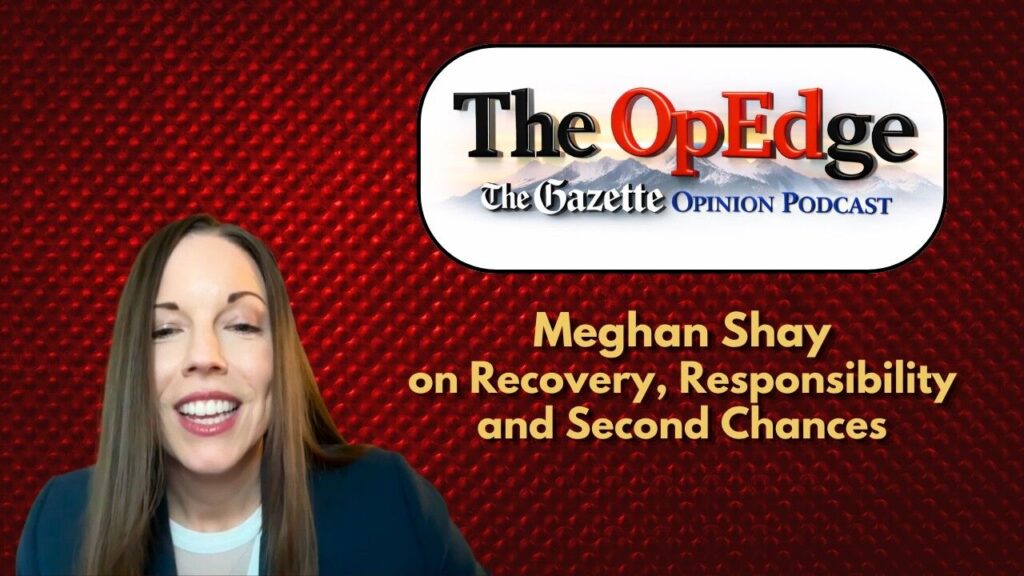
Meghan Shay on recovery, responsibility and second chances | The OpEdge Podcast
Tony Olivero
tony.olivero@gazette.com
Updated 6 days ago
Step Denver and Step Springs CEO Meghan Shay joins The OpEdge to explore addiction recovery, homelessness, and the role of accountability in lasting change. Shay tells host and investigative columnist Jimmy Sengenberger why she believes recovery is built on personal...
PREV
PREVIOUS

Colorado Springs Gazette: Trust mama bears to improve public schools
Morsa Images Mama bears have awakened from their hibernation, and Big Education knows it. Union leaders, puppeteering public education for decades, are worried and they should be. Colorado in the past year has seen the sprouting and growth of grassroots, representative democracy. For years, local school board elections were mostly an afterthought. Candidates often ran […]

State workers' contract with Colorado a win for all
Jessica Mathis No matter where you work or where you live, the pandemic hit all of us hard. Many of us were asked to work in unsafe conditions, take on new roles and responsibilities, and some Coloradans lost their jobs completely or even worse – their lives. Countless Colorado state employees, like myself, suddenly found […]