

Colorado Health Foundation poll cites the mental health toll of worrisome economics

A new in-depth survey suggests Coloradans have faith in a robust economic recovery, but in the meantime the high cost of living is exacting a cost on their mental health.
The nonprofit Colorado Health Foundation’s annual “Pulse” poll of 2.493 adults cites a lack of affordable housing and the high cost of child care as driving factors behind higher anxiety and depression cited by those polled.
As previous state and national polls have indicated, people of color are feeling the brunt.
The good news is Coloradans seemed less concerned about the overall economy this year compared to last year, when the pandemic was at its economic worst.
Pollsters said 44% of Coloradans considered jobs and the economy still to be a serious problems, whereas 63% cited those concerns last year.
In some bad news for Democrats who run the state and nation at least until next year’s election, 73% of those surveyed cited the cost of living an extremely or very serious problem. That’s up from 64% in 2020, when Republicans controlled the state Senate and the White House.
The concerns were even higher among people of color: 81% of Black respondents and 83% of Latino participants.
Read the full poll by clicking here.
“When we know more about what Coloradans are thinking, feeling and experiencing, we can better advocate for their health and well-being,” Karen McNeill-Miller, president and CEO of The Colorado Health Foundation, said in a statement. “Since the pandemic began, so many of us have had to face challenges we never expected, and Pulse shows us who has been hit hardest: women of color trying to balance child care and their countless other responsibilities, families living on low income struggling to keep a roof over their heads or food on their table, and workers facing anxiety and depression after job loss.
“These are the Coloradans we should be focused on supporting for the long term.”
The high price of housing was cited as a serious problem by 82%, including higher-income Coloradans across the state, which is a 15% increase over a year earlier.
About 1 in 5 Coloradans, the poll suggests, are worried about paying their mortgage or rent, but the number rises to 33% of Hispanic respondents.
About 24 of Coloradans on lower incomes told pollsters they have skipped meals to save money and 49% put off medical or dental care over concern about the bills. Almost a quarter of parents said they are unable to find affordable child care, including half who identified as lower-income and 31% of people of color.
The poll was conducted from July 27 to Aug. 16 by FM3 Research, a Democratic firm, and New Bridge Strategy, which typically works with Republicans, with a margin of error of plus or minus 2.7% and a confidence of 95%.
“It’s been a difficult year, and most Coloradans are feeling it. Still, few sought the help of a trained professional, raising questions about the availability of those services,” stated Dave Metz, the president of FM3 Research. “Given such widespread reports of mental health strain, it’s no surprise that Coloradans overwhelmingly support providing more state-funded mental health and substance use services.”



Group submits signatures for proposed Colorado graduated income tax
Marianne Goodland
marianne.goodland@coloradopolitics.com
Updated 12 hours ago
The measure, which eliminates Colorado’s flat tax, is expected to raise $2 billion in new revenue The proposal to amend the Colorado constitution to change the state’s flat rate into a graduated income tax came in under the wire Monday,...

10th Circuit weighs Gross Reservoir expansion, judge’s ‘punishment’ of Denver Water
Michael Karlik
michael.karlik@coloradopolitics.com
Updated 10 hours ago
Members of the Denver-based federal appeals court considered on Friday whether they could intervene in an ongoing infrastructure project to enlarge a Boulder County dam after a trial judge deemed the underlying permit unlawful nearly two years ago. Denver Water...

Democratic group maps out path to Colorado House and Senate supermajorities
Marissa Ventrelli
marissa.ventrelli@coloradopolitics.com
Updated 13 hours ago
A national organization that works to elect Democrats to state legislatures has its sights on Colorado, unveiling a road map to establish a supermajority in both the House and Senate. Democrats have held a majority in the House since 2013...

10th Circuit upholds federal prohibition on juvenile handgun possession
Michael Karlik
michael.karlik@coloradopolitics.com
Updated 15 hours ago
The Denver-based federal appeals court concluded on Monday that Congress acted within its constitutional powers to make it a crime for juveniles to possess handguns in most instances. The decision from the U.S. Court of Appeals for the 10th Circuit...

Board of Peace demands Netanyahu cease Gaza airstrikes
The Washington Examiner
the-washington-examiner@coloradopolitics.com
Updated 16 hours ago
The Board of Peace is struggling to get Israel on board with its peace plan for Gaza as Israeli militia airstrikes continue to bombard the war-torn strip despite expectations for a ceasefire and de-escalation. Gaza City was hit repeatedly by...

Trump wants to give Iran ‘last chance’ to strike a deal before ‘decapitation’
Christian Datoc
christian-datoc@coloradopolitics.com
Updated 17 hours ago
President Donald Trump said this week’s talks with Iran will be the “last chance” for the Middle Eastern country to avoid a severe escalation in the war. Trump called off plans to strike Iran’s energy infrastructure over the weekend after...
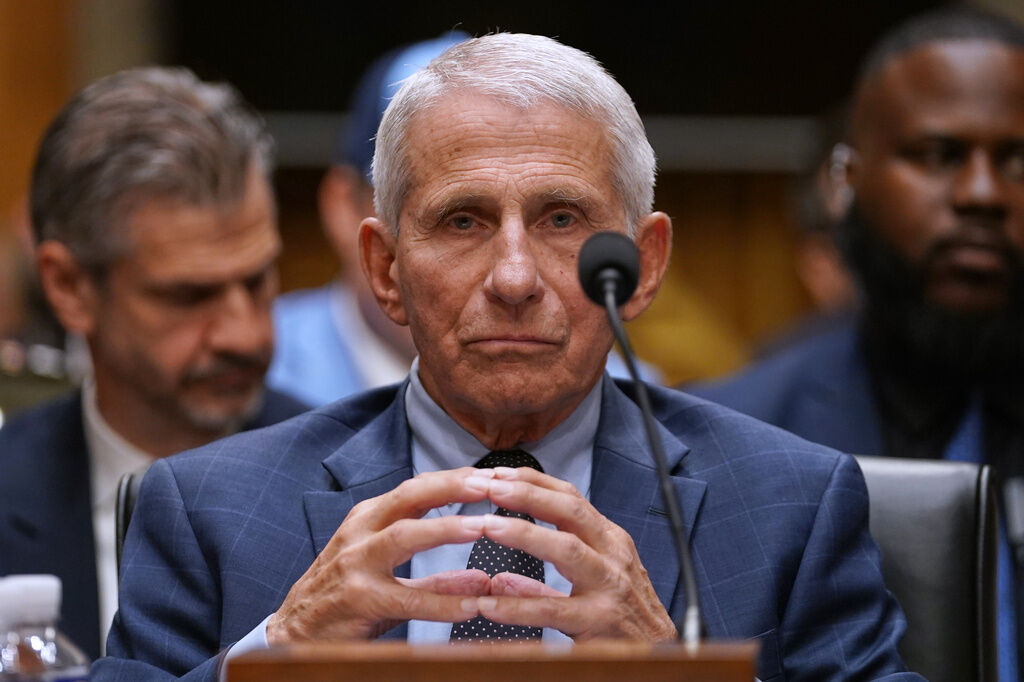
Fauci told Congress higher COVID-19 fatality rate than he calculated in diary: ‘More like 0.2-0.3%’
Mia Cathell
mia-cathell@coloradopolitics.com
Updated 17 hours ago
Dr. Anthony Fauci privately calculated that COVID-19 had a significantly lower fatality rate than what he told Congress a month later at the outset of the pandemic. On March 11, 2020, the day that the World Health Organization declared COVID-19...

Senate advances judicial nominee, Montezuma County judge agrees to discipline | COURT CRAWL
Michael Karlik
michael.karlik@coloradopolitics.com
Updated 18 hours ago
Welcome to Court Crawl, Colorado Politics’ roundup of news from the third branch of government. A U.S. Senate committee advanced a judicial nominee from Colorado, plus a Montezuma County judge agreed to receive discipline for his misconduct that stops short...

Tunnel to Towers brings 9/11 steel to Denver
Nicholas Fogleman
nicholas.fogleman@denvergazette.com
Updated 21 hours ago
A nationwide tour commemorating the 25th anniversary of 9/11 brought a piece of the World Trade Center to Denver on Saturday as the Tunnel to Towers Foundation hosted a ceremony at the Wings Over the Rockies Air & Space Museum....
Top officials in Arizona’s Maricopa County agree on how to oversee elections | OUT WEST ROUNDUP
The Associated Press
the-associated-press@coloradopolitics.com
Updated 6 days ago
ARIZONA Officials agree on election oversight PHOENIX — Election officials in Arizona’s most populous county reached an agreement a week before the state’s July 21 primary on how to jointly oversee the vote, ending a prolonged legal battle. Republican Maricopa...
PREV
PREVIOUS

INSIGHTS | Higher energy prices look increasingly like a foregone conclusion
John Hickenlooper had a hard time staying on point, but his diversion was big news. A few days before The New York Times reported it last Sunday, Hick broke the news that Congress is on the cusp of passing a carbon tax to cut pollution, raise revenue and speed the transition from fossil fuels to […]

Gov. Jared Polis draws heat over comments on renaming Clear Creek County mountain
Gov. Jared Polis took strong criticism over comments Thursday on the renaming of Squaw Mountain in Clear Creek County. The Colorado Geographic Naming Advisory Board recommended in September the governor approve the renaming of Squaw Mountain in Clear Creek County to Mestaa’?hehe (pronounced mess-ta-HAY) Mountain. The name is in honor of the wife of William Bent, also […]