

Biden’s judicial nominee for Colorado appears before Senate committee
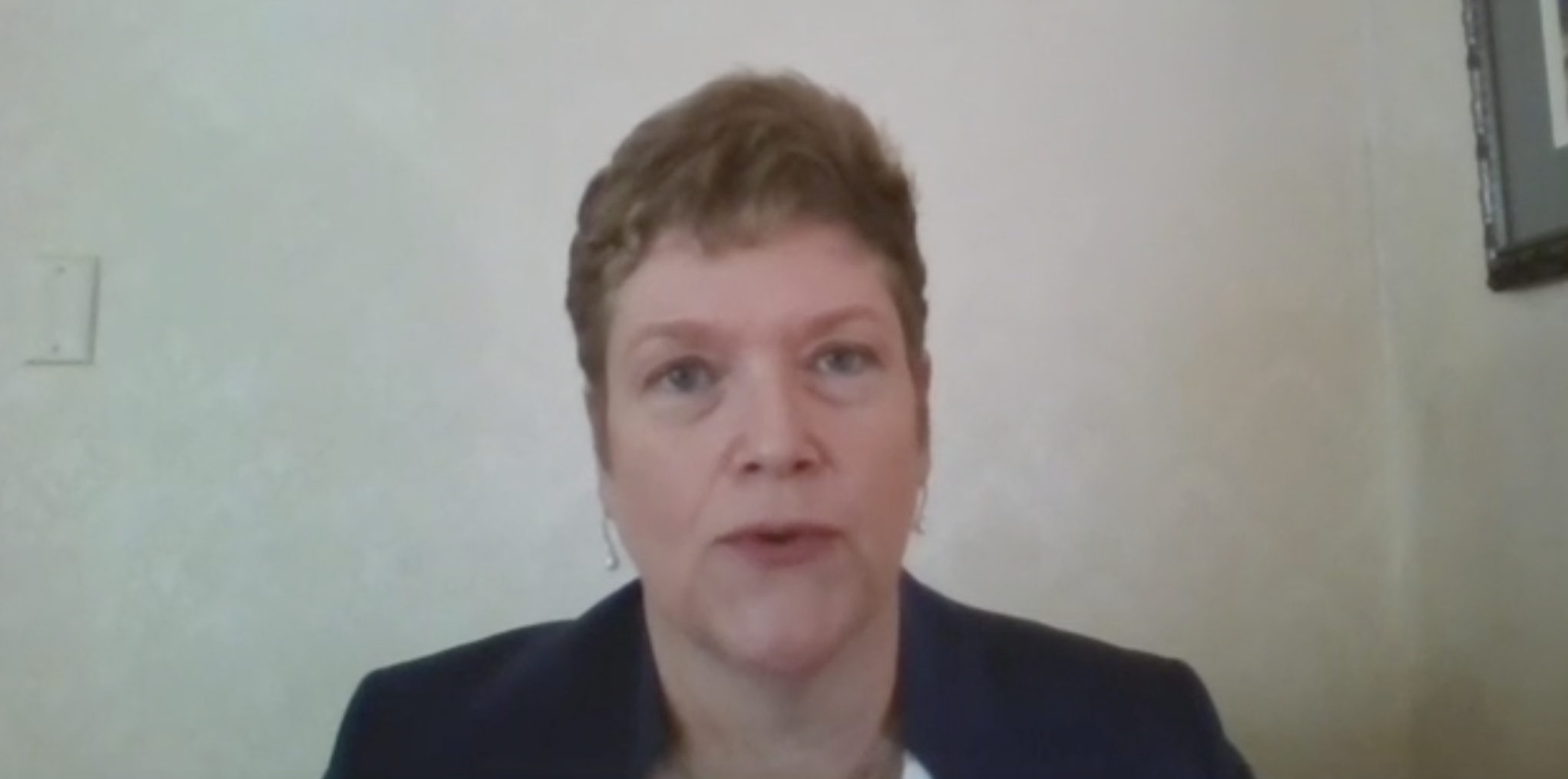
If her appearance before a U.S. Senate committee on Wednesday was any indication, Charlotte N. Sweeney can expect a smooth path to confirmation as Colorado’s next federal judge.
Sweeney, who is 52 this year, gave brief remarks to the U.S. Senate Committee on the Judiciary along with four of the Biden administration’s other trial court nominees. If confirmed, the workers’ rights attorney would be the first openly gay federal judge for Colorado, and the first openly LGBTQ woman to serve as a U.S. District Court judge west of the Mississippi River.
“For Charlotte, equality under the law is no abstraction. It is her life’s work,” said U.S. Sen. Michael Bennet, who introduced her to the committee along with U.S. Sen. John Hickenlooper.
Sweeney’s resume is distinct from the Biden administration’s two prior nominees from Colorado: U.S. District Court Judge Regina M. Rodriguez, a former prosecutor and corporate attorney, and appellate Judge Veronica S. Rossman, a public defender and immigrant. Sweeney, by contrast, has worked as an employment and civil rights attorney, with a long string of victories in discrimination cases.
From 2016-2020, she represented an anesthesiologist of Mexican descent who won nearly $700,000 from a jury after suing the University of Colorado for retaliation. An arbitrator awarded Sweeney’s client, a former telecom sales director, $782,200 after finding her termination amounted to age discrimination.
Notably, she was one of the attorneys who represented female law professors at the University of Denver in an unequal pay case. DU agreed to pay $2.66 million to settle the lawsuit.
“The typical clients in my practice are private or public employees, with varying levels of income, who find themselves in a very difficult employment situation or in need of contractual advice,” she told the judiciary committee in a 35-page questionnaire.
Sweeney was one of three candidates Bennet and Hickenlooper recommended to the White House to succeed R. Brooke Jackson, an Obama administration appointee who stepped down as an active judge on Sept. 30. President Joe Biden announced Sweeney’s nomination on Aug. 5.
Materials submitted to the judiciary committee painted Sweeney as someone concerned with the plight of the less fortunate, the effects of discrimination and the ability to counter institutional harms through the law.
“Charlotte Sweeney has the temperament, character and integrity to serve the people of Colorado, and all Americans, with honor and distinction,” wrote Judy Shepard in a letter to the committee. Shepard’s 21-year-old son, Matthew Shepard, was murdered in Wyoming in 1998 because of his sexual orientation. Sweeney now serves on the board of directors for the Matthew Shepard Foundation.
Rhonda Rhodes, also an attorney, praised Sweeney for joining her annual mission trip to Juarez to build housing near the border.
“Charlotte has traveled to Juarez with Rhodes to Relief and Missions Ministries since 2014. Over these years, our team has built 19 houses for families living in shacks, pallet structures, or even abandoned busses,” Rhodes told the Senate. “She has framed more than her fair share and climbed on the roof accepting the full burden of the hot Mexican sun to spread tar paper. She does not hesitate to cut and then stuff fiberglass insulation in the walls and ceiling, a task that other members shirk.”
Sweeney has frequently appeared on top attorney rankings, having been named one of Denver’s top lawyers by 5280 Magazine, one of the Top Women in Law by Law Week Colorado, and a recipient of the “Raising the Bar” award for the Colorado Women’s Bar Association.
“I would like to thank my many mentors, colleagues and good friends…who have been with me over this journey of the last 26 years of my career, and even before that,” Sweeney said during the conformation hearing, in which she appeared virtually.
She is a 1995 graduate of the University of Denver’s law school, and has been a partner in her employment law firm since 2008. If confirmed, it would mark the first time that three women have served simultaneously on Colorado’s seven-member U.S. District Court.
In 2017, she assisted state legislators in drafting the Equal Pay for Equal Work Act, which ultimately passed in 2019. The law prohibits a variety of employment practices for compensation, such as calculating an employee’s wages based on their prior wage rate or requiring a prospective employee to disclose their pay history as a condition of hiring. The legislature’s intent was to ensure that workers with similar job duties were paid the same and end sex-based wage discrimination.
“As a litigator, I had no prior experience with legislative affairs or the actual bill process. I gained significant knowledge regarding legislative negotiations, compromise, and the art of the legislative process itself,” she told the judiciary committee.
The law has since come under scrutiny for its requirement that employers post compensation ranges for job openings in Colorado, prompting some companies to evade the terms by warning that positions are not open to Colorado applicants. Sweeney appeared in June on the Big Girl Money podcast to address the fallout.
“It struck me that maybe there’s some little loopholes to close,” she said at the time.
Sweeney listed several cases she litigated over her career that resulted in favorable outcomes for her clients. In one instance, she represented Jacqueline Vanech, a U.S. Department of Labor employee with a degenerative eye disease. A federal jury in 2018 awarded Vanech $300,000 after finding the government had not provided reasonable accommodations for her disability, and that Vanech had proved her termination resulted from the disability.
“Sadly, that outcome isn’t the norm in America, where our justice system too often sides against workers, even when the facts of the case are on their side,” Bennet told the committee. “That is corrosive to the American people’s confidence in the rule of law and it’s why we need more judges with Charlotte’s perspective.”
Sweeney will next receive a vote in the committee before proceeding to the Senate floor. No senators on the judiciary committee asked questions of her during Wednesday’s brief hearing.

U.S. Supreme Court upholds state laws banning transgender girls and women from school athletic teams
The Associated Press
the-associated-press@coloradopolitics.com
Updated 3 minutes ago
WASHINGTON • The U.S. Supreme Court on Tuesday upheld state laws barring transgender girls and women from playing on school athletic teams. The court’s conservative majority ruled that state bans in Idaho and West Virginia don’t violate the U.S. Constitution...
Colorado Supreme Court upholds child abuse convictions despite faulty jury instruction
Michael Karlik
michael.karlik@coloradopolitics.com
Updated 17 hours ago
The Colorado Supreme Court decided on Monday that a San Miguel County jury properly convicted a defendant of child abuse resulting in death, even though the instructions potentially allowed jurors to avoid finding that the child abuse resulted in death....
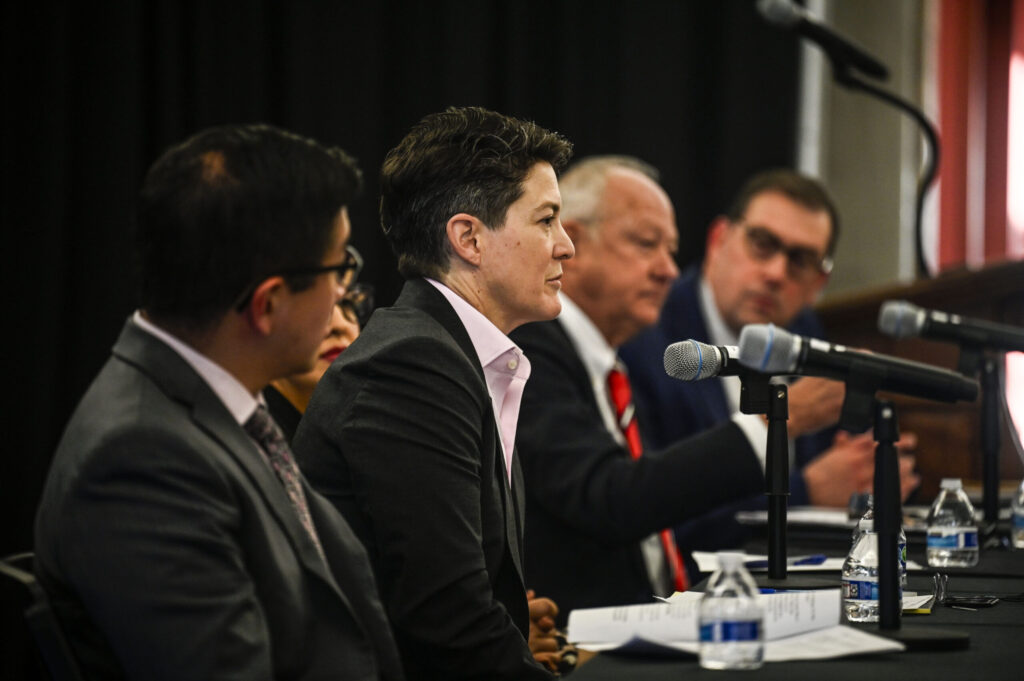
Colorado justices say group that spent $4M on ballot initiatives does not have to disclose donors
Michael Karlik
michael.karlik@coloradopolitics.com
Updated 20 hours ago
The Colorado Supreme Court ruled on Monday that an organization that spent $4 million to advocate on ballot initiatives in the 2020 election is not required to disclose its donors and spending. The Supreme Court acknowledged that multiple factors suggested...
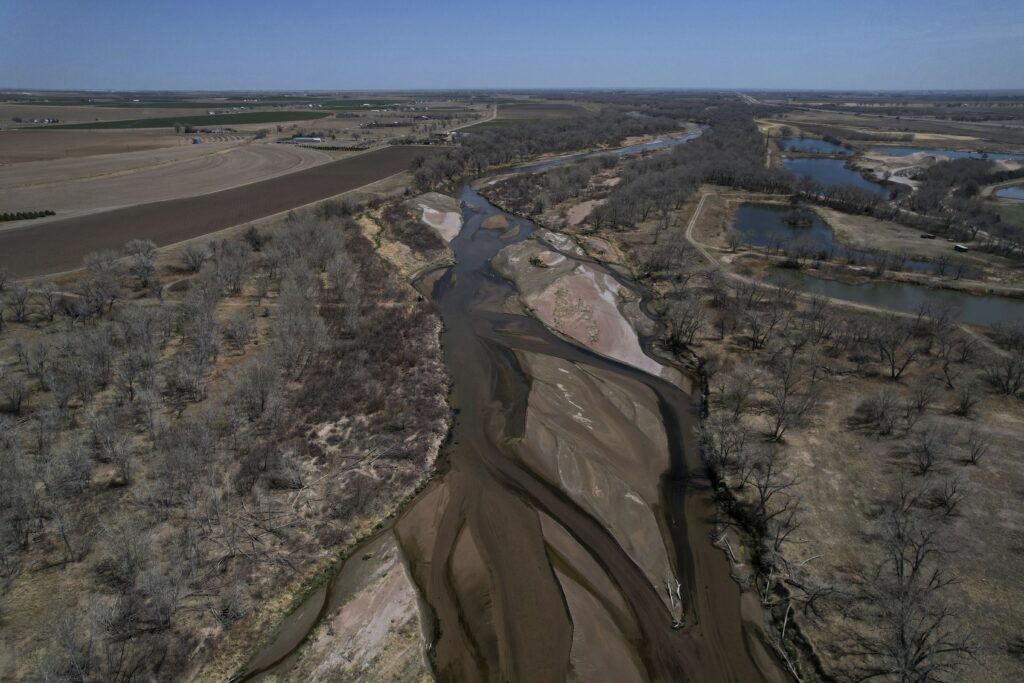
Colorado–Nebraska water clash heads to US Supreme Court as canal fight intensifies
Marianne Goodland
marianne.goodland@coloradopolitics.com
Updated 16 hours ago
The U.S. Supreme Court on Monday agreed to hear Nebraska’s lawsuit against Colorado over the Perkins County canal, a move that advances a legal dispute likely to take years to resolve. The proposed Perkins County canal would run through land...
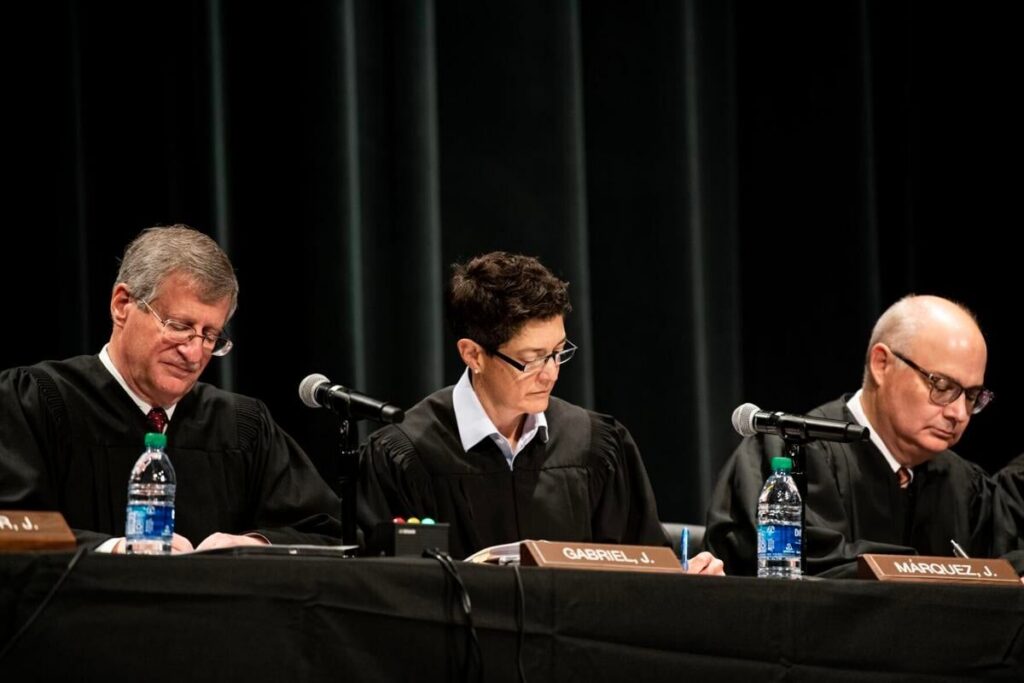
Colorado Supreme Court: Redistricting plans for 2028 election cannot proceed under state constitution
Michael Karlik
michael.karlik@coloradopolitics.com
Updated 15 hours ago
The Colorado Supreme Court blocked all attempts at redrawing congressional district boundaries for the 2028 election from reaching the ballot on Monday, concluding each of the proposed ballot measures violated the constitutional single-subject requirement. The court considered five distinct but...

Bennet, Hickenlooper to vote against Trump’s 10th Circuit nominee from Colorado
Michael Karlik
michael.karlik@coloradopolitics.com
Updated 3 days ago
Colorado’s two Democratic senators will not vote to confirm President Donald Trump’s nominee to a vacancy on the Denver-based federal appeals court. Trump has selected U.S. District Court Chief Judge Daniel D. Domenico, who he appointed as a federal trial...
Trump administration warns Jeffco Public Schools it will lose federal funding over transgender issue
Matt Kyle
matt.kyle@denvergazette.com
Updated 20 hours ago
The U.S. Department of Education on Friday warned Jeffco Public Schools it has 10 days to correct alleged Title IX violations over the Colorado district’s transgender policy or lose federal funding. The Notice of Impending Action is the latest development...
U.S. government declines to oppose multiple challenges to immigration detention in Colorado
Michael Karlik
michael.karlik@coloradopolitics.com
Updated 4 days ago
Multiple federal judges in Colorado granted petitions from people challenging the lawfulness of their immigration detention this week after the government took the unusual step of declining to submit arguments in opposition. Colorado’s federal trial court is facing a flood of...
Colorado justices discuss solution to confusion from prior criminal ruling
Michael Karlik
michael.karlik@coloradopolitics.com
Updated 4 days ago
The Colorado Supreme Court pondered the fallout on Tuesday from its nearly six-year-old decision interpreting the state’s impaired driving laws, with the justices now addressing how defendants affected by the legal change must seek postconviction relief. In contrast to other...
Colorado justices suggest father entitled to appeal of custody decision
Michael Karlik
michael.karlik@coloradopolitics.com
Updated 5 days ago
Members of the Colorado Supreme Court signaled strongly on Tuesday that a father deserved some avenue for challenging a temporary child custody order that no lower court believed it could review due to the unusual circumstances of the case. Because...
PREV
PREVIOUS

Judge tosses lawsuit from pass holders seeking COVID-19 refunds from Vail Resorts
Vail Resorts did not breach its contract with season pass holders when it closed its facilities amid the spread of COVID-19, a federal judge decided in tossing a lawsuit from those seeking refunds. The Broomfield-based company suspended operations of its North American ski areas on March 15, 2020, days before Colorado’s governor issued a statewide […]

Gov. Jared Polis in hot water with his party over support of property tax ballot measure
Gov. Jared Polis plans to vote for Proposition 120, a ballot measure backed by the conservative advocacy group Colorado Rising State Action. That put the titular leader of the state’s Democrats on the opposing side from lawmakers, primarily Democrats, who say they are concerned about the damage the measure could cause to local property tax […]