

NOONAN | Ballot issues short public ed yet again
Paula Noonan

How bad is it that the chair of the state Senate Education Committee, Sen. Rachel Zenzinger, says that students from Campo in eastern Colorado advocating for a $40,000 starting salary for rural teachers will “face an uphill battle” in the legislature.
Zenzinger, a supporter of public education, is surely not happy that Campo’s starting teacher salary is $27,000. The district finally hired a math teacher after a three year vacancy, but lost its English teacher. Its 10-year/master’s degree salary is $34,600. One of Campo’s students, Malcolm Lovejoy, 17, worries that his math skills aren’t where they need to be. The rest of us should worry about that, too.
Is there any wonder it’s tough to recruit teachers for these non-urban/suburban school districts? Three Campo students, including Lovejoy, have put together a bill, so far without legislator sponsors, to boost rural teacher starting salaries to the $40,000 mark. Their bill would benefit 6,000 teachers and cost $35 million a year. If this is accurate, then the state, given that it’s ignored Amendment 23’s school funding requirements for over a decade, is shorting rural Colorado teachers $35 million in pay necessary for a basic living wage. That money would go far to making life in Colorado’s rural communities better for everyone there.
The people of this state are highly skilled at laying funding deficits on educators. Two propositions on this year’s ballot will make the problems worse.
Proposition 119, Learning Enrichment and Academic Progress Program (LEAPP) will gin up $137,600,000 for non-public school programs to provide tutoring and other services to children between 5 and 17 years of age. It’s important to note that the program is not a public school investment. It will put dollars into a new state board, appointed by the governor, called the Colorado Learning Authority. This board is autonomous, not connected to the State Department of Education or the State Board of Education.
Once the board is created, its bureaucracy will oversee eligibility of service providers and children. Parents will tell the board where to send money so their children can receive support.
As per usual, much of the $135 million will come from more sin tax on marijuana. $20 million will come from the State Land Board whose funds are dedicated to public schools and public state colleges and universities. That is, $20 million that’s supposed to go to already underfunded public institutions will be directed to this new and untested, so to speak, program.
LEAPP’s mission is worthy. It’s designed to target money to “eligible students,” with low-income kids receiving priority. However, the programs within LEAPP, such as after school tutoring and providing other resources to kids with learning gaps, can more efficiently be offered without opening a new bureaucracy. If the people of the state want to raise $135 million in more funds for educating its children, the money should go through current state agencies with current knowledge of needs and the ability to provide oversight.
Proposition 120 is even worse for public schools and many other local government entities relying on property taxes to support services. This proposition will take property tax assessments on non-residential properties down by 2.6 percent and lower residential property tax by .6 percent. While the impact on individual property tax payers is small, the overall impact on fire districts, water districts, county governments, city governments, and school districts is $1.03 billion. That’s a lot of lost services and probably layoffs of Coloradans who serve and protect us state residents.
Unfortunately for Malcolm Lovejoy, neither of these propositions remedy his basic problem – not enough teachers and not enough pay in rural school districts. Across the Denver metro area, there aren’t enough substitute teachers to cover for absences. Teachers are losing their planning time when a colleague is absent because they have to cover for the missing person. Districts don’t have enough bus drivers for getting kids to school. Soon, districts will increase the radius for transportation, meaning more children getting driven to school by parents with consequent traffic jams and polluting cars before and after school.
Public education funding in Colorado continues to move in the wrong direction. New teachers barely make enough to cover student loans. If they’re lucky, they can afford a dog.
Colorado Politics Must-Reads:

A right to buy a product? | Hal Bidlack
Hal Bidlack
hal-bidlack@coloradopolitics.com
Updated 15 hours ago
A recent story in Colorado Politics caught my eye, as I learned of a “citizen initiative” that has qualified for the November ballot. It seems supporters of Initiative 177 have collected enough signatures, 146,165 legitimate ones out of a total...
Fourteen years after Aurora — we can’t afford to go backward | GUEST COLUMN
Colorado Politics
colorado-politics@coloradopolitics.com
Updated 15 hours ago
By John Hickenlooper and Gabby Giffords Two Saturdays ago, a gunman shot and killed three people and wounded several others in Twin Falls, Idaho. This latest deadly shooting comes only days after we remembered the lives we lost 14 years...

A daring and fearless rescuer — is afraid of a debate | Dick Wadhams
Dick Wadhams
dick-wadhams@coloradopolitics.com
Updated 3 days ago
Victor Marx, the Republican nominee for governor who says he can exorcize demons and who claimed he has fearlessly rescued 45,000 women and children during 150 “high-risk” missions around the world, appears to be intimidated by the notion of debating...
Colorado’s ballot-initiative process again a battleground for deep pockets, special interests — not the people | Miller Hudson
Miller Hudson
miller-hudson@coloradopolitics.com
Updated 1 day ago
The Oxford English Dictionary defines a constitution as, “The set of fundamental principles according to which a state is constituted and governed, a body of rules prescribing the major elements of the structure and activities of any organization.” Somewhere in...
Proposed EPA changes could save truckers billions | Rachel Gabel
Rachel Gabel
rachel-gabel@coloradopolitics.com
Updated 3 days ago
Agriculture is in distress across nearly every segment across much of the nation, and certainly to a more dire degree in the western United States. If it were not a historic drought, some pressures could be eased. Others can be...

Colorado Democrats, your time is coming | Jon Caldara
Jon Caldara
jon-caldara@coloradopolitics.com
Updated 3 days ago
Hey, Colorado Democrats! All the fun you’ve had watching Republican dysfunction in Colorado for the last 20 years was just a preview of what is about to happen to you. The Colorado Republican Party no longer exists as a competitive...
Perspective: Hunters and anglers are pushing back
Chris Dorsey
chrisd@gmail.com
Updated 1 day ago
For generations, Coloradans hunted elk, caught trout and managed wildlife without consulting a constitutional attorney. That was before wildlife management became a recurring statewide election issue, replete with consultants, national pressure groups and enough political mail to denude an aspen...
The relevance of Watergate more than a half-century later | SONDERMANN
By Eric Sondermann
by-eric-sondermann@coloradopolitics.com
Updated 6 days ago
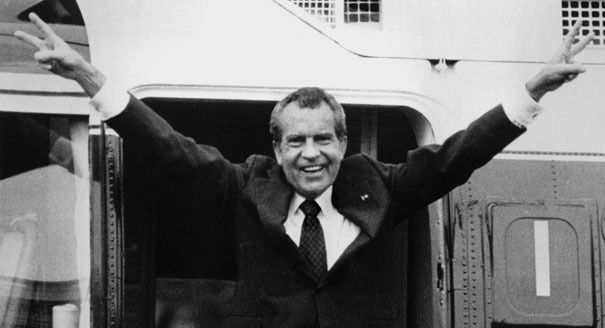
It was the scandal for which all other scandals are now named. In June 1972, a small group of Cuban burglars with high-level connections broke into the headquarters of the Democratic National Committee. Those headquarters were located in the Watergate...
Colorado must continue finding common ground on wildfire policy | GUEST COLUMN
Colorado Politics
colorado-politics@coloradopolitics.com
Updated 5 days ago
By John Herrick Colorado has never lacked for opinions about wildfire policy. We debate forest management, climate change, prescribed burns, land use, air quality and budgets. Those debates are familiar territory, but a new discussion is beginning to happen around...

Proposition NN is the best investment for Colorado’s students and schools | GUEST COLUMN
Colorado Politics
colorado-politics@coloradopolitics.com
Updated 5 days ago
By Justin Ogden Colorado families know what it means to make difficult budget decisions. Inflation has driven up the cost of groceries, housing, utilities and just about everything else. Families like mine work hard to stretch every dollar while still...
PREV
PREVIOUS

THE PODIUM | Campus crime spikes with cops absent
Alan Gottlieb Alex Marrero has been on what he calls a “listening and learning tour” since becoming superintendent of Denver Public Schools in July. Now he’s facing his first tough challenge, and will have to use all of his political and interpersonal skills to craft a solution. The issue? School safety after the removal of […]

SLOAN | Biden finds himself over a barrel — of oil
Kelly Sloan Oil prices, as anyone who watches markets knows, are going up. And gasoline prices, as anyone who moves about knows, are also going up, which creates a political problem for the White House. Doubly so, as the only viable solutions are ideologically anathema to the current administration. The problem is worse in Europe, […]