

Court consolidates lawsuits from Frontier pilots, flight attendants alleging discrimination
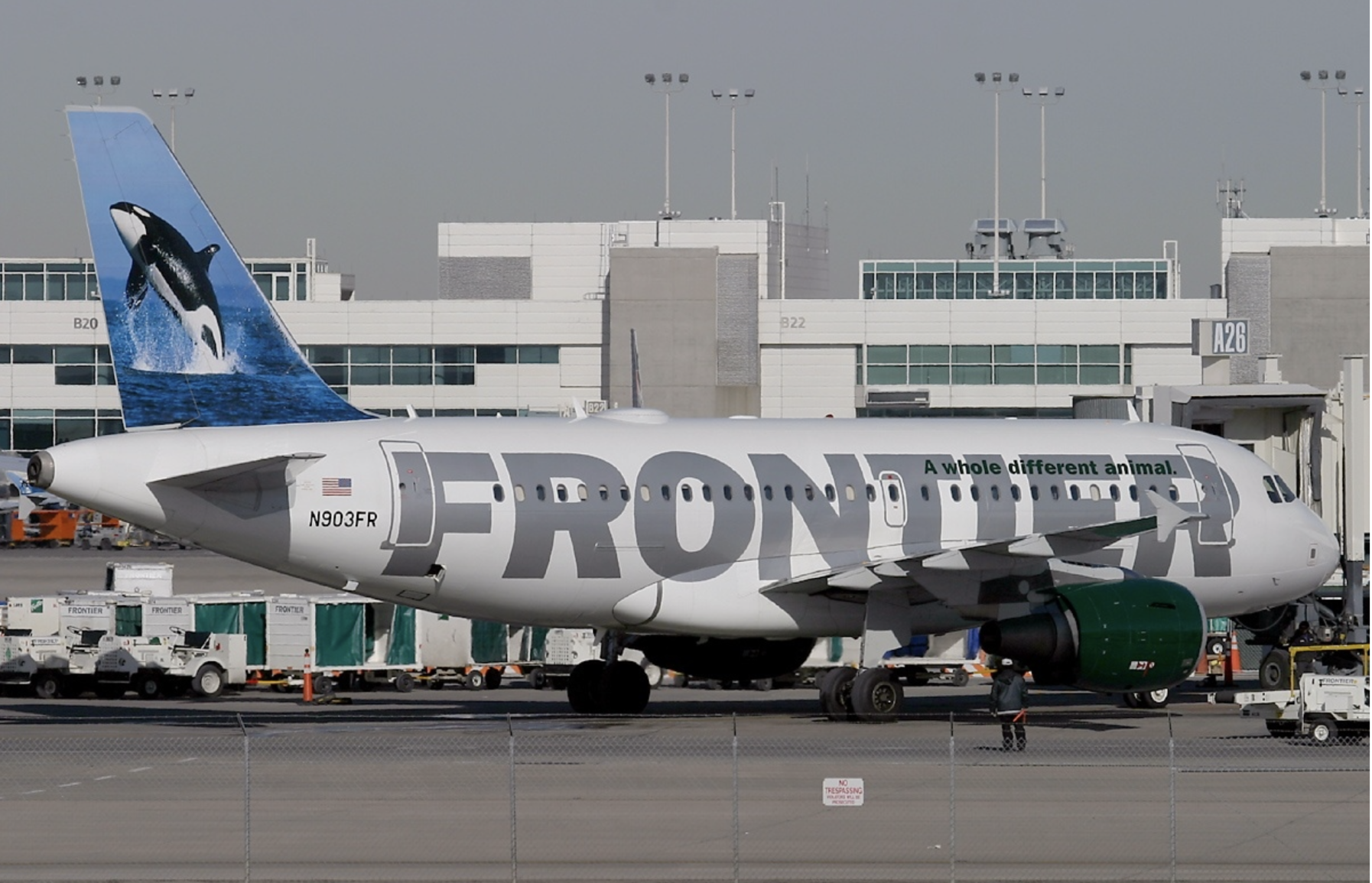
A federal judge has agreed to consolidate two lawsuits against Frontier Airlines — one from its flight attendants and the other from four pilots — that both allege the company’s refusal to accommodate pregnancy and lactation.
The ACLU of Colorado filed suit on behalf of female pilots and flight attendants who had given birth during their time with Frontier. Allegedly, the airline did not make it possible for them to pump breast milk on the job.
One pilot claimed the company prohibited her from pumping while in uniform, even between flights. Another said airline representatives questioned her about “why she was not choosing to feed her child formula, why she thought it was acceptable to use a breast pump in the aircraft, and how long she planned to do so.” And a flight attendant reportedly gave up breastfeeding in order to to return to work.
“Frontier’s policies and practices challenged here are a legacy of the long and unfortunate history of sex discrimination in the airline industry as a whole,” the lawsuit on behalf of flight attendants argues. “Most airlines at one time had explicit policies forcing female flight attendants off the job when they got married or became pregnant, subjecting them to discriminatory requirements related to their weight and appearance, and imposing blatant gender stereotypes. Female pilots were almost unheard of.”
On September 30, U.S. District Court Judge Christine M. Arguello agreed to consolidate the two cases going forward. She had been overseeing the pilots’ lawsuit, while U.S. District Court Judge Raymond P. Moore had handled the flight attendants’ lawsuit. Although Frontier had objected, believing different policies applied to each group of plaintiffs, Arguello found that similar factual and legal questions applied to both.
Arguello noted that she will determine at a later time whether to try the two cases together before a jury. The flight attendants’ lawsuit is a class action on behalf of all similarly-situated workers.
The two cases contain largely parallel allegations: that Frontier forced employees onto unpaid leave during pregnancy and while breastfeeding, and prohibited them from using break time to pump in airplane lavatories. Both lawsuits alleged some form of penalty for nursing-related absences, plus a requirement for pilots to take unpaid leave after 32 weeks in their pregnancies.
The complaints pointed to violations federal civil rights law and state statues protecting pregnant and nursing workers.
Frontier generally denied the allegations, while countering that the company did provide a list of approved lactation rooms as well as “job-protected leave” in lieu of a ground assignment.
To date, both lawsuits have survived Frontier’s motions to dismiss. Moore in July found the flight attendants had identified specific policies that adversely impacted them as nursing mothers, including the airline’s alleged practice of giving ground assignments to injured or disabled flight attendants, but not to those who were breastfeeding. Arguello, on the same day she consolidated the cases, rejected the airline’s argument that the pilots had failed to state a claim.
“Plaintiffs’ Complaint specifically alleges that Frontier provided accommodations to pilots who were ‘unable to fly’ for ‘reasons unrelated to pregnancy,’ while declining to provide those accommodations to pilots who were pregnant or nursing,” she wrote. “These allegations, if true, are sufficient to demonstrate that Frontier provided accommodations to other pilots who were ‘similar [to Plaintiffs] in their inability to work,’ while denying those accommodations to Plaintiffs.”
Although Frontier had contended that the plaintiffs could not sue because they were no longer pregnant and therefore not harmed by any policies, the plaintiffs successfully pointed to Roe v. Wade, the landmark U.S. Supreme Court decision that established the constitutional right to abortion. Given the short duration of pregnancy relative to the length of a lawsuit, and the possibility that the plaintiffs will become pregnant again, Roe gave the plaintiffs standing to sue, the court decided.
All of the named plaintiffs are based out of Denver International Airport. The cases are Hodgkins et al. v. Frontier Airlines, Inc. and Freyer et al. v. Frontier Airlines, Inc.
Colorado Politics Must-Reads:


Bennet, Hickenlooper to vote against Trump’s 10th Circuit nominee from Colorado
Michael Karlik
michael.karlik@coloradopolitics.com
Updated 13 hours ago
Colorado’s two Democratic senators will not vote to confirm President Donald Trump’s nominee to a vacancy on the Denver-based federal appeals court. Trump has selected U.S. District Court Chief Judge Daniel D. Domenico, who he appointed as a federal trial...

U.S. government declines to oppose multiple challenges to immigration detention in Colorado
Michael Karlik
michael.karlik@coloradopolitics.com
Updated 12 hours ago
Multiple federal judges in Colorado granted petitions from people challenging the lawfulness of their immigration detention this week after the government took the unusual step of declining to submit arguments in opposition. Colorado’s federal trial court is facing a flood of...
Colorado justices discuss solution to confusion from prior criminal ruling
Michael Karlik
michael.karlik@coloradopolitics.com
Updated 10 hours ago
The Colorado Supreme Court pondered the fallout on Tuesday from its nearly six-year-old decision interpreting the state’s impaired driving laws, with the justices now addressing how defendants affected by the legal change must seek postconviction relief. In contrast to other...
Colorado justices suggest father entitled to appeal of custody decision
Michael Karlik
michael.karlik@coloradopolitics.com
Updated 2 days ago
Members of the Colorado Supreme Court signaled strongly on Tuesday that a father deserved some avenue for challenging a temporary child custody order that no lower court believed it could review due to the unusual circumstances of the case. Because...

Court snuffs out challenge to Denver’s flavored tobacco ban
Deborah Grigsby
deborah.smith@denvergazette.com
Updated 19 hours ago
The smoke finally cleared in Denver’s battle over a citywide ban on flavored tobacco products when a Denver court dismissed a challenge from local vape shop owners seeking to declare the ordinance unconstitutional and block its enforcement. On Wednesday, Denver...
Colorado justices agree fraud claims belong in corporate dispute
Michael Karlik
michael.karlik@coloradopolitics.com
Updated 2 days ago
The Colorado Supreme Court decided on Tuesday that a corporate plaintiff validly pursued fraud claims over conduct that was not covered by a contract or by a set of interrelated business agreements leading up to the contract. Previously, the Court...
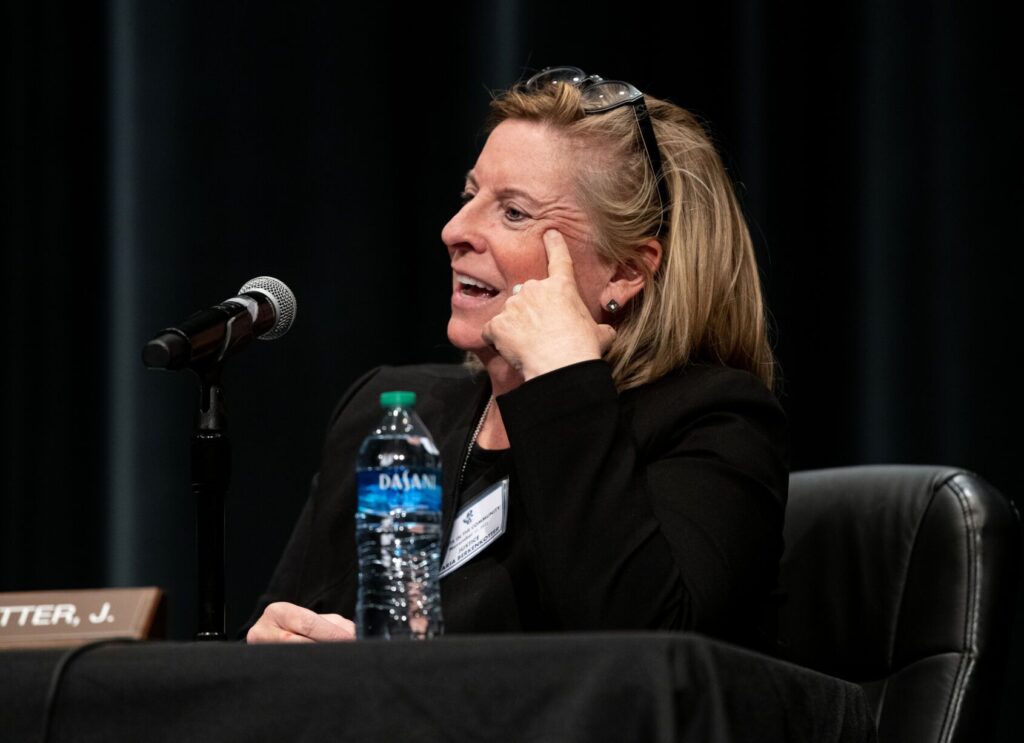
Colorado Supreme Court says intimate messages irrelevant to assault case
Michael Karlik
michael.karlik@coloradopolitics.com
Updated 2 days ago
The Colorado Supreme Court decided on Tuesday that a Douglas County judge acted reasonably by blocking evidence of a defendant’s BDSM-related conversations with the victim in his trial for assault and false imprisonment. While the Court of Appeals believed that...
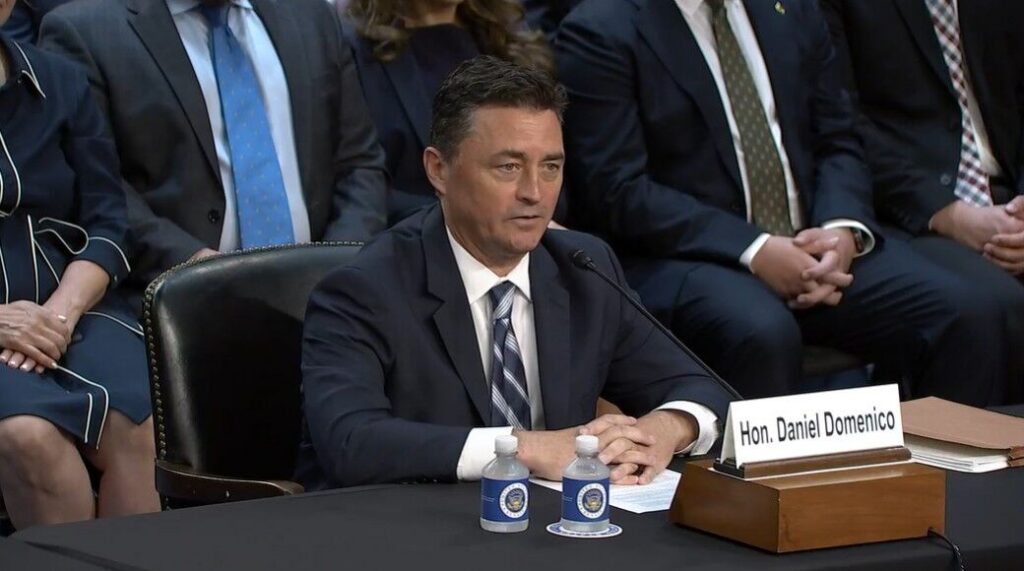
Trump’s 10th Circuit nominee declines to name 2020 election winner, defends immigration decisions
Michael Karlik
michael.karlik@coloradopolitics.com
Updated 2 days ago
President Donald Trump’s nominee to the Denver-based federal appeals court declined to say who won the 2020 presidential election during his appearance before the U.S. Senate Judiciary Committee on Wednesday, and defended his recent rulings in immigration detention cases. U.S....
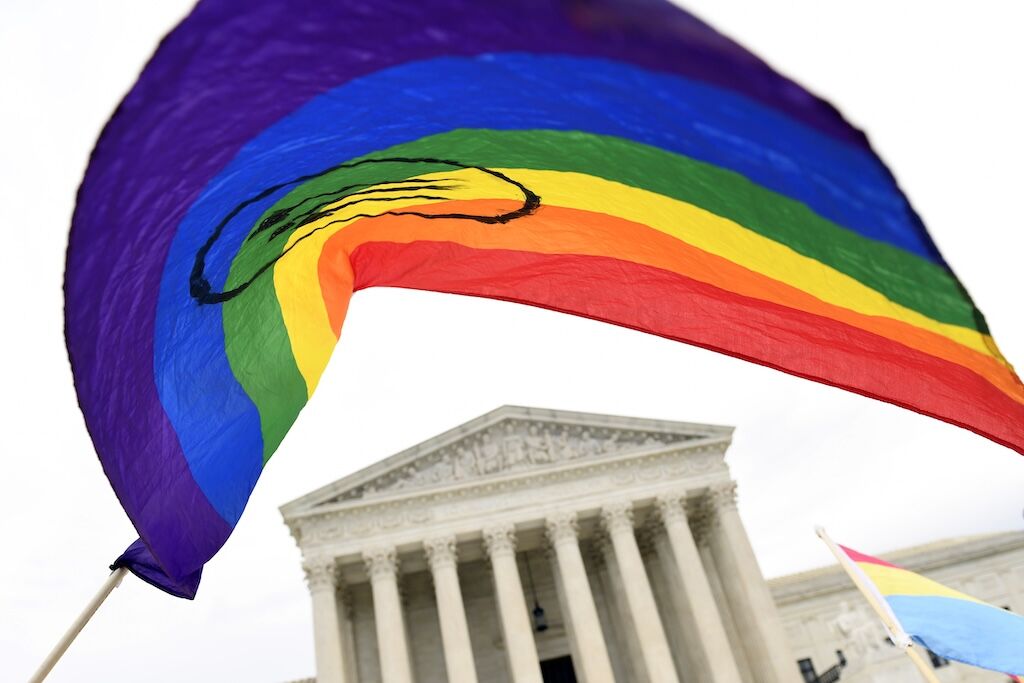
Colorado law allowing lawsuits against ‘conversion therapy’ providers takes effect July 1
Marissa Ventrelli
marissa.ventrelli@coloradopolitics.com
Updated 12 hours ago
With a new law taking effect July 1, Colorado is creating a legal pathway for people to sue licensed providers of “conversion therapy,” even as debate over the practice’s constitutionality continues in the wake of a recent U.S. Supreme Court...
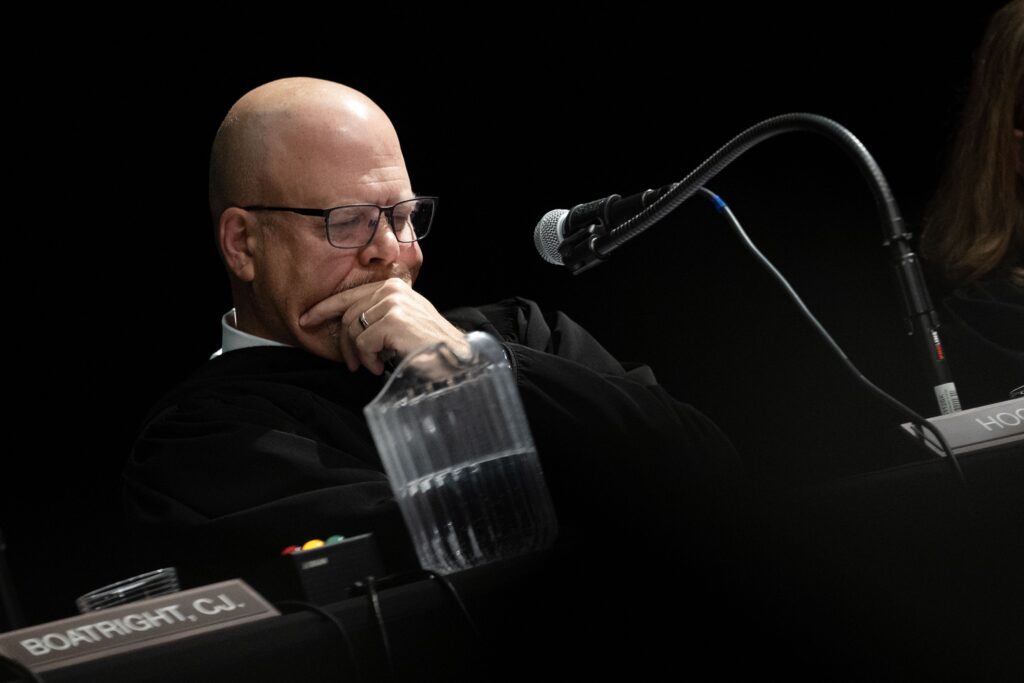
Colorado justices expand ability for civil defendants to avoid participating, win after trial
Michael Karlik
michael.karlik@coloradopolitics.com
Updated 2 days ago
The Colorado Supreme Court decided on Tuesday that a civil defendant, whose non-participation in the case meant that he legally admitted to the sexual assault allegations against him, could nonetheless prevail after he showed up to testify at trial. A...
PREV
PREVIOUS

State Supreme Court to weigh Arapahoe judge's partial courtroom closure during trial
The Colorado Supreme Court will decide whether an Arapahoe County judge violated a man’s Sixth Amendment right to a public trial by excluding his co-defendant’s wife from the courtroom. Previously, the state’s Court of Appeals determined the answer was yes, and ordered a new trial for Terrel Shameek Turner. The Attorney General’s Office appealed, arguing […]

Senators recommend candidates for Colorado court vacancy
Colorado’s senators have recommended three candidates to the White House to fill a vacancy in 2022 on the state’s seven-member federal trial court. The list includes two familiar names: U.S. Magistrate Judge Nina Y. Wang and intellectual property attorney Kenzo Kawanabe, both of whom were finalists for the most recent opening on the court. President Joe […]